
Politics
INEC Accused Of Delaying Registration Of 104 New Parties Including Anti-Tinubu Coalition

It was gathered that the applications were filed in the aftermath of the 2023 general elections to allow more platforms to participate in Nigeria’s future electoral processes.
The Independent National Electoral Commission (INEC) is yet to act on the applications of 104 groups and associations seeking registration as political parties, several months after they were submitted.
It was gathered that the applications were filed in the aftermath of the 2023 general elections to allow more platforms to participate in Nigeria’s future electoral processes.
Among the groups seeking registration is the National Opposition Coalition Group, which is reportedly planning to challenge President Bola Tinubu in the 2027 general elections.
The coalition has proposed to float a new political party named the All Democratic Alliance (ADA) as its platform for the 2027 contest.
Meanwhile, the group is wary of partnering with existing political parties, alleging that many of them may have been compromised or infiltrated by the ruling All Progressives Congress (APC).
Daily Trust reports that despite the urgency expressed by some of the applicants, INEC appears to be dragging its feet.
Comrade Salihu Lukman, a former National Vice Chairman (North) of the All Progressives Congress (APC), has said that Nigeria’s political space is facing a crisis of representation, stressing that forming a new political party may be the only viable alternative for opposition coalitions ahead of the 2027 general elections.
Speaking on Trust TV, Lukman explained that internal issues within the APC led to his departure and warned that “all the potential platforms are in danger.”
He said leaders of the new coalition had explored the political landscape and identified two options — foremost among them, registering a new party.
However, with over 104 political associations awaiting registration and no sign that the Independent National Electoral Commission (INEC) has begun verification, chances of unifying opposition under a new umbrella such as the proposed Alliance Democratic Alliance seem slim.
“More than 70 groups have submitted applications to INEC. But INEC is sitting on them,” Lukman alleged, accusing the electoral body of deliberately stalling the process.
“Acknowledgement letters are not even being issued. That’s a violation of the law,” he added, noting that the Electoral Act mandates INEC to act within a 90-day window after acknowledging applications.
According to Lukman, the delay is part of a broader issue of “state capture” where institutions like the National Assembly and INEC are no longer functioning independently.
Barrister Okere Kingdom Nnamdi, representing the proposed Patriotic Peoples Party (PPP), said he submitted his application to INEC on March 28, 2025, but only received a response in May.
The response, he said, merely informed him to “await the opening of the registration portal”—a condition he described as vague and unaccountable.
In his formal letter to INEC, Okere stated that the PPP had met all constitutional requirements under Sections 221 to 224 of the 1999 Constitution and Section 75 of the Electoral Act 2022.
He demanded an official acknowledgment and warned of legal action if denied registration without just cause.
Some coalition members argue that had INEC expedited the process, emerging parties would have had sufficient time to organize ahead of 2027 primaries, which may begin early next year.
But Barrister Kenneth Udeze, National Chairman of the Action Alliance (AA), cast doubt on the feasibility of registering new parties.
He argued that by mid-2026, electoral activities like party primaries will be in full swing, leaving little room for new entrants. “Legally, no party can be registered within 12 months of a general election,” he noted.
INEC officials, speaking anonymously, said the commission is still reviewing the applications and has responded to many within the legal timeframe.
One official said the commission is developing a portal to automate the process and will announce its launch soon.
On the speculation that INEC fears litigation from deregistered parties, the official clarified: “The commission hasn’t made any decision on deregistration yet, but any action taken will follow legal guidelines.”
In 2020, INEC deregistered 74 of the 91 existing political parties due to poor performance in the 2019 elections.
The Chairman Mahmood Yakubu cited failure to win 25% of votes in a state or local government area, or to secure a single seat at any level, as grounds for deregistration.
Meanwhile, only 18 parties survived—later joined by the Youth Party (YP) and Boot Party (BP) through court orders—bringing the total to 19.
Critics argue that many of the surviving parties are now inactive, with only a handful maintaining political relevance.
Mr. Rotimi Oyekanmi, Chief Press Secretary to the INEC Chairman, said all applicants must meet clearly defined criteria before registration.
“If there are issues with their documents or information, they must be resolved. Applicants are free to seek updates from the commission.”
Experts remain divided on the issue. Prof. Adele Jinadu, a former president of the International Political Science Association, said that in a multi-party democracy, there is no cap on the number of parties, provided legal requirements are met.
Dr. Dauda Garuba of the Centre for Democracy and Development (CDD) agreed, adding that parties should be allowed to operate freely if compliant with the law.
But Mr. Ezenwa Nwagwu, Executive Director of the Peering Advocacy and Advancement Centre in Africa (PAACA), argued that INEC’s role should not include registering parties.
“The right to associate is constitutionally guaranteed. INEC’s responsibility should be limited to setting criteria for appearing on the ballot.”
He noted that many associations seeking registration are simply creating Special Purpose Vehicles (SPVs) for political bargaining. “Parties don’t need to go national. They can focus on local elections. Most lack the capacity to manage a national campaign anyway.”






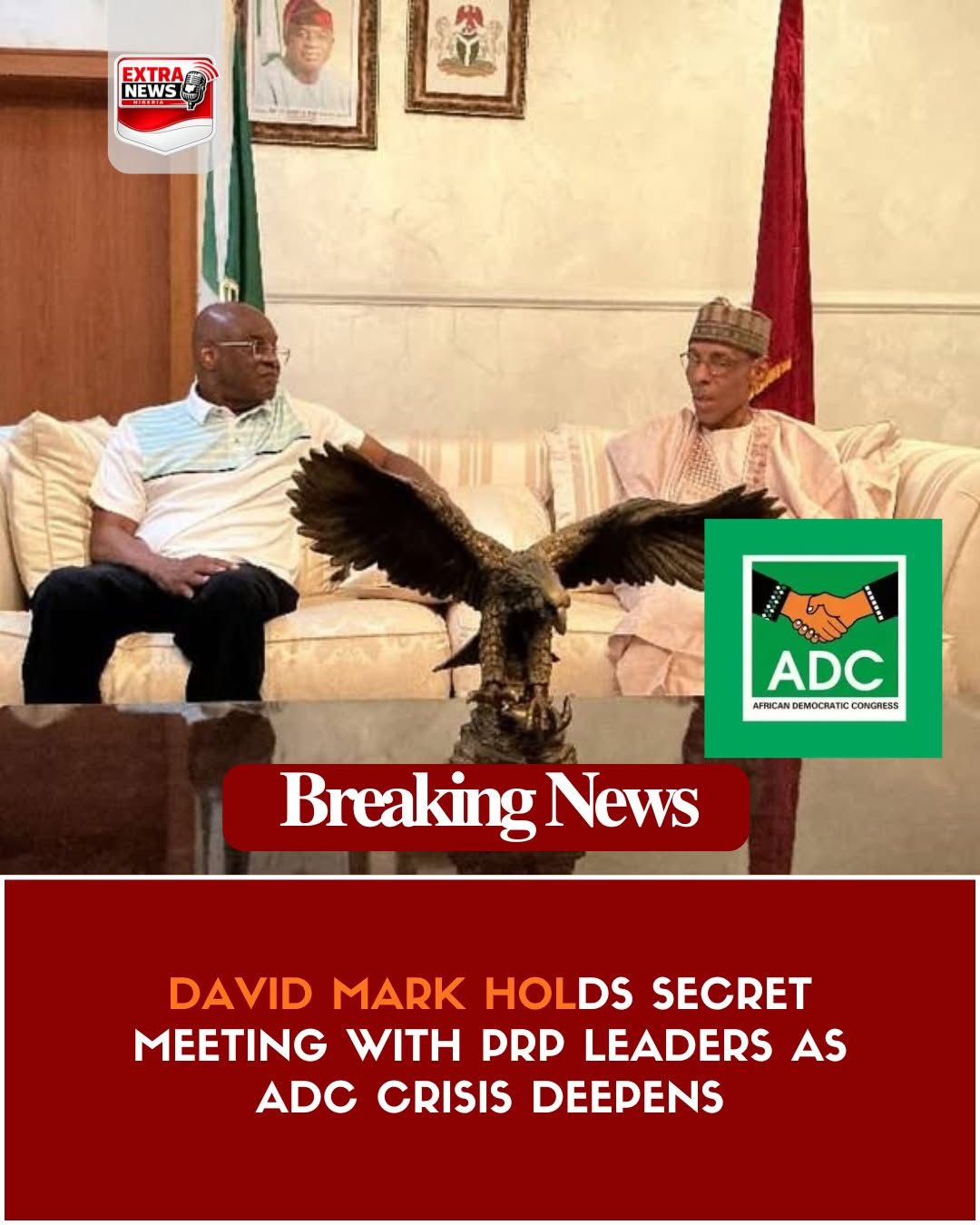
The embattled National Chairman of the African Democratic Congress, David Mark, on Friday held a closed-door meeting with leaders of the Peoples Redemption Party in Abuja. The private consultation is seen as a fresh round of political moves as the ADC continues to battle a lingering leadership crisis and growing internal divisions.
Top figures from both parties were said to be present at the meeting, including PRP National Chairman Hakeem Baba-Ahmed and senior ADC officials. The development is already drawing attention as opposition parties continue realignments ahead of the 2027 political season, with many watching closely for possible alliances and next steps in the party crisis.
Politics
“ADC is a Holy Party, Cannot be used to Scam Nigerians Again” – Hon Success Opara tells David Mark
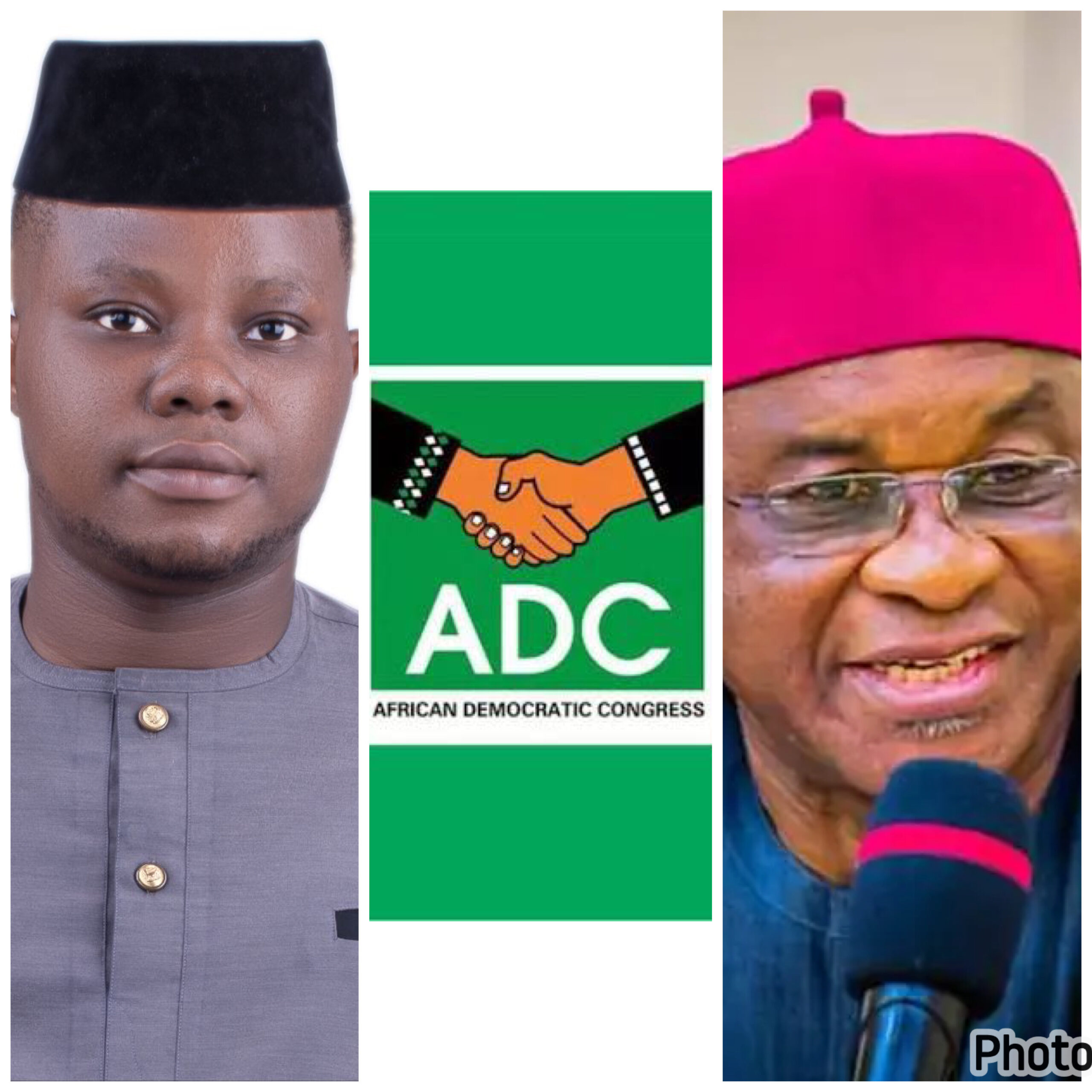
ADC Party in Turmoil: Hon Success Opara Slams Leadership, Warns Against Scamming Nigerians
Abuja, Nigeria – The African Democratic Congress (ADC) is facing internal strife as Hon Success Opara, a prominent party official, has warned against attempts to use the party to deceive Nigerians. Opara specifically criticized the leadership of David Mark, stating that the party cannot be used to scam citizens again.
“ADC holy Party cannot be used to scam Nigerians again,” Opara said, emphasizing that those forming coalitions are hindering the party’s growth and denying youths opportunities to thrive.
“Those who are forming coalition don’t want to give the youths the chance to strive in the party,” she added.
Opara’s statement highlights the deepening divisions within the ADC, with concerns over leadership and the party’s direction.
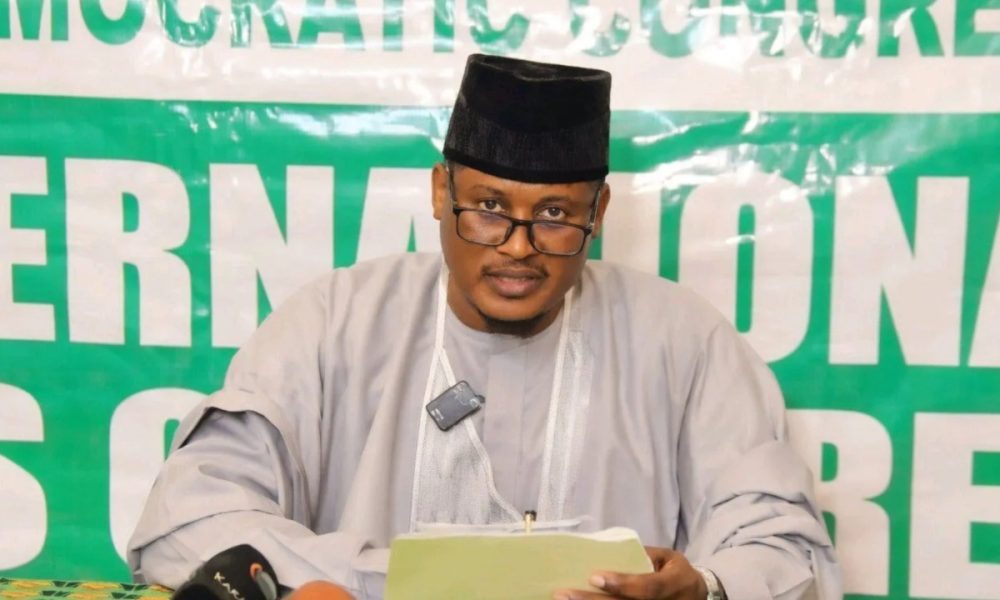
The factional National Chairman of the African Democratic Congress (ADC), Nafiu Bala Gombe, has announced that the party under his leadership will bar individuals above the age of 55 from contesting for political positions.
Gombe made the disclosure during an interview with BBC Hausa, where he outlined a vision centred on generational change and greater youth participation in politics.
“The African Democratic Congress (ADC) is a party that belongs to all Nigerians. What we are doing now is to ensure the party moves forward properly.
“We have decided that we will give the youths a real chance. The time has come for young people to take the lead in politics.
“If you are over 55 years old, you are not going to contest for positions in the ADC under our leadership.
“We want to bring in fresh blood, new ideas, and energy from the youth. Nigeria’s future depends on the young generation.
“The old ways have not worked well for the country. We need to open the door wide for youths to participate fully as candidates, leaders, and decision-makers,” he said.

David Mark Holds Secret Meeting With PRP Leaders as ADC Crisis Deepens

Chaos As Military Officers Exchange Blows During Tinubu’s Visit To Bayelsa (Videos)

HRH Ekwueme of Ochia Kingdom Iynched & kiIIed in Imo.

-
Business1 year ago
US court acquits Air Peace boss, slams Mayfield $4000 fine
-

 Trending1 year ago
NYA demands release of ‘abducted’ Imo chairman, preaches good governance
-

 Politics1 year ago
Mexico’s new president causes concern just weeks before the US elections
-

 Politics1 year ago
Putin invites 20 world leaders
-

 Politics1 year ago
Russia bans imports of agro-products from Kazakhstan after refusal to join BRICS
-
Entertainment1 year ago
Bobrisky falls ill in police custody, rushed to hospital
-
Entertainment1 year ago
Bobrisky transferred from Immigration to FCID, spends night behind bars
-
Education2 years ago
GOVERNOR FUBARA APPOINTS COUNCIL MEMBERS FOR KEN SARO-WIWA POLYTECHNIC BORI