
Politics
INEC Releases Full 2027 Election Preparation Timetable: What Nigerians Need to Know

By. Eziomume Nwakanma
The Independent National Electoral Commission (INEC) has officially released the full preparatory timetable for the highly anticipated 2027 General Elections. The schedule outlines critical activities for political parties, voters, and all stakeholders as the nation begins its countdown to another electoral cycle.
This announcement marks the first major step toward the 2027 polls, giving parties ample time to prepare and Nigerians the opportunity to engage early in the democratic process.
Continuous Voter Registration (CVR) Begins April 2026
INEC confirmed that the nationwide voter registration exercise will commence April 2026 and run until January 2027.
Activities during this period include:
Registration of new voters
Replacement of lost or damaged PVCs
Transfer of voting locations
Updates for individuals turning 18 years old
This phase is crucial in ensuring every eligible Nigerian has the opportunity to participate in the election.
—
Political Party Primaries Set for July–September 2026
According to the timetable, political parties will conduct all congresses and primaries between July 1 and September 30, 2026.
During this window, parties are expected to:
Select candidates for all elective positions
Conduct congresses at ward, LGA, state, and national levels
Submit the outcomes of primaries to INEC within one week
INEC emphasized adherence to party constitutions and the Electoral Act to avoid legal disputes.
Submission of Candidate Lists Begins October 2026
Political parties will upload the names of candidates and their running mates between October 1 and October 31, 2026 via INEC’s online nomination portal.
Required forms include:
EC9 for candidates
EC9B for running mates
Late submission will not be allowed, INEC warned.
Publication of Final Candidate List: November 15, 2026
INEC will publish the official list of contenders for:
Presidential race
Governorship seats
National Assembly positions
State Assembly contests
This publication will confirm the eligible candidates and set the stage for campaign activities.
Election Campaigns to Begin November–December 2026
Campaign activities will begin in two phases:
Presidential and National Assembly campaigns: November 18, 2026
Governorship and State Assembly campaigns: December 15, 2026
All campaigns must end 24 hours before election day in compliance with the law.
2027 Election Dates Announced
INEC’s proposed dates for the 2027 elections are as follows:
Presidential & National Assembly Elections: Saturday, February 20, 2027
Governorship & State Assembly Elections: Saturday, March 6, 2027
These dates align with constitutional requirements regarding the expiration of current elected officials’ tenures.
Other Key Activities Ahead of the 2027 Elections
Display of Voter Registers: October 2026
Collection of PVCs: December 2026 – February 2027
Training of Ad-hoc Staff: December 2026 – February 2027
Distribution of Election Materials: February – March 2027
INEC reaffirmed the continued use of BVAS technology and combined electronic and physical result transmission to ensure transparency.
Conclusion
The release of the 2027 election timetable signals the official start of Nigeria’s march toward another defining moment in its democracy. With early preparation, transparent processes, and citizen participation, INEC hopes to deliver a credible and smooth election cycle.
For political observers, parties, and voters, the countdown to 2027 has truly begun.





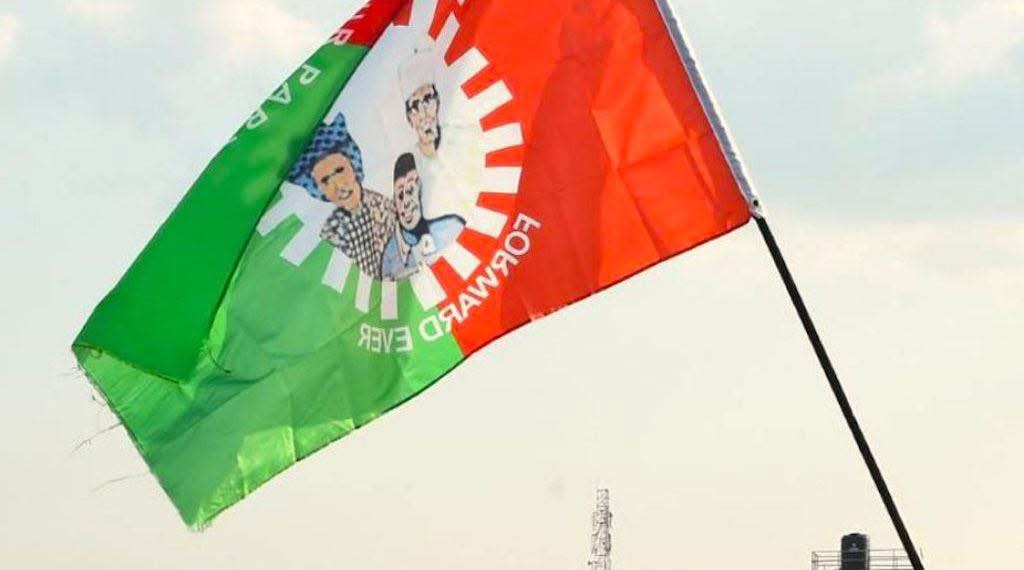
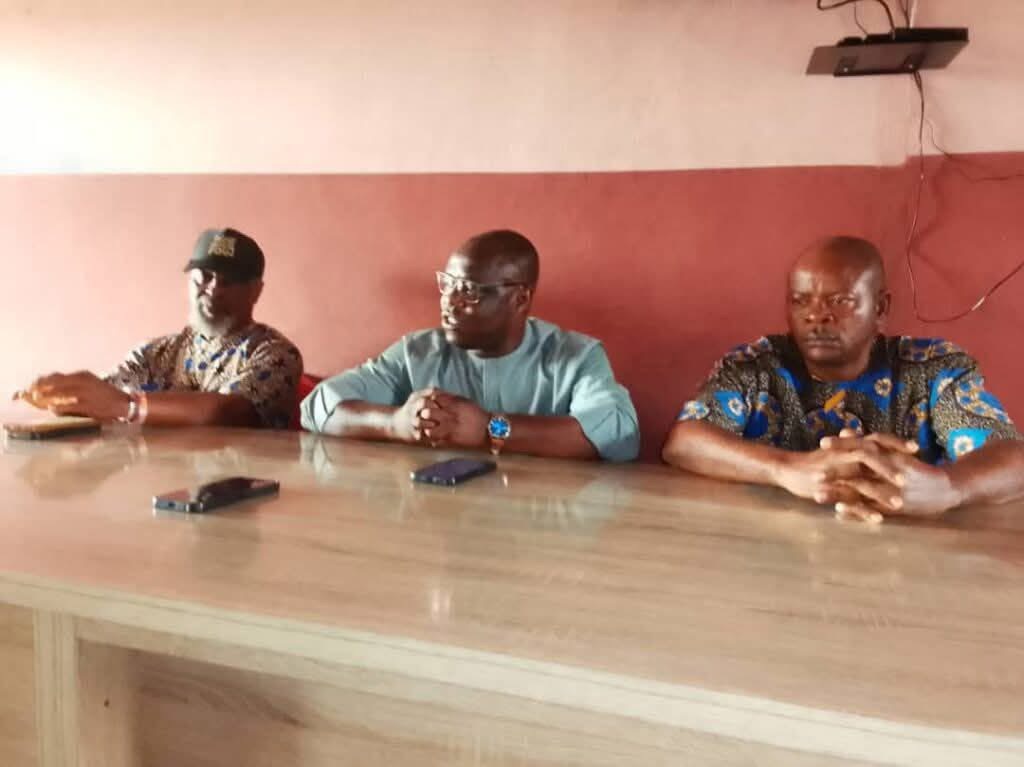
The Labour Party in Imo State is engulfed in a bitter leadership clash as the Callistus Ihejiagwa-led faction warns members not to participate in any party activities not sanctioned by his leadership.
The warning comes in response to claims that Sen. Nenadi Usman and Darlington Nwokocha’s faction plans to hold Ward, LGA, and State congresses starting March 26, 2026—moves Ihejiagwa calls illegal and unconstitutional.
Ihejiagwa insists that the Independent National Electoral Commission (INEC) has already refused to dissolve existing party structures, meaning any attempt to replace sitting executives is null and void.
He dismissed arguments that INEC officials attending Usman/Nwokocha’s National Executive Council meeting on March 17 would confer legality, stressing that presence does not equal approval.
March 20, 2026
The All Progressives Grand Alliance in Abia State has called on the Senate to declare the seat of the Senator representing Abia South, Enyinnaya Abaribe, vacant following his resignation from the party.
The party made the call on Thursday during a press briefing in Umuahia, where its leadership, led by a former member of the Abia State House of Assembly, Obinna Ichita, insisted that Abaribe voluntarily resigned from APGA and was not sacked, contrary to his claim at the Senate.
Ichita argued that Abaribe’s exit from the party that sponsored his election violates constitutional provisions, stressing that there was no leadership crisis within APGA to justify his defection.
“The senator resigned in his ward. He did so voluntarily, which is his right. However, if you leave the party that gave you the platform for another party when there is no leadership crisis, that seat must be declared vacant,” he said.
He further alleged that Abaribe misrepresented the circumstances of his exit by claiming he was sacked.
“The party has documentary evidence to show that Senator Abaribe was not sacked. He resigned three months after disciplinary measures were taken against him over actions the court did not consider appropriate,” Ichita added.
According to him, the mandate belongs to the people and the party, not the individual office holder.
“They gave him the mandate on the platform of APGA, not any other party. There was nothing like ADC when he was elected. He cannot take the mandate elsewhere without consulting the people who gave it to him,” he said.
Ichita maintained that the constitution is clear on defection, noting that any lawmaker who leaves a party without a valid internal crisis must vacate the seat.
“My message to Senator Abaribe is to honourably vacate the seat instead of waiting for the National Assembly to declare it vacant. That would amount to national embarrassment,” he added.
Also speaking, the APGA State Chairman, Sunday Onukwubiri, and the party’s Public Relations Officer, Chukwuemeka Nwokoro, reiterated that Abaribe had distanced himself from the party’s activities at various levels in the state.
They insisted that he neither holds dual membership nor was he expelled, maintaining that his resignation was voluntary.
“He was invited by the party but failed to appear and was subsequently suspended in line with the party’s constitution. Three months later, he resigned,” the officials said.
Reacting, Abaribe defended his position, insisting that he acted within his constitutional rights.
“When you are no longer a member of a party by virtue of being sent away, you have the fundamental right of association to join another party,” he said.
He argued that his indefinite suspension by APGA effectively amounted to expulsion.
“If a party places you on indefinite suspension for more than six months, what does that mean? It means you have been told to go elsewhere, and that is exactly what I did,” he stated.
The senator added that the proper constitutional procedure for removing him from office would be through a recall process by his constituents.
“If the people who elected me no longer want me, the right thing to do is to initiate a recall. That is the position of the law,” he said.
Politics
Tinubu’s Reforms May Be Challenging, but They’ve Boosted Nigeria’s Global Respect — Information Minister Mohammed Idris
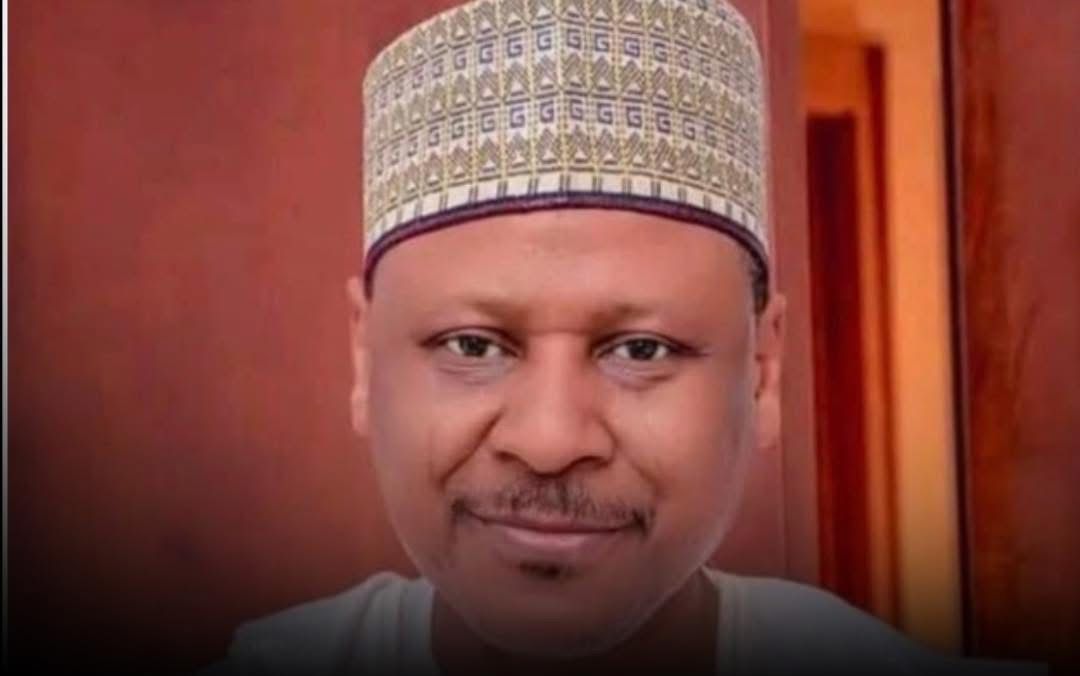
The Minister of Information and National Orientation, Mohammed Idris, has stated that Nigeria is receiving greater respect internationally under the leadership of President Bola Tinubu.
Speaking on Friday after attending Jumaat prayers at Yahaya Road Mosque in Kaduna, Mr Idris said, “Nigeria is indeed taking its rightful place. The country is respected more than ever before on the international scene. The reforms that the president has instituted, as challenging as they are, are meant for the benefit of all Nigerians.”
He urged Nigerians to stay calm as the government continues its efforts to restore security across the nation. Referring to the recent multiple b%mb att@cks in Maiduguri, Borno State, the minister assured that such incidents would not be allowed to recur.
“Indeed, our country is facing challenges, and the government is working tirelessly to ensure security throughout Nigeria. We have seen what has happened, particularly in Borno State. We pray to Allah to make this the last one, as the government is committed to preventing any repetition of such incidents,” he said.
Mr Idris also stressed the importance of citizens being prayerful and working together to address the country’s challenges. He encouraged both Muslims and non-Muslims to unite in the interest of Nigeria’s growth and development.
“This is a time for reflection for all Nigerians. We pray that everyone will consider this moment and recognize the need for unity, progress, and national development. All hands must be on deck for the unity of the country. As we earn respect internationally, we also hope and pray that unity will strengthen within our nation,” he added.

IMO STATE LABOUR PARTY DESCENDS INTO FACTIONAL WAR

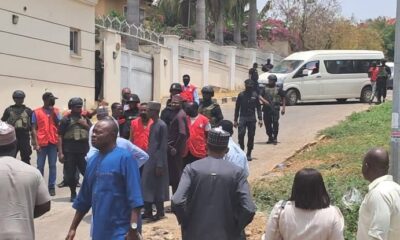
EFCC evicts Malami from Abuja home amid forfeiture dispute

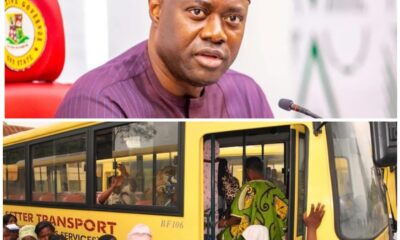
Fuel price hike: Gov Makinde announces N10,000 transport support for workers

-
Business1 year ago
US court acquits Air Peace boss, slams Mayfield $4000 fine
-

 Trending1 year ago
NYA demands release of ‘abducted’ Imo chairman, preaches good governance
-

 Politics1 year ago
Mexico’s new president causes concern just weeks before the US elections
-

 Politics1 year ago
Putin invites 20 world leaders
-

 Politics1 year ago
Russia bans imports of agro-products from Kazakhstan after refusal to join BRICS
-
Entertainment1 year ago
Bobrisky falls ill in police custody, rushed to hospital
-
Entertainment1 year ago
Bobrisky transferred from Immigration to FCID, spends night behind bars
-
Education2 years ago
GOVERNOR FUBARA APPOINTS COUNCIL MEMBERS FOR KEN SARO-WIWA POLYTECHNIC BORI