
Politics
INEC to phase out PVCs, plans Diaspora voting INEC Chairman, Mahmood Yakubu

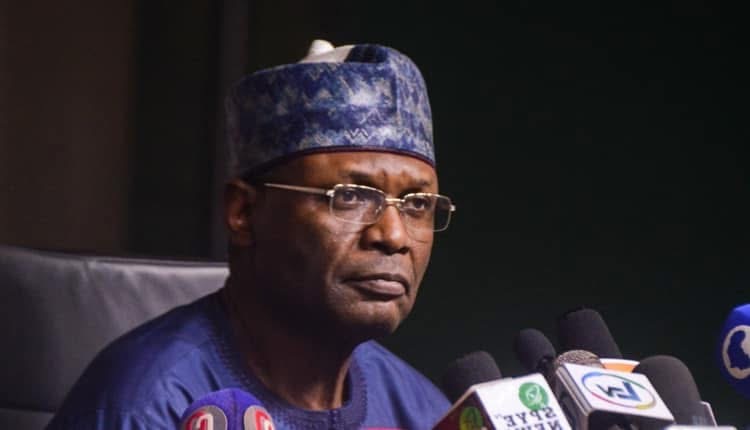
The Independent National Electoral Commission has proposed sweeping reforms to improve the country’s electoral system, following lessons learnt from the 2023 general elections and subsequent off-cycle polls.
Among the reforms being proposed are diaspora voting and phasing out of the use of Permanent Voter Card during elections.
The INEC Chairman, Prof, Mahmood Yakubu, disclosed these on Thursday in Abuja during a meeting with Resident Electoral Commissioners.
He stated that INEC would soon present these proposals and more to the relevant committees in the Senate and House of Representatives.
He said, “Among the major highlights of the commission’s recommendations is the imperative of legal clarity in result management, with regard to manual transfer versus the electronic transmission of results.
“The commission also believes that with the introduction of the Bimodal Voter Accreditation System, the use of the Permanent Voters’ Cards as the sole means of identification for voter accreditation on election day should be reviewed. Those who already have the PVCs can still use them to vote, but going forward, computer-generated slips issued to the voter or even downloaded from the commission’s website will suffice for voter accreditation.
“This will not only save cost, it will also eliminate the issues around the collection of PVCs and the diabolical practice of buying up the cards from voters in order to disenfranchise them.
There are also recommendations in support of diaspora voting, the unbundling of the commission with the establishment of electoral offences tribunal and a separate agency to handle the registration and regulation of political parties.
“Similarly, the commission will step up action on voter access and distribution to polling units.”
INEC Chairman explained that these recommendations were captured in a 524-page review report on the 2023 general elections
He said, “With the conclusion of five major off-cycle governorship elections and nine out of 21 bye-elections since the 2023 general elections, this is the most appropriate time for us to commence the implementation of the recommendations arising from our review of the general elections.
“From the internal and external engagements, the commission has identified 142 recommendations dealing with the general state of preparedness, voter management, voter education and public communication, political parties and candidate management, electoral operations and logistics management, election officials and personnel, partnership and collaboration, monitoring and supervision, election technology, voting and result management, election security, electoral offences and the electoral legal framework,” the chairman said.
Of these, 86 require administrative action by the commission, 48 depend on collaboration with stakeholders such as security agencies and civil society organizations, and eight involve legislative amendments by the National Assembly.
Yakubu noted, “Out of the 142 recommendations, 86 require administrative action by the commission. It is therefore pertinent that we engage first with our Resident Electoral Commissioners because of your frontline role in the implementation of the recommendations.
This is followed by 48 recommendations that require action by a variety of stakeholders, including security agencies, mobile network operators, statutory bodies, political parties, transport unions, civil society organisations and the media.
“On the legal review, there are eight recommendations that require legislative action by the National Assembly. Very soon, the commission will make a presentation to the Joint Committee of the Senate and House of Representatives on Electoral Matters as they continue to deliberate on electoral reform.”
Central to the proposed reforms is a push for legal clarity on result transmission, specifically the roles of manual and electronic methods.
Yakubu noted that the introduction of the Bimodal Voter Accreditation System has highlighted the need for a more streamlined process.
He suggested the possibility of replacing Permanent Voter Cards with computer-generated slips or downloadable credentials for voter accreditation, a move aimed at reducing costs and eliminating voter card-buying schemes.
Yakubu also revealed plans to introduce early and diaspora voting to accommodate citizens unable to vote at their registered polling units, including INEC staff, security personnel, and Nigerians living abroad.
Additionally, INEC is advocating the unbundling of its responsibilities, with proposals for the establishment of an electoral offences tribunal and a separate agency to oversee political party registration and regulation.
Other key areas of reform include cleaning the voters’ register in collaboration with the National Identity Management Commission and enhancing partnerships with transport unions to ensure the timely deployment of election materials.
The commission also plans to intensify voter education campaigns to combat misinformation and promote greater participation by marginalised groups.
“As a matter of urgency, the commission also intends to develop protocols for the cleaning up of the voters’ register in collaboration with other agencies such as the National Identity Management Commission and the National Population Commission. Other areas of reform include advocacy for affirmative action for greater participation of under-represented groups, a more robust voter education and public communication to combat fake news and misinformation,” Yakubu stated.
The recommendations, documented in a comprehensive report, will soon be made available to the public in hard and soft copies.
Yakubu urged the RECs to engage deeply with the report and contribute to the development of a more efficient and inclusive electoral system.






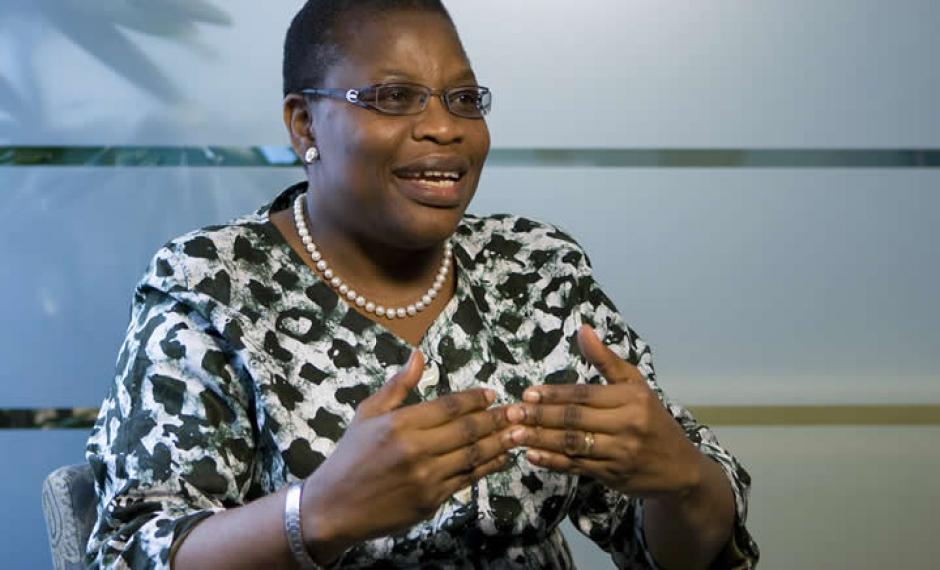
Former Minister of Education, Oby Ezekwesili, has said Nigerians have every reason to be mad at the Senate over the ongoing debate on e-transmission of election results.
Ezekwesili made this known on Friday when she featured in an interview on Arise Television’s ‘Morning Show’ monitored by DAILY POST.
DAILY POST reports that the Senate on Wednesday turned down a proposed change to Clause 60, Subsection 3, of the Electoral Amendment Bill that aimed to compel the electronic transmission of election results.
Reacting to the matter, Ezekwesili said, “The fundamental issue with the review of the Electoral Act is that the Senate retained the INEC 2022 Act, Section 60 Sub 5.
“This section became infamous for the loophole it provided INEC, causing Nigerians to lose trust. Since the law established that it wasn’t mandatory for INEC to transmit electoral results in real-time, there wasn’t much anyone could say.
“Citizens embraced the opportunity to reform the INEC Act, aiming to address ambiguity and discretionary opportunities for INEC. Yet, the Senate handled it with a “let sleeping dogs lie” approach. The citizens have every reason to be as outraged as they currently are.”
Politics
Electoral act: Senate’s action confirms Nigeria ‘fantastically corrupt’, ‘disgraced’ – Peter Obi
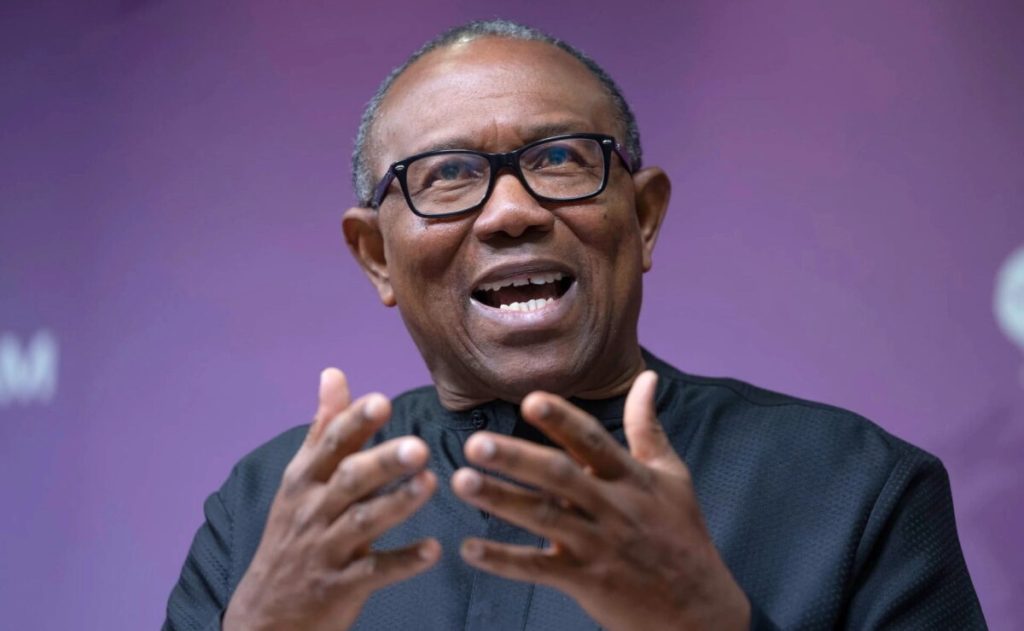
Former Labour Party presidential candidate, Peter Obi, has condemned the Senate’s refusal to make electronic transmission of election results mandatory, saying the move further exposes Nigeria as a fantastically corrupt and disgraced country.
Obi expressed his views in a statement shared on X on Friday, where he accused lawmakers of deliberately weakening Nigeria’s democratic process ahead of the 2027 general elections.
He explained that his reaction came after a brief pause to mourn victims of a deadly tragedy in Kwara State, where over 150 people reportedly lost their lives.
“Let us first pray for the souls of the innocent Nigerians lost in Kwara. That painful incident is why I delayed responding to the shameful development surrounding our electoral system,” he wrote.
Describing the Senate’s decision as intentional and dangerous, Obi said rejecting mandatory electronic transmission was not a simple oversight but a calculated attempt to block transparency.
“The Senate’s open rejection of electronic transmission of results is an unforgivable act of electoral manipulation ahead of 2027,” he said.
According to him, the action strikes at the heart of democracy and raises serious questions about the true purpose of governance in Nigeria.
“This failure to pass a clear safeguard is a direct attack on our democracy. By refusing these transparency measures, the foundation of credible elections is being destroyed. One must ask whether government exists to ensure justice and order or to deliberately create chaos for the benefit of a few.”
The former Anambra State governor linked the post-election controversies of the 2023 general elections to the failure to fully deploy electronic transmission of results, insisting that Nigerians were misled with claims of technical failures.
“
The confusion, disputes and manipulation that followed the 2023 elections were largely due to the refusal to fully implement electronic transmission,” he said.
He added that the so-called system glitch never truly existed.
Obi compared Nigeria’s electoral process with those of other African countries that have embraced technology to improve credibility, lamenting that Nigeria continues to fall behind.
“Many African nations now use electronic transmission to strengthen their democracy. Yet Nigeria, which calls itself the giant of Africa, is moving backwards and dragging the continent along.”
He criticised Nigeria’s leadership class, saying the country’s problems persist not because of a lack of ideas but because of deliberate resistance to meaningful reform.
“We keep organising conferences and writing policy papers about Nigeria’s challenges. But the truth is that the leaders and elite are the real problem. Our refusal to change is pushing the nation backwards into a primitive system of governance.”
Warning of the dangers ahead, Obi said rejecting electronic transmission creates room for confusion and disorder that only serves the interests of a small group.
He also recalled past remarks by foreign leaders who described Nigeria as corrupt, arguing that actions like this continue to justify those statements.
“When a former UK Prime Minister described Nigeria as ‘fantastically corrupt,’ we were offended. When former US President Donald Trump called us a ‘disgraced nation,’ we were angry. But our continued resistance to transparency keeps proving them right.”
Obi warned that Nigerians should not accept a repeat of the electoral irregularities witnessed in 2023.
“Let there be no mistake. The criminality seen in 2023 must not be tolerated in 2027.”
He urged citizens to be ready to defend democracy through lawful and decisive means, while also calling on the international community to closely monitor developments in Nigeria’s electoral process.
“The international community must pay attention to the groundwork being laid for future electoral manipulation, which threatens our democracy and development,” Obi stated.
He concluded by expressing hope that change is still possible if Nigerians take collective responsibility.
“A new Nigeria is possible but only if we all rise and fight for it.”
By Comrade Igboayaka O. Igboayaka
President OHANEZE YOUTH COUNCIL
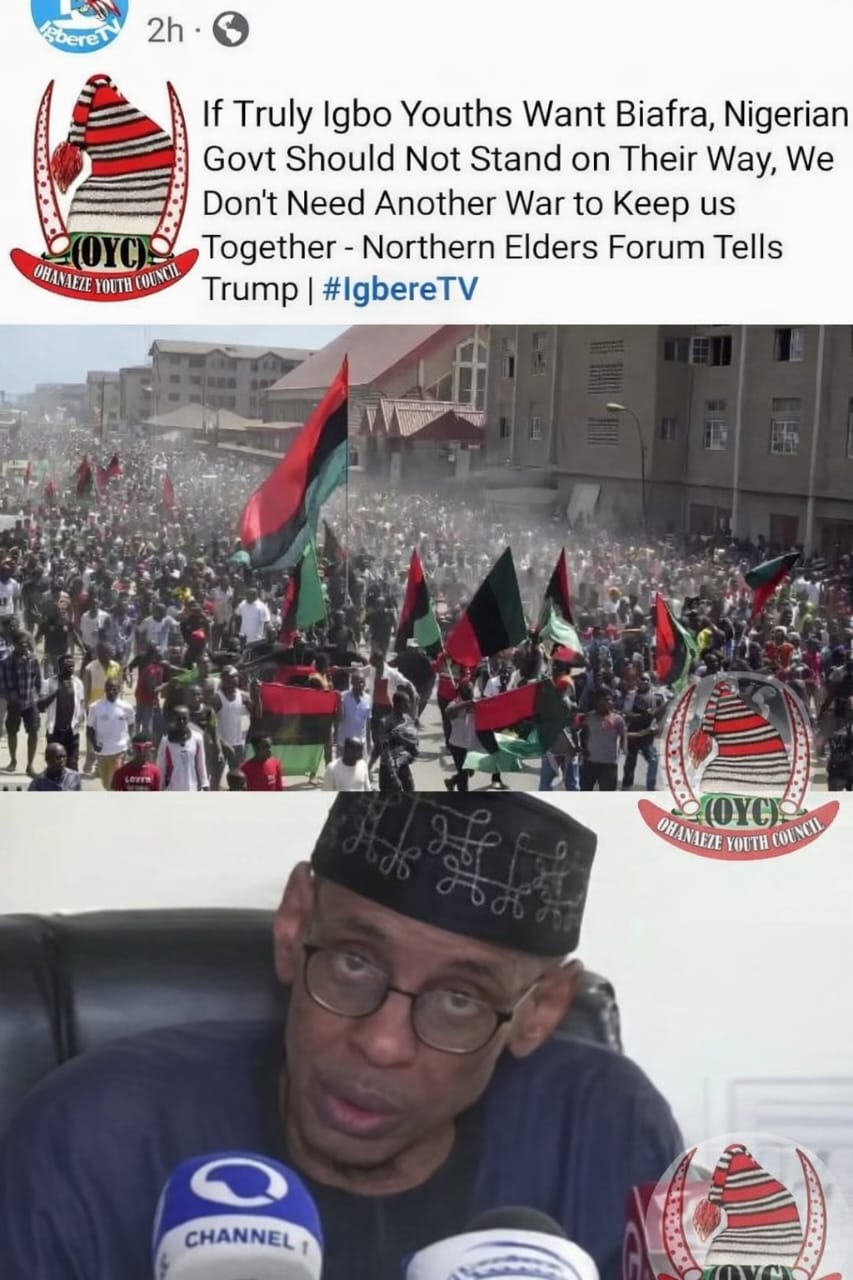
The Ohanaeze Youth Council (OYC) has formally replied to the recent statement credited to the Northern Elders Forum, wherein they suggested that if Igbo youths truly desire Biafra, the Nigerian government should not stand in their way.
While we acknowledge this rare moment of honesty, OYC states clearly and unequivocally:-Yes — Igbo youths want Biafra. And this desire is not born out of hatred, but out of decades of injustice, exclusion, and systemic oppression.
The agitation for Biafra is the direct consequence of Nigeria’s persistent failure to build an equitable and inclusive federation.
WHY IGBO YOUTHS ARE DEMANDING BIAFRA
Our position is anchored on undeniable realities:-
*1. Political Differences:-Nigeria’s political structure has consistently marginalized the Southeast. Since the return to democracy in 1999, the Igbo nation has been deliberately excluded from key leadership positions, particularly the Presidency and critical security offices. Federal appointments, resource control, and political representation remain grossly imbalanced against Ndigbo.The so-called federal system operates more like a unitary arrangement where certain regions dominate while others are reduced to spectators.*
*2. Social Differences:-Social integration in Nigeria has collapsed. Igbo citizens face profiling, harassment, and selective enforcement of laws across different parts of the country. Peaceful protests in Igboland are met with military brutality, while violent extremism elsewhere often receives negotiation and amnesty.This double standard has deepened alienation among Igbo youths.*
*3. Cultural Differences:-Our language, traditions, and values are neither protected nor promoted within the Nigerian framework. Instead, Igbo culture is routinely undermined and treated as inferior. A nation that fails to respect the cultural identity of its people cannot claim unity.*
*4. Religious Differences:-Religious intolerance has become normalized. Christian communities in the Southeast feel increasingly threatened in a country where religious bias influences policy, security response, and governance. The absence of genuine religious neutrality further widens the divide.*
*5. Ethnic Hate Against Ndigbo:- Anti-Igbo rhetoric has been openly displayed in national discourse. From threats of expulsion to hate speeches and coordinated attacks, Ndigbo have become targets within their own country. Properties belonging to Igbos are often destroyed during crises, with little or no compensation or justice.This persistent hostility sends a clear message;we are not wanted.*
*6. Systemic Marginalization:- From abandoned federal roads to exclusion from major infrastructure projects, from poor seaport development to economic strangulation, the Southeast remains deliberately underdeveloped. Igbo youths graduate into unemployment, poverty, and despair while watching other regions benefit disproportionately from national resources.*
*This is not accidental. It is structural.*
*OUR MESSAGE IS SIMPLE*
*Igbo youths are not asking for war.*
*Igbo youths are asking for dignity.*
*Igbo youths are asking for freedom.*
*Igbo youths are asking for self-determination.*
*If Nigeria cannot guarantee justice, equity, and equal opportunity for all, then the call for Biafra becomes not just legitimate — but inevitable.*
*To the Northern Elders Forum: we appreciate your acknowledgment. Now let the Nigerian state also have the courage to respect the democratic will of a people.*
*You cannot force unity where there is no justice.*
*Powered by OHANAEZE YOUTH COUNCIL (OYC)*

Electoral Act: Nigerians have every reason to be mad at Senate – Ezekwesili

Electoral act: Senate’s action confirms Nigeria ‘fantastically corrupt’, ‘disgraced’ – Peter Obi

Bosso replaces Danjuma as Imo Police Command CP

-
Business1 year ago
US court acquits Air Peace boss, slams Mayfield $4000 fine
-

 Trending1 year ago
NYA demands release of ‘abducted’ Imo chairman, preaches good governance
-

 Politics1 year ago
Mexico’s new president causes concern just weeks before the US elections
-

 Politics1 year ago
Putin invites 20 world leaders
-

 Politics1 year ago
Russia bans imports of agro-products from Kazakhstan after refusal to join BRICS
-
Entertainment1 year ago
Bobrisky falls ill in police custody, rushed to hospital
-
Entertainment1 year ago
Bobrisky transferred from Immigration to FCID, spends night behind bars
-
Education1 year ago
GOVERNOR FUBARA APPOINTS COUNCIL MEMBERS FOR KEN SARO-WIWA POLYTECHNIC BORI