
Politics
INVESTIGATION: Why No Imo Governor Ever Controls Succession- The Untold Story

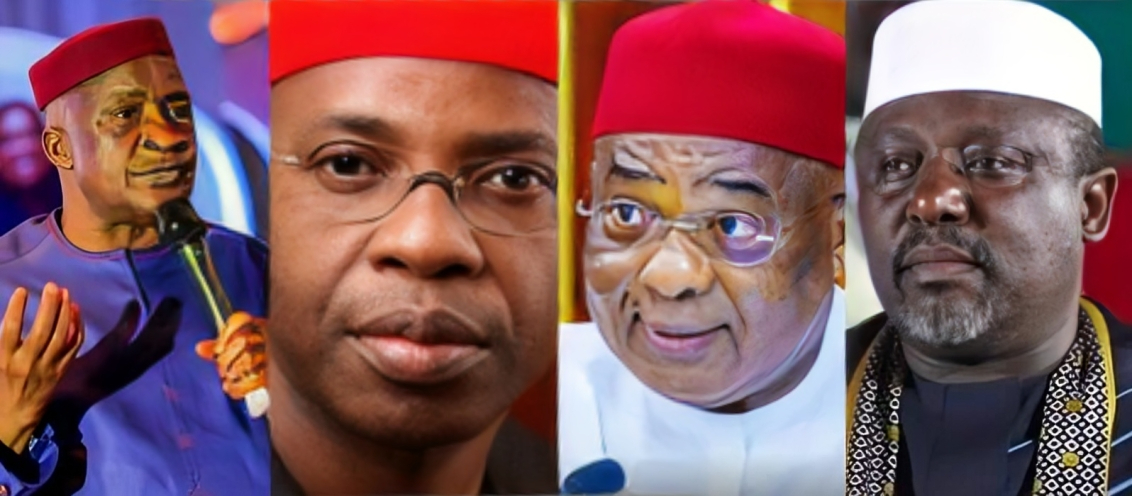
Imo State’s inability to sustain political succession from one elected governor to another is not accidental. It is the consequence of recurring structural failures rooted in elite conspiracy, federal power realignments, internal party implosions, zoning sensitivities, and the perennial arrogance of incumbency. From Achike Udenwa to Ikedi Ohakim and Rochas Okorocha, each administration fell victim to a combination of these forces, leaving behind a state where power is never inherited, only contested.
Achike Udenwa’s experience remains the most instructive example of how federal might and elite scheming can dismantle a governor’s succession plan. Governing between 1999 and 2007 under the PDP, Udenwa assumed that the party’s national dominance would guarantee internal cohesion in Imo. Instead, his tenure coincided with one of the most vicious intra-party wars the state has ever witnessed.
The Imo PDP split into two irreconcilable blocs. On one side was Udenwa’s grassroots-driven Onongono Group, powered by loyalists such as Alex Obi and anchored on local structures. On the other was a formidable Abuja faction populated by heavyweight figures including Kema Chikwe, Ifeanyi Araraume, Hope Uzodimma, Tony Ezenna, and others with direct access to federal influence. This was not a clash of personalities alone; it was a struggle over who controlled the levers of power beyond Owerri.
The conflict worsened when Udenwa openly aligned with then Vice President Atiku Abubakar during his bitter feud with President Olusegun Obasanjo. That alignment proved politically fatal. Obasanjo, determined to weaken Atiku’s network nationwide, withdrew federal support from governors perceived as loyal to the vice president. In Imo, the effect was immediate and devastating.
Federal agencies, party organs, and influence channels tilted decisively toward the Kema Chikwe-led Abuja faction. Udenwa lost effective control of the PDP structure, security leverage, and strategic influence. His foot soldiers in the Onongono Group could mobilise locally, but they could not withstand a coordinated assault backed by the centre.
His preferred successor, Charles Ugwu, never gained political altitude. By the time succession became imminent, Udenwa was already a governor without power. Even his later recalculations failed to reverse the tide. The party had slipped beyond his grasp.
The eventual outcome was politically ironic. Ikedi Ohakim emerged governor, backed by forces aligned with the federal establishment, notably Maurice Iwu—his kinsman and then Chairman of the Independent National Electoral Commission (INEC). Another Udenwa ally, Martin Agbaso, briefly tasted victory, only for his election to be cancelled. The lesson was brutal and unmistakable: without federal alignment, succession in Imo is almost impossible.
Notably, Udenwa’s record in office did not rescue him. Infrastructure development, relative stability, and administrative competence counted for little in the face of elite conspiracy operating simultaneously at state and federal levels. In Imo politics, performance is secondary to power alignment.
Ikedi Ohakim’s tenure presents a different dimension of failure. Unlike Udenwa, he never reached the point of succession planning. His administration was consumed by political survival. From 2007 to 2011, Ohakim governed amid persistent hostility from elites and a rapidly deteriorating public image.
Ohakim has consistently maintained that his downfall was orchestrated. Central to his claim is the allegation that he was blackmailed with a scandal involving the alleged assault of a Catholic priest, Reverend Father Eustace Eke. In a deeply religious state like Imo, the allegation was politically lethal.
Whether the claims were factual or exaggerated mattered less than their impact. The narrative overwhelmed governance, drowned out policy achievements, and turned public opinion sharply against him. Political elites who had midwifed his emergence quickly distanced themselves, sensing vulnerability.
By the 2011 election, Ohakim stood isolated. Party loyalty evaporated, elite cover disappeared, and voter sympathy collapsed. His re-election bid failed decisively. With that loss, any discussion of succession became irrelevant. His experience reinforces a core principle: a governor rejected by the electorate cannot dictate continuity.
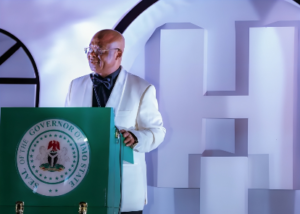
*Uzodimma*
Rochas Okorocha’s rise in 2011 appeared to signal a break from Imo’s succession curse. Charismatic, populist, and financially powerful, he commanded party structures and grassroots loyalty. By his second term, he seemed politically unassailable.
Yet Okorocha committed the most consequential succession error in the state’s history. By attempting to impose his son-in-law, Uche Nwosu, as successor, he crossed from political strategy into dynastic ambition. That decision detonated his massive support base in the State overnight.
Imo’s political elites revolted almost unanimously. Party affiliation became secondary to a shared determination to stop what was widely perceived as an attempt to privatise public office. The revolt was elite-driven, strategic, and ruthless.
The zoning factor compounded the crisis. Okorocha hailed from Orlu zone; so did Nwosu. For many Imo voters, the prospect of Orlu retaining power through familial succession was unacceptable. What might have been tolerated as ambition became framed as entitlement.
This time, elite resistance aligned with popular sentiment. The electorate queued behind alternatives not necessarily out of conviction, but out of rejection. Crucially, Emeka Ihedioha emerged governor because Okorocha fatally miscalculated—splitting his base, provoking elite rebellion, and underestimating voter resentment. Okorocha’s formidable structure collapsed under internal rebellion and voter backlash, sealing his failure to produce a successor.
Hope Uzodimma’s current position must be assessed against this turbulent history. At present, the structural indicators are in his favour. He enjoys firm federal backing, controls the APC machinery in the state, and commands the support—or at least the compliance—of most major political elites.
Unlike Udenwa, Uzodimma is aligned with the centre. Unlike Ohakim, he has survived electoral tests. Unlike Okorocha, he has not openly flirted with dynastic politics. On the surface, the succession equation appears favorable.
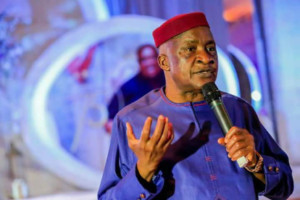
*Udenwa*
However, Imo’s history cautions against certainty. Elite loyalty in the state is conditional and transactional. It endures only where interests are balanced, ambitions managed, and inclusion sustained. A wrong choice of successor could still provoke elite conspiracy, even if it emerges from within the ruling party.
The opposition remains weak and fragmented, with limited capacity to mobilize mass resistance. Yet voter apathy, now more pronounced than during the Udenwa and Okorocha eras, introduces a new risk. Disengaged electorates are unpredictable and often disruptive.
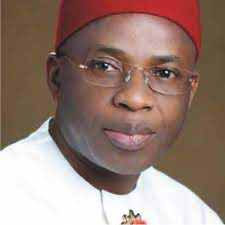
“Ohakim*
Ultimately, Uzodimma’s challenge is not opposition strength but elite psychology. Suppressed ambitions, if mishandled, can erupt. Succession in Imo has never been about coronation; it is about negotiation.
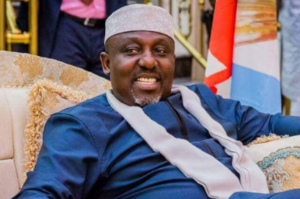
*Okorocha*
History is unforgiving to governors who confuse incumbency with ownership. Power in Imo is never transferred by decree. As 2027 approaches, the same forces that toppled past succession plans remain alive. Whether Uzodimma avoids their trap will depend not on power alone, but on restraint, balance, and political wisdom.
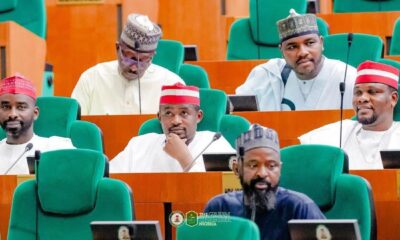
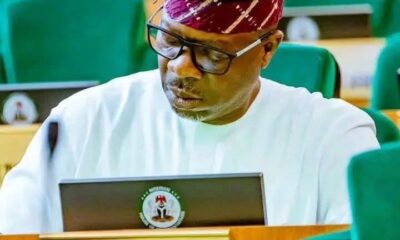

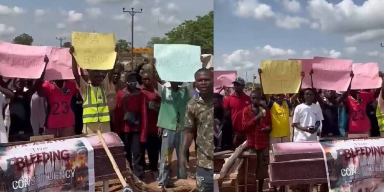

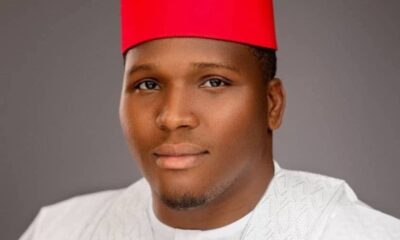

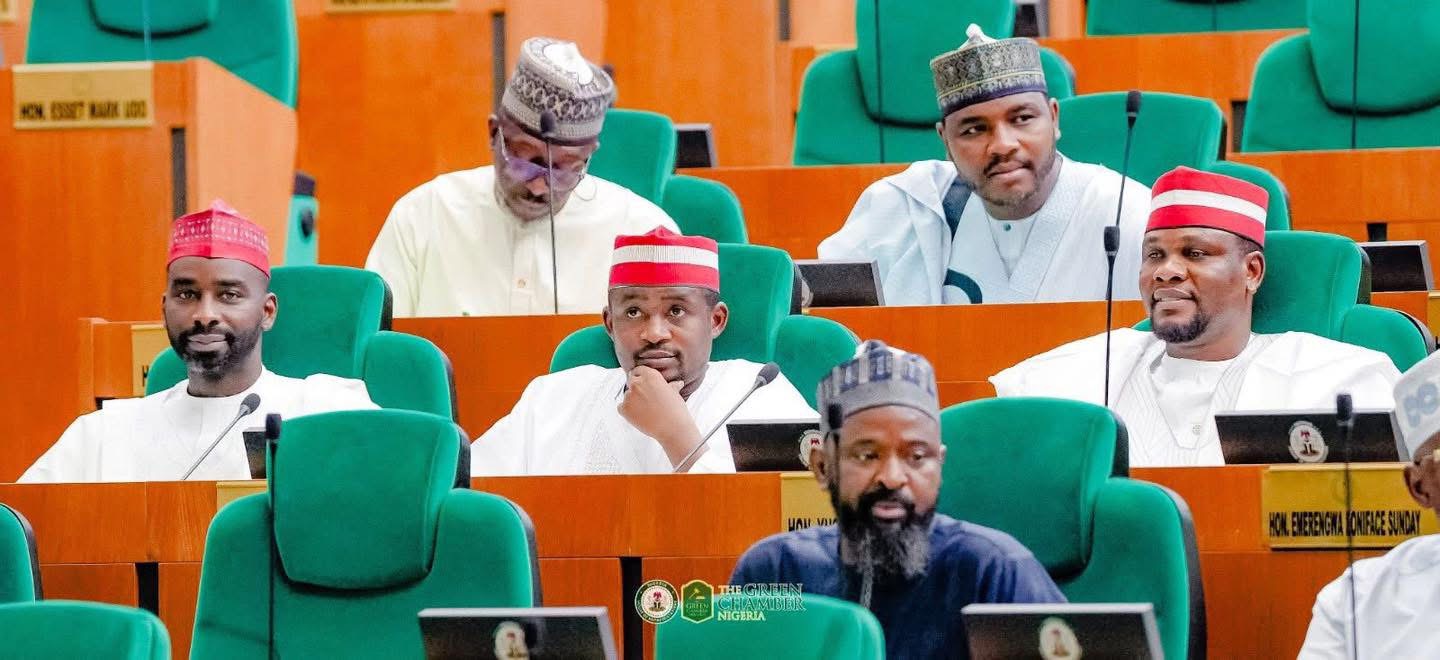
No fewer than 50 members of the 10th House of Representatives are unlikely to be part of the 11th Assembly after losing out in the All Progressive Congress (APC) primaries held on Saturday.
This marks one of the largest turnovers of sitting federal lawmakers since 2015 and signals intensifying internal competition within the ruling party eight months to the 2027 general elections.
While House Speaker Tajudeen Abbas (Kano) and Deputy Speaker Benjamin Kalu (Abia) successfully defended their tickets, several ranking and long-serving lawmakers were defeated, exposing strong anti-incumbent sentiment and the decisive role of state governors in candidate selection.
Major casualties
One of the biggest upsets was the defeat of House Majority Leader Julius Ihonvbere in Edo State’s Owan Federal Constituency. He polled 1,005 votes out of 7,587 cast, finishing third behind Andrew Ijegbia, who scored 3,695 votes. Abdul Oroh placed second with 1,740 votes.
In Delta State, veteran lawmaker Nicholas Mutu, who has represented Bomadi/Patani Federal Constituency since 1999, lost his re-election bid. Ngozi Okolie also lost the Aniocha/Oshimili ticket to former House Minority Leader Ndudi Elumelu.
Cross River State recorded one of the highest casualty rates, with five of eight incumbents failing to secure re-nomination.
They include three-term member Mike Etaba (Obubra/Etung), Godwin Offiono (Ogoja/Yala), Emil Inyang (Akamkpa/Biase), and Bassey Akiba (Odukpani/Calabar Municipality).
Only Peter Akpanke, Joseph Bassey, and Victor Abang won return tickets.
In Plateau State, conflicting results in Pankshin/Kanke/Kanam Federal Constituency triggered early confusion. One returning officer declared challenger John Tongshinen winner with 29,968 votes against incumbent Yusuf Gagdi’s 5,849.
The APC Plateau State primaries committee, chaired by Stella Okotete, later dismissed that declaration as unauthorised and affirmed Mr Gagdi as the authentic winner with 29,207 votes.
At a press briefing, Mrs Okotete stated that Nandom Kura was the recognised returning officer. “The returning officer approved by my committee that has gone to do fake declaration is null and void,” she said.
Other significant losses occurred in Ogun State (at least five incumbents, including Deputy Chief Whip Ibrahim Isiaka and Tunji Akinosi) and Ekiti State (three sitting members).
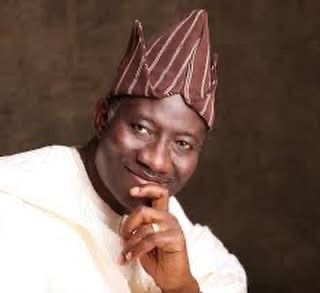
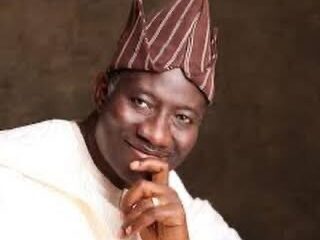
The Peoples Democratic Party (PDP), led by Tanimu Turaki, SAN, has scheduled to screen former president Goodluck Jonathan tomorrow, Tuesday, aMay 19, as the lone presidential candidate of party.
According to a statement from the PDP faction backed by the Oyo State Governor, Seyi Makinde, Former Vice-President Namadi Sambo, former governor of Plateau State, Jona Jang and a former Minister of Foreign Affairs, Tom Ikimi have been listed among a committee of 14 members to screen Jonathan described as a lone candidate by the party.
Other members of the committee were Chief Olabode George, Babangida Aliyu, Maryam ciroma, Zainab Maina, Josephine Anenin, Dr. Abdul Bulama, Dr. Esther Uduehi, Edo State PDP chairman, Tony Aziegbemi, Dr. Sunday Solarium and Chief Anicho Okoro, who would serve as administrative secretary of the committee.
Last week, the national Publicity Secretary of the faction, Ini Ememobong, disclosed that former president Jonathan has successfully registered as a member of the party in the fresh digital registration exercise directed by INEC.
The PDP faction also announced that it was set to screen 748 house of representatives aspirants, 198 senatorial aspirants, and 112 governorship aspirants.
The screening committee would screen 2122 states houses of assembly aspirants. The exercise will commence tomorrow, Tuesday in different states.
According to the statement, the screening exercise would take place nationwide on Tuesday, May 19, 2026, at 10:00 a.m.
The statement said the Interim National Working Committee (iNWC) has also released the names of members to serve on the Screening Committees and Screening Appeal Panels.
It added that the publication of the screening details “is in accordance with the party’s guidelines and timetable for the conduct of the 2027 general elections.”
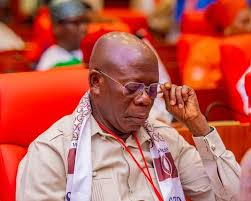
A former governor and incumbent Senator, Adams Oshiomhole, along with his counterpart Senator Joe Ikpea, sailed through the All Progressives Congress senatorial primary in Edo unopposed, and securing their tickets without a single vote cast against them.
Also Omoregie Ogbeide-Ihama emerged the winner in the APC primary for the Edo South senatorial district.
Ogbeide-Ihama won in the seven local government areas of Edo South in the results announced by the Chairman of APC National Assembly Primary Election, Muhammed Ajana at the Urokpota Hall, Benin.
He polled 27,154 votes while his opponents, Senator Neda Imasuen, got 13,580, and Pastor Osagie Ize-Iyamu got 6785.
The elections were hitch-free in Edo North and Edo Central, where there was no contest against the incumbents, Senators Oshiomhole of Edo North and Ikpea of Edo Central, respectively.
Ajana at the Urokpota Hall said the collation arose from votes cast in the seven local government areas made up of 77 wards where elections were conducted by members of the committee.
He said, “There are seven local governments that make up the Edo South Senatorial District. We have heard from the Returning officers from the seven local government areas. From the collation, the cumulative result we have for Edo South Senatorial District is this; Ogbeide-Ihama with 27,154 votes, Imasuen with 13,580 votes and Ize-Iyamu with 6, 785.
“This is the total reflection of what has transpired from the ward level to the local government and the Edo South senatorial district collation centre. With this we await further directives from the National Secretariat, we have done our best by collating the results which is our mandate, to collate the results and send them to the National Secretariat.”
However, it was gathered that Ize-Iyamu emerged as the APC candidate for Edo South Senatorial race. He claimed to have clinched the party’s ticket after defeating Ogbeide-Ihama and Imasuen.
It was claimed that the Chief Returning Officer, Abubakar Muhammad Kabiru, officially declared Ize-Iyamu the winner after securing the highest number of votes cast.
On his part, the senator representing the district condemned the exercise describing it as a sham allegedly designed to favour a preferred aspirant.
Imasuen spoke while reacting to events at his polling unit in Umagbae North Ward 5, Urhokuosa where he said he was denied the opportunity to vote following what he described as a chaotic and manipulated process.
The lawmaker accused leaders of the party of openly adopting a preferred candidate ahead of the exercise and intimidating members into supporting that aspirant.
He said, “There is nothing satisfactory about this sham of election they did today and it is very unfortunate because as a loyal party member, I expected something better than this.”
He said the warning signs emerged days before the primary when some ward chairmen allegedly informed him that they had been directed not to receive him during consultations.
Imasuen claimed that some ward leaders openly told him the party had already adopted a preferred aspirant, identified as Hon. Omoregie Ogbeide-Ihama, making further consultations unnecessary.

2027: More Than 50 Lawmakers Lose APC Reps Tickets in Major Primary Election

Bandits behind Ogbomoso school abduction will face full wrath of the law- President Tinubu

PDP to screen Goodluck Jonathan on Tuesday as its sole Presidential aspirant For 2027 race

-
Business2 years ago
US court acquits Air Peace boss, slams Mayfield $4000 fine
-

 Trending2 years ago
NYA demands release of ‘abducted’ Imo chairman, preaches good governance
-

 Politics2 years ago
Mexico’s new president causes concern just weeks before the US elections
-

 Politics2 years ago
Putin invites 20 world leaders
-

 Politics2 years ago
Russia bans imports of agro-products from Kazakhstan after refusal to join BRICS
-
Entertainment2 years ago
Bobrisky falls ill in police custody, rushed to hospital
-
Entertainment2 years ago
Bobrisky transferred from Immigration to FCID, spends night behind bars
-
Education2 years ago
GOVERNOR FUBARA APPOINTS COUNCIL MEMBERS FOR KEN SARO-WIWA POLYTECHNIC BORI