
News
Iran gambles with Israel attack after humiliating blows to allies

The commander-in-chief of Iran’s Islamic Revolution Guard Corps (IRGC), Maj-Gen Hossein Salami, stood in front of a large banner in a war room as he used a telephone to order the launch of about 200 ballistic missiles at Israel on Tuesday night, according to a video clip published by Iranian media.
The banner featured photos of the three men whose deaths he said Iran was seeking to avenge with the major attack – Hamas political leader Ismail Haniyeh, who was killed in Tehran in July in an attack that Iran blamed on Israel, and Hezbollah leader Hassan Nasrallah and IRGC Quds Force operations commander Brig-Gen Abbas Nilforoushan, who were killed in an Israeli air strike in Beirut last week.
The IRGC claimed the barrage included Fattah hypersonic missiles that took 12 minutes to reach Israel and that they successfully hit targets including three Israeli airbases and the headquarters of the Mossad spy agency.
However, the Israel Defense Forces (IDF) said most of the missiles were “intercepted by Israel and a defensive coalition led by the United States”, and that there were a “small number of hits” in central and southern Israel.
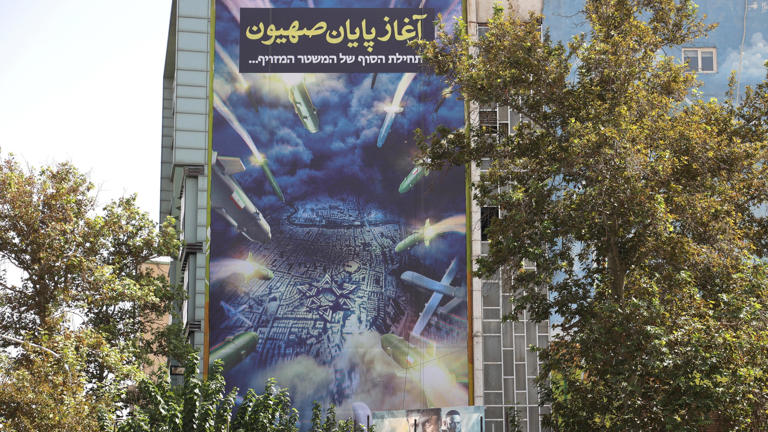
Shortly after the attack, a massive banner was raised in Tehran’s Palestine Square, featuring missiles flying towards buildings shaped like a Star of David and the words “The beginning of the end of Zionism”.
Iran had appeared to show restraint after Haniyeh’s assassination – but this inaction became a source of humiliation when Israel dealt a series of devastating blows to Iran’s closest and most longstanding regional ally Hezbollah, culminating in the air strike on Friday that killed Nasrallah and Nilforoushan.
Iranian weapons, training and funding have been pivotal to Hezbollah’s transformation into Lebanon’s most powerful armed force and political actor since the IRGC helped establish the group in the 1980s.
Before this month, Iranian leaders had hoped that a war of attrition with Hezbollah would help wear down the Israeli military, which is still fighting a war against Hamas in Gaza.
They also relied on Hezbollah and its massive arsenal of rockets and missiles to serve as a major deterrent against direct Israeli attacks on their country’s nuclear and missile facilities.
President Masoud Pezeshkian, who was elected in July, accused Israel of trying to provoke Iran into a regional war that would also draw in the US.
“We also want security and peace. It was Israel that assassinated Haniyeh in Tehran,” he was quoted by Iranian media as saying during a visit to Qatar on Wednesday.
“Europeans and the US said that if we do not act, there will be a peace in Gaza in one week. We waited for them to have peace but they increased their killing.”
Many hardline conservatives in Iran had been growing uneasy about the country’s lack of action against Israel.
Several commentators on state TV – which is controlled by the Supreme Leader, Ayatollah Ali Khamenei, and the IRGC – argued that the decision to hold back from seeking revenge for Haniyeh’s killing had emboldened Israeli Prime Minister Benjamin Netanyahu to attack Iran’s interests and allies in Lebanon.
After Tuesday’s missile attack, the chief of staff of the Iranian Armed Forces Maj Gen Mohammad Baqeri stated that the time for “patience and restraint” was over.
“We targeted military and intelligence sites in Israel and deliberately refrained from hitting economic and industrial locations,” he said. “However, if Israel retaliates, our response will be more forceful.”
The missile attack reflects a growing concern among Iranian leaders that remaining silent after Israel’s attacks would portray them as weak and vulnerable – both domestically and in the eyes of their regional allies in the so-called “Axis of Resistance” which includes Hezbollah and Hamas.
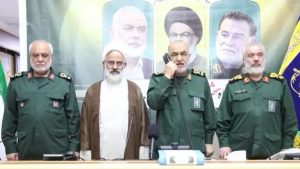
Maj-Gen Hossein Salami (2nd right) was filmed ordering Iran’s missile attack on Israel from a war room
© IRIB
Iran and Israel have pursued a shadow war for decades, adhering to a policy of “no war, no peace”. However, it now appears that this status quo is ending.
Israel has vowed to respond severely, with Netanyahu warning that “Iran made a big mistake and it will pay for it”.
There are also indications of a shift in tone and strategy from the US.
In April, President Joe Biden urged restraint after Israeli and US-led forces shot down most of the 300 drones and missiles that Iran launched at Israel in retaliation for an air strike on the Iranian consulate in Syria that killed several top IRGC commanders. Israel heeded the US call and responded by launching a missile that hit an Iranian air defence battery in central Iran.
But this time, Biden’s National Security Adviser Jake Sullivan warned there would be “severe consequences” for the Iranian attack and that the US will “work with Israel to make that the case”.
Israeli media cited Israeli officials as saying on Wednesday that Israel was preparing for retaliatory strikes on Iran “within days”, and that they would target “strategic sites”, including the country’s vital oil facilities.
The officials also warned that Iran’s nuclear facilities would be hit if it made good on its threat to strike back at Israel.
Senior Iranian officials have asserted that they consider their retaliation for the killing of Haniyeh, Nasrallah and Nilforoushan to be over unless they are provoked further.
Foreign Minister Abbas Araghchi also said he had conveyed a message to the US through the Swiss embassy in Tehran warning it “not to intervene”.
He cautioned: “Any third country that assists Israel or allows its airspace to be used against Iran will be considered a legitimate target.”
The US has approximately 40,000 troops stationed in the Middle East, with many deployed in Iraq and Syria. These troops could be threatened by Iran-backed Shia militias in both countries.
Iran must now brace itself for the Israeli response and hope its gamble pays off.




News
𝗛𝗢𝗡. 𝗧𝗢𝗦𝗞𝗔 𝗖𝗢𝗡𝗗𝗘𝗠𝗡𝗦 𝗧𝗛𝗘 𝗞𝗜𝗟𝗟𝗜𝗡𝗚𝗦, 𝗞𝗜𝗗𝗡𝗔𝗣𝗣𝗜𝗡𝗚𝗦 𝗔𝗡𝗗 𝗥𝗔𝗣𝗘𝗦 𝗜𝗡 𝗜𝗛𝗜𝗔𝗚𝗪𝗔, 𝗢𝗕𝗜𝗕𝗜𝗘𝗭𝗘𝗡𝗔, 𝗘𝗭𝗜𝗢𝗕𝗢𝗗𝗢, 𝗘𝗠𝗘𝗔𝗕𝗜𝗔𝗠, 𝗢𝗞𝗢𝗟𝗢𝗖𝗛𝗜, 𝗨𝗠𝗨𝗚𝗨𝗠𝗔, 𝗔𝗩𝗨 𝗔𝗡𝗗 𝗢𝗧𝗛𝗘𝗥 𝗖𝗢𝗠𝗠𝗨𝗡𝗜𝗧𝗜𝗘𝗦: 𝗖𝗔𝗟𝗟𝗦 𝗙𝗢𝗥 𝗜𝗠𝗠𝗘𝗗𝗜𝗔𝗧𝗘 𝗖𝗘𝗦𝗦𝗔𝗧𝗜𝗢𝗡
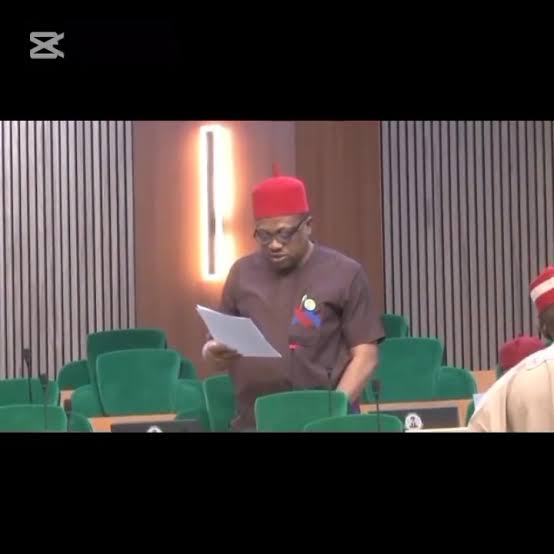
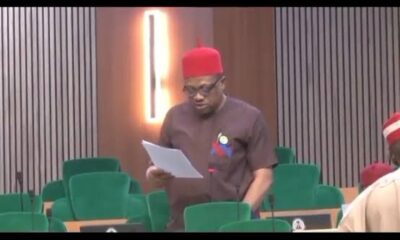
Hon. Sir Tochukwu Okere(TOSKA), Member Representing Owerri Federal Constituency, has strongly condemned the incessant gruesome killings, kidnappings, rapes and violent attacks carried out by unscrupulous and criminal elements terrorizing communities within Owerri Federal Constituency, especially in Ihiagwa, Obibiezena, Eziobodo, Emeabiam, Okolochi, Umuguma, Avu and other neighbouring communities.
The recent killings of vigilante operatives and innocent constituents at Umuguma and Ihiagwa call for urgent and deterrent response by our security agencies.
In a passionate motion raised before the Federal House of Representatives, Hon. Okere called on the Federal Government of Nigeria and relevant security agencies to immediately deploy adequate security personnel to the affected communities and take decisive actions against the worsening insecurity threatening the lives and properties of his people.
According to him, the continuous attacks on harmless villagers, farmers, women and youths can no longer be tolerated under any guise.
“I urge the Federal Government of Nigeria to urgently look into this motion and act swiftly before more innocent lives are lost. Our people deserve to live and to live in peace without fear of being kidnapped, raped or butchered in their own communities,” Hon. TOSKA stressed.
The lawmaker further emphasized that the people of Owerri Federal Constituency will not fold their arms and watch criminals continue to unleash terror across Ihiagwa, Obibiezena, Eziobodo, Emebiam, Okolochi, Umuguma, Avu and other communities while families continue to mourn their loved ones daily.
This courageous move by Hon. Sir Tochukwu Okere has continued to attract commendations from constituents who describe his intervention as timely, bold and people-oriented.
Hon. Okere is the light and the voice of Owerri Federal Constituency.
May God keep him to keep standing for us and for our interest.
News
TENSIONS RISE IN OGUTA LGA AS CHAIRMAN MOVED AHEAD WITH Town UNION ELECTIONS AGAINST STATE DIRECTIVE
By Nwauwa Ikedi Justice
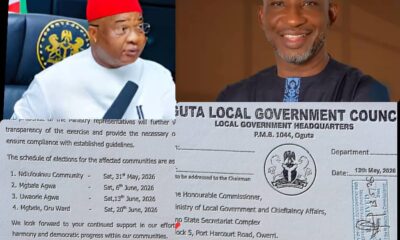
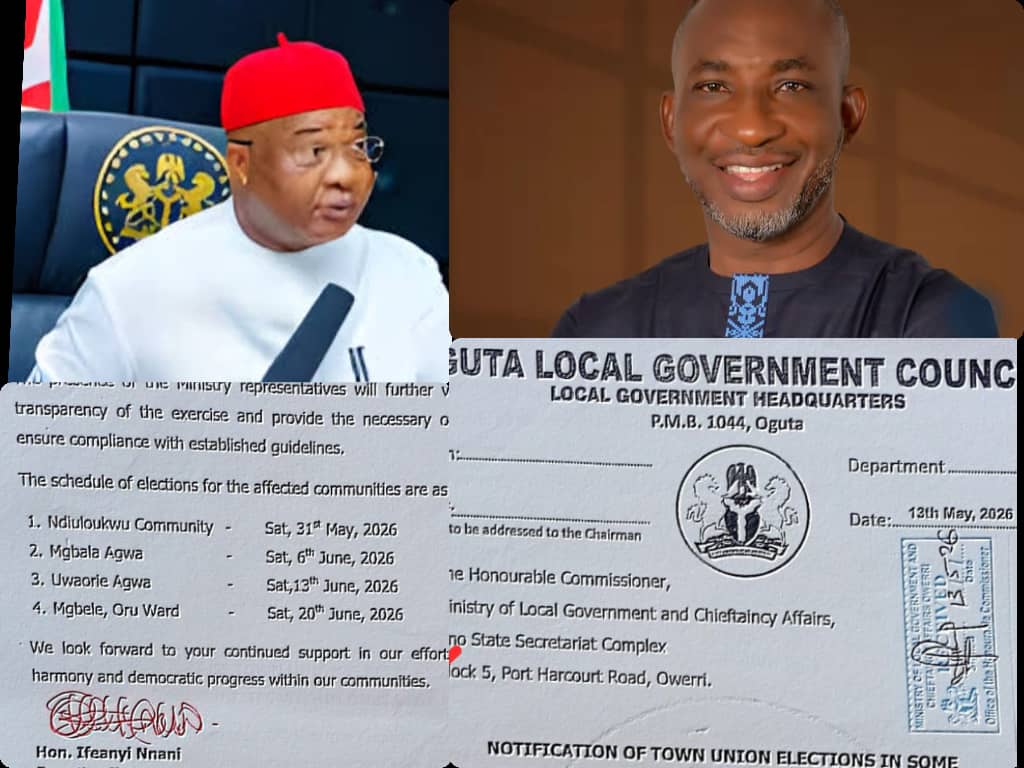
An emerging standoff between the Oguta Local Government Area executive and the Imo State Government has sparked concerns of unrest in several communities, after the council chairman proceeded with plans to conduct Town Union elections in defiance of a statewide directive from Governor Hope Uzodimma.
Last week, Hon. Ifeanyi Nnani, Executive Chairman of Oguta LGA, initiated steps to organize elections in five autonomous communities, an action seen by observers as a direct challenge to the governor’s order prohibiting local government chairmen from interfering in Town Union affairs.
The controversy stems from earlier complaints by traditional rulers across the state, who alleged that some local government chairmen had been imposing proxies as Town Union executives in their domains.
In response, Governor Uzodimma convened a statewide stakeholders’ meeting on January 17, 2026, at the Eze Imo Palace. Citing the Imo State Town Union Law No. 6 of 2003, as amended, the governor lifted the existing ban on Town Union elections and ruled that the process should be conducted in line with each community’s established customs. He also transferred supervisory responsibility from local government chairmen to the Ministry of Local Government and Chieftaincy Affairs, designating it the appropriate authority for such matters. The directive has since been credited with restoring relative peace across the state.
Despite this, sources indicate that Hon. Nnani’s administration has quietly begun conducting elections in villages within Oguta LGA without consulting the affected Town Unions or seeking clearance from the supervising ministry.
A letter dated last week and personally signed by the chairman to the Commissioner for Local Government and Chieftaincy Affairs has since come to light. Rather than seeking approval, the correspondence served as notification of the council’s intent to proceed with elections in Ndiuloukwu, Mgbala, Uworie, and Mgbele autonomous communities—a move that appears to contradict the state government’s directive.
The emergence of the letter has alarmed traditional rulers, with reports of growing unease in the affected communities. Community leaders have vowed to resist what they describe as an unlawful intrusion into their internal affairs.
Attempts to reach Hon. Nnani for comment have so far been unsuccessful, as calls to his office went unanswered.
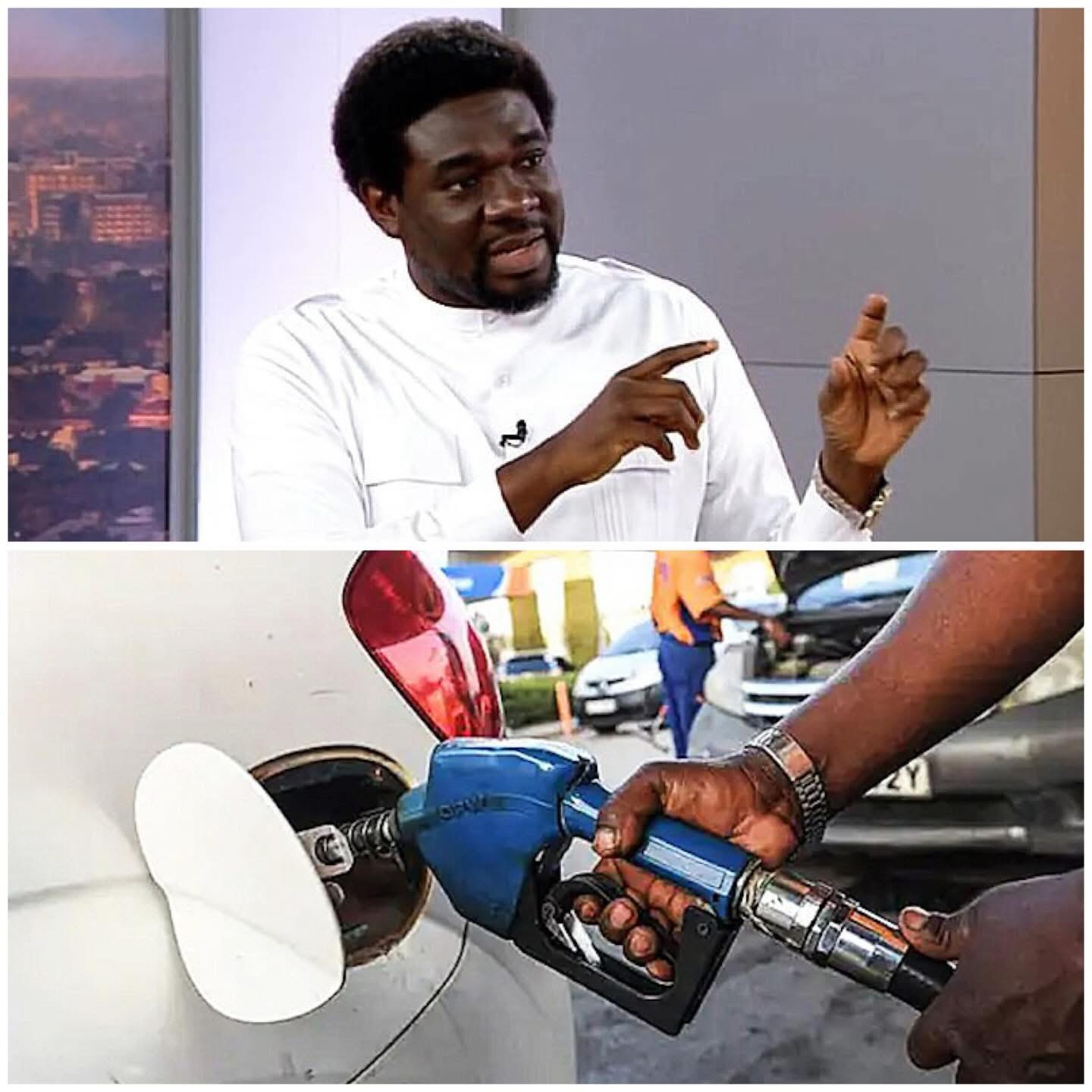
The Trade Union of Nigeria, TUC, has raised the alarm that the price of Premium Motor Spirit aka Petrol may climb to about N2,000 per litre if urgent measures are not taken to cushion the impact of rising global crude prices and the depreciating naira.
Speaking to newsmen on Thursday, April 9, the president of the TUC, Festus Osifo, called on the Federal Government to immediately deploy 60 percent of excess crude oil revenue above the 2026 budget benchmark to subsidise crude feedstock supplies to the Dangote Refinery and other modular refineries, a move it says will slash pump prices of petrol, diesel, and jet fuel within two weeks
“Today, comrades, we are seeing that the cost of petrol is edging towards N2,000 per litre depending on the part of the country that you are. Nigerian workers are already passing through excruciating pain as we speak.
The same way it is affecting transportation, it is also affecting manufacturing. The cost of diesel has also gone northward, meaning that the cost of production has increased. When production costs rise, the final price of goods on the shelves will also skyrocket.
If this continues unchecked, the inflation that we are currently celebrating as going downwards will reverse and start moving up again,” he stated.
Osifo outlined the proposal as an urgent intervention to cushion Nigerian workers from excruciating pain caused by petrol prices edging towards ₦2,000 per litre in some parts of the country

Ugochukwu Obodo wins Owerri Municipal APC ticket again as APC Elects 27 Imo Assembly Candidates After Successful Primaries

Dr. Betty Anyanwu-Akeredolu Meets NLC President Joe Ajaero in Abuja as #ImoEast2027 Consultations Continue

Imo ADC Screens and Clears 50 Aspirants, Sets Stage for Party Primaries

-
Business2 years ago
US court acquits Air Peace boss, slams Mayfield $4000 fine
-

 Trending2 years ago
NYA demands release of ‘abducted’ Imo chairman, preaches good governance
-

 Politics2 years ago
Mexico’s new president causes concern just weeks before the US elections
-

 Politics2 years ago
Putin invites 20 world leaders
-

 Politics2 years ago
Russia bans imports of agro-products from Kazakhstan after refusal to join BRICS
-
Entertainment2 years ago
Bobrisky falls ill in police custody, rushed to hospital
-
Entertainment2 years ago
Bobrisky transferred from Immigration to FCID, spends night behind bars
-
Education2 years ago
GOVERNOR FUBARA APPOINTS COUNCIL MEMBERS FOR KEN SARO-WIWA POLYTECHNIC BORI