




The cause of the altercation could not be immediately ascertained as of press time.
Trending
Israel-Lebanon crisis: Lebanese ramp up humanitarian efforts

Amid Israeli strikes and limited public aid, Lebanese activists are jumping into action. However, observers point out that aid is being politicized, and there are too many in need.
Almost three weeks into Israel’s devastating strikes on Lebanon, civilians are increasingly taking the organization of humanitarian help into their own hands.
“I joined a local initiative, and we distribute donations between several shelters and schools,” Rayan Chaya told DW in Aley, some 20 kilometers (12 miles) southeast of Beirut.
The 27-year-old mechanical engineer has been setting up databases with places to rent and eat for free. He also organized a wheelchair for a family who had to leave theirs behind when they fled.
“We’re in a crisis, and if we don’t help each other, who will?” he said. “The government isn’t taking any serious action.”
Heiko Wimmen, Lebanon project director at the International Crisis Group, a non-governmental conflict prevention organization, confirms this view.
“The level of humanitarian support for the population is what you would expect from a country whose political structures do not really function,” he told DW.
Years of political instability in combination with an ongoing economic crisis have left Lebanon on the brink of collapse.
The dire situation was further exacerbated in late September when Israel escalated its attacks on Hezbollah, designated as a terrorist organization by several countries, including the US and Germany, while the EU classifies its armed wing as a terrorist group, after a year of limited fighting.

Israeli attacks have not only killed several leading Hezbollah members but also around 2,000 civilians, according to the Lebanese Health Ministry
© Daniel Carde/ZUMA/picture alliance
Since then, several Hezbollah leaders have been killed and more than 2,000 civilians have died in the Israeli attacks, according to the Lebanese Health Ministry.
Some 608,000 people are currently internally displaced according to the latest update by the UN Office for the Coordination of Humanitarian Affairs (OCHA). According to Lebanese authorities, this number is twice as high.
Beirut Urban Lab
@BeirutUrbanLab
The Beirut Urban Lab launches the English version of its platform “Government-Designated Shelters in Lebanon” updated on the 1st of October. You can access the platform experience.arcgis.com/experience/af2 Government-Designated Shelters in Lebanon beiruturbanlab.com/en/Details/200 Show more

Watch on X
House squatters on the rise
Meanwhile, the Lebanese government, which acts in a caretaker capacity, has set up 973 shelters in public institutions across the country. Yet, the available 180,000 places were quickly taken.
“The number of shelters doesn’t match the number of needed places and I fear that house squatters will increasingly take over both emptied apartments as well as uninhabited luxury flats,” Wimmen said.
According to a study by Beirut’s American University, around 31% of Beirut’s property has been bought for investment purposes.
Meanwhile, Lebanese who are affiliated in one way or the other with Hezbollah’s influential political wing are increasingly moving into these apartments.
“Some of the Hezbollah-affiliated parties such as the Amal [Movement] and the Syrian Socialist National Party [in Lebanon], who have been doing the dirty work on behalf of Hezbollah for years, have opened buildings for refugees,” Crisis Group’s Wimmen said.
The Washington Post reported earlier this week that a spokesman for the Lebanese police told their reporter that they would empty the buildings only when proper alternatives were found.

Volunteers work in a community kitchen to prepare meals for those who fled Israeli bombardment in southern Lebanon
© ANWAR AMRO/AFP
Food, clothes, and a hug
Mosques, churches, bars and many private people do their best to help, Anna Fleischer, director of the Heinrich-Böll-Stiftung Middle East Office in Beirut, told DW.
“In my mosque, there is no space to host families but the number of worshippers has increased immensely and we provide food, medical services and relief,” Sheikh Mohammed Abu Zaid, imam of the largest mosque in Saida, 45 kilometers south of Beirut, told Ekwutosblog.
Timour Azhari
@timourazhari
Famous for hosting champagne-fueled parties attended by the Beirut jet set, Skybar club on the city’s waterfront has taken in a new crowd: Lebanon’s war displaced People danced till dawn here less than two weeks ago. It’s now a much-needed temporary home. 



Sally Halawi, who owns the thrift shop “Circuit” in Beirut, has also decided to help refugees.
“I felt I had to do something to help,” she told DW. She donated everything in her shop to people who had left their homes and belongings behind. On Instagram, she called out for more donations.
“Lots of people responded,” Halawi recalls. Every morning, she assembles the donations according to gender and size. Every evening, donations are sent to the school-turned-shelters.
“So far, we have collected more than 30,000 items,” the 35-year-old said, adding that “as draining and hectic as this is, I believe this is the least I can do for my people, and I still feel it’s not enough.”
Humanitarian aid bridge
Meanwhile, international humanitarian aid for Lebanon’s population is picking up.
On Friday, the first of three flights with EU-owned stocks including hygiene items, blankets and emergency shelter kits is set to arrive in Beirut. France and other EU offices have also sent supplies.
Earlier this week, Health Minister Firas Abiad welcomed 40 tons of medical supplies from the United Arab Emirates.
And yet, observers stress that addressing the humanitarian crisis in Lebanon is also driven by political interests.
“Lebanon’s ruling elite is now trying to maintain its dominance by courting international donors as well as Western and Gulf Arab sponsors,” Lorenzo Trombetta, a Middle East analyst, told DW.
The first to promise humanitarian aid were Qatar and the United Arab Emirates, he added.
However, Qatar has been hosting the political Hamas elite for years and is one of the key negotiators for a cease-fire in Gaza.
“And Abu Dhabi supports the alliance with the United States and collaborates with Israel and its armed forces on high-tech technology, as well as continuing to send aid to Beirut,” Trombetta explained.
In his view, this is done to “exert greater political influence in Lebanon and strengthen its presence in the Eastern Mediterranean.”
He also fears that Lebanon’s political elite is about to deprioritize the needs of the population. “In the near future, the main focus will turn to the management of reconstruction funds,” Trombetta warned.
He considers it key to link reconstruction aid as well as the distribution of essential services and welfare exclusively to Lebanon’s civil population.
However, that aid effort appears to be stalling. The UN-led flash appeal for over $426 million (€389 million) for Lebanon’s civil society has so far received only $53 million.
Edited by: Rob Mudge

Personnel of the Nigerian military were seen engaging in a fight during the visit of President Bola Ahmed Tinubu to Bayelsa on Friday.
In a video spotted on social media, the driver of a Hilux vehicle marked “Naval Police” was seen stepping down from his vehicle and exchanging words with another driver.
After returning to his vehicle, another driver with a rifle approached him and threw a punch at the Naval Police driver, triggering a brawl.
The incident quickly escalated into a free-for-all, with personnel attached to both vehicles exchanging blows, while stunned civilians watched in disbelief.
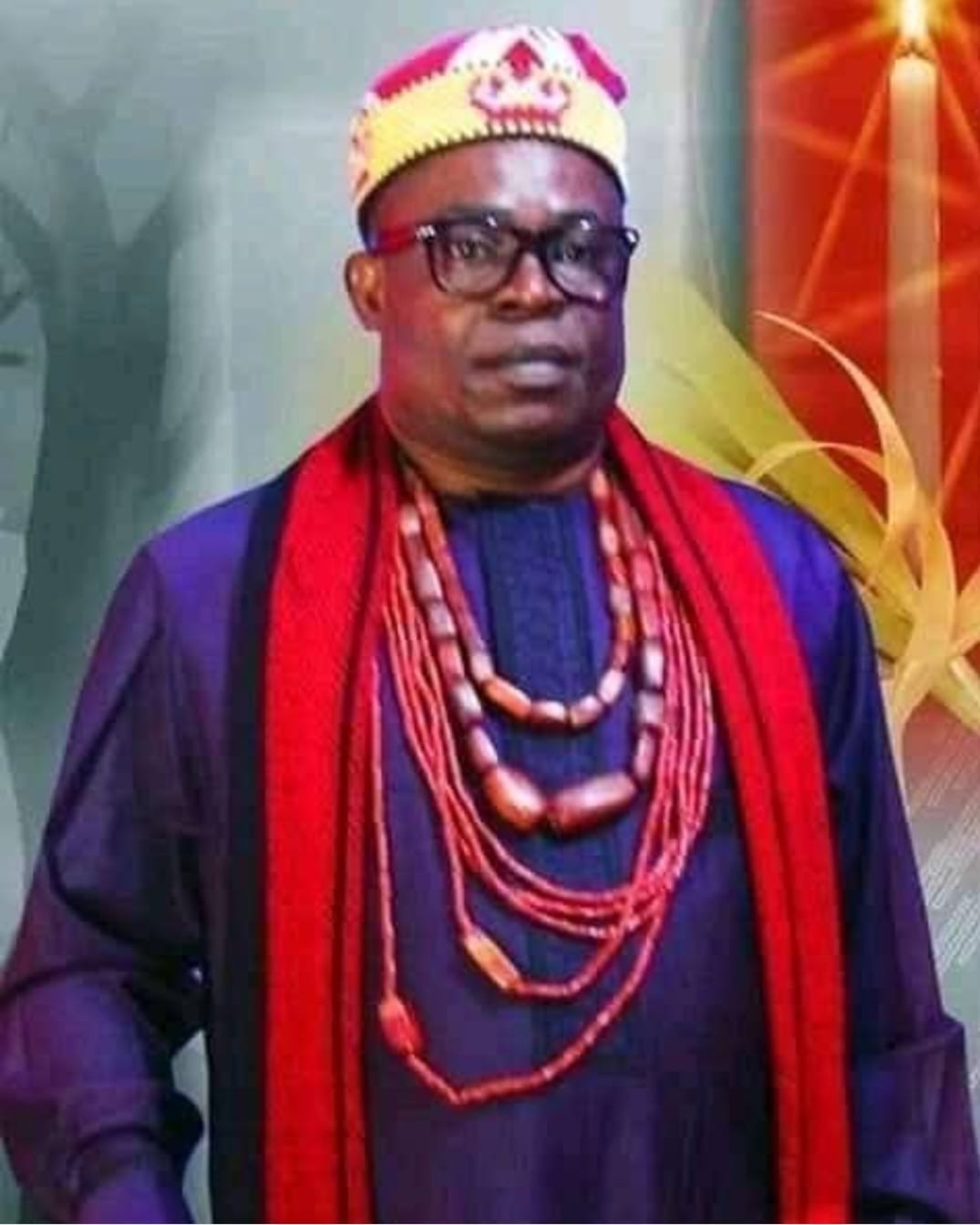
Gunmen on Friday night killed the traditional ruler of Ochia, Barr Paulinus Ekwueme, alongside security operatives in the Ohaji/Egbema Local Government Area of Imo State. The attackers ambushed the monarch at the boundary of Assa and Ochia communities after he returned from a trip abroad earlier in the week.
Some security operatives in his convoy were also shot dead. Eyewitness said the monarch and the security operatives were set ablaze after the killing, adding that the Ohaji/Egbema Local Government Area had been thrown into mourning.
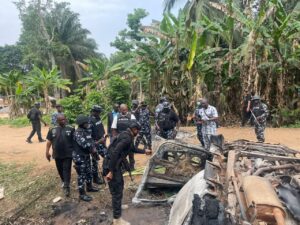
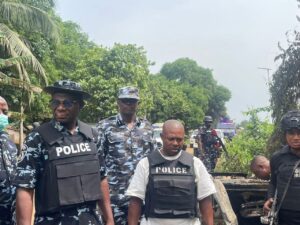
Hrm lives in America, but some in his town accuse him of acquiring lots of wealth coming from the oil in their land and yet they have no nepa (light) and other amenities, and that this angered the youths of his community to take this step. One said Ms Duruaku wrote, “he ate the youth empowerment meant given to him by shell oil company and ran abroad for years”

#Ekwutosblog
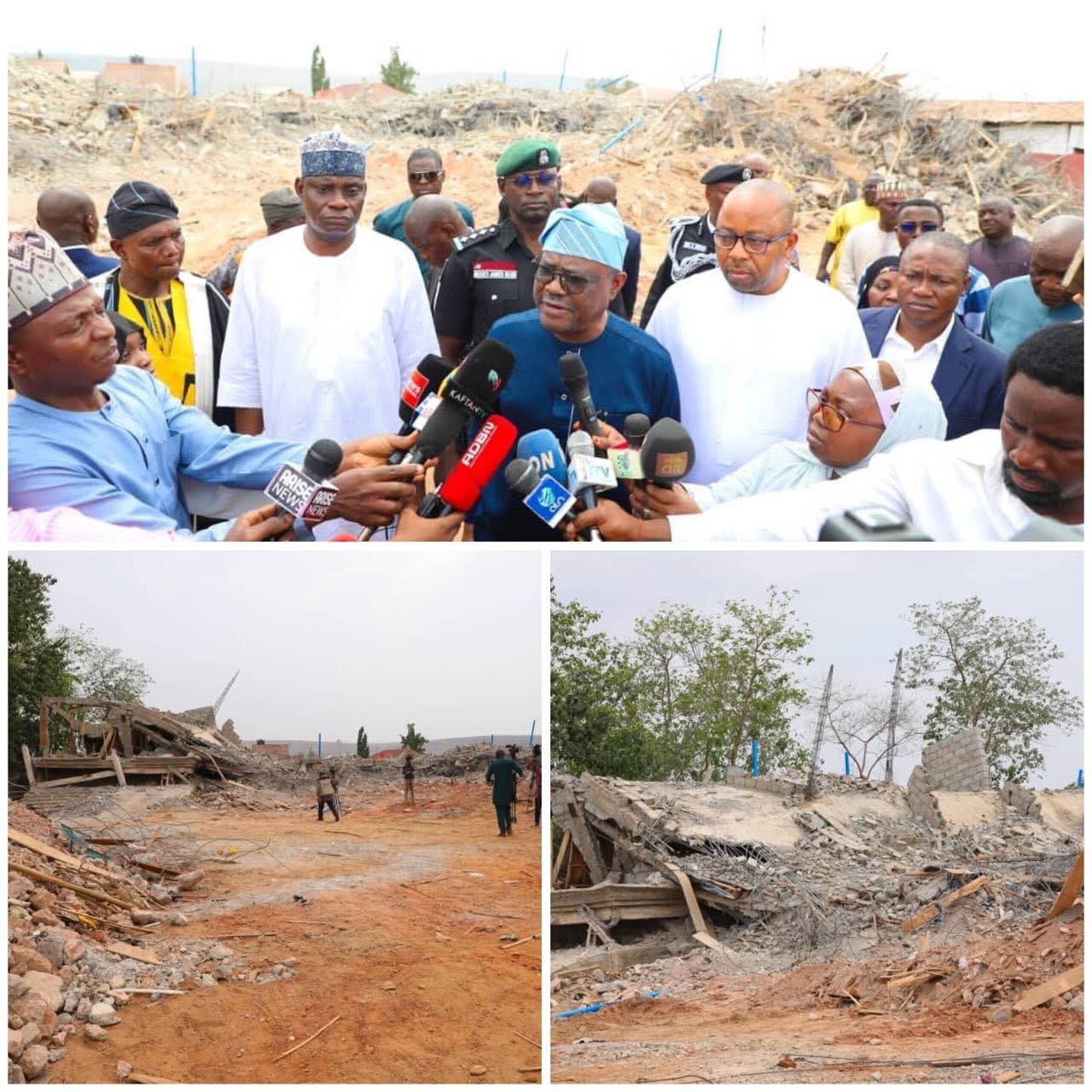
The Minister of the Federal Capital Territory, Nyesom Wike, has ordered the immediate arrest of the owner of a multi-story hotel that collapsed in Jikwoyi, Abuja last Friday, April 4 and announced that the land would be seized for public use.
LIB had reported that the building crumbled while workers were on site, triggering an emergency response from relevant authorities.
Visiting the site today April 7, Wike said the building was constructed without approval from the FCT Department of Development Control and that all the stop-work notices sent to the builders were ignored by the developer.
Wike confirmed that while there were no fatalities, several people sustained injuries and were taken to the hospital. He warned that the outcome could have been far worse.
Announcing the government’s plans for the land, Wike said the FCT Administration will take over the land for public use, noting that those responsible for the illegal construction will face prosecution in accordance with the law.
He added that the local community would be consulted to determine a suitable public-purpose project for the reclaimed site.

Politics1 week ago
David Mark Holds Secret Meeting With PRP Leaders as ADC Crisis Deepens

Trending1 week ago
Chaos As Military Officers Exchange Blows During Tinubu’s Visit To Bayelsa (Videos)

Trending1 week ago
HRH Ekwueme of Ochia Kingdom Iynched & kiIIed in Imo.

-
Business1 year ago
US court acquits Air Peace boss, slams Mayfield $4000 fine
-

 Trending1 year ago
NYA demands release of ‘abducted’ Imo chairman, preaches good governance
-

 Politics1 year ago
Mexico’s new president causes concern just weeks before the US elections
-

 Politics1 year ago
Putin invites 20 world leaders
-

 Politics1 year ago
Russia bans imports of agro-products from Kazakhstan after refusal to join BRICS
-
Entertainment1 year ago
Bobrisky falls ill in police custody, rushed to hospital
-
Entertainment1 year ago
Bobrisky transferred from Immigration to FCID, spends night behind bars
-
Education2 years ago
GOVERNOR FUBARA APPOINTS COUNCIL MEMBERS FOR KEN SARO-WIWA POLYTECHNIC BORI