
Columns
Israel’s Katz says Iran nuclear sites ‘exposed’ to strikes

Israel’s new defense minister, Israel Katz, has hinted that Israel has an “opportunity” to target Iran’s nuclear program. He has also told military officials there will be no cease-fire with Hezbollah.
Israel will continue to hit Hezbollah with “full force,” says Israel’s defense minister The UN’s humanitarian agency says Israel often denied access to northern Gaza last month Gaza medical officials say at least 14 have been killed in Israeli strikes in the Palestinian territory on Tuesday Israel’s military says four of its soldiers have died in fighting in northern Gaza
This is a roundup of the latest developments in the conflicts in the Middle East on November 12, 2024.
Iran’s nuclear sites ‘more exposed than ever,’ says Israel’s Katz
Newly appointed Israeli Defense Minister Israel Katz told military officials on Monday that Iran was “more exposed than ever to strikes on its nuclear facilities”.
“We have the opportunity to achieve our most important goal — to thwart and eliminate the existential threat to the State of Israel,” Katz added on X, formerly Twitter.
https://twitter.com/Israel_katz/status/1856076850352504875?ref_src=twsrc%5Etfw%7Ctwcamp%5Etweetembed%7Ctwterm%5E1856076850352504875%7Ctwgr%5Eeb0144dbf162d244c87aeea163c5f7488536c948%7Ctwcon%5Es1_&ref_url=https%3A%2F%2Fwww.dw.com%2Fen%2Fisrael-s-katz-says-iran-nuclear-sites-exposed-to-strikes%2Flive-70761116
According to the International Atomic Energy Agency (IAEA), Iran is rapidly advancing its nuclear program, and is continuing to increase stockpiles of uranium enriched to weapons grade levels in defiance of international demands.
IAEA head Rafael Grossi has warned that Iran possess enough uranium enriched to near- weapons-grade levels to make “several” nuclear bombs if it chose to do so.
Iran claims it’s nuclear program is for peaceful purposes.
The always tense relations between Israel and its regional archenemy have recently worsened further amid tit-for-tat missile strikes.
Iran twice fired missiles directly on Israeli territory this year, drawing responses in kind from Israel.
No cease-fire with Hezbollah: Israeli defense minister
Israel’s new defense minister, Israel Katz, says he told military officials on Monday that there would be no cease-fire in Lebanon until “the goals of the war are achieved.”
In a post on X, formerly Twitter, Katz wrote that he had told the General Defense Forum that “offensive activity should be continued in order to … realize the fruits of victory.”
“In Lebanon there will be no cease-fire and there will be no respite,” the post said.
Israeli leaders on Monday seemed to send mixed signals on the possibility of a cease-fire in Lebanon.
Foreign Minister Gideon Saar, who this week replaced Katz in the Foreign Ministry, said Israel was “working with the Americans on the issue,” reporting “a certain progress.”
Israel has escalated its hostilities against Lebanon’s Iran-backed Hezbollah militia since late September, beginning a ground offensive on September 30 after a previous campaign of intense airstrikes.
Iran-backed Hezbollah has been carrying out attacks on Israel since Israel began an offensive in Gaza against Hezbollah ally Hamas in response to deadly raids by the Palestinian militants in southern Israel on October 7, 2023.
Israeli army says 4 soldiers killed in northern Gaza
The Israeli army said on Tuesday that four of its soldiers had been killed in figthing in the northern Gaza Strip, where it has been carrying out a major offensive.
All four “fell during combat in the northern Gaza Strip” on Monday, a statement said.
The deaths bring to 376 the total number of Israeli soldiers killed in the Palestinian territory since the start of ground operations against Hamas militants in October last year.
Some 43,500 Palestinians have been killed during the campaign, according to health officials in Hamas-run Gaza. That figure does not distinguish between civilians and militants.
Israeli strikes in Gaza kill at least 14, officials say
Palestinian medical officials said two Israeli strikes in Gaza late on Monday and early on Tuesday have killed at least 14 people, including two children and a woman.
At least 11 people, including two children, died in a strike on the so-called Muwasi humanitarian zone west of Khan Younis, according to officials at Nasser Hospital.
Al-Awda Hospital officials say three people, including a woman, were killed in another strike that hit a house in Nuseirat refugee camp in central Gaza.
Israel hindering aid to northern Gaza, UN says
The UN Office for the Coordination of Humanitarian Affairs, known as OCHA, says most of its bids to coordinate aid convoys and humanitarian visits to northern Gaza last month were denied or impeded by Israel.
OCHA says it made 98 requests for authorization to enter the war-stricken zone but only 15 made it through.
A spokesperson said Ocha was “worried about the fate of Palestinians remaining in North Gaza as the siege there continues, and urgently calls on Israel to open up the area to humanitarian operations at the scale needed, given the massive needs.”
Residents of northern Gaza are at risk of acute hunger as Israel carries out a major offensive therethat it says aims to prevent Hamas militants from regrouping.





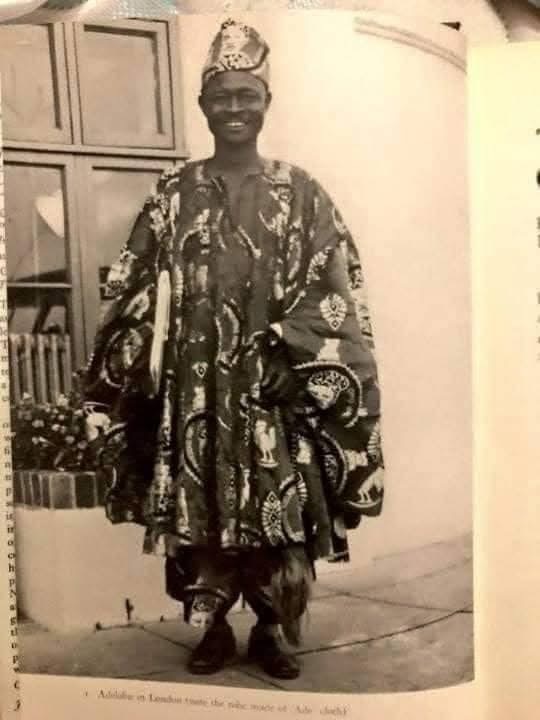
Full Name: Alhaji Adegoke Gbadamosi Adelabu
Birth Name: Gbadamosi Adegoke Akande
Date of Birth: 3 September 1915
Place of Birth: Ibadan, present-day Oyo State, Nigeria
Nickname: “The Lion of the West” — a title earned for his fearless, combative, and charismatic political style
Education:
St. David’s School, Kudeti, Ibadan (1925–1929)
Government College, Ibadan (from 1936)
Yaba Higher College (admitted on scholarship)
Intellectual Reputation:
Adelabu was renowned for his exceptional oratory, sharp intellect, and ideological boldness, making him one of the most formidable politicians of his generation.
Popular Alias:
Known among his largely non-literate supporters as “Penkelesi” — a Yorubanised version of “peculiar mess”, a phrase he frequently used in speeches, which became inseparably associated with him.
Political Affiliation:
A leading member of the National Council of Nigeria and the Cameroons (NCNC) under Dr. Nnamdi Azikiwe during the colonial era.
Political Rivalry:
He was a fierce and ideological opponent of Chief Obafemi Awolowo in the Western Region, making Western Nigerian politics highly competitive and polarized in the 1950s.
Colonial-Era Persecution:
Adelabu is widely regarded as one of the most persecuted opposition politicians of the colonial period, having faced about 18 court cases, many believed to be politically motivated.
Corporate Achievement:
He made history as the first African General Manager of the United Africa Company (UAC), a major British trading firm, marking a significant breakthrough for Africans in colonial corporate leadership.
Death:
Date: 25 March 1958
Place: Ode-Remo, Ijebu Province (present-day Ogun State)
Cause: Fatal motor accident involving his Volkswagen Beetle, alongside a Lebanese business associate and two relatives
Age at Death: 43 years old — two years before Nigeria’s independence
Family:
At the time of his death, Adelabu had 12 wives and 15 children, reflecting the social norms of his era.
Aftermath of Death:
His sudden and tragic death sparked widespread riots and unrest across Ibadan, underscoring his immense popularity and political influence among the masses.
Historical Significance:
Adelabu remains one of the most charismatic, controversial, and intellectually formidable politicians in Nigerian pre-independence history, often remembered as a symbol of radical opposition politics and mass mobilisation.
Source:
Nigerian political history archives
Ibadan colonial-era political records
Biographical accounts on Adegoke Adelabu
Yoruba political history documentation
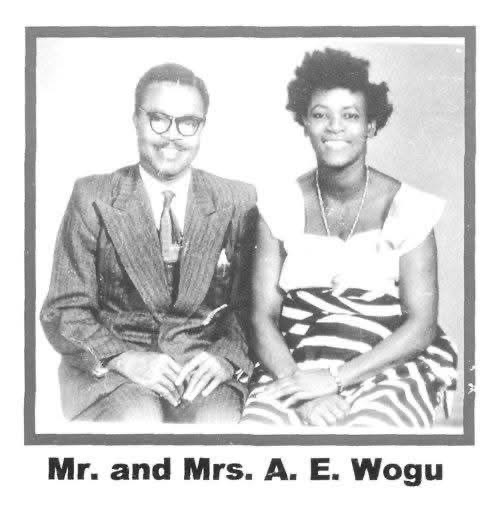
The pioneering role of Mr and Mrs A. E. Wogu in the rise of indigenous Pentecostalism
The explosive growth of Pentecostal Christianity in Nigeria during the twentieth century did not emerge overnight. Long before megachurches, crusade grounds, and global ministries, the movement was shaped by small prayer groups, radical faith, and indigenous leaders who believed that Christianity in Africa must be spiritually vibrant and culturally rooted. Among the most influential of these pioneers were Mr and Mrs Augustus Ehurie Wogu, whose quiet but profound work in Eastern Nigeria helped spark what later became one of the most significant religious revivals in Nigerian history.
By the 1930s, Nigeria was already experiencing religious ferment. Dissatisfaction with mission churches, hunger for spiritual power, and the search for an African-led Christian expression created fertile ground for Pentecostal ideas. It was within this context that the Wogus emerged as key catalysts of renewal.
Augustus Ehurie Wogu: Faith and Public Life
Augustus Ehurie Wogu (A. E. Wogu) was not a cleric by training. He was a respected civil servant, educated and deeply rooted in Christian discipline. Like many early revivalists, his spiritual influence came not from formal ordination but from conviction, prayer, and leadership within lay Christian circles.
At a time when colonial society often separated public service from spiritual enthusiasm, Wogu embodied both. His faith was intense, practical, and unapologetically Spirit-filled. He believed that Christianity should be marked by holiness, prayer, divine healing, and the active presence of the Holy Spirit—beliefs that resonated deeply with many Nigerians who felt constrained by the formality of mission Christianity.
The Pentecostal Spark: Print, Prayer, and Providence
One of the most remarkable aspects of the Nigerian Pentecostal revival was how it was ignited. Rather than beginning with foreign missionaries, the movement was sparked through printed Pentecostal literature.
In the early 1930s, Wogu and other like-minded believers encountered Pentecostal Evangel, a magazine published by the Assemblies of God in the United States. The publication circulated testimonies of revival, Spirit baptism, divine healing, and missionary zeal. For Wogu and his associates, this literature provided language and theological grounding for experiences they were already seeking.
Inspired, they began intense prayer meetings, fasting, and Bible study sessions in their homes. These gatherings soon attracted others hungry for deeper spiritual life.
The Wogu Home as a Revival Centre
The home of Mr and Mrs Wogu in Umuahia, present-day Abia State, became one of the earliest hubs of Spirit-filled Christianity in Eastern Nigeria. It functioned as:
A prayer house
A teaching centre
A refuge for believers seeking healing and renewal
These meetings were marked by fervent prayer, testimonies, and an emphasis on personal holiness. Importantly, leadership was indigenous. Nigerians taught, prayed, interpreted scripture, and organised fellowships without missionary supervision.
This approach helped dismantle the idea that spiritual authority had to come from Europe or America.
Mrs Wogu and the Role of Women in Early Pentecostalism
While historical narratives often foreground male leaders, Mrs Wogu played a crucial role in sustaining and expanding the revival. She provided spiritual support, hospitality, organisational stability, and mentorship—functions that were essential to the survival of early Pentecostal fellowships.
Her partnership with her husband reflected a pattern later seen across Nigerian Pentecostalism, where women played powerful but often understated roles as prayer leaders, organisers, and spiritual anchors.
From Fellowship to Movement: Birth of Assemblies of God Nigeria
As the revival grew, correspondence began between Nigerian believers and the Assemblies of God in the United States. This relationship eventually led to the arrival of American missionaries in the late 1930s.
Crucially, because the movement already existed before foreign involvement, the resulting church developed with a strong indigenous identity. This distinguished Assemblies of God in Nigeria from many earlier mission-founded churches.
The values emphasised by Wogu and his peers—local leadership, spiritual experience, and African agency—became foundational to the denomination’s growth.
Impact on Nigerian Christianity
The legacy of Mr and Mrs A. E. Wogu extends far beyond Umuahia or the Assemblies of God denomination. Their work helped shape:
The broader Pentecostal and Charismatic movement in Nigeria
The idea that revival could emerge from African initiative
The theology of prayer, healing, and Spirit baptism that dominates Nigerian Christianity today
Many of Nigeria’s most influential pastors and evangelists trace their spiritual heritage, directly or indirectly, to the revival culture of the 1930s.
A Lasting Legacy
A photograph dated 29 March 1959, showing Mr and Mrs A. E. Wogu, captures not just a couple but a generation of believers whose faith reshaped Nigeria’s religious landscape. By that time, the movement they helped ignite had grown beyond imagination.
Their story reminds us that history is often made not only by those on pulpits or platforms, but by faithful individuals who open their homes, pray persistently, and dare to believe that renewal is possible.
Sources
This Week in AG History
Assemblies of God Nigeria historical archives
Ogbu Kalu, African Pentecostalism: An Introduction
J. D. Y. Peel, Religious Encounter and the Making of the Yoruba (contextual reference)
Nigerian church
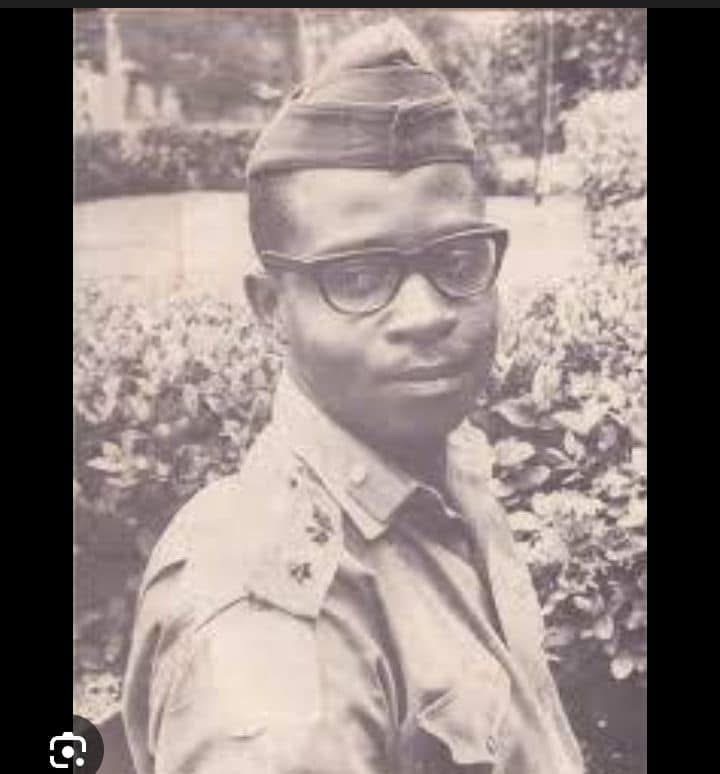
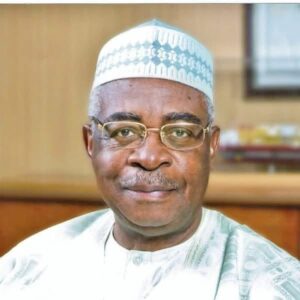
Lieutenant General Theophilus Yakubu Danjuma GCON ) is a retired Nigerian @rmy officer, billionaire businessman, and prominent philanthropist. He is considered one of Nigeria’s most influential and controversial milit@ry figures, having played a central role in several key events in the country’s post-independence history.
Born in Takum, Taraba State on December 9, 1938 , from a humble farming family.
He Attended St. Bartholomew’s Primary School and Benue Provincial Secondary School.
He received a scholarship to study history at Ahmadu Bello University but joined the Nigerian Army in 1960, the year Nigeria gained independence.
Commissioned in 1960, he served as a platoon commander in the Congo Crisîs and rose to the rank of Captain by 1966.
He is widely recognized for leading the troops that arrested and overthrew the first military Head of State, General Aguiyi-Ironsi, during the July 1966 counter-coup.
He served as the Chief of @rmy Staff from 1975 to 1979 under the milit@ry göverñmëñts of Murtala Muhammed and Olusegun Obasanjo.
After returning to public service in the democratic era, he served as Nigeria’s Minister of D£fence from 1999 to 2003 under President Obasanjo.
After returning to public service in the democr@tic era, he served as Nigeria’s Ministēr of Defēñce from 1999 to 2003 under President Obasanjo.
Following his military retirement in 1979, Danjuma became one of Africa’s wealthiest individuals through ventures in shipping and petroleum.
He owns NAL-Comet Group, A leading indigenous shipping and terminal operator in Nigeria.
Owns NAL-Comet Group, leading indigenous shipping and terminal operator in Nigeria.
South Atlantic Petroleum (SAPETRO): An oil exploration company with major interests in Nigeria and across Africa.
In 2009,he established TY Danjuma Foundation: with a $100 milliøn grant, it supports education, healthcare, and pôverty alleviation projects throughout Nigeria.
As of early 2026, he remains an active elder statesman, having celebrated his 88th birthday in December 2025.
He continues to be a vocal crìtic of Nigeria’s security situation, recently urging citizens to “rise up and DEFĒÑD themselves” against b@nditry and in$urgēncy when gøvernmēñt protection f@ils.
He remains a “towering national figure” in Taraba State, where he has recently toured ongoing construction for the T.Y. Danjuma University and Academy.
Danjuma is celebrated as a figure who transitioned from milit@ry leadership to business and philanthropy, significantly impacting Nigeria’s development.

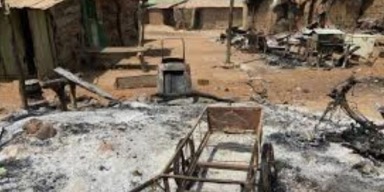
US Reacts As De@th Toll In Kwara Terror Attacks Hits 200

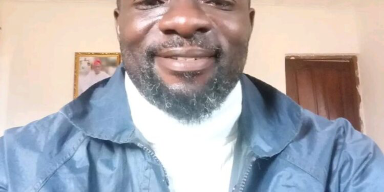
I’m Sick And Homeless – Nigerian Actor, Okemesi Cries Out For Help (Video)

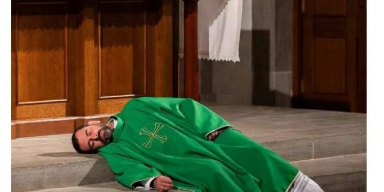
Catholic Priest Collapses And D!es In Front Of Congregation While Walking To Tabernacle To Return Holy Communion

-
Business1 year ago
US court acquits Air Peace boss, slams Mayfield $4000 fine
-

 Trending1 year ago
NYA demands release of ‘abducted’ Imo chairman, preaches good governance
-

 Politics1 year ago
Mexico’s new president causes concern just weeks before the US elections
-

 Politics1 year ago
Putin invites 20 world leaders
-

 Politics1 year ago
Russia bans imports of agro-products from Kazakhstan after refusal to join BRICS
-
Entertainment1 year ago
Bobrisky falls ill in police custody, rushed to hospital
-
Entertainment1 year ago
Bobrisky transferred from Immigration to FCID, spends night behind bars
-
Education1 year ago
GOVERNOR FUBARA APPOINTS COUNCIL MEMBERS FOR KEN SARO-WIWA POLYTECHNIC BORI