
News
Japan opens applications for driver job opportunities for foreign workers in 2025.


Teaching English is by far the easiest job to get without any knowledge of the Japanese language.
While Japan isn’t offering completely “free” jobs to foreigners, they do provide extensive free support services to help foreigners find and secure employment.
These services include job matching, career counseling, resume reviews, interview preparation, and even vocational training programs, all with multilingual support.
Japan is expanding its Specified Skilled Worker (SSW) program to include more positions in the transport sector, offering new opportunities for international job seekers.
With reports noting a growing demand for skilled drivers, Japan’s government aims to address labour shortages in key industries, including taxi, bus, and truck driving.
This offers skilled foreign drivers a chance to live and work in Japan, earn competitive salaries, and potentially bring their families along.
According to DAAD, the SSW program is a part of Japan’s efforts to tackle its aging population and workforce decline by attracting qualified foreign workers. The program will officially roll out in mid-2025, with applications starting as early as January 2025.
Foreign drivers are being invited to fill crucial roles, and Japan is ready to offer stable employment and long-term opportunities.
Job benefits
Working in Japan’s transport sector comes with several advantages for international drivers. The country’s transport infrastructure, according to reports, is known for its efficiency and safety, and foreign workers in this sector can expect good salaries and the chance to experience Japan’s respected work culture.
Salary expectations:
DAAD informs that the pay for drivers varies by position:
Taxi drivers: JPY 2.5 million to JPY 3.2 million (USD 22,000 to USD 28,000) annually, with the possibility of performance bonuses.
Bus drivers: JPY 3 million to JPY 4 million (USD 26,000 to USD 36,000) annually.
Truck drivers: JPY 3.2 million to JPY 4.2 million (USD 28,000 to USD 38,000) annually, with higher pay for long-haul routes.
Family reunification:
Reports inform that foreign workers can also bring their families to Japan, subject to certain conditions. This adds to the appeal for those seeking a work-life balance and a high standard of living.
Expanded SSW program and recruitment process for 2025
According to DAAD, the Japanese government is working with the Ministry of Justice and the Ministry of Land, Infrastructure, Transport and Tourism to expand the SSW program, which aims to fill critical positions in the transport sector. The program will officially begin in mid-2025, but recruitment will start earlier, with official guidelines expected in January 2025.
The expansion of the program reflects Japan’s need to attract skilled labour, particularly in areas like driving, where there is a growing shortage. By offering competitive salaries and benefits, Japan hopes to attract qualified workers from around the world to contribute to the country’s booming transport industry.
Eligibility and requirements for the SSW program
Foreign drivers interested in applying for jobs under the SSW program must meet several requirements.
Driver’s license:
Applicants must have a valid driver’s license that meets Japanese standards. In some cases, an international driver’s license may need to be converted to a Japanese one.
Skills and language requirements:
Applicants must pass a practical driving test and demonstrate a basic understanding of Japanese. The Japanese Language Proficiency Test (JLPT) N4 level or equivalent is usually required.
Physical health standards:
Applicants must meet specific health standards, which include having a clear vision and being in good physical condition to meet Japan’s safety regulations.
Experience:
Prior driving experience is required, especially for truck driving roles, which may demand specific expertise.
What to know
Reports inform that Job seekers can find driving opportunities in Japan through various job portals and recruitment agencies. Some of the top platforms to explore include:
GaijinPot Jobs
Daijob
JapanDriver
Pasona Group
Recruit Holdings
JAC Recruitment
Nikkei HR, Inc. and Persol Holdings Co., Ltd. also list available positions for foreign drivers in Japan.
How to apply for Japan’s SSW visa for drivers
The process for applying for an SSW visa for driving jobs in Japan involves several steps:
1. Find a job:
First, secure a job offer from a Japanese company that is willing to sponsor your SSW visa.
2. Check eligibility:
Ensure that you meet all requirements, including having a valid driver’s license, meeting language and health standards, and having sufficient driving experience.
3. Apply for the certificate of eligibility (COE):
Your employer will apply for a Certificate of Eligibility on your behalf, which is necessary to apply for the SSW visa.
4. Submit your visa application:
Once you have the COE, apply for the SSW visa at your nearest Japanese embassy or consulate.
5. Arrive in Japan:
Upon arrival, you may need to take additional training or licensing exams to comply with local regulations.
Family Reunification:
Once settled in Japan, workers can apply for family reunification, though specific conditions must be met.
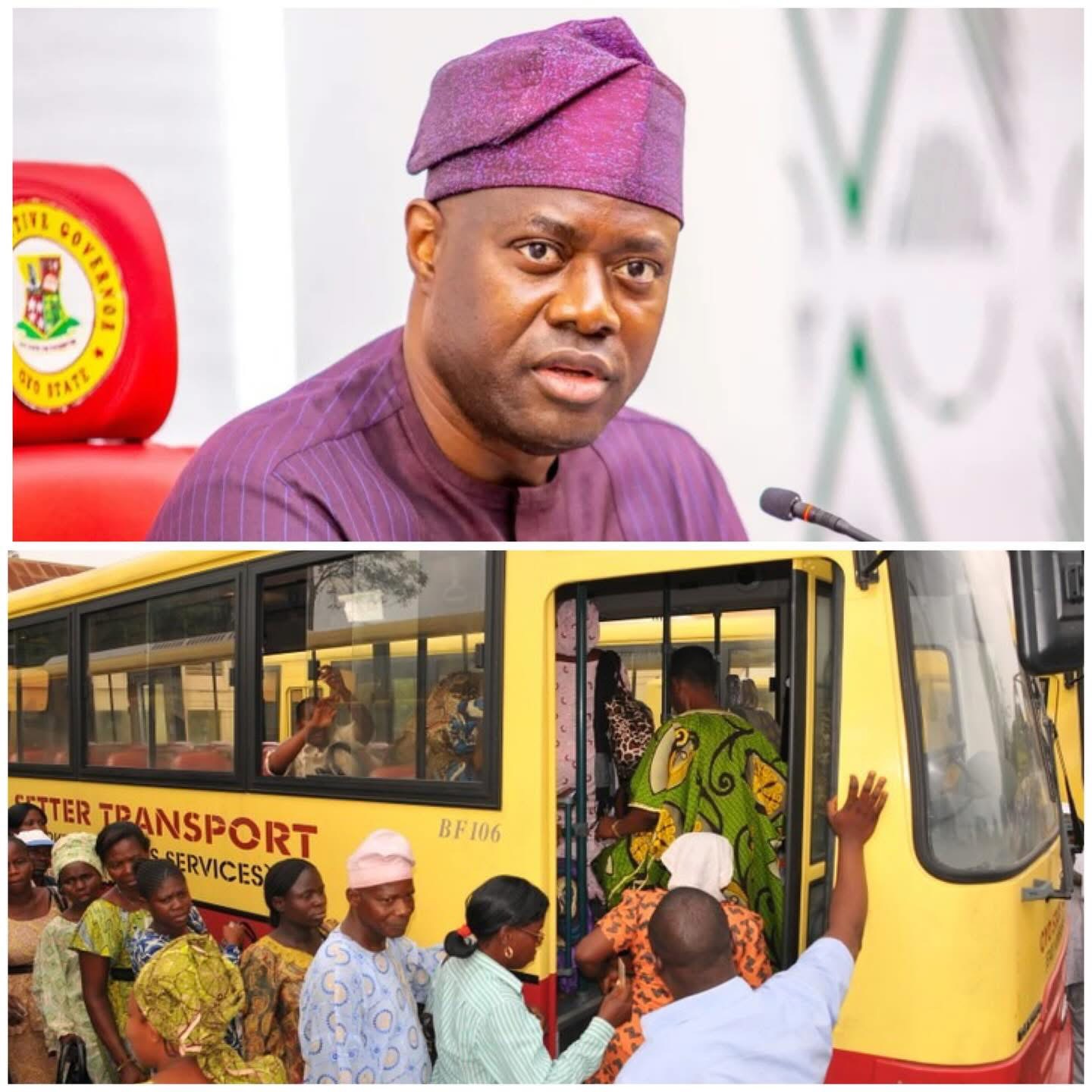
The governor of Oyo state, Seyi Makinde, has approved a N10,000 transportation allowance as a palliative for the state workforce to cushion the effects of the increase in the pump price of Premium Motor Spirit, otherwise known as petrol.
The Chairman of the Nigeria Labour Congress (NLC), Oyo State chapter, Kayode Martins, in a statement released on Monday, March 23, disclosed that the governor has granted the request of the union on the issue of transportation allowance.
The statement read
“Following the intervention and formal request made by the State Council of the Nigeria Labour Congress (NLC) earlier this morning, the state government has approved a N10,000 transportation allowance for all workers in the state.
The newly approved allowance is set to take effect from April 2026, providing much-needed relief to workers grappling with rising transportation costs amid current economic challenges.
This development comes as a direct response to sustained advocacy by the state NLC, aimed at cushioning the impact of increased living expenses on the workforce.
Further details on implementation are expected to be communicated by the relevant government authorities in due course.”
News
Former Acting Accountant-General of the Federation bags 72years imprisonment for diverting N868.46 million security funds
Justice James Omotosho of the Federal High Court in Abuja, on Monday, March 23, convicted and sentenced Chukwunyere Nwabuoku, former acting Accountant-General of the Federation (AGoF), to a 72-year jail term without an option of fine.
DailyTrust reports that in the judgment delivered, Justice Omotosho held that the Economic and Financial Crimes Commission (EFCC) had been able to prove the nine-count money laundering charge beyond reasonable doubt.
According to the judge, the defendant is hereby convicted as charged.
Justice Omotosho convicted Nwabuoku in all the nine counts and sentenced him to eight years imprisonment in each of the counts, making 72 years.
The judge, however, ordered that the counts shall run concurrently.
Justice Omotosho, who described Nwabuoku’s act of diverting funds meant for security and defence while he served as Director of Finance and Account in the Ministry of Defence as “appalling,” commended the EFCC for being detailed in its prosecution.
The judge observed that the evidence of the 9th prosecution witness that Nwabuoku voluntarily refunded part of the siphoned money of over N200 million during investigation was not controverted by the defence.
Nwabuoku served as the Director of Finance and Accounts in the Ministry of Defence between 2019 and 2021. He became acting Accountant General of the Federation in May 2022.

The police in Delta state have arrested eleven more suspects over the sexu@l ass@ults recorded during what was described as a “r@ping festival” in Oramudu Quarters in Ozoro last Thursday, March 19.
In a statement released on Saturday, March 21, the spokesperson of the command, SP Bright Edafe, said the CP Special Assignment Team (CP-SAT) was tasked with conducting a detailed investigation into the incident.
Edafe said operatives of CP-SAT conducted a thorough analysis of available video evidence and intelligence, leading to the arrest of eleven additional suspects identified as Samson Atukpodo, Steven ovie, Ugbevo Samson, Afoke Akporobaro, Evidence Oguname, and six others. Edafe mentioned that these latest arrests bring the total number of suspects currently in police custody in connection with the incident to fifteen (15)
“The Command reiterates that preliminary findings indicate that the unfortunate incident was perpetrated by criminal elements who exploited the situation to engage in acts of sexu@l v!olence, which are in no way representative of any legitimate cultural practice.
The Commissioner of Police, Delta State Command, CP Aina Adesola, condemns these acts in totality and reassures the public that the Command remains resolute in its determination to ensure that all those involved are identified, arrested, and prosecuted in accordance with the law. Members of the public, particularly victims and witnesses, are once again encouraged to come forward with credible information that will aid ongoing investigations. The Command assures that all information provided will be treated with strict confidentiality.”the statement in part reads

Fuel price hike: Gov Makinde announces N10,000 transport support for workers

Former Acting Accountant-General of the Federation bags 72years imprisonment for diverting N868.46 million security funds

Benita Enwonwu in the 1970s: Model, Actress, and Daughter of Ben Enwonwu

-
Business1 year ago
US court acquits Air Peace boss, slams Mayfield $4000 fine
-

 Trending1 year ago
NYA demands release of ‘abducted’ Imo chairman, preaches good governance
-

 Politics1 year ago
Mexico’s new president causes concern just weeks before the US elections
-

 Politics1 year ago
Putin invites 20 world leaders
-

 Politics1 year ago
Russia bans imports of agro-products from Kazakhstan after refusal to join BRICS
-
Entertainment1 year ago
Bobrisky falls ill in police custody, rushed to hospital
-
Entertainment1 year ago
Bobrisky transferred from Immigration to FCID, spends night behind bars
-
Education2 years ago
GOVERNOR FUBARA APPOINTS COUNCIL MEMBERS FOR KEN SARO-WIWA POLYTECHNIC BORI