
Politics
Kanu rejects trial resumption, insists on change of judge


The detained leader of the Indigenous People of Biafra, Nnamdi Kanu, has opposed the request by the Federal Government for the resumption of his trial, insisting that the trial judge, Justice Binta Nyako, must recuse herself from the matter.
Kanu’s lead counsel, Aloy Ejimakor, revealed his client’s position in a post on X on Tuesday, rejecting the Federal Government’s bid to reopen the trial.
Kanu, who is being prosecuted on seven counts of alleged treasonable felony and terrorism, was re-arrested in Kenya in 2021 and extraordinarily rendered to Nigeria. He has pleaded not guilty to all charges.
At the last court session on September 24, 2024, Kanu requested that Justice Nyako, recuse herself, citing a loss of confidence in her handling of the case.
Justice Nyako agreed to recuse herself and forwarded the case file to the Chief Judge of the Federal High Court for reassignment.
However, the Chief Judge returned the case to Justice Nyako, stating that two other judges had previously recused themselves, and Justice Nyako, having handled the matter since 2015, was best positioned to conclude it.
The Chief Judge instructed that if Kanu still wanted Justice Nyako to step aside, he must file a formal motion with an affidavit detailing his reasons, serve it on the prosecution, and await Justice Nyako’s determination.
Despite this directive, the Federal Government’s counsel, Adegboyega Awomolo (SAN), requested a new trial date in a December 5, 2024, letter addressed to the Deputy Chief Registrar of the Federal High Court.
Awomolo argued that the Chief Judge’s decision reinstated Justice Nyako as the trial judge.
However, Kanu’s lawyer, Ejimakor, in a counter-letter rejecting the request, argued that Justice Nyako’s decision to recuse herself was still valid and binding.
“Our position is based on the fact that Justice Nyako entered and enrolled an order recusing herself on September 24, 2024, and to date, that order remains extant and subsisting. It has not been set aside by any competent court,” Ejimakor stated.
He further accused the prosecution of attempting to mislead the court, insisting that Kanu no longer has a case before Justice Nyako.
“For the avoidance of doubt, as of September 24, 2024, the defendant no longer has any case to answer before Justice Binta Nyako,” Ejimakor said.
Demanding Justice Nyako’s withdrawal from his case at the previous proceedings, Kanu, who shouted down his lawyer and spoke for himself, maintained that he did not trust the judge to be impartial.
Addressing the judge directly, Kanu said, “My Lord, I have no confidence in this court anymore and I ask you to recuse yourself because you did not abide by the decision of the Supreme Court.
“I can understand it if the DSS refused to obey a court order, but for this court to refuse to obey an order of the Supreme Court is regrettable. I am asking you to recuse yourself from this case.”
However, the prosecution counsel, Awomolo, urged Justice Nyako to regard Kanu’s claim of disobeying a Supreme Court order and proceed with the hearing.
“My Lord, you should not recuse yourself on the basis of this mere observation which does not have anything to do with the Supreme Court. It is an incompetent observation. We urge this court to proceed with the hearing,” Awomolo said.
But Kanu vehemently objected, waving a copy of a document in his hand which he said was a copy of the subsisting judgment of the Supreme Court.
He proceeded to read a part that said the actions of the trial court rendered the impartiality of the judge suspect.
He also tried to explain to the judge that his objection to her presiding over his matter was not personal but that he was now fed up with the trial, which, according to him, was at variance with constitutional provisions.
Declaring her stance on the matter, Justice Nyako declared: “I hereby recuse myself and remit the case file back to the Chief Judge.”
Kanu was first arrested on October 14, 2015, following his return to Nigeria from the U K and was later granted bail in 2017 on health grounds after being detained at the Kuje correctional facility.
Kanu later fled the country following a raid by the military on his home and moved back to the United Kingdom but was later re-arrested in Kenya in 2011 and brought back to Nigeria.
His his re-arrested and repatriation to the country, he has been detained in the custody of the Department of State Services.
His repeated applications for fresh bail have been turned down by Justice Nyako.



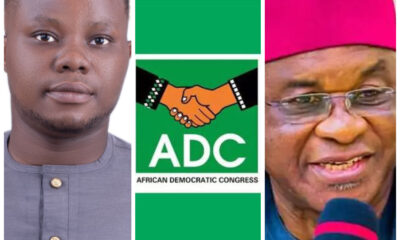

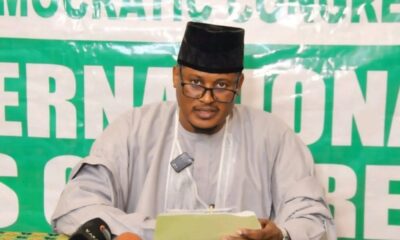


The embattled National Chairman of the African Democratic Congress, David Mark, on Friday held a closed-door meeting with leaders of the Peoples Redemption Party in Abuja. The private consultation is seen as a fresh round of political moves as the ADC continues to battle a lingering leadership crisis and growing internal divisions.
Top figures from both parties were said to be present at the meeting, including PRP National Chairman Hakeem Baba-Ahmed and senior ADC officials. The development is already drawing attention as opposition parties continue realignments ahead of the 2027 political season, with many watching closely for possible alliances and next steps in the party crisis.
Politics
“ADC is a Holy Party, Cannot be used to Scam Nigerians Again” – Hon Success Opara tells David Mark
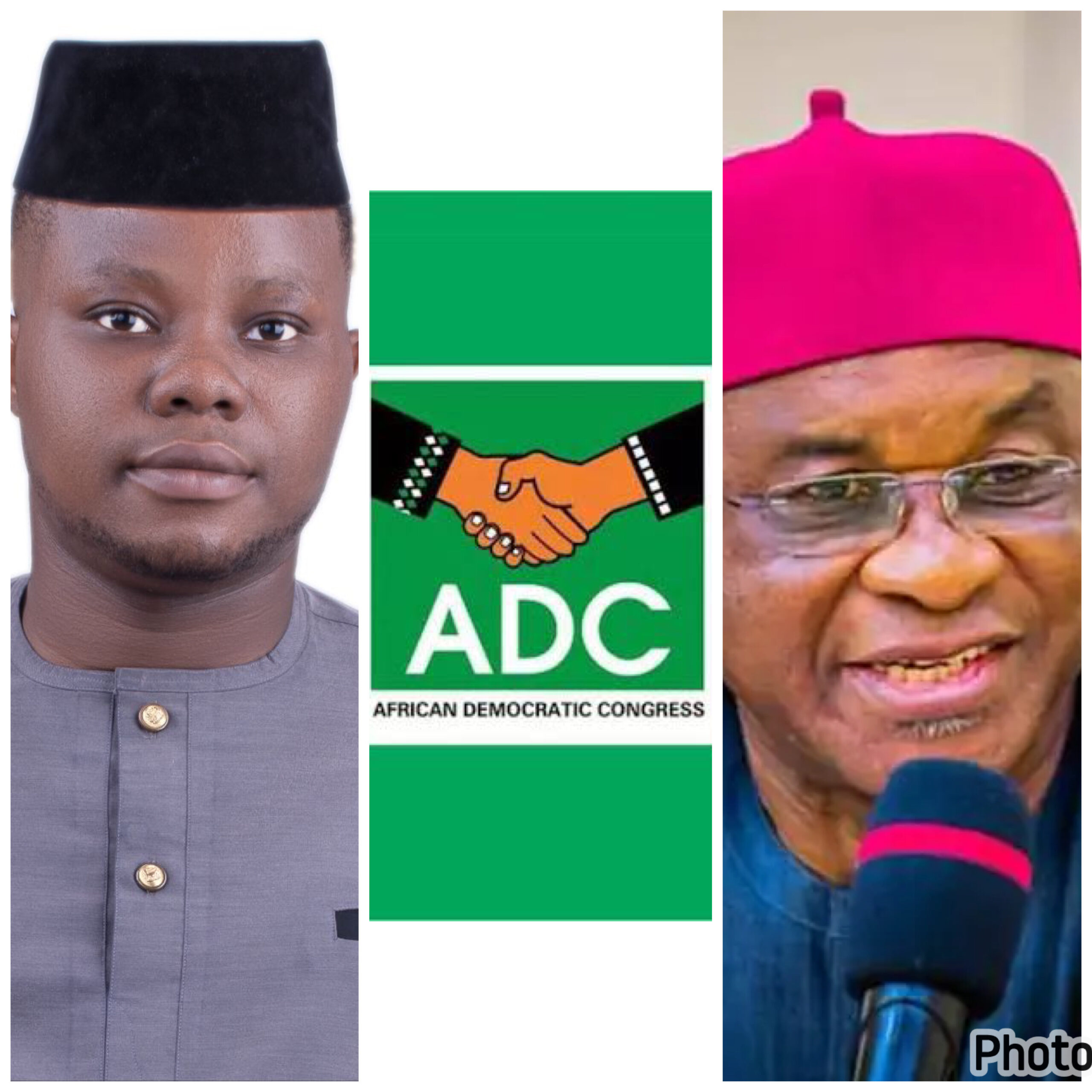
ADC Party in Turmoil: Hon Success Opara Slams Leadership, Warns Against Scamming Nigerians
Abuja, Nigeria – The African Democratic Congress (ADC) is facing internal strife as Hon Success Opara, a prominent party official, has warned against attempts to use the party to deceive Nigerians. Opara specifically criticized the leadership of David Mark, stating that the party cannot be used to scam citizens again.
“ADC holy Party cannot be used to scam Nigerians again,” Opara said, emphasizing that those forming coalitions are hindering the party’s growth and denying youths opportunities to thrive.
“Those who are forming coalition don’t want to give the youths the chance to strive in the party,” she added.
Opara’s statement highlights the deepening divisions within the ADC, with concerns over leadership and the party’s direction.
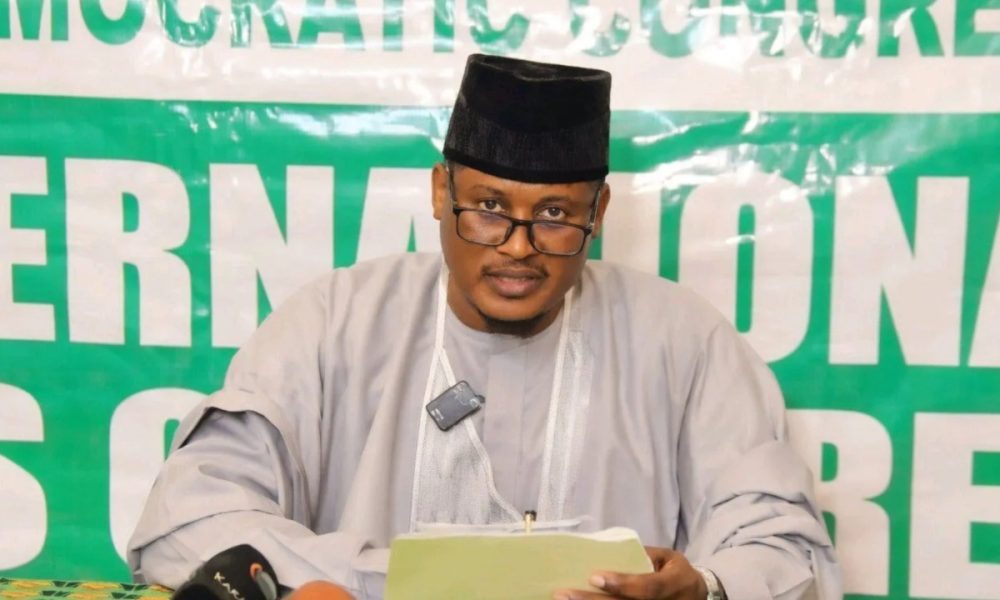
The factional National Chairman of the African Democratic Congress (ADC), Nafiu Bala Gombe, has announced that the party under his leadership will bar individuals above the age of 55 from contesting for political positions.
Gombe made the disclosure during an interview with BBC Hausa, where he outlined a vision centred on generational change and greater youth participation in politics.
“The African Democratic Congress (ADC) is a party that belongs to all Nigerians. What we are doing now is to ensure the party moves forward properly.
“We have decided that we will give the youths a real chance. The time has come for young people to take the lead in politics.
“If you are over 55 years old, you are not going to contest for positions in the ADC under our leadership.
“We want to bring in fresh blood, new ideas, and energy from the youth. Nigeria’s future depends on the young generation.
“The old ways have not worked well for the country. We need to open the door wide for youths to participate fully as candidates, leaders, and decision-makers,” he said.

David Mark Holds Secret Meeting With PRP Leaders as ADC Crisis Deepens

Chaos As Military Officers Exchange Blows During Tinubu’s Visit To Bayelsa (Videos)

HRH Ekwueme of Ochia Kingdom Iynched & kiIIed in Imo.

-
Business1 year ago
US court acquits Air Peace boss, slams Mayfield $4000 fine
-

 Trending1 year ago
NYA demands release of ‘abducted’ Imo chairman, preaches good governance
-

 Politics1 year ago
Mexico’s new president causes concern just weeks before the US elections
-

 Politics1 year ago
Putin invites 20 world leaders
-

 Politics1 year ago
Russia bans imports of agro-products from Kazakhstan after refusal to join BRICS
-
Entertainment1 year ago
Bobrisky falls ill in police custody, rushed to hospital
-
Entertainment1 year ago
Bobrisky transferred from Immigration to FCID, spends night behind bars
-
Education2 years ago
GOVERNOR FUBARA APPOINTS COUNCIL MEMBERS FOR KEN SARO-WIWA POLYTECHNIC BORI