
Politics
Lawmakers To Tinubu: Cut Down Ministers To 37

The proposal currently under review by the House of Representatives Committee on Constitutional Review seeks to amend the 1999 Nigerian Constitution by limiting the number of ministers the president can appoint to 37.
The bill, which aims to streamline the Federal Executive Council, is sponsored by representatives from the Darazo/Ganjuwa and Kaga/Gubio/Magumeri Federal Constituencies of Bauchi and Borno states, respectively.
The bill specifically targets Section 147(1) of the Constitution, proposing that the president be allowed to establish a maximum of 37 ministerial offices. This comes in response to concerns over the growing cost of governance and the potential inefficiency caused by overlapping duties among ministers. Currently, the Federal Executive Council under President Bola Tinubu consists of 45 ministers, including both substantive ministers and Ministers of State, a configuration that has drawn criticism for its perceived inefficiencies.
A key point raised by the bill’s proponents, including Bauchi lawmaker Mansur Soro, is the need to reduce the number of ministers per state and ensure greater efficiency in government operations. Soro expressed that, in his view, one minister per state should suffice, with the Federal Capital Territory (FCT) also represented. He further questioned the fairness of the current system, which allows some states, like Ogun, to have multiple ministers while others have just one.
Moreover, the proposal is seen as a means to address the issue of unequal representation among states. For instance, Ogun State currently has four ministers, whereas many other states have only one. Soro highlighted that the president already has other avenues, such as key government agencies and parastatals, to appoint technocrats or politicians, thus making additional ministers unnecessary.
In addition to this, the committee is also reviewing a proposal to amend Section 62 of the Constitution to enforce the federal character principle in the selection of National Assembly principal officers. This amendment would ensure that the principle of equity and balance in representation is adhered to in the legislative branch as well.
This ongoing constitutional review could have significant implications for the way Nigeria’s executive and legislative structures are organized, with an emphasis on reducing the cost of governance and enhancing efficiency.
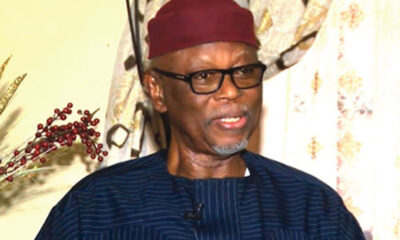








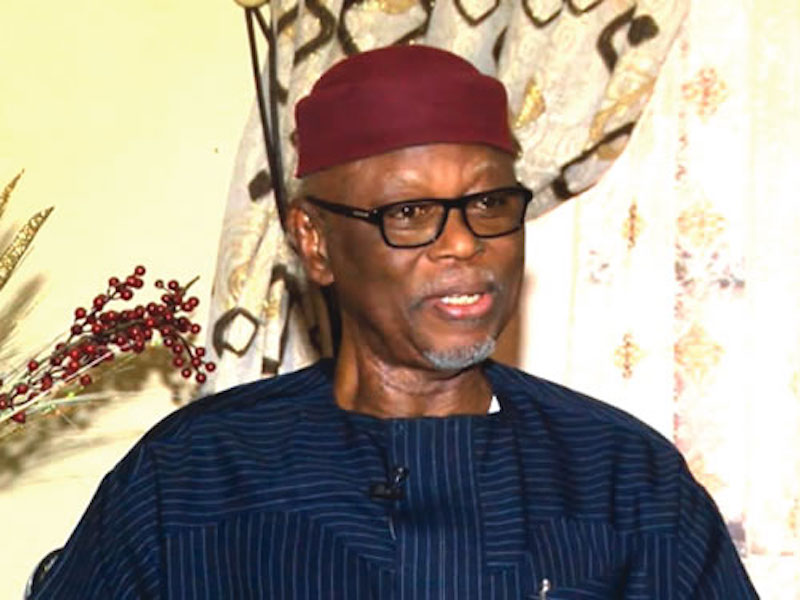
Chairman, Policy Manifesto Committee of the African Democratic Congress, ADC, John Odigie-Oyegun, says former president Muhammadu Buhari gave him the shock of his life, six months into his administration as Nigeria’s leader.
Oyegun made this disclosure on Friday when he featured in an interview on Arise Television’s ‘Prime Time’.
He revealed that as National Chairman of the All Progressives Congress, APC, he went to tell Buhari that he was not delivering his election promises to Nigerians but that the late president told him he would not rule with strictness, but rather wanted to show Nigerians that he is a true civilian president.
The former APC National Chairman lamented that it became business as usual, from there.
“I was national chairman of the APC. Six months or less into our assuming office, fairly alarmed, I went to the late President Buhari for a one-on-one talk. I said Mr President, this is not what the people were expecting. They wanted a bit of the old president Buhari.
“And he explained to me, Mr Chairman, I have learned my lesson. I was shocked. And don’t forget at that time, a lot of prominent Nigerians took their holidays abroad, just to be sure and see what this new sheriff in town will be.
“Buhari told me he wants to now show the people that he’s a true civilian president in Agbada. And by the time we finished the conversation, I said Oh God, we are finished. Because, if he’s not ready to be strict, what’s the point?
“Weeks later, months later, years later, I was proven correct. And of course, it became business as usual, only that they are a new set of tenants in Aso Rock. That was a shocker,” he said.
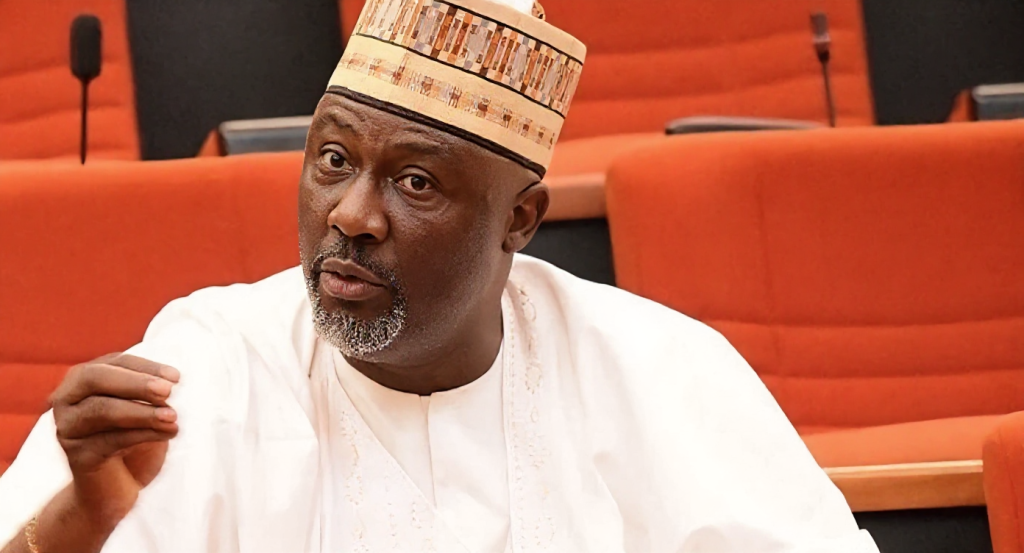
Former lawmaker, Dino Melaye Esq, has raised concerns over the Senate’s reported rejection of the electronic transmission of election results.
The move, according to Melaye, is a clear endorsement of election rigging and an indication of a sinister plan to rig the 2027 elections.
In a statement on Friday, the former lawmaker criticized the Senate’s decision, stating that it undermines the credibility of the electoral process.
The African Democratic Congress, ADC chieftain, also stated that the move opens the door for electoral manipulation and fraud.
He further warned that the rejection of electronic transmission of results is a step backwards for democracy in Nigeria.
Melaye called on lawmakers and citizens to stand up against “this blatant attempt to undermine the will of the people and ensure that future elections are free, fair, and transparent”.
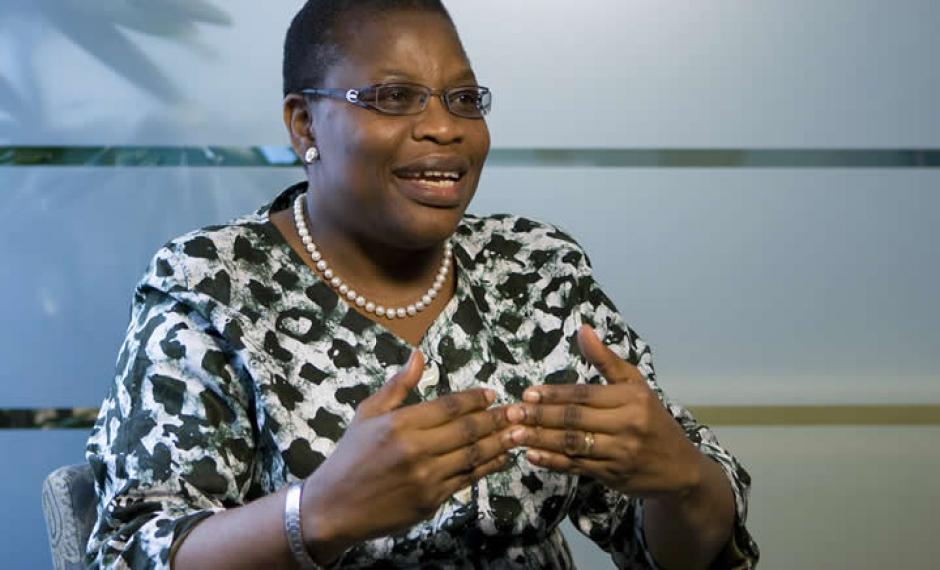
Former Minister of Education, Oby Ezekwesili, has said Nigerians have every reason to be mad at the Senate over the ongoing debate on e-transmission of election results.
Ezekwesili made this known on Friday when she featured in an interview on Arise Television’s ‘Morning Show’ monitored by DAILY POST.
DAILY POST reports that the Senate on Wednesday turned down a proposed change to Clause 60, Subsection 3, of the Electoral Amendment Bill that aimed to compel the electronic transmission of election results.
Reacting to the matter, Ezekwesili said, “The fundamental issue with the review of the Electoral Act is that the Senate retained the INEC 2022 Act, Section 60 Sub 5.
“This section became infamous for the loophole it provided INEC, causing Nigerians to lose trust. Since the law established that it wasn’t mandatory for INEC to transmit electoral results in real-time, there wasn’t much anyone could say.
“Citizens embraced the opportunity to reform the INEC Act, aiming to address ambiguity and discretionary opportunities for INEC. Yet, the Senate handled it with a “let sleeping dogs lie” approach. The citizens have every reason to be as outraged as they currently are.”

How Buhari shocked me 6 months into his administration – Oyegun

Gunmen k!ll President General of Ogidi community and one other in Anambra.

Police bust syndicate behind nude photo blackmail in Lagos

-
Business1 year ago
US court acquits Air Peace boss, slams Mayfield $4000 fine
-

 Trending1 year ago
NYA demands release of ‘abducted’ Imo chairman, preaches good governance
-

 Politics1 year ago
Mexico’s new president causes concern just weeks before the US elections
-

 Politics1 year ago
Putin invites 20 world leaders
-

 Politics1 year ago
Russia bans imports of agro-products from Kazakhstan after refusal to join BRICS
-
Entertainment1 year ago
Bobrisky falls ill in police custody, rushed to hospital
-
Entertainment1 year ago
Bobrisky transferred from Immigration to FCID, spends night behind bars
-
Education1 year ago
GOVERNOR FUBARA APPOINTS COUNCIL MEMBERS FOR KEN SARO-WIWA POLYTECHNIC BORI