
Politics
LG autonomy: FG threatens contempt suit against errant govs

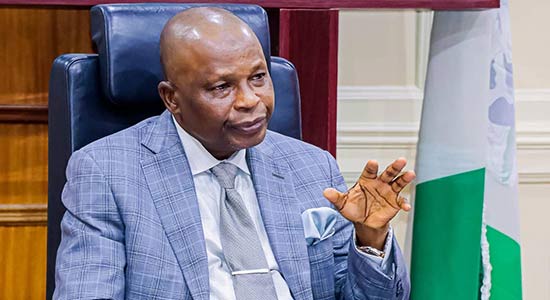
•Lawyers, state AGs aiding govs risk LPDC sanctions, Fagbemi accuses governors of treason
The Attorney General of the Federation and Minister of Justice, Prince Lateef Fagbemi (SAN), has issued a stern warning to state governors bypassing the Supreme Court judgment on local government autonomy, threatening to seek a contempt of court suit if the defiance continues.
Fagbemi stated this in Abuja, on Thursday, at the 2024 annual conference of the National Association of Judiciary Correspondents.
The Supreme Court, on July 11, 2024, delivered a landmark judgment affirming the financial autonomy of the 774 local government areas in the country and stopping governors from further control of funds meant for the councils.
The apex court also directed the Accountant-General of the Federation to pay local government allocations directly to their accounts, as it declared the non-remittance of funds by the 36 states unconstitutional.
In a suit marked SC/CV/343/2024, aimed at strengthening local government autonomy as guaranteed by the constitution, Fagbemi also obtained a court order preventing governors from unilaterally dissolving democratically elected local government councils and establishing caretaker committees.
In the unanimous judgment of its seven-member panel, the Supreme Court upheld the suit brought by the Federal Government to strengthen the independence of local governments in the country.
More than five months after the judgment, the Federal Government had not effected direct payment of allocations to the local government, as directed by the apex court.
The PUNCH reported that the Minister of Finance and Coordinating Minister of the Economy, Wale Edun, said the Federal Government was yet to commence direct payment to the respective LGs due to some “practical impediments.”
He added that a committee had been set up by the Federal Government to look at the practicability of the judgment.
The Federal Government, it was learnt, faced challenges implementing the ruling on local government financial autonomy, with concerns over its impact on salary payments and operational viability.
The Oyo State Governor, Seyi Makinde, who raised concerns over the judgment, called for a homegrown solution to ensure the people did not suffer.
“The law is the law and when there is a conflict, yes, we should go to the court. But it behoves us to look for our own homegrown solutions that can ensure that we have transparency and that our people do not suffer. This is because when two elephants are fighting, it is the grass that will suffer,” Makinde was quoted to have said.
Some states have, however, carried out legislation to bypass the judgment of the Supreme Court.
The Anambra State House of Assembly passed the Local Government Administration Bill 2024 on Tuesday, October 8, 2024, amid condemnation from civil society groups and opposition parties, including Labour Party lawmakers in the assembly.
Section 13(1) of the bill stipulates that the state shall maintain a “State Joint Local Government Account,” into which all federal allocations to LGAs must be deposited.
Section 14(3) further mandates that each LG must, within two working days of receiving their allocations from the Federation Account, remit a state-determined percentage to the consolidated account. This requirement applies even if the allocations are received directly from the Federation Account.
Section 14(4) outlines that if the state receives the LGA allocation on their behalf, it must deduct the specified percentage before disbursing the remaining funds to the LGA.
Labour Party members in the assembly kicked against the bill, saying, “Some sections of the bill, particularly sections 13, 14 and 16, seek to compel the Local Governments to pay their federal allocation into an account to be established by the state government, thereby running foul of the Supreme Court judgment.
The bill was later signed by Governor Chukwuma Soludo on October 15, 2024.
Speaking after signing the bill, Soludo warned that granting full autonomy to Nigeria’s 774 local government areas could lead to “humongous chaos,” arguing that such a move would not result in sustainable development.
Soludo said the new legislation aimed to ensure consistency, transparency, and collaboration among the different tiers of government.
He stated, “The new laws by Anambra House of Assembly are, therefore, consequential to give operational life to the Supreme Court judgment and not to undermine it.
“If the state House of Assembly abdicates this constitutional duty, the local government will then have no law on the use and management of its finance.”
Contrary to the move by the Anambra State House of Assembly, the Nasarawa State House of Assembly, on October 14, 2024, passed a bill to restructure the local government system in the state to conform with the recent ruling of the Supreme Court granting financial autonomy to the third tier of government.
The bill was signed by Governor Abdullahi Sule on November 4, 2024.
Addressing newsmen, the Chairman of the House Committee on Information, Jonah Ali, said, “The amendment of the LG law will, among other things, abolish the existing joint accounts as well as abolish the state Ministry for Local Government and Chieftaincy Affairs.”
The Senate, on Wednesday, October 9, 2024, expressed alignment with the Supreme Court judgment of July 11, 2024, which granted financial autonomy to the 774 local government areas across the country.
It faulted moves by some governors to enact laws to mandate the local government councils in their states to remit allocations into a joint account.
The Red Chamber urged all three tiers of government to fully comply with the judgment and resolved to collaborate with the House of Representatives to amend certain provisions of the 1999 Constitution to ensure full implementation.
The Senate President, Godswill Akpabio, highlighted Section 162, Subsection 6 of the 1999 Constitution, which created the State/Local Government Joint Account.
He noted that the provision must be amended to allow for the full implementation of the Supreme Court judgment.
Speaking at the judiciary correspondents’ conference on Thursday, Fagbemi acknowledged some states’ actions against the local government autonomy, adding that some of the steps taken by the states contradicted the Supreme Court’s judgment.
“I am aware that some states have embarked on legislations, promulgation of legislations which appear to be antithetical to the tenets or tenor of the judgment of the Supreme Court.
“My simple comment is that the states concerned are advised not to tread within the precincts of contempt of court,” he said.
The AGF said that it did not bring legal action against any sub-national government lightly, but added that constitutional provisions must be respected.
“It does not give anybody any joy to drag any of the sub-nationals to court, whether the High Court, Court of Appeal, or Supreme Court.
“But you must also take cognisance of the fact that the constitution is there to attend to any concern expressed by anybody or claim of right.”
Highlighting the constitutional breach, the AGF pointed out that some states’ actions had led to the starvation of local government councils, preventing them from fulfilling their constitutional duties.
“Some states have, by their various illegal actions, starved local government councils to the extent that most of them cannot exercise their constitutional powers or perform their statutory functions.
“This is one type of government inhumanity to another type of government,” he said.
The AGF invoked Section 1(2) of the Nigerian Constitution, which asserts that the Federal Republic of Nigeria shall not be governed except by the constitution.
“That was what motivated me in asking the Supreme Court to say that it is treason on the part of the governors to try and take over other than the way the constitution has prescribed,” he stated.
The AGF further cautioned state attorneys-general to avoid actions that could attract scrutiny from the Legal Practitioners’ Disciplinary Committee for professional misconduct.
He underscored that ignoring or bypassing constitutional rulings, especially on issues such as local government autonomy, could result in legal professionals being held accountable for unethical practices.
“My colleagues at the sub-nationals should not also invite what I would call the attention of the Legal Practitioners Disciplinary Committee for misconduct,” he said.
Fagbemi emphasised that with local government areas granted the autonomy promised by the constitution, there would be a more independent and accountable system, encouraging greater public participation in political processes.
This, he argued, would lead to more effective governance at the grassroots level, empowering citizens to actively shape the development of their communities and ensuring that local government councils fulfil their constitutional duties without undue influence from state governors.
“It is expected that having become divorced from the financial dependency on the state’s government, more Nigerians will begin to get involved in grassroots politics to ensure effective governance from the ground up,” the AGF said.
While acknowledging the discomfort it caused and the dislike of the governors, Fagbemi stressed that the actions were for the benefit of the general populace.
Fagbemi also cautioned local government chairmen across the country against mismanaging or looting public funds.
The AGF stressed that the autonomy granted to local government areas by the Supreme Court was for the purpose of empowering the grassroots and not for carting public funds into private pockets, as such an attitude would not go unpunished.
He stressed the importance of accountability and good governance, reiterating that tampering with local government funds would attract severe legal consequences, including imprisonment.
“If they (LG chairmen) choose to tamper with public funds and fail to deliver on their constitutional mandates, they risk going to jail. The trust placed in them must not be betrayed,” the AGF said.
Fagbemi, while highlighting the role local government areas play in promoting grassroots development, urged the chairmen and other officials to prioritise their constitutional duties.
He said, “Primary education must be accessible to every child, pregnant women and infants must receive quality healthcare, and the vulnerable in our society must benefit from sustainable welfare programmes.
“Any debt incurred by local governments must align with their constitutional functions. Projects like building airports, which are outside their scope, will not be tolerated.”
The AGF commended President Bola Tinubu’s administration for its commitment to strengthening governance structures at all levels.
He urged local government officials to embrace transparency, warning that the era of impunity was over.
The AGF stressed that the ongoing efforts aim to ensure that state independent electoral commissions operate with the independence granted to them by the constitution.
“We have tried and will continue to try to allow the various states’ independent electoral commissions the independence granted to each one of the states. But we are not resting on our oars.
“If we don’t have any meaningful response, we may also invite the Supreme Court to help us take a look at the constitution and see whether they should be allowed to continue to conduct local government elections in the form that we want or not,” he said.
Fagbemi also called on the media to ensure accurate and responsible reportage of issues related to governance and judicial proceedings.
“Good governance is a collaborative effort, and every tier of government must be held accountable,” he said.
He added that of the three arms of government in the country, the judiciary remained the best and least corrupt.
The Chief Justice of Nigeria, Justice Kudirat Kekere-Ekun, speaking at the event, noted that the media and the judiciary played critical roles in the development of society.
She said, “I must emphasise the importance of credible journalism in strengthening public trust in the judiciary.
“Your work is integral to fostering a transparent and accountable judiciary, and your dedication to these ideals will contribute significantly to the advancement of justice in our society.”





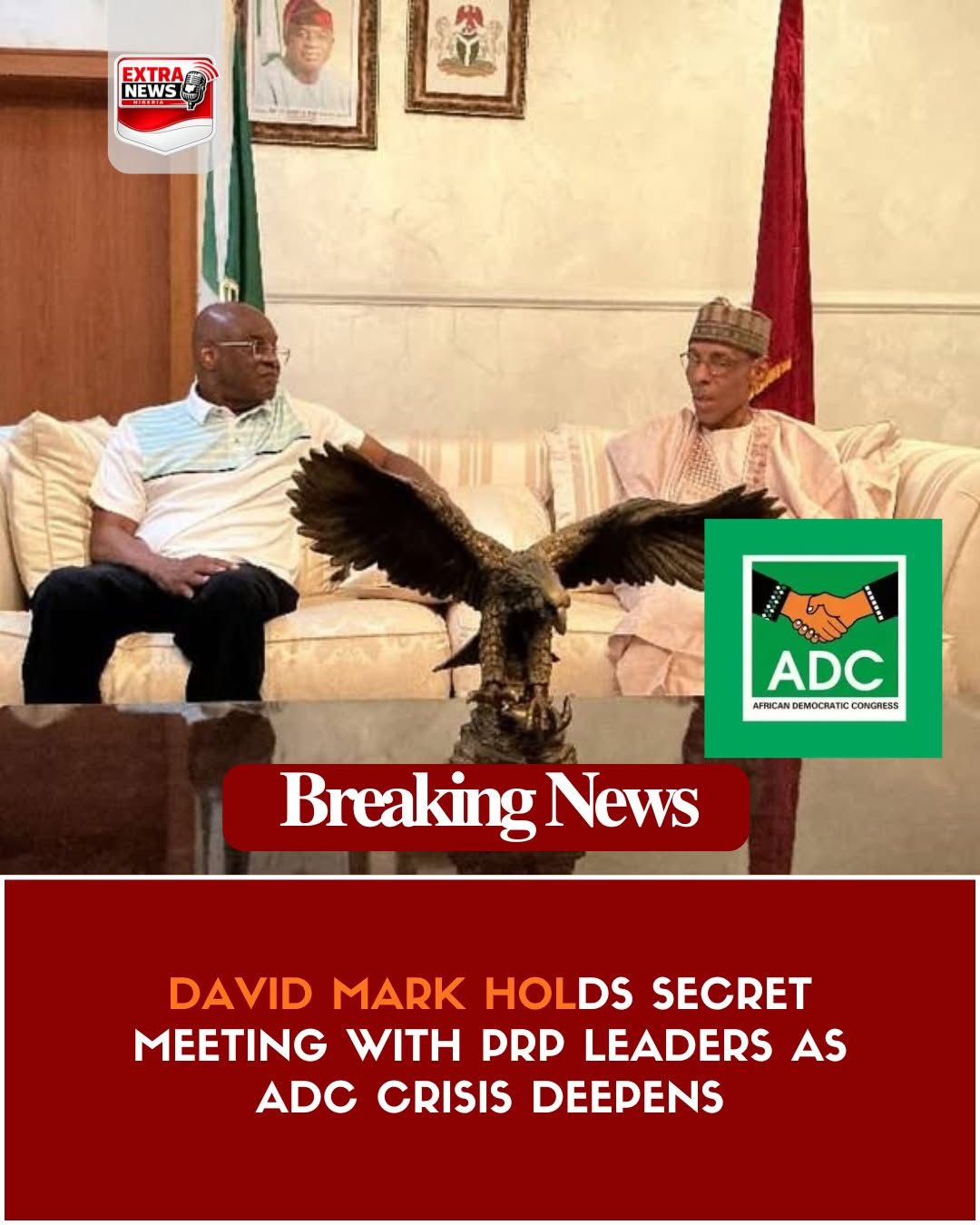
The embattled National Chairman of the African Democratic Congress, David Mark, on Friday held a closed-door meeting with leaders of the Peoples Redemption Party in Abuja. The private consultation is seen as a fresh round of political moves as the ADC continues to battle a lingering leadership crisis and growing internal divisions.
Top figures from both parties were said to be present at the meeting, including PRP National Chairman Hakeem Baba-Ahmed and senior ADC officials. The development is already drawing attention as opposition parties continue realignments ahead of the 2027 political season, with many watching closely for possible alliances and next steps in the party crisis.
Politics
“ADC is a Holy Party, Cannot be used to Scam Nigerians Again” – Hon Success Opara tells David Mark
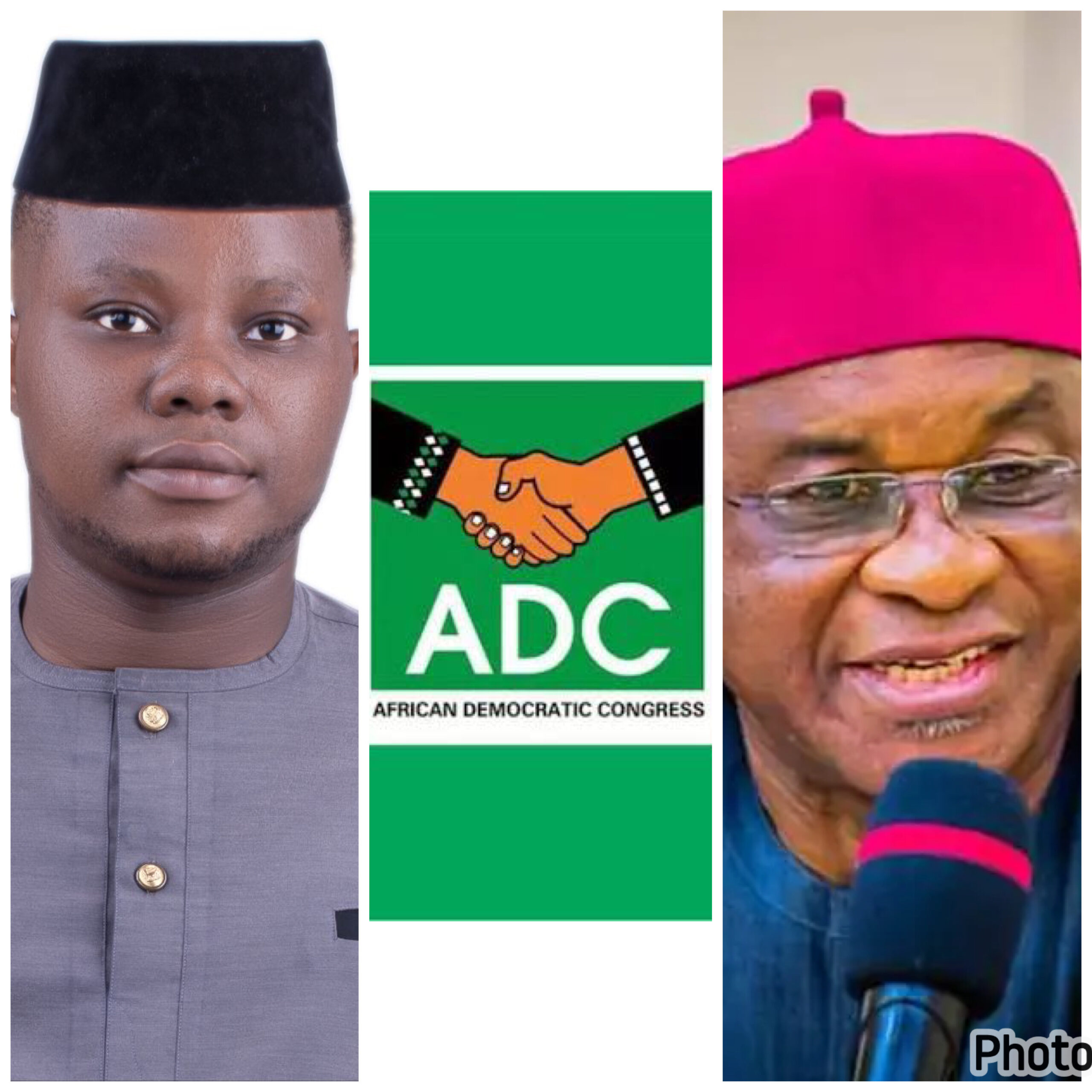
ADC Party in Turmoil: Hon Success Opara Slams Leadership, Warns Against Scamming Nigerians
Abuja, Nigeria – The African Democratic Congress (ADC) is facing internal strife as Hon Success Opara, a prominent party official, has warned against attempts to use the party to deceive Nigerians. Opara specifically criticized the leadership of David Mark, stating that the party cannot be used to scam citizens again.
“ADC holy Party cannot be used to scam Nigerians again,” Opara said, emphasizing that those forming coalitions are hindering the party’s growth and denying youths opportunities to thrive.
“Those who are forming coalition don’t want to give the youths the chance to strive in the party,” she added.
Opara’s statement highlights the deepening divisions within the ADC, with concerns over leadership and the party’s direction.
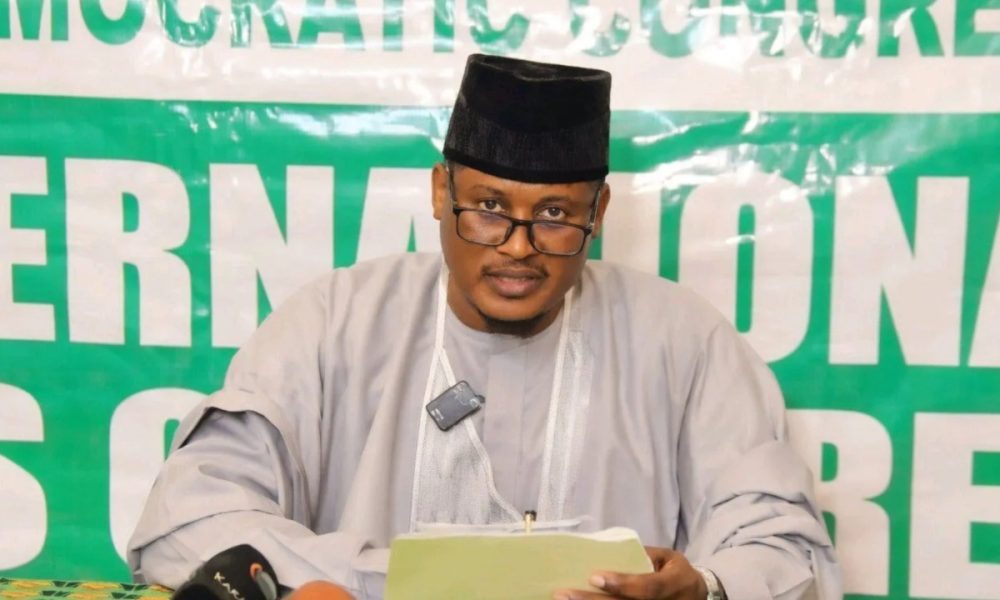
The factional National Chairman of the African Democratic Congress (ADC), Nafiu Bala Gombe, has announced that the party under his leadership will bar individuals above the age of 55 from contesting for political positions.
Gombe made the disclosure during an interview with BBC Hausa, where he outlined a vision centred on generational change and greater youth participation in politics.
“The African Democratic Congress (ADC) is a party that belongs to all Nigerians. What we are doing now is to ensure the party moves forward properly.
“We have decided that we will give the youths a real chance. The time has come for young people to take the lead in politics.
“If you are over 55 years old, you are not going to contest for positions in the ADC under our leadership.
“We want to bring in fresh blood, new ideas, and energy from the youth. Nigeria’s future depends on the young generation.
“The old ways have not worked well for the country. We need to open the door wide for youths to participate fully as candidates, leaders, and decision-makers,” he said.

David Mark Holds Secret Meeting With PRP Leaders as ADC Crisis Deepens

Chaos As Military Officers Exchange Blows During Tinubu’s Visit To Bayelsa (Videos)

HRH Ekwueme of Ochia Kingdom Iynched & kiIIed in Imo.

-
Business1 year ago
US court acquits Air Peace boss, slams Mayfield $4000 fine
-

 Trending1 year ago
NYA demands release of ‘abducted’ Imo chairman, preaches good governance
-

 Politics1 year ago
Mexico’s new president causes concern just weeks before the US elections
-

 Politics1 year ago
Putin invites 20 world leaders
-

 Politics1 year ago
Russia bans imports of agro-products from Kazakhstan after refusal to join BRICS
-
Entertainment1 year ago
Bobrisky falls ill in police custody, rushed to hospital
-
Entertainment1 year ago
Bobrisky transferred from Immigration to FCID, spends night behind bars
-
Education2 years ago
GOVERNOR FUBARA APPOINTS COUNCIL MEMBERS FOR KEN SARO-WIWA POLYTECHNIC BORI