
Columns
Lt. Colonel Victor Adebukunola Banjo and the Mid-Western Front of the Nigerian Civil War

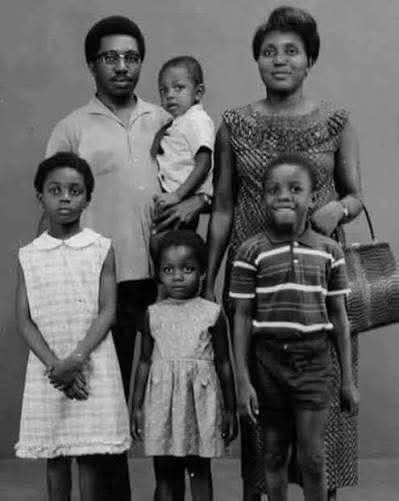
The photograph referenced is of Victor Adebukunola Banjo, a Nigerian Army officer whose career intersected dramatically with the political crises that followed the January 15, 1966 coup and the outbreak of the Nigerian Civil War (1967–1970).
After the January 15, 1966 Coup
Following the coup led by officers including Chukwuma Kaduna Nzeogwu and Emmanuel Ifeajuna, several political leaders were detained. Historical accounts indicate that Banjo, alongside Yakubu Gowon (then a lieutenant colonel), intervened to prevent the killing of Western Region politician Remi Fani-Kayode, who had been arrested by coup plotter Emmanuel Nwobosi.
Soon afterward, Banjo himself fell under suspicion. Under the military government of Johnson Aguiyi-Ironsi, he was arrested and detained in Enugu, reportedly accused of disloyalty.
Role in the Nigerian Civil War
When Chukwuemeka Odumegwu Ojukwu declared the secession of the Eastern Region as the Republic of Biafra on 30 May 1967, Banjo was released and commissioned into Biafran service.
He was assigned to lead Biafran forces in the Mid-Western Region invasion of August 1967. His troops swiftly captured Benin City and advanced westward toward Ore, bringing them within striking distance of Lagos. However, federal forces regrouped and launched a counteroffensive. The battle around Ore marked a decisive turning point, halting the Biafran advance.
The phrase often cited in Yoruba oral expression, “Olèku Ìjà Òré,” is popularly associated in folklore with the heavy fighting in that sector, though interpretations of its precise origin vary in historical literature.
Trial and Execution
Following the failed campaign, Banjo returned to Biafran territory. In September 1967, he was accused by Ojukwu of plotting against the Biafran leadership. After a military tribunal in Enugu, he was convicted of treason and executed by firing squad on 22 September 1967, alongside other officers.
Within weeks, federal troops recaptured Enugu on 4 October 1967.
Historical Context and Interpretation
Banjo’s execution occurred within the broader pattern of wartime military tribunals during the Nigerian Civil War. Similar charges of treason had been brought earlier against Isaac Jasper Adaka Boro, leader of the 1966 Niger Delta insurgency, though his death sentence was not carried out due to the July 1966 counter-coup that overthrew Ironsi.
Comparisons between historical treason cases and contemporary political prosecutions — including those involving Nnamdi Kanu — remain matters of political debate. Legal interpretations vary, and assessments of fairness depend on judicial processes, constitutional standards, and the specific circumstances of each case.
Sources
Max Siollun, Oil, Politics and Violence: Nigeria’s Military Coup Culture (1966–1976) (Algora Publishing, 2009).
Max Siollun, The Nigerian Civil War (Pen & Sword Military, 2019).
Nowa Omoigui, “The Mid-Western Invasion of 1967,” archival essays on Nigerian military history.
John de St. Jorre, The Nigerian Civil War (Hodder & Stoughton, 1972).
Nigerian National Archives, Civil War Military Tribunal Records (1967).




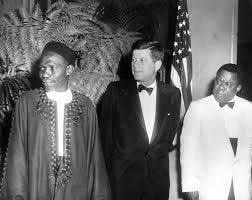
In July 1961, Sir Abubakar Tafawa Balewa, the Prime Minister of Nigeria, visited the White House in Washington, D.C., where he was formally received by John F. Kennedy, the President of the United States. This historic visit marked the first time a Nigerian leader was hosted by an American president, reflecting Nigeria’s growing diplomatic presence in the early post-independence era.
Key Highlights of the Meeting
Diplomatic Significance: The meeting symbolized strengthening ties between Nigeria, newly independent in 1960, and the United States.
Participants: Chief Momo Udochi, a senior Nigerian official, was also present during the discussions, representing aspects of Nigeria’s civil administration and governance interests.
Bilateral Discussions: Topics likely included trade, education, technical assistance, and geopolitical collaboration in the context of the Cold War.
Historical Note
Tragically, both leaders were assassinated within a few years after this meeting:
John F. Kennedy in November 1963, during his presidency in the United States.
Sir Abubakar Tafawa Balewa in January 1966, during the military coup in Nigeria.
This meeting remains a milestone in Nigeria–United States relations, symbolizing the diplomatic strides of newly independent African nations during the early 1960s.
Sources:
National Archives, Nigeria – Diplomatic Records (1961)
White House Historical Association – Presidential Visits
Britannica, Biography of Sir Abubakar Tafawa Balewa
U.S. Department of State – Historical Diplomatic Visits
Columns
Very interesting history about Obalende and the present site where Kings College is today sited:
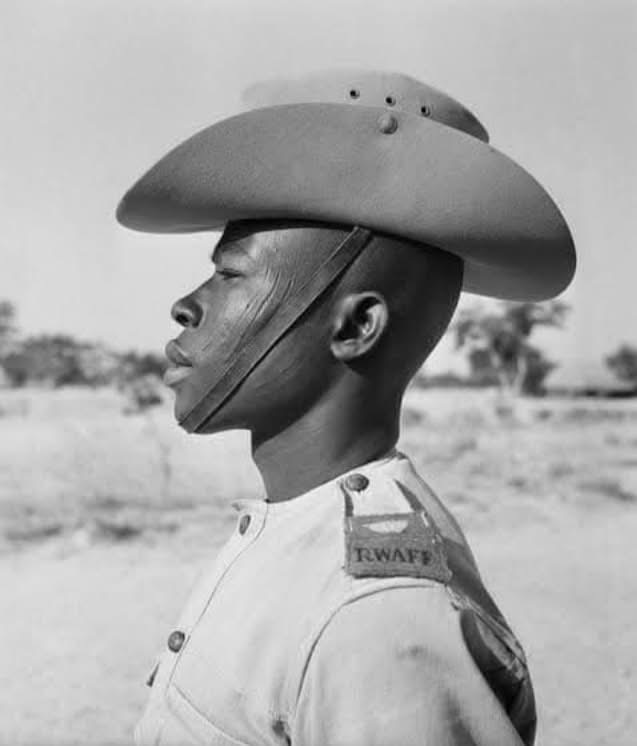
In 1906, Obalende became a resettlement site for soldiers and the veterans of the Royal West Force (RWAFF). Hence, the name, Obalende was given by the natives of the land.
The Royal West African Frontier Force (RWAFF) made up of predominantly Hausa men were initially camped on the land where King’s College, Lagos is situated.
Then, a need arose for the use of the land and the Oba of Lagos pressured the Governor of Lagos to resettle the RWAFF men, and sold virgin land in what is now Obalende to the British Colonial Government.
So they were somehow ‘chased’ to a new site at Obalende by the ‘Oba’.
Hence the name Obalende was coined:
The RWAFF men named the place Ibi ti Ọba lé wà dé, which translated from Yoruba means “the place where the king drove us to”.
Photo: Undated image of Adamu Sokoto when he joined the Royal West African Frontier Force.
Image sourced from IWM.
Source Greg Nwoko
Columns
Sir David Hunt: British High Commissioner in Lagos During the Nigerian Civil War (1967–1969)
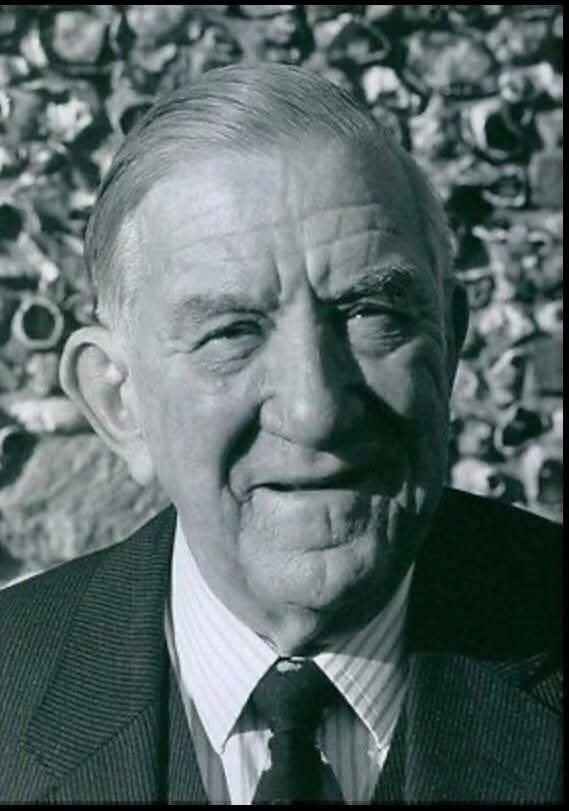
Sir David Hunt served as the United Kingdom’s High Commissioner to Nigeria from 1967 to 1969, a period that coincided with the outbreak and most intense years of the Nigerian Civil War.
Military and Diplomatic Background
Before entering the diplomatic service, Hunt had a distinguished career in the British Army during World War II, where he served with distinction. After the war, he joined the British Diplomatic Service and held various postings before being appointed High Commissioner to Nigeria in 1967, shortly after Nigeria’s Eastern Region declared independence as Biafra.
Role During the Nigerian Civil War
Hunt’s tenure in Lagos was dominated by Britain’s controversial policy toward the war between the Federal Military Government of Nigeria and the secessionist state of Biafra, led by Chukwuemeka Odumegwu Ojukwu.
The British government, under Prime Minister Harold Wilson, maintained official support for Nigeria’s federal government, including the continued supply of arms. This policy attracted heavy criticism from sections of the British Parliament, humanitarian groups, church organizations, and segments of the press, particularly as images of widespread starvation in Biafra circulated internationally.
Critics argued that British military support helped sustain the Federal blockade that contributed to severe humanitarian suffering in the secessionist region. Supporters of the policy maintained that Britain was backing Nigeria’s territorial integrity and preventing the fragmentation of a former colony.
Allegations circulated at the time—and later in memoirs and commentary—that Hunt harbored personal animosity toward Ojukwu. Claims included suggestions of strained personal interactions and social tensions in Lagos. Some accounts also mention his second wife, Iro Myrianthousis, niece of businessman Anastasios George Leventis, though such personal narratives remain part of contested and anecdotal discussions rather than established diplomatic record.
Later Career and Public Recognition
Hunt left Nigeria in 1969 and was subsequently appointed British Ambassador to Brazil. Beyond diplomacy, he became widely known in Britain for winning the BBC quiz program Mastermind, further adding to his public profile.
Historical Assessment
Sir David Hunt remains a controversial figure in discussions of Britain’s role during the Nigerian Civil War. His tenure reflects the complexities of Cold War-era diplomacy, post-colonial relations, and humanitarian crises in newly independent African states.
Sources
UK National Archives records on British policy during the Nigerian Civil War
Parliamentary debates (Hansard), 1967–1969
Biographical entries on Sir David Hunt
Contemporary British press coverage (1967–1970)
BBC archives on Mastermind
Photo referenced as 1970 (internet source).

Historic Meeting: Sir Abubakar Tafawa Balewa and John F. Kennedy, July 1961

BREAKING: Court Refuses To Hear Ex-Governor El-Rufai’s Bail Application, Adjourns Case To April 23

Lt. Colonel Victor Adebukunola Banjo and the Mid-Western Front of the Nigerian Civil War

-
Business1 year ago
US court acquits Air Peace boss, slams Mayfield $4000 fine
-

 Trending1 year ago
NYA demands release of ‘abducted’ Imo chairman, preaches good governance
-

 Politics1 year ago
Mexico’s new president causes concern just weeks before the US elections
-

 Politics1 year ago
Putin invites 20 world leaders
-

 Politics1 year ago
Russia bans imports of agro-products from Kazakhstan after refusal to join BRICS
-
Entertainment1 year ago
Bobrisky falls ill in police custody, rushed to hospital
-
Entertainment1 year ago
Bobrisky transferred from Immigration to FCID, spends night behind bars
-
Education1 year ago
GOVERNOR FUBARA APPOINTS COUNCIL MEMBERS FOR KEN SARO-WIWA POLYTECHNIC BORI