
Politics
Macron stresses need for lasting peace in Ukraine, calls for end to Russian “aggression” after talks with Trump, Zelenskyy

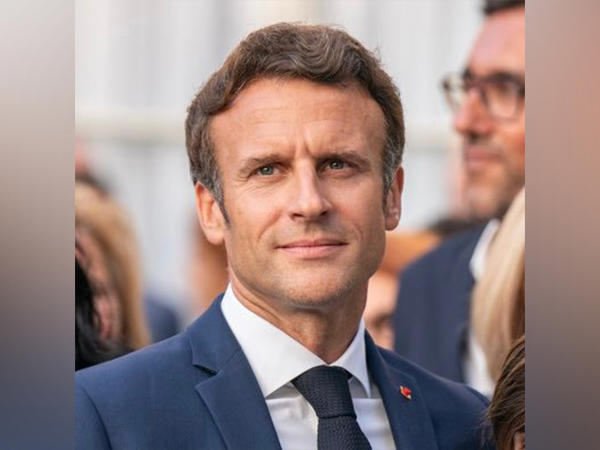
Paris [France], February 18 (ANI): French President Emmanuel Macron held discussions with US President Donald Trump and Ukrainian President Volodymyr Zelenskyy, and emphasised the importance of a strong and lasting peace.
He stressed that Russia must end its aggression, and that this must be accompanied by “strong and credible” security guarantees for Ukraine.
Sharing a post on X, Macron wrote, “After bringing together several European leaders, I have just spoken with President @realDonaldTrump and then with President @ZelenskyyUa. We seek a strong and lasting peace in Ukraine. To achieve this, Russia must end its aggression, and this must be accompanied by strong and credible security guarantees for the Ukrainians. Otherwise, there is a risk that this ceasefire will end up like the Minsk agreements.”
The post added, “We will work on this together with all Europeans, Americans, and Ukrainians. This is the key. We are convinced that Europeans must invest better, more, and together in their security and defense–both for today and for the future.”
Zelenskyy also shared details of his conversation with French President Macron following his discussions with European leaders about Ukraine‘s security situation. Zelenskyy reiterated the commitment to securing robust and reliable security guarantees for Ukraine, emphasising that any agreement lacking these guarantees–such as a fragile ceasefire–would only enable further deception by Russia and risk reigniting conflict.
In a post on X, Zelenskyy said, “I just had a long conversation with President of France@EmmanuelMacron following his meeting today with other European leaders to discuss the global situation, the state of affairs in Europe, and security guarantees for Ukraine.”
He added, “We share a common vision: security guarantees must be robust and reliable. Any other decision without such guarantees–such as a fragile ceasefire–would only serve as another deception by Russia and a prelude to a new Russian war against Ukraine or other European nations. Emmanuel also briefed me on his talks with other leaders, not just European ones. We agreed to stay in constant contact as major decisions are being made. Ensuring a robust and lasting peace is a must. And that can only be achieved through strong security guarantees.”
Meanwhile, European leaders on Monday reaffirmed their commitment to supporting Ukraine amid Russia‘s invasion, but did not offer any new security guarantees that might alter the situation, especially as Donald Trump pushes for negotiations with Russia, Euro News reported.
At the conclusion of an emergency summit in Paris, UK Prime Minister Keir Starmer expressed his willingness to commit British forces on the ground alongside other nations if a lasting peace agreement is reached.
However, he emphasised that a US security guarantee is essential to effectively deter further Russian aggression towards Ukraine.
“I am prepared to consider committing British forces on the ground alongside others if there’s a lasting peace agreement. But there must be a US backstop because a US security guarantee is the only way to effectively deter Russia from attacking Ukraine again,” Starmer said at the end of an emergency summit in Paris.
“We have to recognise the new era we’re in, not cling hopelessly to the comforts of the past. It’s time for us to take responsibility for our security, for our continent,” he added. (ANI)






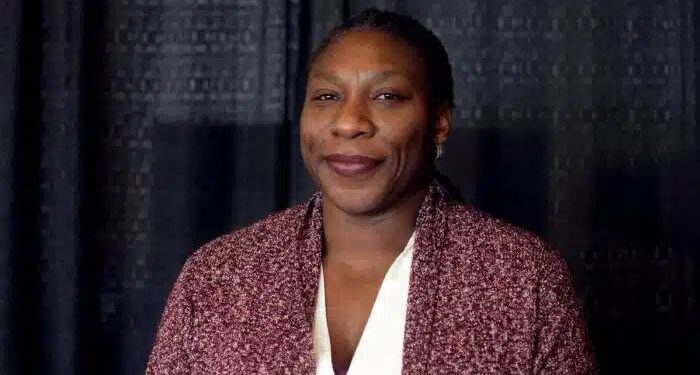
Prof. Iyabo Obasanjo, daughter of former President Olusegun Obasanjo, has declared her intention to contest the 2027 governorship election in Ogun State under the platform of the ruling All Progressives Congress (APC).
She made the declaration during an interview with Nigerian football legend Segun Odegbami on 103.7FM Eagle7 Sports, on Saturday.
The former commissioner ruled out a return to the Senate, stating that her focus is firmly on the governorship race.
“So moving ahead, I’m not going to be Commissioner. Like I said, I’m not even going back to the same party because I think that’s old and I don’t see the use of it. And I’m not going to go back to the Senate,” she said.
“Like the American would say, there’s no need. And this is what I told my associates, when this all started. I said, the only thing I’ll come back to do is the governorship.
“And we have started that journey. We are going to see it through. And so that’s the journey I’m on. And we are very serious about it. I mean we are very dedicated to it.”
The politician also confirmed that she recently joined the APC, explaining that her return to active politics followed persistent calls from supporters.
“Like I told you, a group of people who I did not bring together, have been working, I think, for two years now. And then they started talking to me about a year ago, saying, ‘Look, we think you are the best candidate. We want you back,’” she added.
Her declaration sets the stage for what may become a keenly contested governorship race in Ogun State ahead of the 2027 elections.
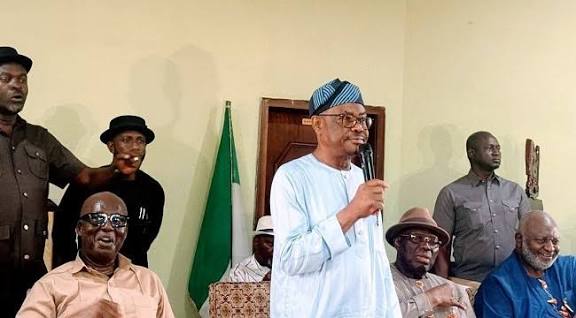
FCT Minister and former governor of Rivers state, Nyesom Wike, has said that any senator, House of Representatives Member, Minister, or governor who supports betrayers will suffer betrayal in their lives and that such person will join their creator when they experience their own betrayal.
Wike who is currently in a running battle with his godson and incumbent governor of Rivers state, Sim Fubara, said this while speaking at a public function in the state today February 6.
Speaking to the crowd at the public function, Wike said
‘’Wether you are a Senator, House of Reps member, a Minister or Governor, and you support betrayers, people will continue to betray you in life. You see people who betray and support them, betrayal is your portion! Betrayal is your portion! and that day you will not have mouth to say anything and there you will collapse and there you will go and they will announce such person has died because that is the seed you have planted because whatever you plant, you reap and so since you are sowing betrayal, betrayal will always follow you.
Watch! Every governor who is doing his second term and has ambition to put a successor and is supporting betrayals, you will never survive it. Betrayal will follow you. From the day your successor comes in. My own took so many months, your own will start immediately the person has been inaugurated. That is what the gods of the land have told me to tell all of you’’
https://www.instagram.com/reel/DUdaCp1jD01/?igsh=MWVnZXoyaGNmOGJ5dA==
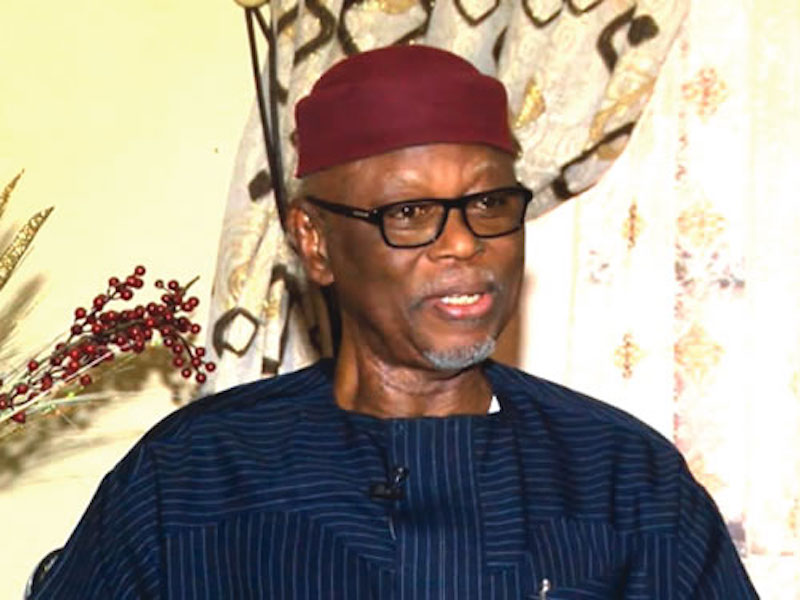
Chairman, Policy Manifesto Committee of the African Democratic Congress, ADC, John Odigie-Oyegun, says former president Muhammadu Buhari gave him the shock of his life, six months into his administration as Nigeria’s leader.
Oyegun made this disclosure on Friday when he featured in an interview on Arise Television’s ‘Prime Time’.
He revealed that as National Chairman of the All Progressives Congress, APC, he went to tell Buhari that he was not delivering his election promises to Nigerians but that the late president told him he would not rule with strictness, but rather wanted to show Nigerians that he is a true civilian president.
The former APC National Chairman lamented that it became business as usual, from there.
“I was national chairman of the APC. Six months or less into our assuming office, fairly alarmed, I went to the late President Buhari for a one-on-one talk. I said Mr President, this is not what the people were expecting. They wanted a bit of the old president Buhari.
“And he explained to me, Mr Chairman, I have learned my lesson. I was shocked. And don’t forget at that time, a lot of prominent Nigerians took their holidays abroad, just to be sure and see what this new sheriff in town will be.
“Buhari told me he wants to now show the people that he’s a true civilian president in Agbada. And by the time we finished the conversation, I said Oh God, we are finished. Because, if he’s not ready to be strict, what’s the point?
“Weeks later, months later, years later, I was proven correct. And of course, it became business as usual, only that they are a new set of tenants in Aso Rock. That was a shocker,” he said.

Olusegun Obasanjo’s Daughter Declares For Ogun Governorship, Joins APC

Nigerian Pharmacist D!es While Donating Kidney To Save His Cousin’s Life

Two Presidents, Many Dignitaries In Attendance As Defence Minister Matawalle’s 10 Children Get Married In One Day (Photos/Video)

-
Business1 year ago
US court acquits Air Peace boss, slams Mayfield $4000 fine
-

 Trending1 year ago
NYA demands release of ‘abducted’ Imo chairman, preaches good governance
-

 Politics1 year ago
Mexico’s new president causes concern just weeks before the US elections
-

 Politics1 year ago
Putin invites 20 world leaders
-

 Politics1 year ago
Russia bans imports of agro-products from Kazakhstan after refusal to join BRICS
-
Entertainment1 year ago
Bobrisky falls ill in police custody, rushed to hospital
-
Entertainment1 year ago
Bobrisky transferred from Immigration to FCID, spends night behind bars
-
Education1 year ago
GOVERNOR FUBARA APPOINTS COUNCIL MEMBERS FOR KEN SARO-WIWA POLYTECHNIC BORI