
Politics
‘Moral darkness has fallen on Israel’, defence minister declares

Outgoing Israeli Defence Minister Yoav Gallant slammed Prime Minister Benjamin Netanhyahu’s ‘corrupt’ policies in an emotional speech Tuesday night after he was sacked over a breakdown in trust during the Gaza war against Hamas.
Addressing the nation just hours after his dismissal, Gallant suggested that a ‘moral darkness’ had fallen on the prime minister and claimed that his removal was due to disagreements over contentious issues faced by Israel‘s government.
This, he said, included disagreements over a new hostage deal and a ‘corrupt’ bill to exempt Orthodox Jews from completing IDF military service.
Referring to the hostage deal, Gallant said that Israel would have to make ‘some painful compromises’ in order to return the remaining hostages to their families and called on the government to bring home hostages while they are ‘still alive’.
‘The State of Israel will know how to withstand these compromises, and the IDF will know how to secure them’, he said, stressing its ‘moral and ethical commitment to bringing back our sons and daughters’.
He also noted how the IDF military service exemption was ‘discriminatory’ as Israelis will have to deal with several security challenges in the years to come.
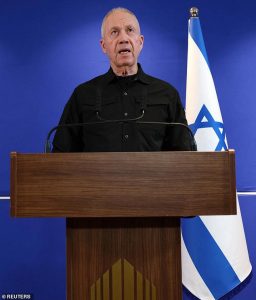
Former Israeli Defense Minister Yoav Gallant speaks to members of the press shortly after he was sacked by Israeli Prime Minister Benjamin Netanyahu who cited a lack of trust. Gallant slammed Prime Minister Benjamin Netanhyahu’s ‘corrupt’ policies

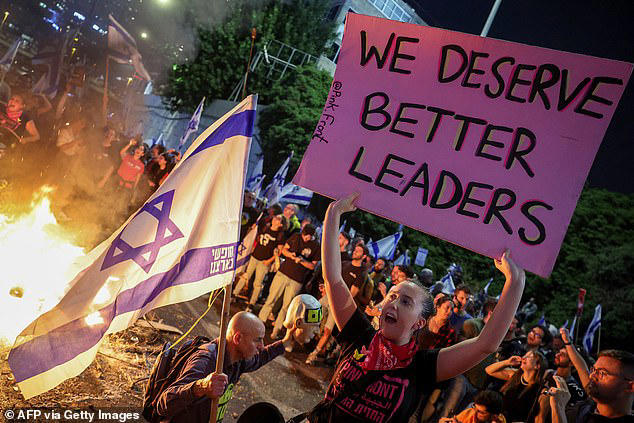
Anti government protesters take to streets after the Israeli prime minister announced that he had fired Defense Minister Yoav Gallant
‘Everyone must serve in the IDF and participate together in the mission of defending the State of Israel,’ he said.
‘We must not allow a corrupt and flawed law to pass in the Knesset (Israel’s parliament) that would exempt tens of thousands of citizens from bearing the burden.’
Gallant was referring to members of the ultra-Orthodox community who were historically exempted from mandatory service until a Supreme Court decision in June.
The decision to oust Gallant came amid controversy over the decision to draft 7,000 more ultra-orthodox Haredi Jews into the military.
The order came after a first round of 3,000 draft orders were sent out in July, sparking protests from the ultra-Orthodox community.
Gallant also cited Netanyahu’s unwillingness to form a National Commission of Inquiry for October 7, which the outgoing minister said was necessary for the truth to ‘see the light of day’.
Netanyahu fired Gallant yesterday night, stating that ‘over the past few months [trust] has eroded. In light of this, I decided today to end the term of the defence minister’.
Gallant, who only returned to the post in April after being sacked last March, will be replaced by Foreign Minister Israel Katz, the office reported.
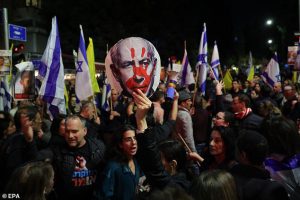
Hundreds took to the streets to protest in a march through Tel Aviv as news broke of the decision.
The mother of a hostage said: ‘Gallant’s dismissal sends a clear message – there is no one left to prevent the foiling of hostage deal; it’s time to take to the streets.’
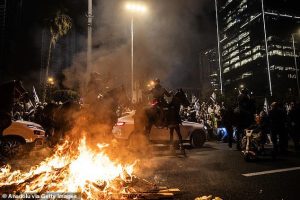
sraeli forces intervene with protesters blocking the Ayalon Highway (Highway 20) while people take the streets to protest Prime Minister Benjamin Netanyahu’s dismissal of Defense Minister
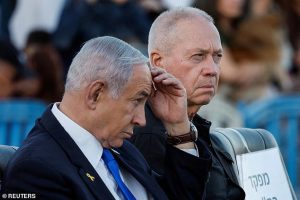
Israeli Prime Minister Benjamin Netanyahu and Israeli Defense Minister Yoav Gallant, Oct 31
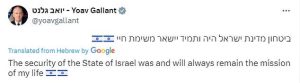
Moral darkness has fallen on Israel’, defence minister declares
Netanyahu posted on social media after issuing the pithy statement, writing on Twitter/X: ‘We must all stand strong against refusal.’
Netanyahu said in his video statement that in spite of ‘fruitful work’ with Gallant at the beginning of the war in Gaza, trust had ‘cracked’ in recent months.
‘I made many attempts to bridge these gaps, but they kept getting wider,’ he continued.
‘They also came to the knowledge of the public in an unacceptable way, and worse than that, they came to the knowledge of the enemy — our enemies enjoyed it and derived a lot of benefit from it.’
Minister without Portfolio Gideon Sa’ar will replace Katz as Foreign Minister.
Gallant had also voiced concerns that divisions within society were hurting morale in the military and empowering Israel’s adversaries.
‘I see how the source of our strength is being eroded,’ he said last Saturday.
Netanyahu insisted in his announcement that most politicians agreed with him on the decision to sack Gallant, opposing the conscription order.
He did not give a specific reason why trust had broken down.
But National Unity lawmaker Orit Farkash Hacohen said of the decision to sack Gallant: ‘There is no low to which this government will not sink.
‘A Defense Minister who announces conscription orders for thousands of Haredim is fired in the middle of a war on the eve of an [expected Iranian] attack for the sake of the evasion law.’

Members of the Israeli security personnel detain an ultra-Orthodox Jewish protester during a demonstration against conscription in Jerusalem on October 31
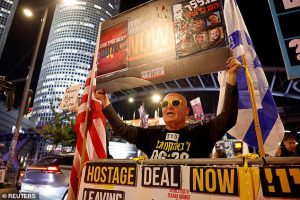
A protester attends a rally demanding the release of hostages in Tel Aviv, Israel, November 4
National Unity chair Benny Gantz, formerly of Netanyahu’s war cabinet, posted: ‘Politics at the expense of national security.’
Gantz announced he was resigning his post over frustrations surrounding Netanyahu’s handling of the war in June.
Yair Golan, leader of The Democrats party, called on the public to ‘hit the streets’ and strike in light of the decision.
Far-right National Security Minister Itamar Ben-Gvir supported Netanyahu’s decision.
‘I congratulate the prime minister on the decision to dismiss Gallant. With Gallant, who is still deeply trapped in his own conception, it is impossible to achieve a complete victory.’
The United States meanwhile praised Gallant as an ‘important partner’.
‘Minister Gallant has been an important partner on all matters related to the defense of Israel. As close partners, we will continue to work collaboratively with Israel’s next minister of defense,’ a State Department spokesperson said.
Gallant had clashed with Netanyahu over the future of the war in Gaza in recent months.
In his eyes, Israel should have shifted its focus more squarely to the northern border with Lebanon, where the military launched a major campaign to stop Iran-backed Hezbollah militants from launching cross-border attacks.
While in sync with Gallant on Lebanon, Netanyahu disagreed with him on the future of Gaza, where the fired defence chief thought Israel should be looking for ways to end the war.
Nearly a year into the war in Gaza, Gallant declared that ‘the centre of gravity’ of Israel’s military campaign was ‘shifting north’ to Lebanon, calling it ‘the beginning of a new phase of the war, which requires courage, determination and perseverance’.
Days later, Israel announced ground troops had begun raids against Hezbollah inside Lebanon, after a spate of attacks that had decimated the powerful group’s leadership.
‘Gallant was one of the first to support the idea that Israel needed to take the initiative in the north, just days after the October 7 attacks,’ said Michael Horowitz, a geopolitical expert at the Middle East-based security consultancy Le Beck.
Calev Ben-Dor, a former analyst at Israel’s foreign ministry, said the ‘reasoning was that in a war, it is preferable to fight the more powerful foe first, and Hezbollah’s strength far outweighed Hamas’s’.






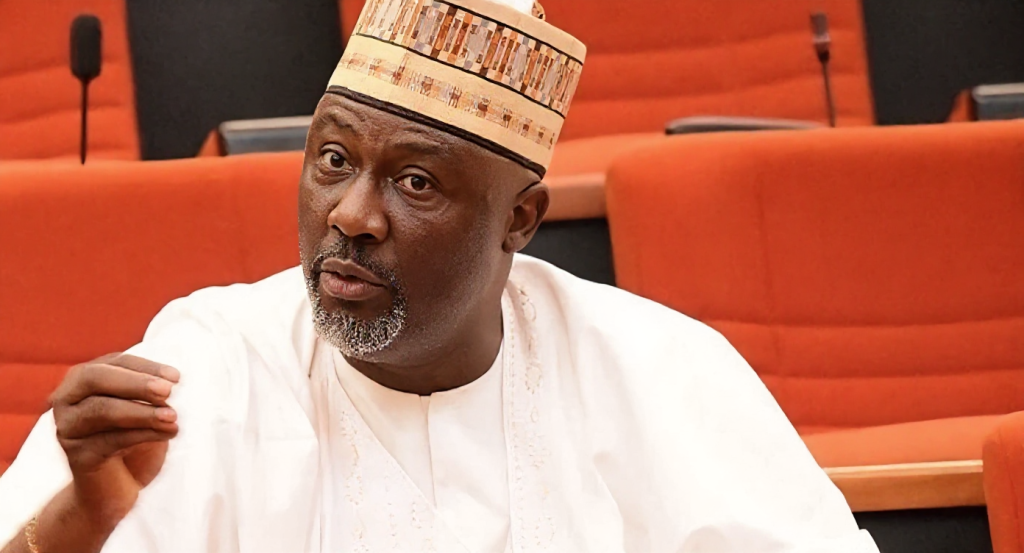
Former lawmaker, Dino Melaye Esq, has raised concerns over the Senate’s reported rejection of the electronic transmission of election results.
The move, according to Melaye, is a clear endorsement of election rigging and an indication of a sinister plan to rig the 2027 elections.
In a statement on Friday, the former lawmaker criticized the Senate’s decision, stating that it undermines the credibility of the electoral process.
The African Democratic Congress, ADC chieftain, also stated that the move opens the door for electoral manipulation and fraud.
He further warned that the rejection of electronic transmission of results is a step backwards for democracy in Nigeria.
Melaye called on lawmakers and citizens to stand up against “this blatant attempt to undermine the will of the people and ensure that future elections are free, fair, and transparent”.
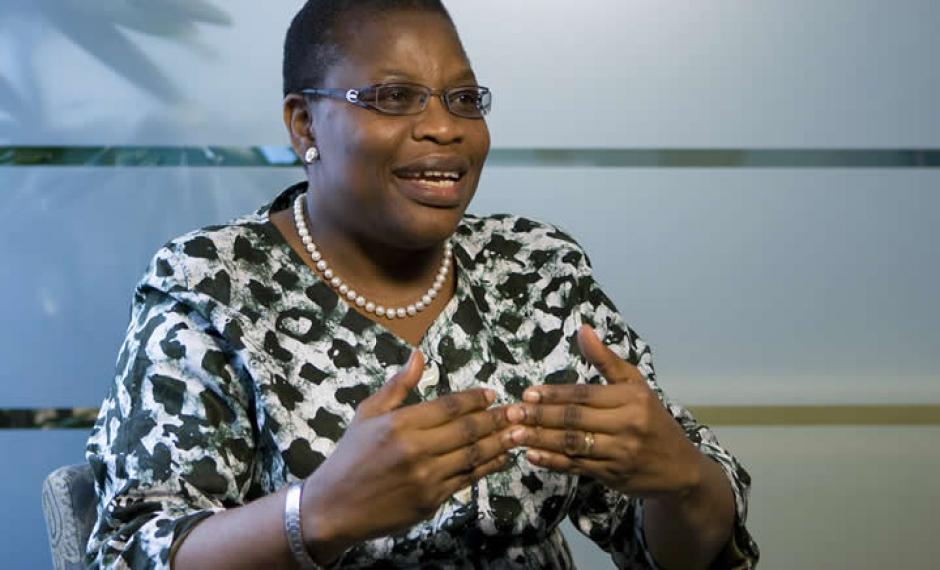
Former Minister of Education, Oby Ezekwesili, has said Nigerians have every reason to be mad at the Senate over the ongoing debate on e-transmission of election results.
Ezekwesili made this known on Friday when she featured in an interview on Arise Television’s ‘Morning Show’ monitored by DAILY POST.
DAILY POST reports that the Senate on Wednesday turned down a proposed change to Clause 60, Subsection 3, of the Electoral Amendment Bill that aimed to compel the electronic transmission of election results.
Reacting to the matter, Ezekwesili said, “The fundamental issue with the review of the Electoral Act is that the Senate retained the INEC 2022 Act, Section 60 Sub 5.
“This section became infamous for the loophole it provided INEC, causing Nigerians to lose trust. Since the law established that it wasn’t mandatory for INEC to transmit electoral results in real-time, there wasn’t much anyone could say.
“Citizens embraced the opportunity to reform the INEC Act, aiming to address ambiguity and discretionary opportunities for INEC. Yet, the Senate handled it with a “let sleeping dogs lie” approach. The citizens have every reason to be as outraged as they currently are.”
Politics
Electoral act: Senate’s action confirms Nigeria ‘fantastically corrupt’, ‘disgraced’ – Peter Obi
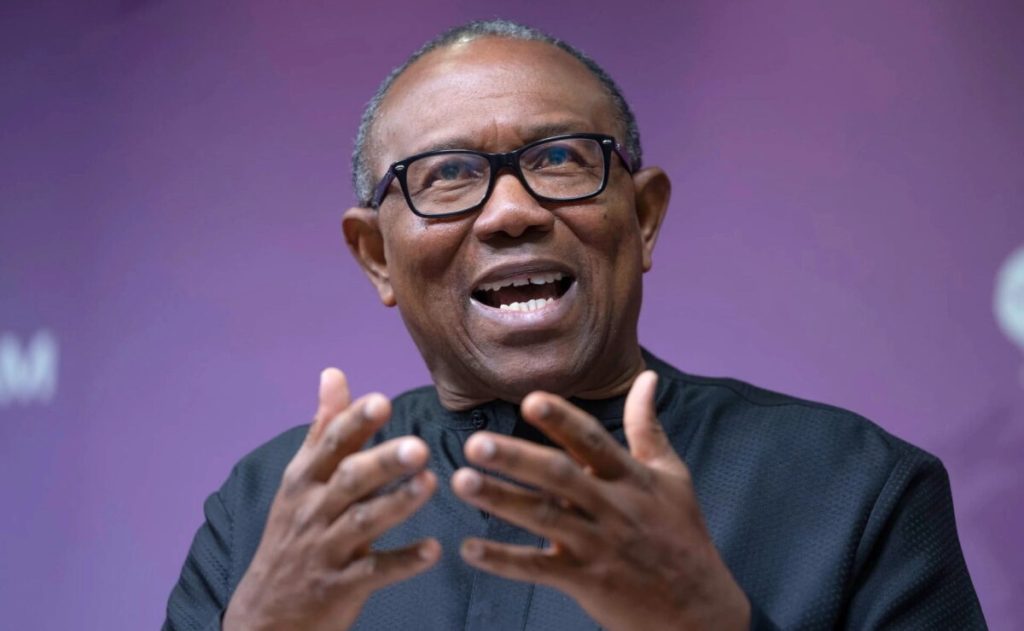
Former Labour Party presidential candidate, Peter Obi, has condemned the Senate’s refusal to make electronic transmission of election results mandatory, saying the move further exposes Nigeria as a fantastically corrupt and disgraced country.
Obi expressed his views in a statement shared on X on Friday, where he accused lawmakers of deliberately weakening Nigeria’s democratic process ahead of the 2027 general elections.
He explained that his reaction came after a brief pause to mourn victims of a deadly tragedy in Kwara State, where over 150 people reportedly lost their lives.
“Let us first pray for the souls of the innocent Nigerians lost in Kwara. That painful incident is why I delayed responding to the shameful development surrounding our electoral system,” he wrote.
Describing the Senate’s decision as intentional and dangerous, Obi said rejecting mandatory electronic transmission was not a simple oversight but a calculated attempt to block transparency.
“The Senate’s open rejection of electronic transmission of results is an unforgivable act of electoral manipulation ahead of 2027,” he said.
According to him, the action strikes at the heart of democracy and raises serious questions about the true purpose of governance in Nigeria.
“This failure to pass a clear safeguard is a direct attack on our democracy. By refusing these transparency measures, the foundation of credible elections is being destroyed. One must ask whether government exists to ensure justice and order or to deliberately create chaos for the benefit of a few.”
The former Anambra State governor linked the post-election controversies of the 2023 general elections to the failure to fully deploy electronic transmission of results, insisting that Nigerians were misled with claims of technical failures.
“
The confusion, disputes and manipulation that followed the 2023 elections were largely due to the refusal to fully implement electronic transmission,” he said.
He added that the so-called system glitch never truly existed.
Obi compared Nigeria’s electoral process with those of other African countries that have embraced technology to improve credibility, lamenting that Nigeria continues to fall behind.
“Many African nations now use electronic transmission to strengthen their democracy. Yet Nigeria, which calls itself the giant of Africa, is moving backwards and dragging the continent along.”
He criticised Nigeria’s leadership class, saying the country’s problems persist not because of a lack of ideas but because of deliberate resistance to meaningful reform.
“We keep organising conferences and writing policy papers about Nigeria’s challenges. But the truth is that the leaders and elite are the real problem. Our refusal to change is pushing the nation backwards into a primitive system of governance.”
Warning of the dangers ahead, Obi said rejecting electronic transmission creates room for confusion and disorder that only serves the interests of a small group.
He also recalled past remarks by foreign leaders who described Nigeria as corrupt, arguing that actions like this continue to justify those statements.
“When a former UK Prime Minister described Nigeria as ‘fantastically corrupt,’ we were offended. When former US President Donald Trump called us a ‘disgraced nation,’ we were angry. But our continued resistance to transparency keeps proving them right.”
Obi warned that Nigerians should not accept a repeat of the electoral irregularities witnessed in 2023.
“Let there be no mistake. The criminality seen in 2023 must not be tolerated in 2027.”
He urged citizens to be ready to defend democracy through lawful and decisive means, while also calling on the international community to closely monitor developments in Nigeria’s electoral process.
“The international community must pay attention to the groundwork being laid for future electoral manipulation, which threatens our democracy and development,” Obi stated.
He concluded by expressing hope that change is still possible if Nigerians take collective responsibility.
“A new Nigeria is possible but only if we all rise and fight for it.”

2026 World Cup: Super Eagles waiting for FIFA’s decision – Iwobi

Ijoba Lande accuses Lagos police officers of assault, theft

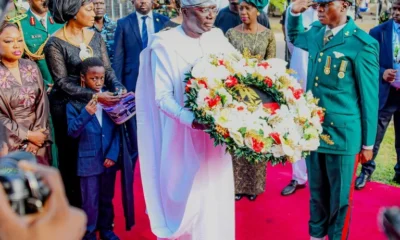
Sanwo-Olu attends 50th memorial ceremony for General Murtala Muhammed

-
Business1 year ago
US court acquits Air Peace boss, slams Mayfield $4000 fine
-

 Trending1 year ago
NYA demands release of ‘abducted’ Imo chairman, preaches good governance
-

 Politics1 year ago
Mexico’s new president causes concern just weeks before the US elections
-

 Politics1 year ago
Putin invites 20 world leaders
-

 Politics1 year ago
Russia bans imports of agro-products from Kazakhstan after refusal to join BRICS
-
Entertainment1 year ago
Bobrisky falls ill in police custody, rushed to hospital
-
Entertainment1 year ago
Bobrisky transferred from Immigration to FCID, spends night behind bars
-
Education1 year ago
GOVERNOR FUBARA APPOINTS COUNCIL MEMBERS FOR KEN SARO-WIWA POLYTECHNIC BORI