
Health
NAFDAC proposes death penalty for drug peddlers

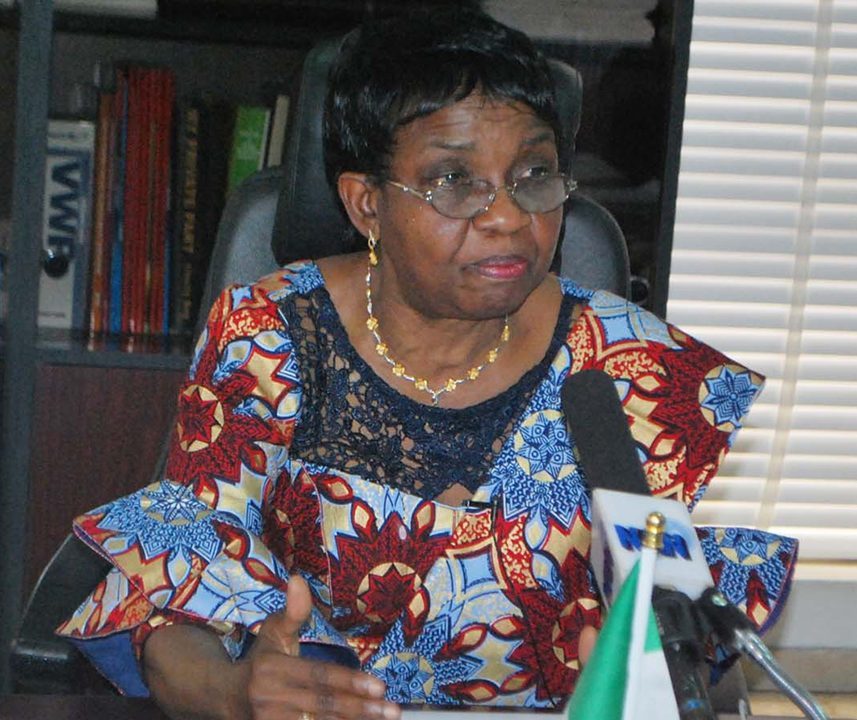
The Director-General of the National Agency for Food and Drug Administration and Control (NAFDAC), Mojisola Adeyeye, has called for the introduction of the death penalty for drug peddlers, particularly those whose actions result in the death of children.
In an appearance on Channels Television’s The Morning Brief on Friday, Adeyeye emphasized that only severe penalties would effectively deter drug peddlers, especially those selling harmful substandard medications.
She shared a troubling example from a recent investigation where children’s medicine was sold at vastly different prices, with one costing N13,000 while a counterfeit version was sold for just N3,000 in the same mall.
When tested at NAFDAC’s Kaduna laboratory, the medicine was found to contain no active ingredients.
“Someone doesn’t need to put a gun to a child’s head to harm them. Just give them bad medicine, and that child’s life can be destroyed,” Adeyeye said, expressing her frustration with the growing issue.
Adeyeye is pushing for a legal framework that would impose harsher penalties for those involved in the trade of counterfeit and dangerous drugs. She stressed the need for cooperation between the judiciary, the National Assembly, and NAFDAC to enforce stricter laws.
“You cannot combat substandard and falsified medicines in isolation. The agency can only do so much, but without strong deterrents, the problem will persist,” she stated.
She cited the case of a person importing a highly dangerous 225mg dose of Tramadol, which could cause severe harm or death, yet only receiving a minimal sentence of five years in prison or a fine of N250,000.
“Who wouldn’t pay a fine of N250,000 and go on to commit the same offense? That’s part of our issue—there are no stringent measures in place to prevent repeat offenses,” Adeyeye added. She urged lawmakers to partner with NAFDAC to make penalties for drug peddling far more severe.
While NAFDAC works tirelessly to address these issues, Adeyeye also highlighted the agency’s struggle with limited staffing and resources. With just around 2,000 employees nationwide, the agency faces significant challenges in carrying out its enforcement duties.
“We are understaffed, and our funding is limited. I hope things will improve so we can strengthen our efforts,” she concluded.








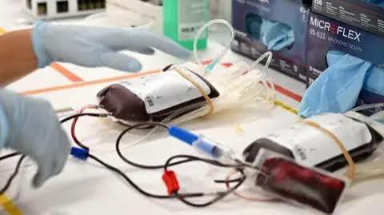
Jehovah’s Witnesses have announced an update on their long-standing position on blood transfusions.
In a video published on the group’s official website on Friday, the church stated that members are allowed to make personal decisions on the use of their own blood during medical procedures.
A member of the Governing Body, Gerrit Lösch, said the clarification is intended to help adherents navigate medical choices without departing from biblical teachings
The church, however, maintains that the prohibition on receiving another person’s blood still stands.
He explained that while the doctrine requiring Christians to abstain from blood remains unchanged, the scriptures do not directly address the use of one’s own blood in clinical settings.
“Regarding the use of one’s own blood…a Christian must decide for himself how his own blood will be handled in the course of a surgical procedure, medical test, or current therapy,” he said.
According to him, members are now free to decide whether to permit procedures where their blood is temporarily removed, stored, and later returned to the body.
“Some Christians may decide that they would allow their blood to be stored and then be given back to them. Others may object. Each Christian must make his personal decision on all matters involving the use of his own blood with regard to medical or surgical care,” Lösch added.
He noted that practices such as blood testing, dialysis, and the use of heart-lung machines have already been widely accepted among adherents.
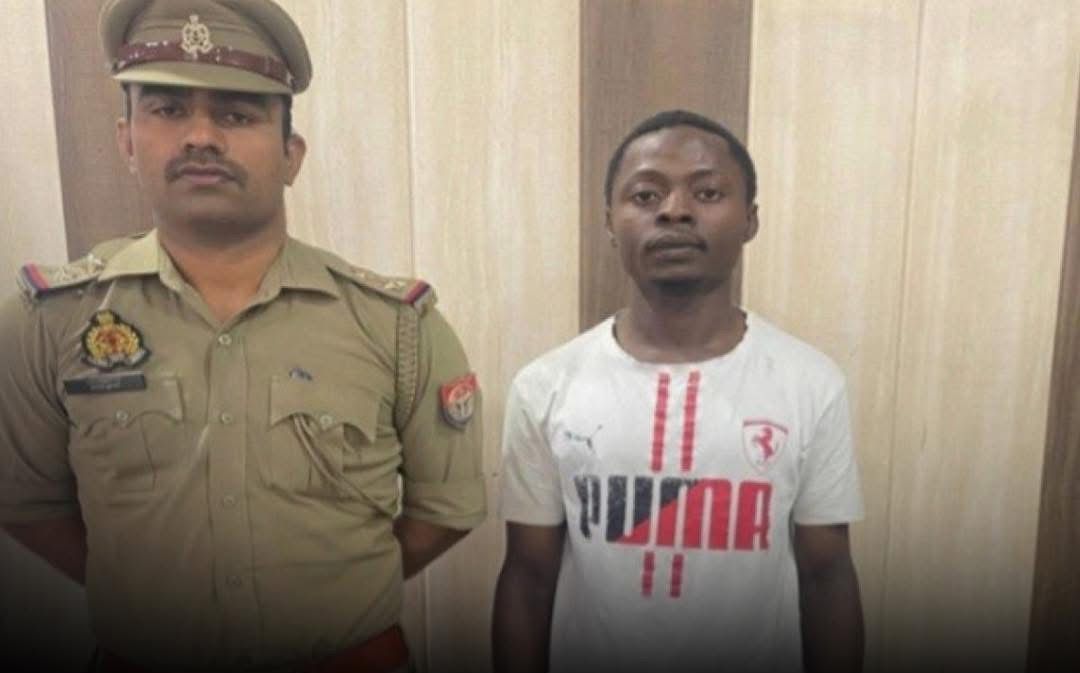
Meerut police in Uttar Pradesh have uncovered a major cyber fra¥d racket involving Nigerian students, arresting one suspect, Saifu Mayana Umar, an MSc Nursing student.
Victims across India were reportedly duped with promises of high returns through investments in foreign companies and stock markets. Investigations have linked Umar and his associates, including a Nigerian national named Yusuf, to at least 16 cyber fra¥d cases.
The gang allegedly used an organized network to lure victims, quickly withdrawing transferred funds through multiple bank accounts and ATMs to avoid detection. Authorities have traced transactions totaling approximately ₹45 lakh in Umar’s bank account, connected to cases mainly from southern states.
The probe involved cyber units from Telangana and Tamil Nadu, who coordinated with Meerut police to apprehend Umar from his hostel. During searches, police recovered electronic devices, ATM cards, bank passbooks, a SIM card, a passport, a cheque book, and mobile phones, all sent for forensic examination to trace the wider network.
Investigators noted that one associate attempted to des+roy banking documents, but some financial records were recovered for scrutiny. Transaction details are also being traced to follow international money flows.
During questioning, Umar admitted that some funds in his account were deposited by Yusuf and subsequently withdrawn. Other names have emerged in the investigation, and warrants are being sought, including potential international cooperation.
Umar has since been released on notice, with his passport confiscated and confinement to the university hostel.
Health
Nigerian dietitian banned from practicing in the UK after lying about her experience for NHS job
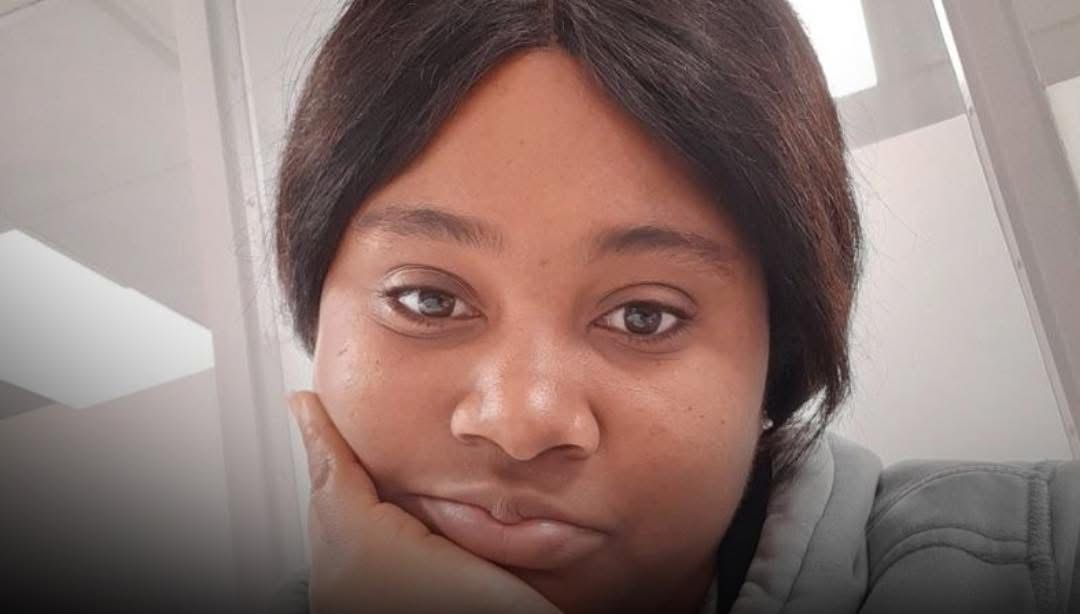
A UK health tribunal has removed Ifenyinwa Chizube Ndulue-Nonso from the professional register after finding she falsely presented herself as an experienced dietitian to secure a job with the NHS.
The Health and Care Professions Tribunal Service (HCPTS) heard on March 2 that Ndulue-Nonso misrepresented her qualifications and displayed serious gaps in basic medical knowledge shortly after starting at Manchester University NHS Foundation Trust in February 2024.
The tribunal found she made fundamental errors, including claiming urine is stored in the gallbladder, stating radiotherapy treats heart failure, misidentifying the large intestine as following the stomach, and failing to calculate a patient’s BMI. Her supervisor described the gaps as extremely alarming, noting they involved basic anatomy and essential professional knowledge. Concerns were formally raised within three days.
Ndulue-Nonso admitted she had never administered feeding through an intravenous catheter or used nutritional supplement drinks, and was reportedly seen searching online for basic medical terms while on duty. Investigations showed 20 of the 28 competencies she claimed were unsupported. She said she had learned correct responses from previous NHS interviews.
Although she denied deliberate deception, claiming her application reflected her Nigerian experience, the panel ruled her conduct was planned and persistent, posing a serious risk to patients.
The Health and Care Professions Council (HCPC) has therefore removed her from the UK register of dietitians, barring her from practising in the country.

Fuel price hike: Gov Makinde announces N10,000 transport support for workers

Former Acting Accountant-General of the Federation bags 72years imprisonment for diverting N868.46 million security funds

Benita Enwonwu in the 1970s: Model, Actress, and Daughter of Ben Enwonwu

-
Business1 year ago
US court acquits Air Peace boss, slams Mayfield $4000 fine
-

 Trending1 year ago
NYA demands release of ‘abducted’ Imo chairman, preaches good governance
-

 Politics1 year ago
Mexico’s new president causes concern just weeks before the US elections
-

 Politics1 year ago
Putin invites 20 world leaders
-

 Politics1 year ago
Russia bans imports of agro-products from Kazakhstan after refusal to join BRICS
-
Entertainment1 year ago
Bobrisky falls ill in police custody, rushed to hospital
-
Entertainment1 year ago
Bobrisky transferred from Immigration to FCID, spends night behind bars
-
Education2 years ago
GOVERNOR FUBARA APPOINTS COUNCIL MEMBERS FOR KEN SARO-WIWA POLYTECHNIC BORI