Connect with us

Health

NAFDAC RTSL, moves to eliminate trans fats from Nigeria’s food supply

Published

on

The National Agency for Food and Drug Administration and Control (NAFDAC) has launched a comprehensive national strategy and roadmap aimed at eliminating industrially produced trans-fatty acids (TFAs) from Nigeria’s food supply chain.

The new regulation was developed in line with the Fats, Oils and Foods Containing Fats and Oils Regulations 2022, and sets a legal threshold of no more than 2 grams of trans fats per 100 grams of fat or oil in food products.

Speaking at the launch event in Lagos on Friday, NAFDAC’s Director General, Professor Mojisola Adeyeye, described the strategy as a clear demonstration of Nigeria’s commitment to aligning with global best practices in public health nutrition.

“This launch is not just about unveiling a document, it is about reaffirming our national commitment to protecting the health of Nigerians from dangerous yet preventable dietary risks,” she said.

Prof. Adeyeye, a professor of pharmaceutical manufacturing and drug evaluation, warned that trans fats are among the leading dietary contributors to cardiovascular disease — the world’s number one cause of death.

“The food we eat can kill us. If you eat well, you will use less medicine,” she stressed.

Scientific data, she noted, shows that high intake of trans fats increases the risk of heart disease-related deaths by 28%. Most industrial TFAs are created through partial hydrogenation of vegetable oils — a process used to extend shelf life and reduce cost, but one that poses serious health risks.

Globally, over 278,000 deaths each year are linked to trans fat consumption.

In recognition of its policy efforts, the World Health Organization (WHO) listed Nigeria in 2023 among seven countries where new best-practice regulations for TFA elimination had taken effect — alongside Egypt, Mexico, Moldova, North Macedonia, the Philippines, and Ukraine.

Prof. Adeyeye said the next step is full implementation, enforcement, and validation by the WHO.

Representing the WHO Country Representative in Nigeria, Walter Mulombo, Mr. Pinda Wakawa commended Nigeria’s strategic leadership and political will in addressing TFA-related health risks.

“This milestone marks a significant step forward in Nigeria’s commitment to improving public health and reducing the burden of non-communicable diseases,” she said.

Nigeria now stands as the second country in the WHO African Region, after South Africa, to adopt a best-practice TFA policy.

“The removal of industrially produced trans fats from the food chain is not only a technical achievement, but a moral imperative,” Ms. Wakawa added.

The WHO pledged continued technical support, including capacity-building and monitoring mechanisms to ensure enforcement of the regulation.

According to global health non-profit Resolve to Save Lives (RTSL), while Nigeria’s TFA ban in 2023 marked a major public health milestone, several implementation challenges remain — such as limited laboratory capacity and the absence of standardised testing protocols.

To bridge these gaps, the Federal Ministry of Health and Social Welfare, WHO, and RTSL supported laboratories across the country by procuring specialised equipment and training personnel in WHO’s simplified TFA testing methods.

At the launch, RTSL’s Executive Director, Nanlop Ogbureke, emphasized the importance of enforcing the new roadmap:

“It is one thing to have a policy or regulation, it is another to ensure its enforcement. As RTSL, we are committed to supporting Nigeria to make TFA a thing of the past.”

“Together, through collaboration and shared commitment, we can build a healthier future for our country, one free of the dangers of TFA,” she added.

Health

I’ve Been Diagnosed With Breast Cancer – Blessing CEO Confirms Cancer Battle, Solicits Financial Help (Video)

Published

on

Nigerian social media influencer and self-proclaimed relationship expert, Blessing CEO, has shared an update regarding her health.

In a post on her Instagram page, the relationship coach revealed that she has been diagnosed with breast cancer and that doctors have recommended urgent surgery to remove one or both breasts to stop the disease from spreading.

She explained that making the decision to undergo surgery was very difficult, describing the emotional toll and challenges she faces.

She also disclosed that her resources have been stretched, prompting her to seek financial help to cover the cost of the operation.

This development follows her earlier announcement that she would sell some of her personal belongings, including her car, wigs, and Lagos mansion, to raise funds for treatment.

She shared an account number in the video to receive contributions and asked her followers to support her in any way they can.

She said: “My name is Okoro Blessing Nkiruka and I’m popularly known as Blessing CEO. I’ve been diagnosed with breast cancer. At this point, an urgent surgery is needed for amputation to stop the spread or to know how far the spread has gone.

“If they’re taking off one of the breasts or both of it, trust me, it was a very hard decision to come here. But the truth is, when predicaments like this come for you, you become powerless. I might not be able to do anything, work, influence, resources has gone into this.

“And that’s why I’m here pleading. If I have ever touched you before, if my words have ever shown any positive in your life, if you ever say Blessing CEO I love you, this is the time to show it.

“Thank you so much for the love. My phone is buzzing. God bless every one of you. Nothing is too small. I just want to be fine. Thank you so much. I’m going to put an account number on this video, hoping to start up the surgery as fast as possible. Thank you so much to those of you who reposted, shared. God bless every one of you.

“Thank you so much. I love you guys. I need all the love, all the advice I’ve given to you guys. You’re going to have to give it back to me. Thank you so much. Thank you so much. I have never been this clueless all my life.

“I thought I was a jagaban. I thought I was so strong. I thought I was so strong. Being strong is now my biggest weakness. Thank you so much. God bless you.”

Continue Reading

Health

Jehovah’s Witnesses Review Blood Transfusion Policy On Members

Published

on

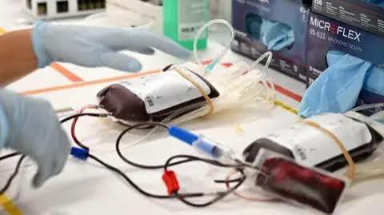
Jehovah’s Witnesses have announced an update on their long-standing position on blood transfusions.

In a video published on the group’s official website on Friday, the church stated that members are allowed to make personal decisions on the use of their own blood during medical procedures.

A member of the Governing Body, Gerrit Lösch, said the clarification is intended to help adherents navigate medical choices without departing from biblical teachings

The church, however, maintains that the prohibition on receiving another person’s blood still stands.

He explained that while the doctrine requiring Christians to abstain from blood remains unchanged, the scriptures do not directly address the use of one’s own blood in clinical settings.

“Regarding the use of one’s own blood…a Christian must decide for himself how his own blood will be handled in the course of a surgical procedure, medical test, or current therapy,” he said.

According to him, members are now free to decide whether to permit procedures where their blood is temporarily removed, stored, and later returned to the body.

“Some Christians may decide that they would allow their blood to be stored and then be given back to them. Others may object. Each Christian must make his personal decision on all matters involving the use of his own blood with regard to medical or surgical care,” Lösch added.

He noted that practices such as blood testing, dialysis, and the use of heart-lung machines have already been widely accepted among adherents.

Continue Reading

Health

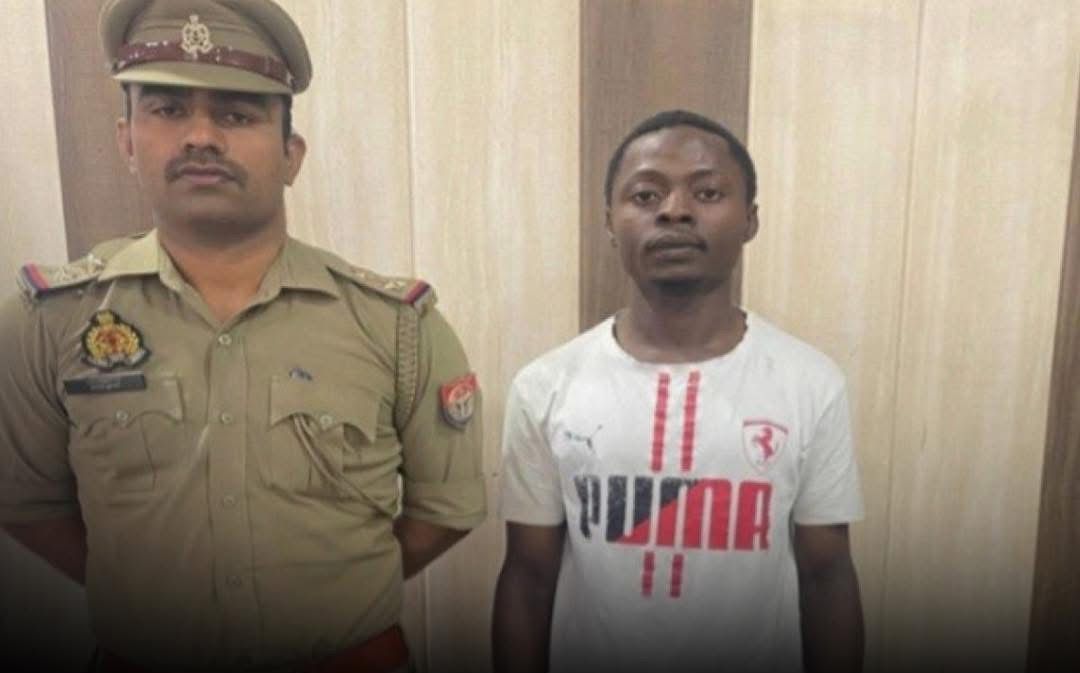
Nigerian MSc Nursing student arrested for fra¥d in India

Published

on


Meerut police in Uttar Pradesh have uncovered a major cyber fra¥d racket involving Nigerian students, arresting one suspect, Saifu Mayana Umar, an MSc Nursing student.

Victims across India were reportedly duped with promises of high returns through investments in foreign companies and stock markets. Investigations have linked Umar and his associates, including a Nigerian national named Yusuf, to at least 16 cyber fra¥d cases.

The gang allegedly used an organized network to lure victims, quickly withdrawing transferred funds through multiple bank accounts and ATMs to avoid detection. Authorities have traced transactions totaling approximately ₹45 lakh in Umar’s bank account, connected to cases mainly from southern states.

The probe involved cyber units from Telangana and Tamil Nadu, who coordinated with Meerut police to apprehend Umar from his hostel. During searches, police recovered electronic devices, ATM cards, bank passbooks, a SIM card, a passport, a cheque book, and mobile phones, all sent for forensic examination to trace the wider network.

Investigators noted that one associate attempted to des+roy banking documents, but some financial records were recovered for scrutiny. Transaction details are also being traced to follow international money flows.

During questioning, Umar admitted that some funds in his account were deposited by Yusuf and subsequently withdrawn. Other names have emerged in the investigation, and warrants are being sought, including potential international cooperation.

Umar has since been released on notice, with his passport confiscated and confinement to the university hostel.

Continue Reading

Trending