
Politics
Nigeria Customs Service Enhances Operations Through Strategic Alliances

…Signs Landmark Customs Mutual Assistance Agreements (CMAAs) with Indian Customs, others
As global trade grows increasingly complex, the need for strategic partnerships has become critical. From aligning with international frameworks to fostering collaborations with local and regional entities, the Nigeria Customs Service (NCS) has continually evolved to meet the demands of a dynamic trade environment. These partnerships are essential not only for combating smuggling and illicit trade but also for ensuring the seamless flow of legitimate trade that drives economic growth.
Over the years, the NCS has embraced various international and regional frameworks, signed Memorandums of Understanding (MoUs), and deepened cooperation with customs administrations worldwide. These efforts underscore the recognition that customs operations cannot function in isolation in an interconnected global economy. From adopting the World Trade Organisation (WTO) Trade Facilitation Agreement to implementing the World Customs Organisation (WCO) SAFE Framework of Standards, the NCS has demonstrated a commitment to efficiency, security, and transparency.
The WTO Trade Facilitation Agreement and Its Impact on NCS
The WTO Trade Facilitation Agreement (TFA), ratified in 2017, is a landmark accord aimed at simplifying and modernising global trade procedures. For Nigeria, the TFA provides a framework for reducing trade costs, eliminating unnecessary barriers, and improving the efficiency of customs operations. The NCS has been at the forefront of implementing TFA provisions to enhance trade facilitation.
The agreement emphasises transparency, prompting the NCS to publish import and export procedures online, making them accessible to stakeholders. Furthermore, the adoption of pre-arrival processing, Time Release Studies, Advance Ruling Systems, Authorised Economic Operator (AEO) programmes, and risk-based management systems aligns with the TFA’s focus on efficiency. These measures are set to reduce clearance times at Nigeria’s ports, boosting the country’s competitiveness in global trade.
By embracing the TFA, the NCS has not only facilitated legitimate trade but also improved compliance rates among importers and exporters. This balance between trade facilitation and regulatory enforcement reflects the Service’s commitment to fostering an environment conducive to economic growth.
The WCO SAFE Framework of Standards: Strengthening Global Supply Chains
The WCO SAFE Framework of Standards is another critical pillar in the NCS’s operational strategy. Designed to secure and facilitate global trade, the framework promotes cooperation between customs administrations and the private sector while ensuring the safety and security of supply chains.
For the NCS, implementing the WCO SAFE Framework has been transformative. The Service has adopted risk management tools to identify high-risk consignments, streamlining the inspection process for low-risk goods. This has resulted in faster clearance times and reduced congestion at ports.
In addition, the Authorised Economic Operator (AEO) programme, a key component of the framework, has incentivised compliance by offering trusted traders benefits such as expedited processing and reduced inspections.
By aligning with the WCO SAFE Framework, the NCS has enhanced its capacity to combat smuggling, counterfeiting, and other illicit activities, ensuring that Nigeria’s borders remain secure while facilitating legitimate trade.
Customs-to-Customs Cooperation: A Global Perspective
International cooperation is vital for the NCS to effectively address cross-border challenges. Customs-to-customs collaboration facilitates the exchange of information, intelligence, and best practices, enabling the NCS to tackle complex issues such as smuggling and tax evasion.
On 18 July 2024, Comptroller-General of Customs, Bashir Adewale Adeniyi, took a significant step in strengthening global partnerships by participating in a bilateral meeting with U.S. Customs and Border Protection (CBP) in Washington, D.C. The meeting focused on reviving the over-decade-old Customs Mutual Assistance Agreement (CMAA) to enhance service delivery through global collaborations and data-driven decision-making to improve national security and combat cross-border crimes.
The CGC highlighted the NCS’s ongoing efforts to address challenges such as drug trafficking, arms smuggling, and money laundering, while ensuring national security. He noted that reviving the CMAA would bolster the NCS’s capacity to protect Nigeria’s borders and enhance service delivery.
On Wednesday, 8 May 2024, Comptroller-General of Customs (CGC) Adewale Adeniyi led some of his management team in Shenzhen, where he signed a bilateral affiliation with China, which, according to him, will boost the two countries’ import-export operations and favour the businesses of MSMEs in Nigeria.
The CGC appreciated the Vice Minister of the General Administration of Customs of the People’s Republic of China, Wang Lingjun, for showing interest in signing MoU with the NCS. He also applauded the recent exponential rise in the development of e-commerce, adding, “We know a lot of Nigerian companies and SMEs take advantage of the opportunities aided through e-commerce.”
CGC Adeniyi expressed optimism that the NCS-GACC Memorandum of Understanding will serve as a critical component of cooperative security and trade relationship between the two nation’s Customs agencies, reiterating that “The relationship will create a cooperative mechanism for NCS and the GACC to collaborate on supply chain security standards and enhance the economic stability of both nations.”
“These are some of the many reasons why Nigeria Customs Service pays attention to what is happening in China. As you have said, China is making the biggest trade in Nigeria, and the basic context of International Trade is ‘your export is our import’. I appreciate the numbers that you gain in Nigeria. But it is also common knowledge that those numbers sometimes must take account of the large volume of informal trade that exists between us.” CGC Adeniyi said.
Mr Wang Lingjun of the General Administration of Customs, who represented Vice Minister Sun Yuning, and signed the MoU on behalf of the People’s Republic of China, expressed satisfaction over CGC Adeniyi’s vision that the affiliation between two agencies will serve as a mechanism for creating opportunities that Nigeria and China share on a wide range of economic issues and trade facilitation.
In 2023 alone, the NCS successfully intercepted over 5,000 illegal firearms and large quantities of counterfeit pharmaceuticals. Such achievements underscore the importance of customs-to-customs partnerships, which also include capacity-building initiatives and technical assistance to modernise technologies and practices.
Customs-to-Business Partnerships: Enhancing Trade Facilitation
In addition to international cooperation, the NCS has prioritised customs-to-business partnerships to foster trust and collaboration with the private sector. These partnerships are crucial for balancing regulatory enforcement to facilitate legitimate trade.
The Authorised Economic Operator (AEO) programme is a prime example of customs-to-business collaboration. The programme has encouraged greater transparency and adherence to customs regulations by granting benefits to compliant traders. Additionally, the NCS has engaged with stakeholders through public forums and consultations to address concerns and improve service delivery.
On September 2, 2024, the NCS rolled out the benefits of the AEO programme to select importers, exporters, SMEs, and logistics operators who demonstrated high levels of regulatory compliance.
In the first week of the rollout, one of the beneficiaries voluntarily disclosed an underpayment of duties due to the erroneous classification of a high-value item. The error, identified through a self-audit, was reported to the NCS without waiting for detection by customs officials. By taking immediate corrective action, the company avoided penalties while retaining the benefits of the AEO programme.
These partnerships have enhanced the efficiency of customs operations and bolstered Nigeria’s reputation as a trade-friendly nation. By working closely with businesses, the NCS has created an environment where compliance is rewarded, and trade facilitation is prioritised.
Regional Integration: AfCFTA’s Role in NCS Operations
The African Continental Free Trade Area (AfCFTA) represents a significant opportunity for Nigeria and the NCS. By removing trade barriers across Africa, AfCFTA aims to boost intra-African trade and foster economic integration.
To align with AfCFTA objectives, the NCS has facilitated Nigeria’s first shipment to Kenya, with Lucky Fibres, a subsidiary of the Tolaram Group, becoming one of the first companies to ship goods to Kenya under the African Continental Free Trade Area Agreement (AfCFTA).
During a visit to the Apapa Area Command on Wednesday, 30 October 2024, to ensure proper documentation and verification of the shipment, Olusegun Olutayo, Senior Trade Expert and Lead of Trade Enablement at the Nigeria AfCFTA Coordination Office, noted that the shipment from Nigeria to Kenya, specifically to the port of Mombasa, demonstrates the collaborative spirit of AfCFTA.
“It is not that we are doing it alone; I have already sent a message to the Secretariat in Ghana that there will be a shipment under AfCFTA to Kenya. I have also communicated with the AfCFTA implementation committee in Kenya. So this is the spirit we are building to ensure that we increase intra-African trade,” Olutayo noted.has taken proactive measures, such as implementing electronic single windows for trade, adopting geospatial intelligence tools, and enhancing border management systems. These initiatives are essential for ensuring Nigeria benefits fully from AfCFTA while safeguarding its revenue and security interests.
Recent MoUs: Strengthening Local and International Partnerships
The signing of MoUs with India on 17 November 2024 and NAFDAC underscores the NCS’s commitment to fostering strategic partnerships.
The CMAA with India establishes a framework for information sharing, joint investigations, and enforcement of customs laws. This partnership, which culminated from negotiations that began in 2016, is expected to streamline border clearance processes, reduce trade costs, and improve enforcement.
Key provisions include the accurate imposition of duties and taxes, verification processes, strengthened mechanisms to combat customs offences, and robust channels for information exchange.
Similarly, the recent MoU signed with NAFDAC at the side event during CGC’s Conference, held between 12 to 15 November 2024 in Abuja, highlights inter-agency collaboration in addressing public health and safety challenges. This partnership seeks to combat the importation of counterfeit pharmaceutical products, ensuring Nigerians have access to safe and high-quality medicines.
NAFDAC’s Director-General, Prof. Mojisola Adeyeye, emphasised that the agreement would strengthen efforts to safeguard public health by reinforcing regulatory frameworks and ensuring the integrity of food and drug products.
Conclusion: A Future Built on Collaboration
The Nigeria Customs Service’s strategic partnerships are a testament to its commitment to modernising customs operations, enhancing trade facilitation, and safeguarding Nigeria’s economy. From aligning with international frameworks like the WTO TFA and WCO SAFE Framework to forging partnerships with key stakeholders, the NCS has demonstrated a clear vision for the future.
Drawing from the recently concluded 2024 Comptroller General of Customs Conference, themed “Engaging Traditional and New Partners with a Purpose,” serves as a strategic platform for stakeholders to explore innovative ways to strengthen partnerships and address challenges within the global supply chain.
The conference emphasises how the Nigeria Customs Service (NCS) is leveraging collaborations with traditional and emerging partners to enhance its core revenue generation, trade facilitation, and compliance enforcement mandates. It examined how these partnerships can improve efficiency, promote seamless trade, and ensure compliance with global regulations, thereby bolstering Nigeria’s economic development.
With thought-provoking panels, keynote speeches, and interactive discussions, the event highlights the NCS’s commitment to modernisation and innovation. It underscores the pivotal role of partnerships in achieving operational excellence and driving Nigeria’s integration into the global economy.








Politics
Man Arrested For Allegedly Shouting “No Water, No Light” During Governor Bago’s Visit To Suleja

The Niger State Police Command has confirmed the arrest of a 38-year-old man, Hamisu Abdullahi, for allegedly shouting “no water, no light” during Governor Mohammed Umaru Bago’s visit to the Emir of Suleja following the Eid-el-Fitr prayers last Friday.
The police spokesperson in the state, SP Wasiu Abiodun, who confirmed the incident to Daily Trust, said the suspect was arrested for attempting to disrupt government activities during the governor’s Sallah visit.
“One Hamisu Abdullahi, 38, of Suleja, was arrested and transferred to the State Criminal Investigation Department (SCID), Minna, on March 20, 2026, for suspected thuggery and attempting to disrupt government activities during the Sallah visit,” he said.
“However, he was later granted bail while investigation continues.”
The suspect’s brother, Haruna Abdullahi, confirmed that he was released on bail on Tuesday evening after spending five days in detention.
Hamisu, an electrician and father of four who resides in Unguwan Bayi, Suleja, was reportedly arrested after shouting the phrase at the emir’s palace during the governor’s visit.
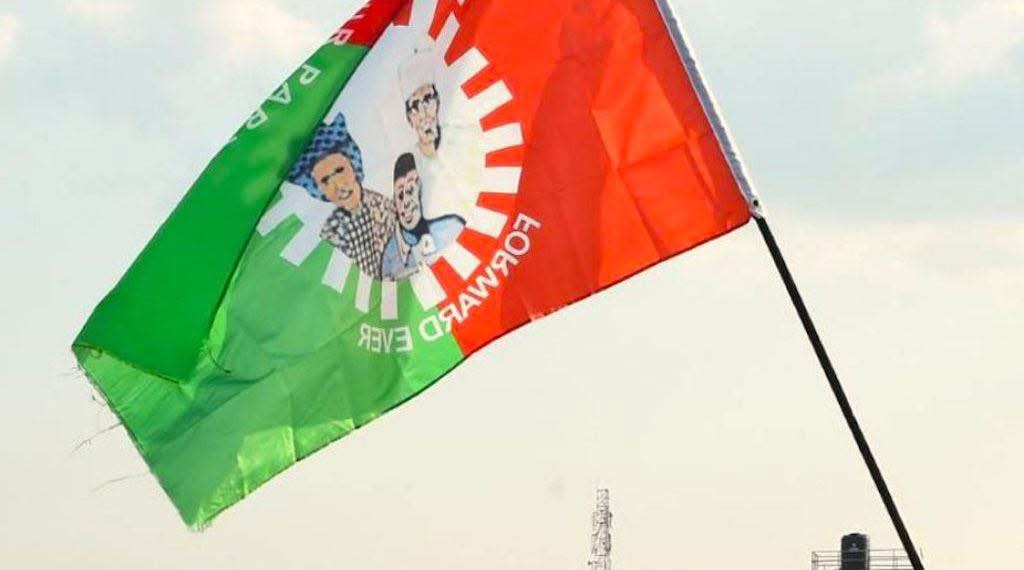
The Labour Party in Imo State is engulfed in a bitter leadership clash as the Callistus Ihejiagwa-led faction warns members not to participate in any party activities not sanctioned by his leadership.
The warning comes in response to claims that Sen. Nenadi Usman and Darlington Nwokocha’s faction plans to hold Ward, LGA, and State congresses starting March 26, 2026—moves Ihejiagwa calls illegal and unconstitutional.
Ihejiagwa insists that the Independent National Electoral Commission (INEC) has already refused to dissolve existing party structures, meaning any attempt to replace sitting executives is null and void.
He dismissed arguments that INEC officials attending Usman/Nwokocha’s National Executive Council meeting on March 17 would confer legality, stressing that presence does not equal approval.

March 20, 2026
The All Progressives Grand Alliance in Abia State has called on the Senate to declare the seat of the Senator representing Abia South, Enyinnaya Abaribe, vacant following his resignation from the party.
The party made the call on Thursday during a press briefing in Umuahia, where its leadership, led by a former member of the Abia State House of Assembly, Obinna Ichita, insisted that Abaribe voluntarily resigned from APGA and was not sacked, contrary to his claim at the Senate.
Ichita argued that Abaribe’s exit from the party that sponsored his election violates constitutional provisions, stressing that there was no leadership crisis within APGA to justify his defection.
“The senator resigned in his ward. He did so voluntarily, which is his right. However, if you leave the party that gave you the platform for another party when there is no leadership crisis, that seat must be declared vacant,” he said.
He further alleged that Abaribe misrepresented the circumstances of his exit by claiming he was sacked.
“The party has documentary evidence to show that Senator Abaribe was not sacked. He resigned three months after disciplinary measures were taken against him over actions the court did not consider appropriate,” Ichita added.
According to him, the mandate belongs to the people and the party, not the individual office holder.
“They gave him the mandate on the platform of APGA, not any other party. There was nothing like ADC when he was elected. He cannot take the mandate elsewhere without consulting the people who gave it to him,” he said.
Ichita maintained that the constitution is clear on defection, noting that any lawmaker who leaves a party without a valid internal crisis must vacate the seat.
“My message to Senator Abaribe is to honourably vacate the seat instead of waiting for the National Assembly to declare it vacant. That would amount to national embarrassment,” he added.
Also speaking, the APGA State Chairman, Sunday Onukwubiri, and the party’s Public Relations Officer, Chukwuemeka Nwokoro, reiterated that Abaribe had distanced himself from the party’s activities at various levels in the state.
They insisted that he neither holds dual membership nor was he expelled, maintaining that his resignation was voluntary.
“He was invited by the party but failed to appear and was subsequently suspended in line with the party’s constitution. Three months later, he resigned,” the officials said.
Reacting, Abaribe defended his position, insisting that he acted within his constitutional rights.
“When you are no longer a member of a party by virtue of being sent away, you have the fundamental right of association to join another party,” he said.
He argued that his indefinite suspension by APGA effectively amounted to expulsion.
“If a party places you on indefinite suspension for more than six months, what does that mean? It means you have been told to go elsewhere, and that is exactly what I did,” he stated.
The senator added that the proper constitutional procedure for removing him from office would be through a recall process by his constituents.
“If the people who elected me no longer want me, the right thing to do is to initiate a recall. That is the position of the law,” he said.

Actress Biola Adebayo Tenders Apology Over Interview With Baba Ijesha (Video)

Police Arrest Pastor, Islamic Cleric And One Other Over Possession Of Human Parts In Oyo

Man Arrested For Allegedly Shouting “No Water, No Light” During Governor Bago’s Visit To Suleja

-
Business1 year ago
US court acquits Air Peace boss, slams Mayfield $4000 fine
-

 Trending1 year ago
NYA demands release of ‘abducted’ Imo chairman, preaches good governance
-

 Politics1 year ago
Mexico’s new president causes concern just weeks before the US elections
-

 Politics1 year ago
Putin invites 20 world leaders
-

 Politics1 year ago
Russia bans imports of agro-products from Kazakhstan after refusal to join BRICS
-
Entertainment1 year ago
Bobrisky falls ill in police custody, rushed to hospital
-
Entertainment1 year ago
Bobrisky transferred from Immigration to FCID, spends night behind bars
-
Education2 years ago
GOVERNOR FUBARA APPOINTS COUNCIL MEMBERS FOR KEN SARO-WIWA POLYTECHNIC BORI