Columns
Nigerians In Pain Under Tinubu’s Government, Though One Year Not Enough To Judge Administration – Bishop Kukah
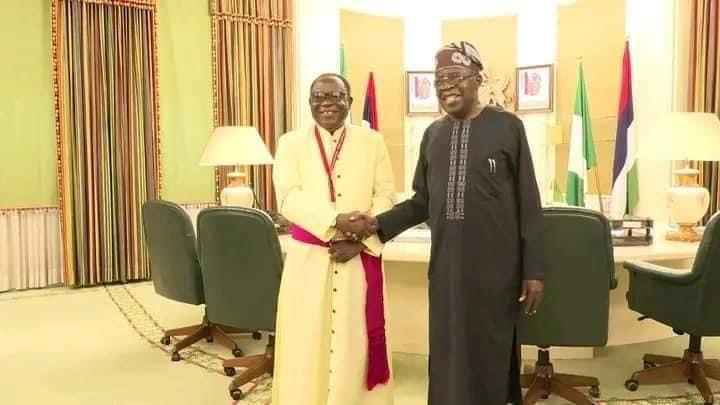
The Bishop of Sokoto Catholic Diocese, Most Rev Matthew Hassan Kukah has said Nigerians are currently in pain and facing tough times under the administration of President Bola Ahmed Tinubu.
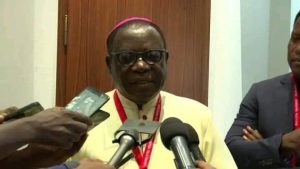
The cleric said this while addressing journalists on Wednesday at the Presidential Villa in Abuja, shortly after meeting with Tinubu.
He, however, added that the pain was unintended but are due to the policies by the administration, noting that , “hopefully, with time, can be amended in order to serve the welfare of the people.”
“I’m sure many people will tell you that one year is not enough to make a judgment,” he continued.
“However, from where we all stand, we know that we are all in a very difficult situation.”
“Nigerians are in various levels of pain and they are pains that are unintended. But they are the results of certain policy decisions that hopefully, with time, can be amended in order to serve the welfare of ordinary people,” he said.
“I believe that the essence of government is to guarantee the welfare and security of ordinary citizens. I believe that the time we are in, we are in very difficult times. And nobody should be under any illusion. And there is also time for renewal. We just need to commit ourselves to the fact that building a good society takes a lot of time. It is not something that is done in one lifetime.
“My argument has always been that the government needs to very quickly improve the quality of communication so that Nigeria can at least get a sense of how long is it going to be before food is ready.”
Follow | Ekwutosblog
Columns
King Onyeama n’Eke: The Great Monarch of Agbaja
King Onyeama n’Eke, the illustrious ruler of Agbaja, was one of the most powerful and influential monarchs in northern Igboland—indeed, perhaps the greatest Igbo king in living memory. From his majestic palace in Eke, he ruled over a vast domain that stretched across Oji River, Udi, and Ezeagu, extending to the present-day capital of Igboland, Enugu, and reaching even the Nkanu and Ogui communities.
Born in the 1870s, Onyeama was recognized as the paramount ruler of his people in 1928, a position he held with dignity and authority until his death in 1933. His reign symbolized strength, unity, and the growing interactions between traditional leadership and British colonial influence.
In 1924, King Onyeama attended the British Empire Exhibition in London, where he paid a royal visit to Buckingham Palace. During this visit, he received a remarkable gift—a 1921 Rudge motorcycle—from King George V of England, himself an enthusiastic cyclist and admirer of Rudge machines.
The prized motorcycle, though no longer in use after the late 1920s, remained a treasured family heirloom. It was carefully preserved in dry storage at the family’s residence in Lagos for decades. In August 2013, the Rudge was finally shipped back to England, a tangible relic of a historic encounter between African royalty and the British crown.
Columns
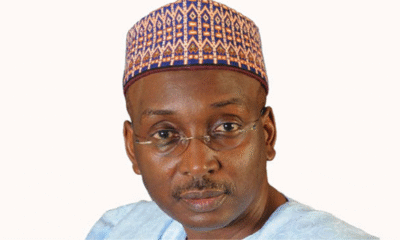
Abdullahi Mohammed (1939–2025)
Abdullahi Mohammed, a distinguished Nigerian statesman and retired military officer, passed away at the age of 86 in the early hours of Wednesday in Abuja. He was widely respected for his decades of service to Nigeria in both military and civilian capacities, particularly for his pivotal role as Chief of Staff to Presidents Olusegun Obasanjo and Umaru Musa Yar’Adua.
Early Life and Education
Abdullahi Mohammed was born in 1939 in Ilorin, Kwara State, Nigeria. He grew up during the colonial era and showed early promise as a disciplined and intelligent young man. His commitment to service led him to pursue a military career, and he was admitted into the Royal Military Academy, Sandhurst, United Kingdom, one of the most prestigious military institutions in the world.
He was commissioned into the Nigerian Army in 1958, joining the ranks of the country’s early generation of professionally trained officers who would later play vital roles in shaping Nigeria’s post-independence military and political history.
Military Career
Abdullahi Mohammed served in various capacities within the Nigerian Army, where he earned a reputation for professionalism, loyalty, and administrative competence. His service spanned critical periods in Nigeria’s history, including the post-independence years and the era of military governance.
He later transitioned from active combat and field duties to strategic and administrative roles, contributing to military intelligence and national security operations. His leadership qualities and steady demeanor earned him the trust of several national leaders.
National Security Adviser and Chief of Staff
Mohammed’s expertise in security and governance led to his appointment as National Security Adviser (NSA) under President Olusegun Obasanjo from 1999 to 2006, at the dawn of Nigeria’s Fourth Republic. In this role, he played a central part in stabilizing the country’s security architecture after years of military rule.
In 2006, he was appointed Chief of Staff to President Obasanjo, a position he retained under President Umaru Musa Yar’Adua after Obasanjo left office in 2007. His tenure was marked by discretion, diligence, and a quiet but effective management style. He became known as one of the most trusted and influential figures in the Obasanjo administration.
As Chief of Staff, Mohammed coordinated the presidency’s activities, managed relations with ministers, and ensured smooth communication between the executive branch and other arms of government. His continuity in office during the early days of Yar’Adua’s presidency reflected the deep confidence both presidents had in his capabilities.
Later Years and Death
After retiring from public service, Abdullahi Mohammed maintained a low profile, occasionally offering advice on national issues and governance. His life was characterized by humility, patriotism, and a deep sense of duty.
He passed away in Abuja at the age of 86, leaving behind a legacy of national service that spanned over five decades — from the military to the highest levels of civilian administration.
Legacy
Abdullahi Mohammed will be remembered as:
One of Nigeria’s most experienced and dependable public servants.
A bridge between the military and democratic eras.
A man of discipline, loyalty, and integrity, whose influence shaped the presidency during Nigeria’s crucial post-military transition period.
His death marks the end of an era for a generation of Nigerian leaders who combined military training with deep administrative experience in service of the nation.
Columns
An Image of Four Notable Nigerians and Their Fate in the Military
From left to right: Sam “Agbam” Agbamuche, a Nigerian foreign service officer who was the only civilian physically involved in Nigeria’s first military coup, Emmanuel Ifeajuna, a Commonwealth Games champion and leader of the country’s first military coup, Michael Echeruo, a William Safire Professor of Modern Letters at Syracuse University, New York, and Ukpabi Asika, a later administrator of East Central State.
Later, on September 25, 1967, in Kuti Hall, University College, Ibadan, Agbam would be executed by Gen. Odumegwu ex, along with Ifeajuna, Alale, and Banjo.
-
Business1 year ago
US court acquits Air Peace boss, slams Mayfield $4000 fine
-

Trending1 year agoNYA demands release of ‘abducted’ Imo chairman, preaches good governance
-
Politics1 year agoMexico’s new president causes concern just weeks before the US elections
-
Politics1 year agoPutin invites 20 world leaders
-
Politics1 year agoRussia bans imports of agro-products from Kazakhstan after refusal to join BRICS
-
Entertainment1 year ago
Bobrisky falls ill in police custody, rushed to hospital
-
Entertainment1 year ago
Bobrisky transferred from Immigration to FCID, spends night behind bars
-

Education1 year ago
GOVERNOR FUBARA APPOINTS COUNCIL MEMBERS FOR KEN SARO-WIWA POLYTECHNIC BORI