
Business
NNPC: Vested interests fight back, stage war against new management’s reform agenda


A group of persons with vested interest in Nigeria’s oil money, are said to have launched a coordinated campaign of calumny using a section of the media and other clandestine guerilla approach against the new management of the Nigeria Petroleum Company Limited (NNPCL), with the aim of undermining President Bola Tinubu’s reform agenda in the industry.
According to a source, the war is being coordinated by a former Group Chief Operating Officer (GCOO) of the Company, who after tendering his resignation, has been making overtures to those that matter at the Aso Rock Presidential Villa for a possible return to the organisation.
The source said, “What began as a quiet effort to assert internal influence has now morphed into a visible war, waged in form of campaign of calumny, with the intent to pour tar on the person of the Group Chief Executive Officer (GCEO) in particular and the company’s leadership in general; so much so that unless this dangerous moves are quickly checked, they have the potency to put the nation’s petroleum industry sector in bad light before local and international publics and stakeholders, by extension, making nonsense of the President’s energy reform legacy.”
Findings reveals that this is not the first time the former NNPCL officer’s name has been linked to disruption at the highest levels. Sources at NNPCL said that during the tenure of Dr. Ibe Kachikwu as Minister of State, Petroleum, the same subject reportedly broke ranks. But a similar attempt to unseat Mele Kyari as GMD of NNPC ended abruptly in 2020 after a covertly recorded conversation exposed internal manoeuvrings, prompting his resignation.
The same name has also surfaced in connection with past financial controversies. In the federal government’s recovery of funds related to the Halliburton bribery case, media reports identified him as one of the individuals associated with an escrow account into which over $32.5 million (₦13.5 billion) was deposited. The account, reportedly held at JP Morgan Chase under the name “Madison Avenue Escrow/CBN/FGN Litigation Settlement,” was not in the name of the Federal Government. While no charges were filed and he insisted the structure was legal and in the national interest, questions from the EFCC regarding oversight and transparency remain part of the public record.
Also, in 2023, a whistleblower alleged his involvement in a $280 million oil servicing fraud. He denied the allegation, threatened legal action, and demanded ₦2 billion in damages as well as a public retraction. None has been issued to date.
The source further said that, “yet it is his recent behaviour that has caused the greatest concern. In the lead-up to the appointment of a new Group Chief Executive Officer for NNPC Limited, he was said to have lobbied aggressively—canvassing key figures in the current administration, in hopes of securing the top job. When that effort failed, a new position was created for him”
Though high-ranking, the new position did not grant him a seat on the company’s Board, as the Petroleum Industry Act (PIA) limits Executive Director positions to the GCEO and GCFO. That lawful exclusion appears to have sparked a campaign of quiet dissent.
According to the source, almost immediately, he began placing close associates in strategic roles across the company, including within the office of the GCEO. He is believed to have cultivated influence in parts of the senior management team while quietly questioning the GCEO’s authority and leadership style—despite the fact that the GCEO was already earning praise for his operational discipline and transparency.
The source revealed further that the situation escalated just days before a major strategy retreat, when blogs began publishing unverified claims about private jet expenses and politically motivated travel. The reports were false, but the damage was done—made worse by a communications team that failed to flag the stories in time. That division, notably, was said to have been the handiwork of the same man.
“Then came the moment that stunned the organisation: while the GCEO was live on stage during a company town hall, he was said to have submitted his resignation—via text message. The timing was interpreted by many as an attempt to destabilise. Within hours, the GCEO revoked all system access and began moving to protect the company’s operations,” the source claimed.
He said, “Days later, the man was said to have started walking back the resignation, privately claiming it had been rejected by higher authorities. No formal statement ever supported that narrative. At a subsequent public event, he approached the GCEO in front of media cameras in what appeared to be a choreographed gesture of reconciliation. Few were convinced.”
Since then, intelligence sources suggest that the subject has been coordinating external pressure using media proxies, contractors, and political allies. Operational instability in certain regions has coincided with these efforts, raising concern that there may be attempts to cast the GCEO as ineffective.
Lamenting, the source said, “What’s at stake is no longer just internal cohesion but a direct challenge to the President’s bold reform of Nigeria’s most strategic state enterprise. The appointment of the current GCEO and the constitution of a new Board and management team was widely regarded as a turning point. For the first time in recent memory, NNPC Limited is led by a group of seasoned professionals with deep technical expertise, international standing, and a clear mandate to run the company commercially. The decision to remove political influence and reward proven competence was met with widespread acclaim both domestically and abroad.
“That this team is already being tested—not by failure or public opposition, but by internal sabotage—is not just unfortunate. It is telling.”
Other public commentators have described the current Board and Management as the most capable NNPC has ever had. Many believe that if this team cannot deliver the long-overdue transformation of the company, no one can.
“What they need now is not interference or engineered instability, but the space, support, and protection to succeed. This isn’t merely a test of corporate governance. It is a test of political will, national reform, and legacy,” one of them said.
The Central Bank of Nigeria (CBN), has declared that banks and financial institutions must establish and maintain a temporary watch-list for Bank Verification Numbers (BVN) implicated in suspected fraudulent transactions.
According to the CBN in a circular dated March 12, 2026 and signed by its Director of Payments System Policy Department, Musa I. Jimoh, the apex bank said such a suspected BVN may remain on the temporary watchlist for a maximum period of twenty-four (24) hours during which the owner would be contacted to make clarifications.
The circular explained that the move is part of several new measures under a revised regulatory framework aimed at enhancing financial system stability.
“A BVN may remain on this temporary Watchlist for a maximum period of twenty-four (24) hours, during this period, the BVN owner shall be contacted to provide clarification regarding the identified transaction(s),” the circular stated.
The circular also sets an age requirement for BVN enrolment, restricting registration to individuals who have attained eighteen (18) years and above.
The CBN also added that amendments to phone numbers linked to a BVN shall be allowed only once.
“Amendments to phone numbers linked to a BVN shall be allowed only once,” the circular noted.
The apex bank stated that access to BVN databases will remain tightly controlled.
“Access to the BVN databases shall be exclusively granted to Central Bank of Nigeria (CBN) licensed financial institutions.
“Notwithstanding this provision, the Central Bank of Nigeria (the Bank) reserves the right to approve access to the BVN databases in extenuating circumstances and in accordance with the provisions of extant laws,” the circular said.
Financial institutions are expected to comply with the new requirements, and customers may be contacted by their banks if their BVNs are temporarily flagged during the new fraud monitoring process.
The new policy, as stated by the CBN, takes effect from May 1, 2026.
NNPC Reduces Fuel Price
The Nigerian National Petroleum Company Limited has reduced the pump price of Premium Motor Spirit, also known as petrol, at its retail stations in Lagos and Abuja.
The adjustment took effect on Wednesday as the national oil company reduced the price to N1,130 per litre in Lagos and N1,165 per litre in Abuja.
The new price means motorists in Lagos are now paying N100 less than the previous pump price of N1,230 per litre.
In Abuja, the new rate represents a reduction of N95 from the former price of N1,260 per litre.
Checks showed that the new price was already in place at several NNPC filling stations in Lagos, including outlets located along Isheri Oshun Road, Apple Junction and Ago Palace Way.
The same adjustment was also recorded in the Federal Capital Territory, where NNPC stations in areas such as Jabi and Wuse began selling petrol at N1,165 per litre.
The reduction comes at a time when many private oil marketers have not yet adjusted their pump prices to match the recent drop in the gantry price announced by the Dangote Petroleum Refinery.
Dangote Refinery had earlier lowered its gantry price for petrol by N100 per litre, bringing it down to N1,075 per litre.
The change followed a fall in international crude oil prices.
Global oil prices had earlier risen sharply due to tensions in the Middle East involving the United States, Iran and Israel.
The crisis raised fears of possible disruption to oil supply, especially around the Strait of Hormuz, an important route for global crude shipments.
Prices later began to fall after the President of the United States, Donald Trump, indicated that the conflict might end soon.
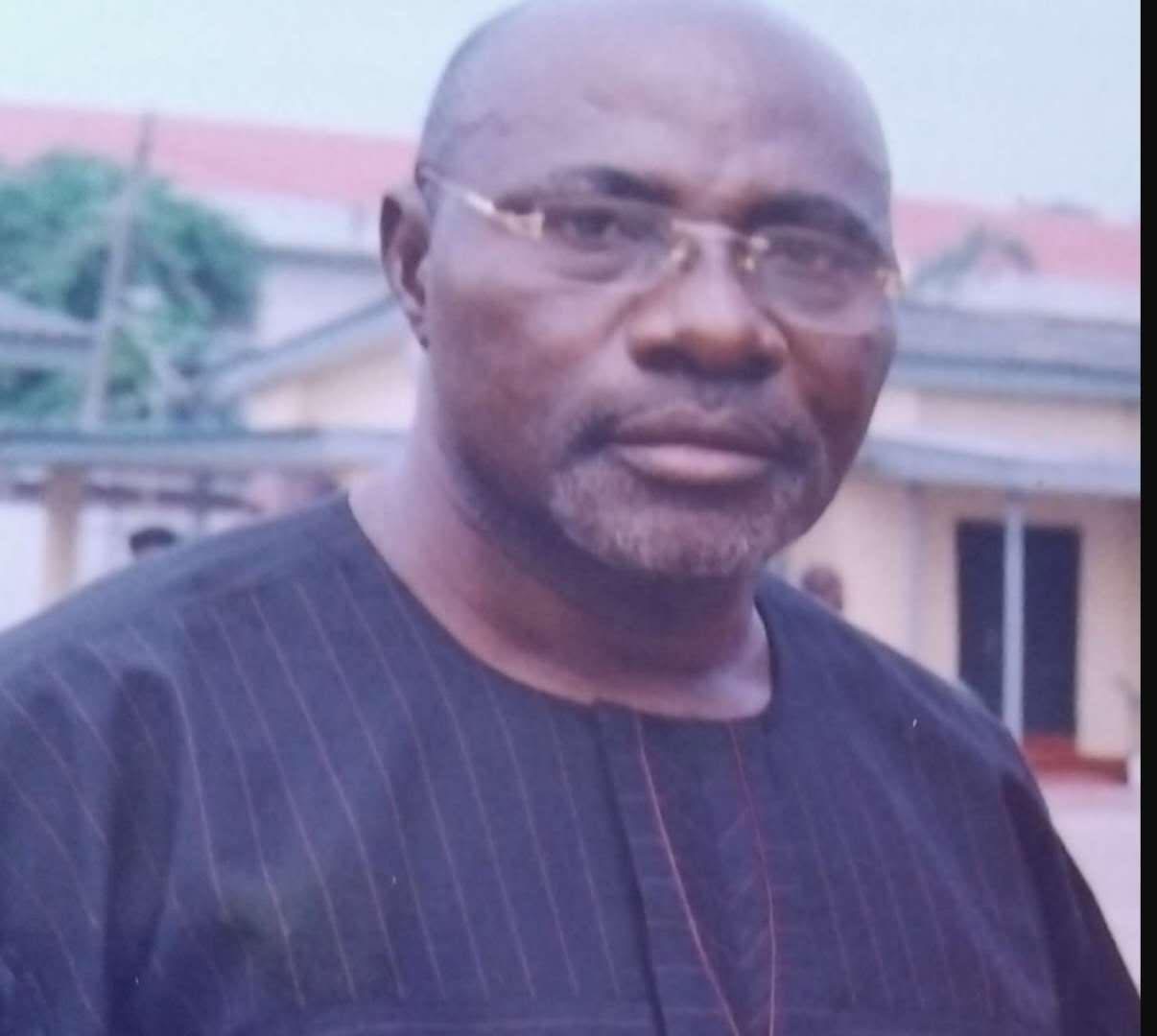
Grief has swept through the business and faith communities following the passing of Sir Innocent Chinedu Onuoha, the respected entrepreneur and Executive Chairman of InnoChris Group. He died peacefully in his sleep on December 11, 2025, at his home in Lagos. He was 71.
Born in 1954 in Umuoma Umuaro II Autonomous Community, Isiala Mbano Local Government Area of Imo State, Onuoha grew to become a symbol of enterprise, generosity, and unwavering faith. A devoted member and evangelist in the Anglican Communion, he lived a life that blended business success with service to God and humanity.
Long before many came to know his vast business interests, the name Innochris had already echoed in popular culture. In the 1990s, legendary Ogene music maestro Oliver De Coque famously chanted “Ugbo ndi oma Innochris eh!” in one of his songs — a line that celebrated the Onuoha brothers and helped make Sir Innocent Onuoha and his brother Christian Onugha widely known during that era.
Onuoha’s entrepreneurial journey began after years of professional experience working as secretary to a former Chief Engineer at Flour Mills of Nigeria. With determination and vision, he went on to establish InnoChris Group, a conglomerate that grew to include InnoChris Transport, InnoChris Computers, and InnoChris Spare Parts, serving customers across Nigeria.
Continues in comments below

Benita Enwonwu in the 1970s: Model, Actress, and Daughter of Ben Enwonwu

Kidnappers Took Loan With My Phone – Victim Recounts Ordeal

11 more arrested over Ozoro “r@ping festival”

-
Business1 year ago
US court acquits Air Peace boss, slams Mayfield $4000 fine
-

 Trending1 year ago
NYA demands release of ‘abducted’ Imo chairman, preaches good governance
-

 Politics1 year ago
Mexico’s new president causes concern just weeks before the US elections
-

 Politics1 year ago
Putin invites 20 world leaders
-

 Politics1 year ago
Russia bans imports of agro-products from Kazakhstan after refusal to join BRICS
-
Entertainment1 year ago
Bobrisky falls ill in police custody, rushed to hospital
-
Entertainment1 year ago
Bobrisky transferred from Immigration to FCID, spends night behind bars
-
Education2 years ago
GOVERNOR FUBARA APPOINTS COUNCIL MEMBERS FOR KEN SARO-WIWA POLYTECHNIC BORI