
Politics
‘Playing with fire’: Orbán’s sanctions veto threat puts Brussels on edge

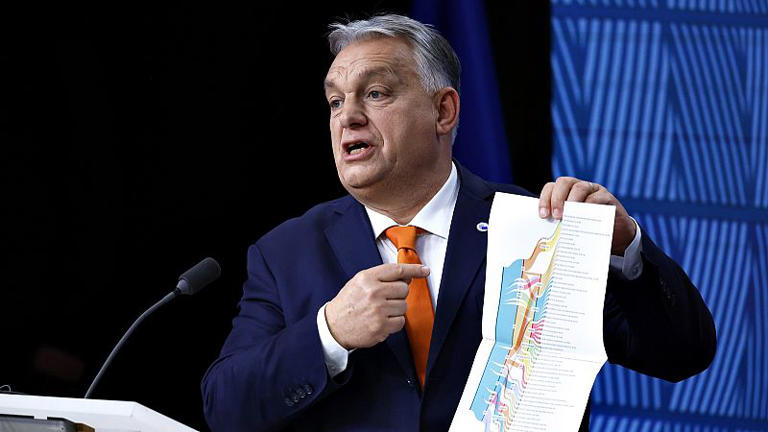
Diplomats and officials in Brussels are holding their breath as they wait to find out if Viktor Orbán’s increasingly critical rhetoric against EU sanctions will translate into a veto that could upend the bloc’s Russia policy, as soon as next week.
Since February 2022, the bloc has brought in sweeping bans on trade with Russia in energy, technology, finance, luxury goods, transport and broadcasting, among others. It’s also frozen €210 billion assets held by the Russian central bank within the bloc, which have been used to back a multi-billion-euro loan for Kyiv.
Those could all soon be put into question. The restrictions, designed to cripple Moscow’s ability to finance its full-scale invasion of Ukraine, need to be prolonged every six months by unanimity, and the next deadline is 31 January.
In recent days, Orbán and his deputies have ratcheted up their harsh words against the sanctions regime, arguing the inauguration of US President Donald Trump, who wants to negotiate with Russia’s Vladimir Putin, requires the bloc to rethink its longstanding stance.
“The question of extending the sanctions is now on the agenda, and I pulled the handbrake and asked European leaders to understand that this cannot be continued,” the Hungarian Prime Minister said in a radio interview on Friday morning.
One of his ministers, Gergely Gulyás, has openly questioned the six-monthly renewal. “So far, everyone has seen the extension of sanctions as automatic, but we do not think it is automatic now,” Gulyás said on Thursday.
Those comments have stoked fears that Hungary will use its veto to block the rollover, triggering the collapse of a sanctions regime painstakingly built across 15 packages, and depriving the EU of its most hard-hitting tool against the Kremlin.
“It’s clear that if Budapest were to block, we would have a great issue at hand,” said a senior diplomat, who spoke on condition of anonymity due to the sensitivity of the matter. “Budapest is playing with fire.”
The diplomat described the political situation as “mind-blowing” given the dire battleground conditions faced by Ukrainian forces, and predicted the EU would plunge into “uncharted territory” were sectoral sanctions to collapse overnight.
“The shenanigans we get from Budapest are seemingly endless,” the diplomat said.
A closed-door discussion among ambassadors on Friday only increased the uncertainty, as the Hungarian representative maintained ambiguity over his position, several diplomats said.
Instead, Hungary asked to change the agenda of Monday’s meeting of foreign affairs ministers, to allow the item on sanctions renewal, which is generally approved without any fuss, to be openly debated after a separate discussion on Ukraine support.
The Hungarian envoy also made a number of requests concerning energy policy, and in particular Ukraine’s recent decision to terminate the transit of Russian gas through Hungary, another diplomat said.
The decision, taken by President Volodymyr Zelenskyy to stop Moscow from earning “additional billions on our blood,” has met with a furious reaction from Hungary and Slovakia, two landlocked countries that still purchase Russian fossil fuels. Earlier this month, Slovak Prime Minister Robert Fico threatened to use his veto power in retaliation.
‘Transactional’ diplomacy
In his radio interview, Orbán made a direct link between sanctions renewal and the gas dispute, and asked the European Commission to intervene in his country’s favour.
The Commission has said it has “no interest” in extending the transit of Russian gas.
“What is closed now, has to be reopened again. This is not a matter for Ukraine, it is an issue for Europe, an issue for central Europe,” the prime minister said.
“If the Ukrainians want help, for example sanctioning the Russians, then let’s reopen the gas transit routes and allow the central European countries, including Hungary, to receive the gas we need through Ukraine.”
The connection between the two issues has left diplomats scratching their heads, trying to figure out how severe the latest threat actually is. Orbán has previously used his veto to extract concessions, but never to provoke such a disruptive effect on sanctions.
“The threats are taken seriously. But it’s not the first time,” a diplomat said, decrying Hungary’s “transactional” manner of making demands.
“The EU cannot enter into panic mode every time somebody says something in Budapest,” they added. “We have learned to make a clear distinction between what we hear in Budapest and what happens in Brussels.”
The suspense is likely to last, at least, until foreign affairs ministers meet on Monday and Hungary’s representative, Péter Szijjártó, announces his country’s position. Diplomats speculate that, despite the harsh talk, Szijjártó will back down if he can secure new EU assistance for Hungary’s energy needs.
This will pave the way for the renewal to be approved, if not on Monday, then at least before the end of the month.
“We expect a positive result from that discussion. [Sanctions] are a key part of our strategy,” said a high-ranking EU official. The issue of gas transit has “nothing to do with sanctions on Russia. Sanctions on Russia are because of the aggression.”
Asked if Brussels was already drafting a Plan B, the official said: “We don’t envisage any other possibility than that it will be approved in the coming days.”
One factor certain to influence the discussion are the latest comments made by Donald Trump, who took some observers by surprise with hawkish comments against Russia.
“If we don’t make a deal, and soon, I have no other choice but to put high levels of taxes, tariffs, and sanctions on anything being sold by Russia to the United States, and various other participating countries,” Trump said.
“We can do it the easy way, or the hard way – and the easy way is always better.”
The EU is already preparing a 16th package of sanctions against Russia, with the view to approving them before the third anniversary of the invasion, in late February.





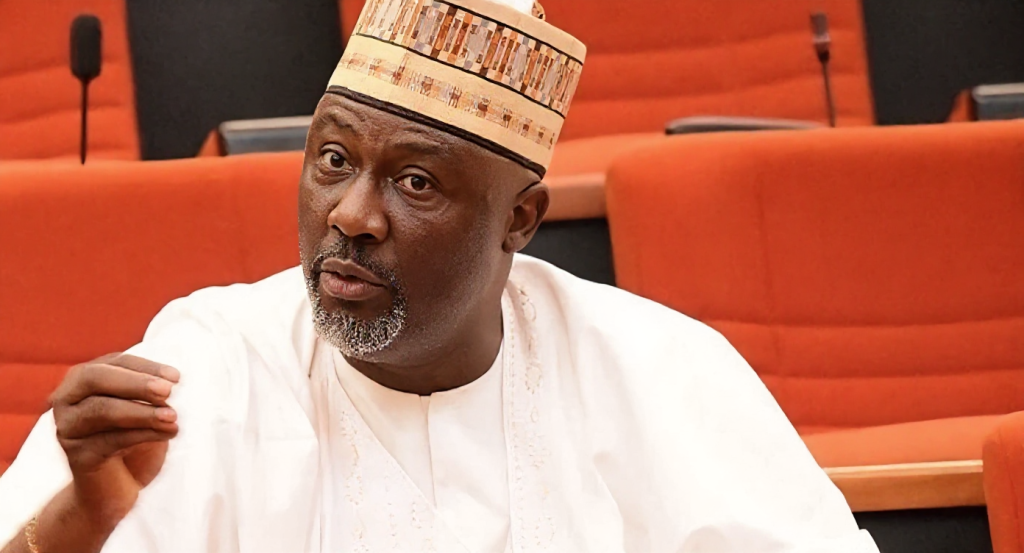
Former lawmaker, Dino Melaye Esq, has raised concerns over the Senate’s reported rejection of the electronic transmission of election results.
The move, according to Melaye, is a clear endorsement of election rigging and an indication of a sinister plan to rig the 2027 elections.
In a statement on Friday, the former lawmaker criticized the Senate’s decision, stating that it undermines the credibility of the electoral process.
The African Democratic Congress, ADC chieftain, also stated that the move opens the door for electoral manipulation and fraud.
He further warned that the rejection of electronic transmission of results is a step backwards for democracy in Nigeria.
Melaye called on lawmakers and citizens to stand up against “this blatant attempt to undermine the will of the people and ensure that future elections are free, fair, and transparent”.
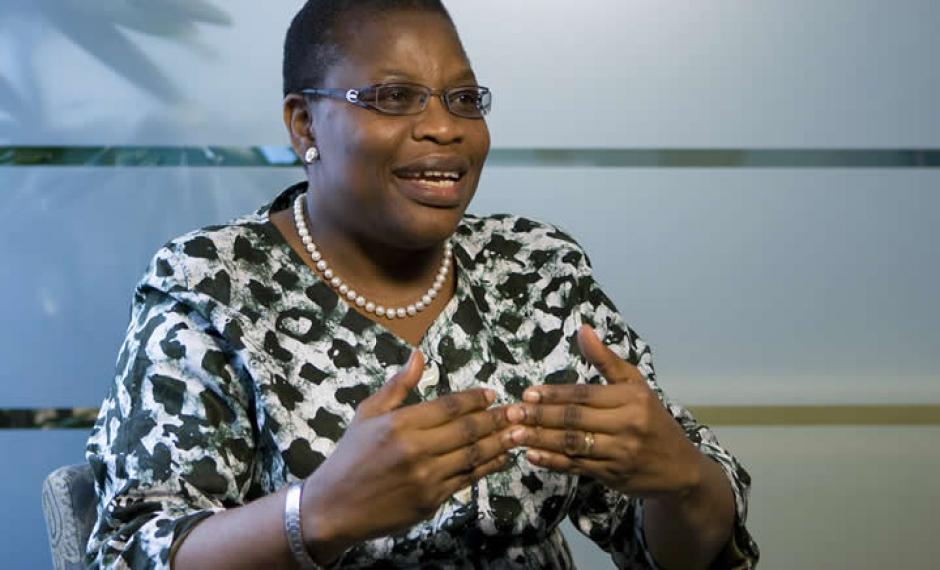
Former Minister of Education, Oby Ezekwesili, has said Nigerians have every reason to be mad at the Senate over the ongoing debate on e-transmission of election results.
Ezekwesili made this known on Friday when she featured in an interview on Arise Television’s ‘Morning Show’ monitored by DAILY POST.
DAILY POST reports that the Senate on Wednesday turned down a proposed change to Clause 60, Subsection 3, of the Electoral Amendment Bill that aimed to compel the electronic transmission of election results.
Reacting to the matter, Ezekwesili said, “The fundamental issue with the review of the Electoral Act is that the Senate retained the INEC 2022 Act, Section 60 Sub 5.
“This section became infamous for the loophole it provided INEC, causing Nigerians to lose trust. Since the law established that it wasn’t mandatory for INEC to transmit electoral results in real-time, there wasn’t much anyone could say.
“Citizens embraced the opportunity to reform the INEC Act, aiming to address ambiguity and discretionary opportunities for INEC. Yet, the Senate handled it with a “let sleeping dogs lie” approach. The citizens have every reason to be as outraged as they currently are.”
Politics
Electoral act: Senate’s action confirms Nigeria ‘fantastically corrupt’, ‘disgraced’ – Peter Obi
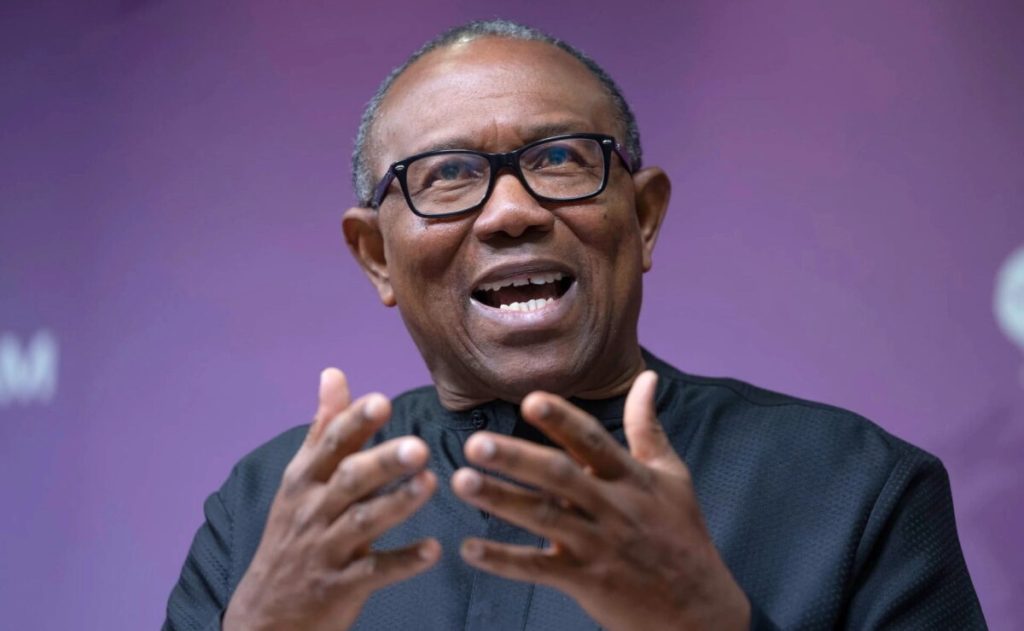
Former Labour Party presidential candidate, Peter Obi, has condemned the Senate’s refusal to make electronic transmission of election results mandatory, saying the move further exposes Nigeria as a fantastically corrupt and disgraced country.
Obi expressed his views in a statement shared on X on Friday, where he accused lawmakers of deliberately weakening Nigeria’s democratic process ahead of the 2027 general elections.
He explained that his reaction came after a brief pause to mourn victims of a deadly tragedy in Kwara State, where over 150 people reportedly lost their lives.
“Let us first pray for the souls of the innocent Nigerians lost in Kwara. That painful incident is why I delayed responding to the shameful development surrounding our electoral system,” he wrote.
Describing the Senate’s decision as intentional and dangerous, Obi said rejecting mandatory electronic transmission was not a simple oversight but a calculated attempt to block transparency.
“The Senate’s open rejection of electronic transmission of results is an unforgivable act of electoral manipulation ahead of 2027,” he said.
According to him, the action strikes at the heart of democracy and raises serious questions about the true purpose of governance in Nigeria.
“This failure to pass a clear safeguard is a direct attack on our democracy. By refusing these transparency measures, the foundation of credible elections is being destroyed. One must ask whether government exists to ensure justice and order or to deliberately create chaos for the benefit of a few.”
The former Anambra State governor linked the post-election controversies of the 2023 general elections to the failure to fully deploy electronic transmission of results, insisting that Nigerians were misled with claims of technical failures.
“
The confusion, disputes and manipulation that followed the 2023 elections were largely due to the refusal to fully implement electronic transmission,” he said.
He added that the so-called system glitch never truly existed.
Obi compared Nigeria’s electoral process with those of other African countries that have embraced technology to improve credibility, lamenting that Nigeria continues to fall behind.
“Many African nations now use electronic transmission to strengthen their democracy. Yet Nigeria, which calls itself the giant of Africa, is moving backwards and dragging the continent along.”
He criticised Nigeria’s leadership class, saying the country’s problems persist not because of a lack of ideas but because of deliberate resistance to meaningful reform.
“We keep organising conferences and writing policy papers about Nigeria’s challenges. But the truth is that the leaders and elite are the real problem. Our refusal to change is pushing the nation backwards into a primitive system of governance.”
Warning of the dangers ahead, Obi said rejecting electronic transmission creates room for confusion and disorder that only serves the interests of a small group.
He also recalled past remarks by foreign leaders who described Nigeria as corrupt, arguing that actions like this continue to justify those statements.
“When a former UK Prime Minister described Nigeria as ‘fantastically corrupt,’ we were offended. When former US President Donald Trump called us a ‘disgraced nation,’ we were angry. But our continued resistance to transparency keeps proving them right.”
Obi warned that Nigerians should not accept a repeat of the electoral irregularities witnessed in 2023.
“Let there be no mistake. The criminality seen in 2023 must not be tolerated in 2027.”
He urged citizens to be ready to defend democracy through lawful and decisive means, while also calling on the international community to closely monitor developments in Nigeria’s electoral process.
“The international community must pay attention to the groundwork being laid for future electoral manipulation, which threatens our democracy and development,” Obi stated.
He concluded by expressing hope that change is still possible if Nigerians take collective responsibility.
“A new Nigeria is possible but only if we all rise and fight for it.”

Police bust syndicate behind nude photo blackmail in Lagos

Man in shock after lady he lodged with in a hotel in Abuja flees with his car and other valuables

US Reacts As De@th Toll In Kwara Terror Attacks Hits 200

-
Business1 year ago
US court acquits Air Peace boss, slams Mayfield $4000 fine
-

 Trending1 year ago
NYA demands release of ‘abducted’ Imo chairman, preaches good governance
-

 Politics1 year ago
Mexico’s new president causes concern just weeks before the US elections
-

 Politics1 year ago
Putin invites 20 world leaders
-

 Politics1 year ago
Russia bans imports of agro-products from Kazakhstan after refusal to join BRICS
-
Entertainment1 year ago
Bobrisky falls ill in police custody, rushed to hospital
-
Entertainment1 year ago
Bobrisky transferred from Immigration to FCID, spends night behind bars
-
Education1 year ago
GOVERNOR FUBARA APPOINTS COUNCIL MEMBERS FOR KEN SARO-WIWA POLYTECHNIC BORI