
Business
President Tinubu Applauds NGX N100 trillion milestone, charges Nigerians To Invest More Locally

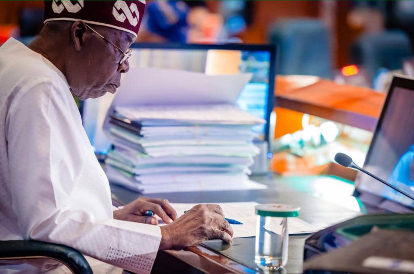
President Bola Tinubu has praised corporate Nigeria, citizens, and other stakeholders in the Nigerian capital market for surpassing the N100 trillion milestone on the Nigerian Exchange (NGX).
President Tinubu described this record achievement as an inspiration for the investing public operating in the money and capital markets.
He urged Nigerians to deepen their investments in the local economy, assuring that 2026 will yield even greater returns as his administration’s economic reforms continue to deliver stronger outcomes.
“With the Nigerian Exchange (NGX) crossing the historic N100 trillion market capitalisation mark, the country is witnessing the birth of a new economic reality and rejuvenation.
“In 2025, while many of the world’s markets struggled with stagnation or tepid recovery, the NGX All-Share Index was on the ascent. It closed 2025 with a 51.19% return, higher than the 37.65% recorded in 2024. This performance ranks among the highest in the world. Year-to-date returns have significantly outpaced the S&P 500, the FTSE 100, and even many of our emerging-market peers in the BRICS+ group.
“Nigeria is no longer a frontier market to be ignored—it is now a compelling destination where value is being discovered. As the stock market reflects the entire economy, its stellar performance is a significant indicator of the country’s economic health and the confidence investors have in our economy
“On the NGX, we have witnessed remarkable performances from listed companies across all sectors. From blue-chip industrial giants that have localised their supply chains, to a banking sector that has demonstrated resilience and technological innovation, Nigerian companies are proving that the country can deliver strong returns on investment.
“And we are just getting started. The pipeline for new and upcoming listings looks robust. More indigenous energy firms, tech unicorns, telecoms, and infrastructure-heavy entities are seeking to access the public market to fund their expansion. As these firms are listed, they will boost market capitalisation and deepen democratic ownership of the Nigerian economy.
“We are not celebrating the superlative stock market performance in isolation. We are also celebrating the microeconomic effects of our reforms. After the initial headwinds that followed our reforms, we are finally seeing a bend in the inflation curve. Crucial monetary tightening and the removal of distortionary ‘Ways and Means’ financing have restored stability to the Naira. Furthermore, investments in the agriculture sector have contributed to a consistent decline in inflation over the past eight months. From a 24-month high of 34.8% in December 2024, inflation decelerated to 14.45% as of November 2025, with projections indicating it will reach 12% in 2026. Indeed, inflation is likely to fall below 10 per cent before the end of this year, leading to improved living standards and accelerated GDP growth. The year 2026 promises to be an epochal year for delivering prosperity to all Nigerians.
“Also noteworthy is the status of our nation’s current account, a valid measure of our overall economic health. In 2024, Nigeria posted a surplus of $16 billion. According to the Central Bank of Nigeria (CBN), our current account balance is projected to rise to $18.81 billion in 2026, up from $16.94 billion in 2025.
“Under our administration, Nigeria is exporting more and importing less of what we can produce locally. Non-oil exports surged by 48% by the third quarter of 2025, totalling N9.2 trillion. Exports to Africa alone rose by 97% to N4.9 trillion. Manufacturing exports increased by 67% year-on-year in the second quarter of 2025, suggesting a strong close to the year.
“Nigeria’s foreign reserves have crossed the $45 billion mark, giving the Central Bank the firepower to maintain stability. The Naira has stabilised, moving away from the volatility that once fuelled speculation. The Central Bank of Nigeria, in its latest outlook, projects foreign reserves will cross the $50 billion threshold in the first quarter of 2026.
“We are also seeing an expansion of the rail networks, the completion of major arterial roads and the revitalisation of our ports. With the transformative Lagos-Calabar and Sokoto-Badagry superhighways, the nation’s infrastructure is growing.
“Our medicare facilities are improving, and medical tourism costs are declining. Our students benefit from the Nigeria Education Loan Fund (NELFUND), and universities are receiving increased research grants.
“Nation-building is a process, not a destination. Hard work, sacrifices, and the focus of its citizens build a nation. The N100 trillion market capitalisation is a signal to the world that the Nigerian economy is robust and productive.
“As your leader, I pledge to continue working unrelentingly to build an egalitarian, transparent, and high-growth economy that will be further catalysed by the historic tax and fiscal reforms that came into full implementation from January 1,” President Tinubu said.
Bayo Onanuga
Special Adviser to the President
(Information and Strategy)
January 8, 2026







The Trade Union of Nigeria, TUC, has raised the alarm that the price of Premium Motor Spirit aka Petrol may climb to about N2,000 per litre if urgent measures are not taken to cushion the impact of rising global crude prices and the depreciating naira.
Speaking to newsmen on Thursday, April 9, the president of the TUC, Festus Osifo, called on the Federal Government to immediately deploy 60 percent of excess crude oil revenue above the 2026 budget benchmark to subsidise crude feedstock supplies to the Dangote Refinery and other modular refineries, a move it says will slash pump prices of petrol, diesel, and jet fuel within two weeks
“Today, comrades, we are seeing that the cost of petrol is edging towards N2,000 per litre depending on the part of the country that you are. Nigerian workers are already passing through excruciating pain as we speak.
The same way it is affecting transportation, it is also affecting manufacturing. The cost of diesel has also gone northward, meaning that the cost of production has increased. When production costs rise, the final price of goods on the shelves will also skyrocket.
If this continues unchecked, the inflation that we are currently celebrating as going downwards will reverse and start moving up again,” he stated.
Osifo outlined the proposal as an urgent intervention to cushion Nigerian workers from excruciating pain caused by petrol prices edging towards ₦2,000 per litre in some parts of the country
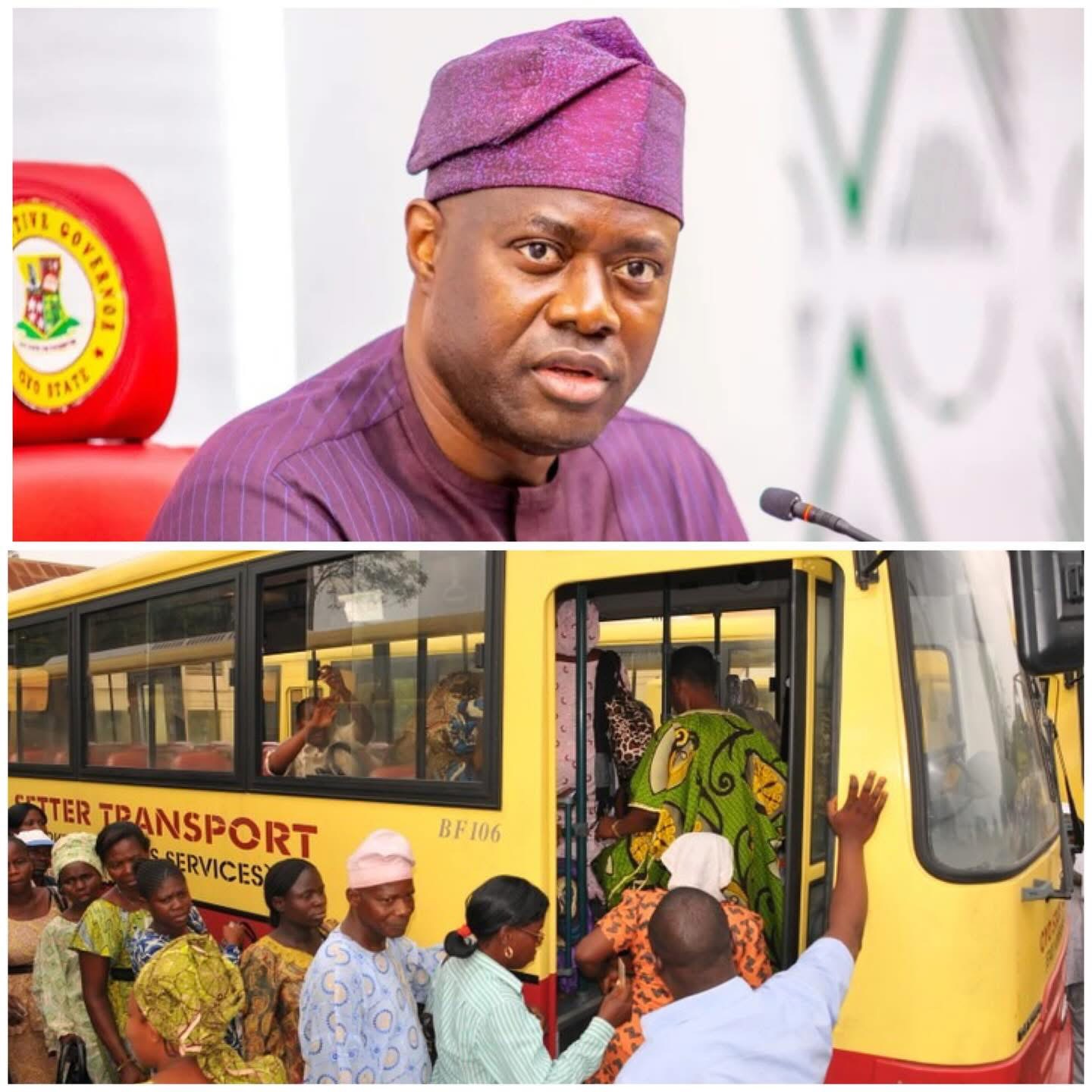
The governor of Oyo state, Seyi Makinde, has approved a N10,000 transportation allowance as a palliative for the state workforce to cushion the effects of the increase in the pump price of Premium Motor Spirit, otherwise known as petrol.
The Chairman of the Nigeria Labour Congress (NLC), Oyo State chapter, Kayode Martins, in a statement released on Monday, March 23, disclosed that the governor has granted the request of the union on the issue of transportation allowance.
The statement read
“Following the intervention and formal request made by the State Council of the Nigeria Labour Congress (NLC) earlier this morning, the state government has approved a N10,000 transportation allowance for all workers in the state.
The newly approved allowance is set to take effect from April 2026, providing much-needed relief to workers grappling with rising transportation costs amid current economic challenges.
This development comes as a direct response to sustained advocacy by the state NLC, aimed at cushioning the impact of increased living expenses on the workforce.
Further details on implementation are expected to be communicated by the relevant government authorities in due course.”
The Central Bank of Nigeria (CBN), has declared that banks and financial institutions must establish and maintain a temporary watch-list for Bank Verification Numbers (BVN) implicated in suspected fraudulent transactions.
According to the CBN in a circular dated March 12, 2026 and signed by its Director of Payments System Policy Department, Musa I. Jimoh, the apex bank said such a suspected BVN may remain on the temporary watchlist for a maximum period of twenty-four (24) hours during which the owner would be contacted to make clarifications.
The circular explained that the move is part of several new measures under a revised regulatory framework aimed at enhancing financial system stability.
“A BVN may remain on this temporary Watchlist for a maximum period of twenty-four (24) hours, during this period, the BVN owner shall be contacted to provide clarification regarding the identified transaction(s),” the circular stated.
The circular also sets an age requirement for BVN enrolment, restricting registration to individuals who have attained eighteen (18) years and above.
The CBN also added that amendments to phone numbers linked to a BVN shall be allowed only once.
“Amendments to phone numbers linked to a BVN shall be allowed only once,” the circular noted.
The apex bank stated that access to BVN databases will remain tightly controlled.
“Access to the BVN databases shall be exclusively granted to Central Bank of Nigeria (CBN) licensed financial institutions.
“Notwithstanding this provision, the Central Bank of Nigeria (the Bank) reserves the right to approve access to the BVN databases in extenuating circumstances and in accordance with the provisions of extant laws,” the circular said.
Financial institutions are expected to comply with the new requirements, and customers may be contacted by their banks if their BVNs are temporarily flagged during the new fraud monitoring process.
The new policy, as stated by the CBN, takes effect from May 1, 2026.

Bandits behind Ogbomoso school abduction will face full wrath of the law- President Tinubu

PDP to screen Goodluck Jonathan on Tuesday as its sole Presidential aspirant For 2027 race

Oshiomhole wins Edo APC senatorial primaries unopposed

-
Business2 years ago
US court acquits Air Peace boss, slams Mayfield $4000 fine
-

 Trending2 years ago
NYA demands release of ‘abducted’ Imo chairman, preaches good governance
-

 Politics2 years ago
Mexico’s new president causes concern just weeks before the US elections
-

 Politics2 years ago
Putin invites 20 world leaders
-

 Politics2 years ago
Russia bans imports of agro-products from Kazakhstan after refusal to join BRICS
-
Entertainment2 years ago
Bobrisky falls ill in police custody, rushed to hospital
-
Entertainment2 years ago
Bobrisky transferred from Immigration to FCID, spends night behind bars
-
Education2 years ago
GOVERNOR FUBARA APPOINTS COUNCIL MEMBERS FOR KEN SARO-WIWA POLYTECHNIC BORI