
Politics
REJOINDER: IT WASN’T THE OPPOSITION – THE APC KICKSTARTED 2027 OUT OF FEAR

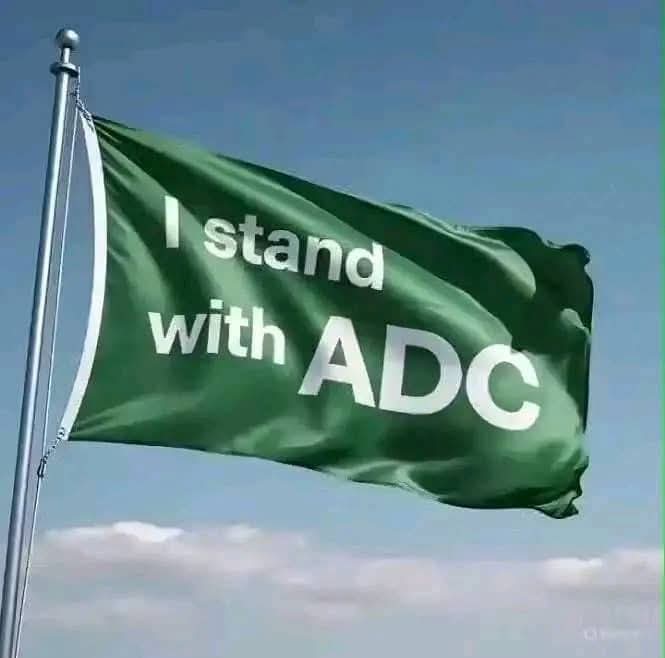
I Stand With ADC – National Media Directorate
“Those who fear tomorrow often shout the loudest today.”
Once again, Bayo Onanuga, the ever-willing voice of the Tinubu Presidency, has released yet another verbose, self-congratulatory piece that does more to expose the ruling party’s panic than to persuade anyone of its “successes.” His latest statement, laughably titled “Former President Jonathan Is Welcome to the Race. Nigerians Will Remember His Dismal Record in Office”, attempts to rewrite history by claiming that it is the opposition that has “prematurely foisted” the 2027 presidential contest upon the nation. Nothing could be further from the truth.
Let us be clear from the outset: it was the Tinubu administration and the APC themselves who fired the first shots in the 2027 race – not the opposition. From the moment Bola Tinubu took office, his handlers have been in permanent campaign mode, obsessed not with governance but with succession politics and electioneering propaganda. Even as Nigerians groaned under the weight of an economy spiralling out of control, APC’s machinery shifted focus from fixing the present to manipulating the future. National appointments were made with 2027 political calculations in mind, not competence. Federal interventions were weaponised to favour regions and individuals seen as “strategic” to their reelection project. Billions were spent on self-advertising campaigns long before any opposition party had even begun to discuss alliances.
If any proof is needed of who truly “foisted” the 2027 conversation upon the nation, we need look no further than President Tinubu’s own words. Barely eight months into his presidency – January 2024 – he declared publicly at a Lagos APC stakeholders’ event that “by 2027, they will know who owns Lagos and Nigeria.” Since then, his foot soldiers have turned governance briefings into campaign rallies, holding “renewed hope” town halls in all 36 states with more political speeches than policy content. Even the budget presentations in 2024 and 2025 were padded with campaign slogans, a telltale sign of a regime too insecure to focus on today because it fears tomorrow.
The reason is simple: they know what awaits them in 2027 – a historic electoral defeat. Every poll, every street conversation, every market whisper, and every youth gathering reflects one reality: Nigerians are disillusioned. In June 2023, shortly after Tinubu’s inauguration, a reputable NOI-Gallup poll found that 71% of Nigerians believed the country was “on the wrong track.” By mid-2025, that number had risen to 83%. Inflation, which the government boasts of reducing, remains above 20%, food inflation is still above 30%, and the cost of living has doubled in less than three years. According to the National Bureau of Statistics (NBS), over 133 million Nigerians now live in multidimensional poverty, a 17% increase from 2022.
And yet, Bayo Onanuga wants Nigerians to believe that “giant strides” have been made. What strides? That the naira – once ₦460 to a dollar – is now oscillating between ₦1,400 and ₦1,500 on the parallel market? That fuel subsidy removal pushed petrol from ₦185 per litre to over ₦850 without a functional public transport system or corresponding wage increases? That a country with over 33% youth unemployment (and even higher underemployment) has become a “global investment magnet”?
The facts mock the propaganda. Tinubu’s so-called economic reforms have unleashed hardship unseen in decades. Crime and insecurity have worsened. Education is in crisis. Health care is collapsing. More than 5 million Nigerians have emigrated since 2023 in the largest brain drain in modern history. These are not the signs of a country that has “turned the corner” – they are the signs of a government desperately spinning tales to distract from its failures.
Onanuga’s attempt to revive the ghost of Goodluck Jonathan’s administration as a campaign scarecrow is equally disingenuous. Nigerians are not debating the past; they are reacting to the present. The overwhelming frustration in the streets is not nostalgia for 2011 – it is anger at 2025. It is the fuel queues, the skyrocketing rent, the collapsing currency, the empty plates, and the shrinking middle class under Tinubu’s watch that will decide 2027 – not tired APC talking points from a decade ago.
And on the matter of the opposition “ganging up,” what Onanuga calls “desperation” is in fact democracy at work. Across the world, opposition parties form alliances to present credible alternatives – and Nigerians welcome this. What frightens the APC is not the existence of coalitions but the calibre of figures involved: statesmen of integrity, seasoned technocrats, and grassroots movements like the ADC-led coalition who command genuine loyalty, not rented applause. The ruling party’s fear is not misplaced – it is rooted in the dawning realisation that they cannot rely on propaganda to win an election against a united, strategic opposition front.
So, let us end this charade: it is not the opposition that triggered the 2027 conversation – it is the APC’s anxiety that did. They are haunted by their record, terrified of public verdict, and unable to inspire confidence beyond the echo chambers of their controlled media. Their premature campaigning is the behaviour of a government already on the defensive, one that senses that its days of electoral impunity are numbered.
And indeed, they are. 2027 will not be a referendum on Goodluck Jonathan. It will not be a referendum on Jerry Gana. It will not even be a referendum on opposition coalitions. It will be a referendum on Bola Ahmed Tinubu and the devastating legacy of mismanagement, inequality, and despair that his presidency has left behind. And on that day, no propaganda, however eloquent, will save them.
I Stand With ADC
National Media Directorate
September 30, 2025








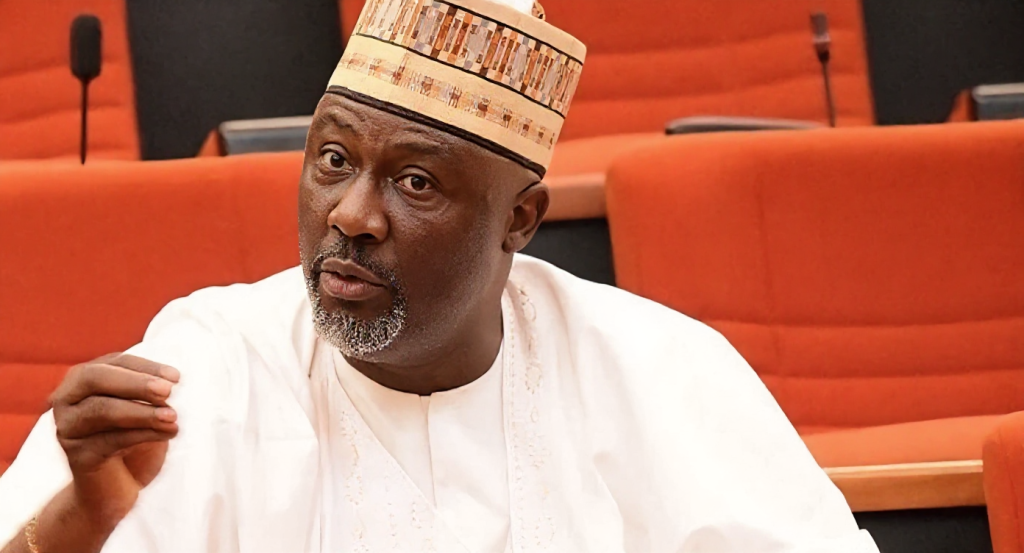
Former lawmaker, Dino Melaye Esq, has raised concerns over the Senate’s reported rejection of the electronic transmission of election results.
The move, according to Melaye, is a clear endorsement of election rigging and an indication of a sinister plan to rig the 2027 elections.
In a statement on Friday, the former lawmaker criticized the Senate’s decision, stating that it undermines the credibility of the electoral process.
The African Democratic Congress, ADC chieftain, also stated that the move opens the door for electoral manipulation and fraud.
He further warned that the rejection of electronic transmission of results is a step backwards for democracy in Nigeria.
Melaye called on lawmakers and citizens to stand up against “this blatant attempt to undermine the will of the people and ensure that future elections are free, fair, and transparent”.
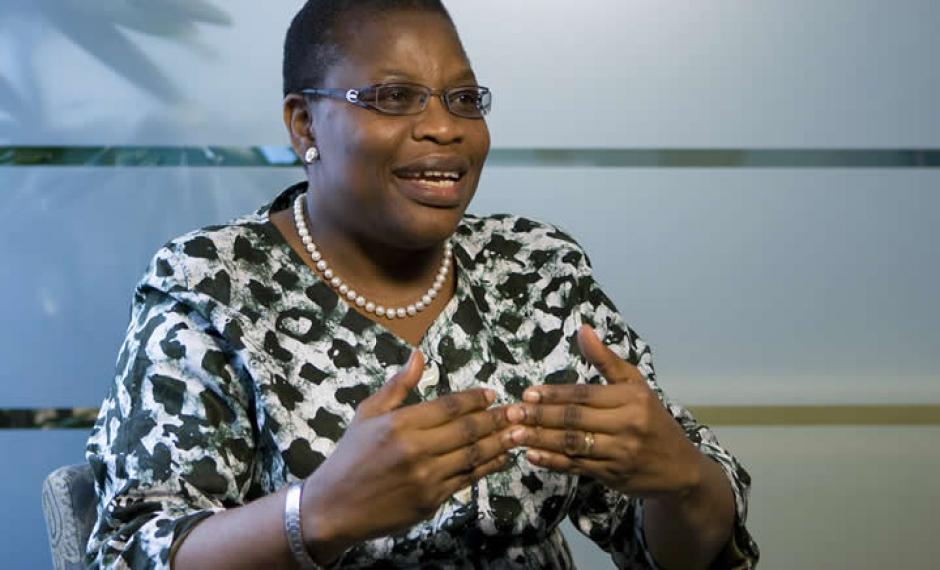
Former Minister of Education, Oby Ezekwesili, has said Nigerians have every reason to be mad at the Senate over the ongoing debate on e-transmission of election results.
Ezekwesili made this known on Friday when she featured in an interview on Arise Television’s ‘Morning Show’ monitored by DAILY POST.
DAILY POST reports that the Senate on Wednesday turned down a proposed change to Clause 60, Subsection 3, of the Electoral Amendment Bill that aimed to compel the electronic transmission of election results.
Reacting to the matter, Ezekwesili said, “The fundamental issue with the review of the Electoral Act is that the Senate retained the INEC 2022 Act, Section 60 Sub 5.
“This section became infamous for the loophole it provided INEC, causing Nigerians to lose trust. Since the law established that it wasn’t mandatory for INEC to transmit electoral results in real-time, there wasn’t much anyone could say.
“Citizens embraced the opportunity to reform the INEC Act, aiming to address ambiguity and discretionary opportunities for INEC. Yet, the Senate handled it with a “let sleeping dogs lie” approach. The citizens have every reason to be as outraged as they currently are.”
Politics
Electoral act: Senate’s action confirms Nigeria ‘fantastically corrupt’, ‘disgraced’ – Peter Obi
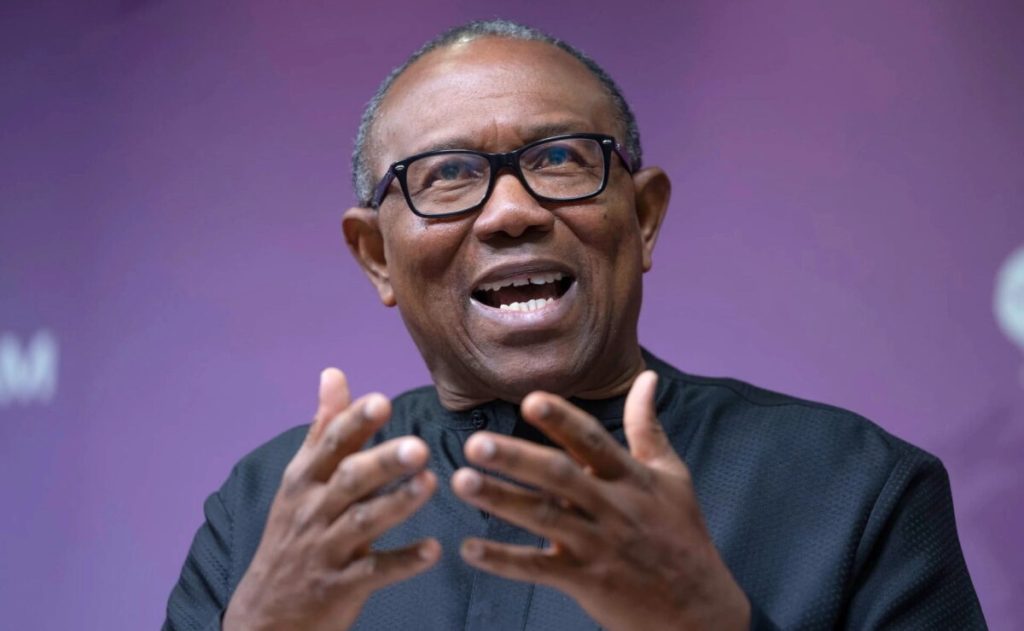
Former Labour Party presidential candidate, Peter Obi, has condemned the Senate’s refusal to make electronic transmission of election results mandatory, saying the move further exposes Nigeria as a fantastically corrupt and disgraced country.
Obi expressed his views in a statement shared on X on Friday, where he accused lawmakers of deliberately weakening Nigeria’s democratic process ahead of the 2027 general elections.
He explained that his reaction came after a brief pause to mourn victims of a deadly tragedy in Kwara State, where over 150 people reportedly lost their lives.
“Let us first pray for the souls of the innocent Nigerians lost in Kwara. That painful incident is why I delayed responding to the shameful development surrounding our electoral system,” he wrote.
Describing the Senate’s decision as intentional and dangerous, Obi said rejecting mandatory electronic transmission was not a simple oversight but a calculated attempt to block transparency.
“The Senate’s open rejection of electronic transmission of results is an unforgivable act of electoral manipulation ahead of 2027,” he said.
According to him, the action strikes at the heart of democracy and raises serious questions about the true purpose of governance in Nigeria.
“This failure to pass a clear safeguard is a direct attack on our democracy. By refusing these transparency measures, the foundation of credible elections is being destroyed. One must ask whether government exists to ensure justice and order or to deliberately create chaos for the benefit of a few.”
The former Anambra State governor linked the post-election controversies of the 2023 general elections to the failure to fully deploy electronic transmission of results, insisting that Nigerians were misled with claims of technical failures.
“
The confusion, disputes and manipulation that followed the 2023 elections were largely due to the refusal to fully implement electronic transmission,” he said.
He added that the so-called system glitch never truly existed.
Obi compared Nigeria’s electoral process with those of other African countries that have embraced technology to improve credibility, lamenting that Nigeria continues to fall behind.
“Many African nations now use electronic transmission to strengthen their democracy. Yet Nigeria, which calls itself the giant of Africa, is moving backwards and dragging the continent along.”
He criticised Nigeria’s leadership class, saying the country’s problems persist not because of a lack of ideas but because of deliberate resistance to meaningful reform.
“We keep organising conferences and writing policy papers about Nigeria’s challenges. But the truth is that the leaders and elite are the real problem. Our refusal to change is pushing the nation backwards into a primitive system of governance.”
Warning of the dangers ahead, Obi said rejecting electronic transmission creates room for confusion and disorder that only serves the interests of a small group.
He also recalled past remarks by foreign leaders who described Nigeria as corrupt, arguing that actions like this continue to justify those statements.
“When a former UK Prime Minister described Nigeria as ‘fantastically corrupt,’ we were offended. When former US President Donald Trump called us a ‘disgraced nation,’ we were angry. But our continued resistance to transparency keeps proving them right.”
Obi warned that Nigerians should not accept a repeat of the electoral irregularities witnessed in 2023.
“Let there be no mistake. The criminality seen in 2023 must not be tolerated in 2027.”
He urged citizens to be ready to defend democracy through lawful and decisive means, while also calling on the international community to closely monitor developments in Nigeria’s electoral process.
“The international community must pay attention to the groundwork being laid for future electoral manipulation, which threatens our democracy and development,” Obi stated.
He concluded by expressing hope that change is still possible if Nigerians take collective responsibility.
“A new Nigeria is possible but only if we all rise and fight for it.”

Police bust syndicate behind nude photo blackmail in Lagos

Man in shock after lady he lodged with in a hotel in Abuja flees with his car and other valuables

US Reacts As De@th Toll In Kwara Terror Attacks Hits 200

-
Business1 year ago
US court acquits Air Peace boss, slams Mayfield $4000 fine
-

 Trending1 year ago
NYA demands release of ‘abducted’ Imo chairman, preaches good governance
-

 Politics1 year ago
Mexico’s new president causes concern just weeks before the US elections
-

 Politics1 year ago
Putin invites 20 world leaders
-

 Politics1 year ago
Russia bans imports of agro-products from Kazakhstan after refusal to join BRICS
-
Entertainment1 year ago
Bobrisky falls ill in police custody, rushed to hospital
-
Entertainment1 year ago
Bobrisky transferred from Immigration to FCID, spends night behind bars
-
Education1 year ago
GOVERNOR FUBARA APPOINTS COUNCIL MEMBERS FOR KEN SARO-WIWA POLYTECHNIC BORI