
Business
Russia hikes interest rates to 21%, highest since 2003

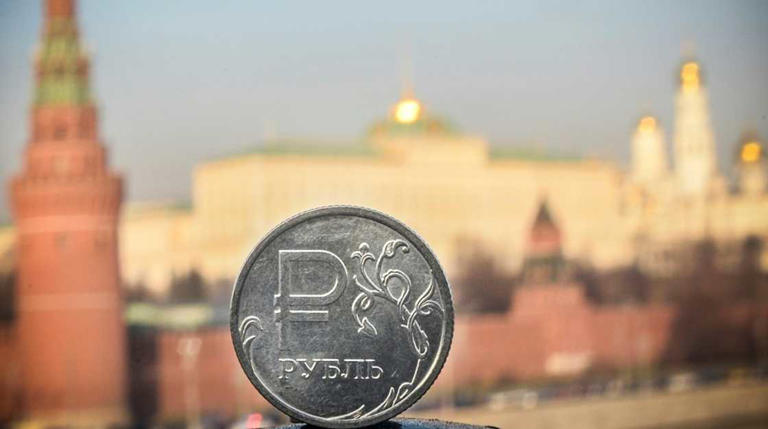
Russia’s central bank hiked interest rates to 21 percent on Friday, taking borrowing costs to their highest level in more than 20 years amid surging inflation.
The rise takes rates above an emergency level introduced in February 2022 — just after Moscow ordered troops into Ukraine — and to their highest since 2003.
“Further tightening of monetary policy is required to ensure the return of inflation to the target and reduce inflation expectations,” the bank said in a statement announcing the increase.
The bank directly blamed high government spending for inflation and said it could hike rates yet again if the pace of price rises does not cool.
“Additional fiscal spending and the related expansion of the federal budget deficit in 2024 have pro-inflationary effects,” it said.
Inflation has surged amid a massive increase in government spending on the Ukraine offensive that has triggered labour shortages across the economy.
Price rises were running at 8.6 percent on an annual basis in September, more than double the official 4.0-percent target.
Russian lawmakers voted Thursday to increase defence expenditure by almost 30 percent next year, another sign Moscow is not planning to halt its spending on the offensive, grinding through its third year, anytime soon.
Several sectors of the economy are facing intense labour shortages, as hundreds of thousands of men have been called up to fight, fled the country or been recruited by a booming domestic weapons’ industry.
That has created strong growth despite an unprecedented package of Western sanctions that Washington hoped would cripple the Russian economy.
The International Monetary Fund this week raised its growth forecast for Russia in 2024 to 3.6 percent.
Inflation woes
But it has also led to a cycle of spiralling wages and prices that the Central Bank has long warned undermines economic stability.
Official borrowing costs in Russia have not been above 20 percent since 2003.
They regularly topped 100 percent throughout the 1990s, a decade of economic volatility and hardship following the collapse of the Soviet Union.
For years President Vladimir Putin has boasted of economic stability under his leadership, with his first years in office in the 2000s seeing an oil-led boom and rising wealth.
But his conflict in Ukraine has threatened Moscow’s future prosperity, cutting it off from lucrative Western export markets and much of the global financial system.
Putin had hoped to advance plans for alternative international payment systems at the BRICS summit in Kazan this week, the largest diplomatic gathering in Russia since the start of the offensive.
But speaking Thursday, he indicated little progress had been made on talks over launching a possible competitor to the Belgium-based SWIFT financial messaging system.
“As for SWIFT and any alternatives, we have not created and are not creating any alternatives,” Putin told reporters at the end of the summit.
“One of the key problems today is the problem of payments, that is why we are moving towards the use of national currencies,” he said.
“As for a unified BRICS currency, we are not considering that question at the moment,” he added.









The governor of Oyo state, Seyi Makinde, has approved a N10,000 transportation allowance as a palliative for the state workforce to cushion the effects of the increase in the pump price of Premium Motor Spirit, otherwise known as petrol.
The Chairman of the Nigeria Labour Congress (NLC), Oyo State chapter, Kayode Martins, in a statement released on Monday, March 23, disclosed that the governor has granted the request of the union on the issue of transportation allowance.
The statement read
“Following the intervention and formal request made by the State Council of the Nigeria Labour Congress (NLC) earlier this morning, the state government has approved a N10,000 transportation allowance for all workers in the state.
The newly approved allowance is set to take effect from April 2026, providing much-needed relief to workers grappling with rising transportation costs amid current economic challenges.
This development comes as a direct response to sustained advocacy by the state NLC, aimed at cushioning the impact of increased living expenses on the workforce.
Further details on implementation are expected to be communicated by the relevant government authorities in due course.”
The Central Bank of Nigeria (CBN), has declared that banks and financial institutions must establish and maintain a temporary watch-list for Bank Verification Numbers (BVN) implicated in suspected fraudulent transactions.
According to the CBN in a circular dated March 12, 2026 and signed by its Director of Payments System Policy Department, Musa I. Jimoh, the apex bank said such a suspected BVN may remain on the temporary watchlist for a maximum period of twenty-four (24) hours during which the owner would be contacted to make clarifications.
The circular explained that the move is part of several new measures under a revised regulatory framework aimed at enhancing financial system stability.
“A BVN may remain on this temporary Watchlist for a maximum period of twenty-four (24) hours, during this period, the BVN owner shall be contacted to provide clarification regarding the identified transaction(s),” the circular stated.
The circular also sets an age requirement for BVN enrolment, restricting registration to individuals who have attained eighteen (18) years and above.
The CBN also added that amendments to phone numbers linked to a BVN shall be allowed only once.
“Amendments to phone numbers linked to a BVN shall be allowed only once,” the circular noted.
The apex bank stated that access to BVN databases will remain tightly controlled.
“Access to the BVN databases shall be exclusively granted to Central Bank of Nigeria (CBN) licensed financial institutions.
“Notwithstanding this provision, the Central Bank of Nigeria (the Bank) reserves the right to approve access to the BVN databases in extenuating circumstances and in accordance with the provisions of extant laws,” the circular said.
Financial institutions are expected to comply with the new requirements, and customers may be contacted by their banks if their BVNs are temporarily flagged during the new fraud monitoring process.
The new policy, as stated by the CBN, takes effect from May 1, 2026.
NNPC Reduces Fuel Price
The Nigerian National Petroleum Company Limited has reduced the pump price of Premium Motor Spirit, also known as petrol, at its retail stations in Lagos and Abuja.
The adjustment took effect on Wednesday as the national oil company reduced the price to N1,130 per litre in Lagos and N1,165 per litre in Abuja.
The new price means motorists in Lagos are now paying N100 less than the previous pump price of N1,230 per litre.
In Abuja, the new rate represents a reduction of N95 from the former price of N1,260 per litre.
Checks showed that the new price was already in place at several NNPC filling stations in Lagos, including outlets located along Isheri Oshun Road, Apple Junction and Ago Palace Way.
The same adjustment was also recorded in the Federal Capital Territory, where NNPC stations in areas such as Jabi and Wuse began selling petrol at N1,165 per litre.
The reduction comes at a time when many private oil marketers have not yet adjusted their pump prices to match the recent drop in the gantry price announced by the Dangote Petroleum Refinery.
Dangote Refinery had earlier lowered its gantry price for petrol by N100 per litre, bringing it down to N1,075 per litre.
The change followed a fall in international crude oil prices.
Global oil prices had earlier risen sharply due to tensions in the Middle East involving the United States, Iran and Israel.
The crisis raised fears of possible disruption to oil supply, especially around the Strait of Hormuz, an important route for global crude shipments.
Prices later began to fall after the President of the United States, Donald Trump, indicated that the conflict might end soon.

Fuel price hike: Gov Makinde announces N10,000 transport support for workers

Former Acting Accountant-General of the Federation bags 72years imprisonment for diverting N868.46 million security funds

Benita Enwonwu in the 1970s: Model, Actress, and Daughter of Ben Enwonwu

-
Business1 year ago
US court acquits Air Peace boss, slams Mayfield $4000 fine
-
 Trending1 year ago
NYA demands release of ‘abducted’ Imo chairman, preaches good governance
-

 Politics1 year ago
Mexico’s new president causes concern just weeks before the US elections
-
 Politics1 year ago
Putin invites 20 world leaders
-
 Politics1 year ago
Russia bans imports of agro-products from Kazakhstan after refusal to join BRICS
-
Entertainment1 year ago
Bobrisky falls ill in police custody, rushed to hospital
-
Entertainment1 year ago
Bobrisky transferred from Immigration to FCID, spends night behind bars
-
Education2 years ago
GOVERNOR FUBARA APPOINTS COUNCIL MEMBERS FOR KEN SARO-WIWA POLYTECHNIC BORI