
Politics
Russian envoy says trade with Hong Kong can grow under strong Moscow-Beijing ties

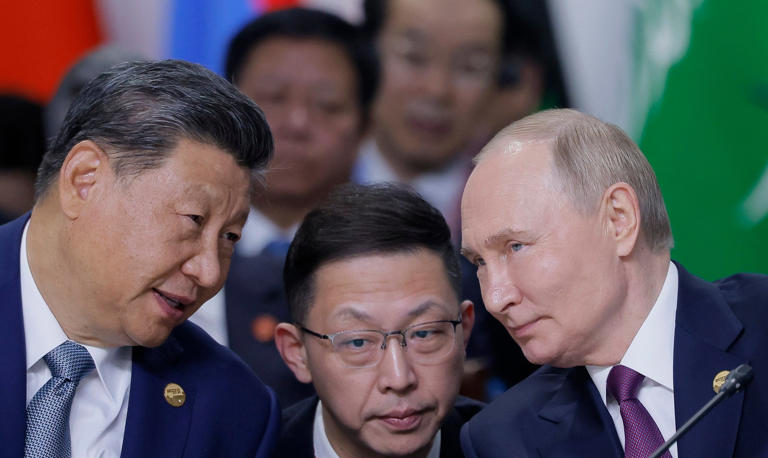
China, Russia can do more to support companies affected by Western sanctions, says Consul General Anatoly Kargapolov
This is the eighth in a series of interviews with consuls general of emerging and belt and road economies with which Hong Kong is keen to build ties. Here are the previous ones.
Russian companies have faced difficulties accessing Hong Kong’s banking services following Western sanctions, but the country’s top envoy to the city has brushed off the impact on bilateral trade.
Consul General Anatoly Kargapolov said growing ties between China and Russia had opened up new opportunities for collaboration with the city, urging the financial hub to host economic forums with former Soviet states.
Do you have questions about the biggest topics and trends from around the world? Get the answers with SCMP Knowledge, our new platform of curated content with explainers, FAQs, analyses and infographics brought to you by our award-winning team.
He spoke to the Post in an exclusive interview days before leaders Xi Jinping and Vladimir Putin said on the sidelines of the 16th Brics summit in Kazan, Russia, last week that both countries were committed to boosting cooperation for a “fair world order”.
Since Russia invaded Ukraine in February 2022, it has faced a slew of sanctions from the United States, the European Union and other Western countries. It was also cut off from Swift, the main international payment messaging network.
Some Russian companies experienced difficulties with banking services in Hong Kong, but Kargapolov said that “was never critical for developing bilateral trade”.
He said US sanctions on dozens of Hong Kong companies for their alleged ties to Russia were meant to “negatively influence” Russia-China trade.
While the affected companies had to navigate the challenges they faced themselves, he added that Moscow and Beijing should support the business community.
In September, the US Treasury Department’s Office of Foreign Assets Control sanctioned 26 Hong Kong companies and another based in the city and mainland China. That followed sanctions last December on eight companies in the city.
On a visit to Hong Kong in July, Ukraine Foreign Minister Dmytro Kuleba urged Chief Executive John Lee Ka-chiu to prevent Russia from using the city to evade Western restrictions.
Lee assured Kuleba that the city adhered to global sanctions and local laws.
Kargapolov called those sanctions “illegal”, saying: “The global economy is grossly distorted by the methods that the West is using to punish those who do not follow its ‘rules’, which are steeped in neocolonialism, and to wipe out its competitors.”
He added that Western countries tried to use the same method against Russia-China trade and Hong Kong in particular, in their attempts to undermine the city’s status as a global financial centre.
Despite the challenges, Russia’s relationship with Hong Kong was part of its “comprehensive partnership and strategic cooperation” with the mainland, which was experiencing “remarkable growth” and opening up new opportunities for deepening cooperation, he said.
He also highlighted the city’s role as the largest source of offshore yuan, which Russia had increasingly turned to for foreign trade in recent years.
Hong Kong’s bilateral trade with Russia climbed to US$5.8 billion last year, up 50.9 per cent from 2022, according to official data. Exports surged by 123 per cent, while imports were up 11.2 per cent.
To boost trade and business ties further, Kargapolov hoped Hong Kong could host economic events focused on member countries of the Commonwealth of Independent States (CIS), which comprised most of the former Soviet Union states in Central Asia and Eastern Europe.
He noted the Hong Kong government had begun paying more attention to countries in the Asean bloc, or the Association of Southeast Asian Nations, and the Middle East, and said that Russia could also supplement the development of the city.
“This will help to extend the economic cooperation between CIS countries and Hong Kong, and with Russia in particular,” he said.
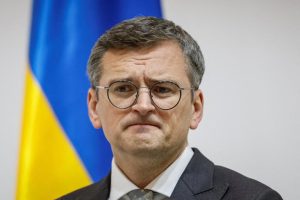
Dmytro Kuleba, Ukraine’s foreign minister, in July urged Chief Executive John Lee to prevent Russia from using Hong Kong to evade Western restrictions. Photo: Reuters
Russia’s exports to the city mainly consisted of precious metals such as silver and platinum, as well as pearls and other precious stones, according to Trade Development Council data.
Kargapolov said there was “huge interest” from Russian companies hoping to send agricultural and food products to the city for re-export to Asean countries and the mainland.
Hong Kong also had unique advantages within the framework of the Greater Bay Area, linking the city with Macau and nine cities in Guangdong province, including its international connectivity, financial infrastructure and common law legal system.
Kargapolov said Hong Kong’s position as a research and development hub also offered new opportunities for cooperation in areas including artificial intelligence and fintech such as banking software.
Lighter side
What surprised you most about Hong Kong when you first arrived?
I was surprised that on such a small piece of land you managed to build great transport infrastructure and business infrastructure. It is a city that combines and embraces everything active people would wish to have.
In a small area everything is accessible. In 20 minutes I can go from the office to the trail to go hiking. I also can enjoy the seashore.
Do you have a favourite local dish?
I like the seafood. Sometimes I go to the wet market, buy some fish and cook it myself. In Moscow, we have mostly frozen products.
But here, you can have a fresh catch and I can treat my family to some dishes.
Where do you usually take guests when they visit Hong Kong?
No 1, we take them to The Peak. No 2, we take them to the [Big] Buddha. No 3, we take them to Tai Kwun because it is an iconic place – the architecture, heritage, cuisine.
If this is not enough, we take them to Tai Po, the fishing village, and we take a boat ride to see the dolphins. We are not lucky every time, but I have seen them.
More Articles from SCMP
Surprised David Eustace breaks new ground with 240-1 Happy Valley double
Discover the quirky toilet habits of wombats, sloths, and more
Why North Korea is starting to become a ‘forgotten’ space for China and the US
PLA Navy tests South China Sea defences as Vietnam and Philippines expand footprint
This article originally appeared on the South China Morning Post (www.scmp.com), the leading news media reporting on China and Asia.
Copyright (c) 2024. South China Morning Post Publishers Ltd. All rights reserved.





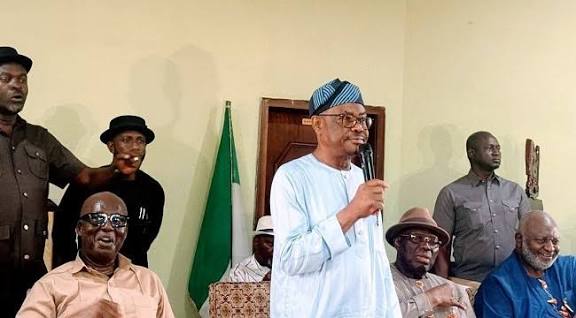
FCT Minister and former governor of Rivers state, Nyesom Wike, has said that any senator, House of Representatives Member, Minister, or governor who supports betrayers will suffer betrayal in their lives and that such person will join their creator when they experience their own betrayal.
Wike who is currently in a running battle with his godson and incumbent governor of Rivers state, Sim Fubara, said this while speaking at a public function in the state today February 6.
Speaking to the crowd at the public function, Wike said
‘’Wether you are a Senator, House of Reps member, a Minister or Governor, and you support betrayers, people will continue to betray you in life. You see people who betray and support them, betrayal is your portion! Betrayal is your portion! and that day you will not have mouth to say anything and there you will collapse and there you will go and they will announce such person has died because that is the seed you have planted because whatever you plant, you reap and so since you are sowing betrayal, betrayal will always follow you.
Watch! Every governor who is doing his second term and has ambition to put a successor and is supporting betrayals, you will never survive it. Betrayal will follow you. From the day your successor comes in. My own took so many months, your own will start immediately the person has been inaugurated. That is what the gods of the land have told me to tell all of you’’
https://www.instagram.com/reel/DUdaCp1jD01/?igsh=MWVnZXoyaGNmOGJ5dA==
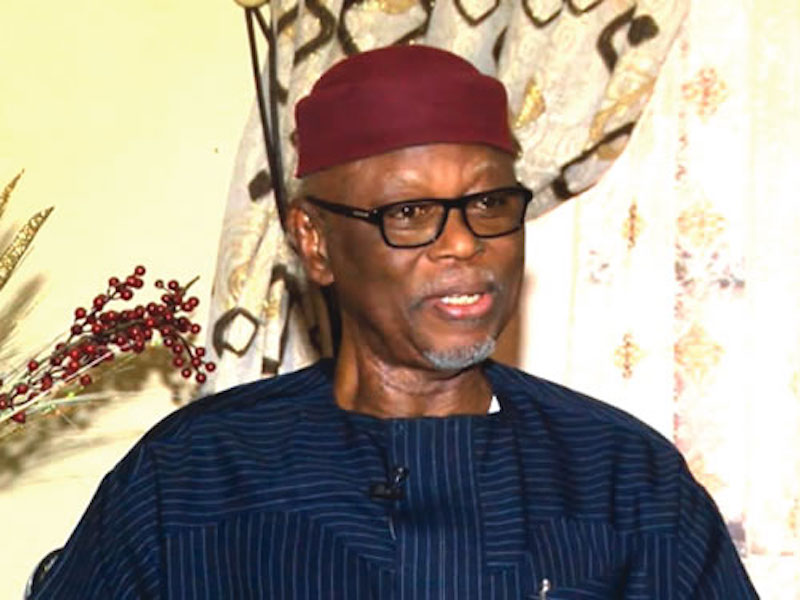
Chairman, Policy Manifesto Committee of the African Democratic Congress, ADC, John Odigie-Oyegun, says former president Muhammadu Buhari gave him the shock of his life, six months into his administration as Nigeria’s leader.
Oyegun made this disclosure on Friday when he featured in an interview on Arise Television’s ‘Prime Time’.
He revealed that as National Chairman of the All Progressives Congress, APC, he went to tell Buhari that he was not delivering his election promises to Nigerians but that the late president told him he would not rule with strictness, but rather wanted to show Nigerians that he is a true civilian president.
The former APC National Chairman lamented that it became business as usual, from there.
“I was national chairman of the APC. Six months or less into our assuming office, fairly alarmed, I went to the late President Buhari for a one-on-one talk. I said Mr President, this is not what the people were expecting. They wanted a bit of the old president Buhari.
“And he explained to me, Mr Chairman, I have learned my lesson. I was shocked. And don’t forget at that time, a lot of prominent Nigerians took their holidays abroad, just to be sure and see what this new sheriff in town will be.
“Buhari told me he wants to now show the people that he’s a true civilian president in Agbada. And by the time we finished the conversation, I said Oh God, we are finished. Because, if he’s not ready to be strict, what’s the point?
“Weeks later, months later, years later, I was proven correct. And of course, it became business as usual, only that they are a new set of tenants in Aso Rock. That was a shocker,” he said.
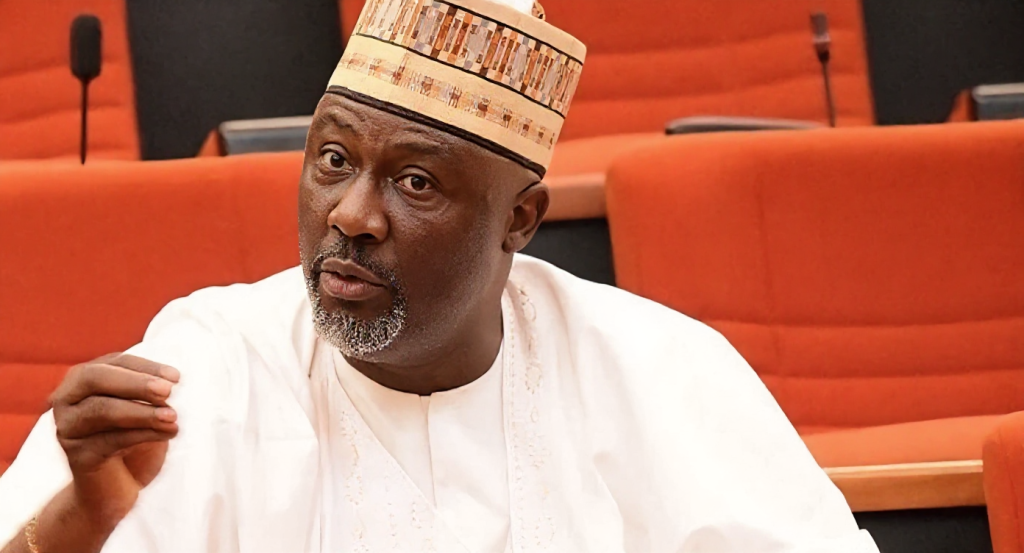
Former lawmaker, Dino Melaye Esq, has raised concerns over the Senate’s reported rejection of the electronic transmission of election results.
The move, according to Melaye, is a clear endorsement of election rigging and an indication of a sinister plan to rig the 2027 elections.
In a statement on Friday, the former lawmaker criticized the Senate’s decision, stating that it undermines the credibility of the electoral process.
The African Democratic Congress, ADC chieftain, also stated that the move opens the door for electoral manipulation and fraud.
He further warned that the rejection of electronic transmission of results is a step backwards for democracy in Nigeria.
Melaye called on lawmakers and citizens to stand up against “this blatant attempt to undermine the will of the people and ensure that future elections are free, fair, and transparent”.

Audu Innocent Ogbeh: Scholar, Legislator, and Federal Minister

Nyesom Wike wishes de@th on any politician supporting ‘’betrayers’

How Buhari shocked me 6 months into his administration – Oyegun

-
Business1 year ago
US court acquits Air Peace boss, slams Mayfield $4000 fine
-

 Trending1 year ago
NYA demands release of ‘abducted’ Imo chairman, preaches good governance
-

 Politics1 year ago
Mexico’s new president causes concern just weeks before the US elections
-

 Politics1 year ago
Putin invites 20 world leaders
-

 Politics1 year ago
Russia bans imports of agro-products from Kazakhstan after refusal to join BRICS
-
Entertainment1 year ago
Bobrisky falls ill in police custody, rushed to hospital
-
Entertainment1 year ago
Bobrisky transferred from Immigration to FCID, spends night behind bars
-
Education1 year ago
GOVERNOR FUBARA APPOINTS COUNCIL MEMBERS FOR KEN SARO-WIWA POLYTECHNIC BORI