
Politics
Taiwan’s political divisions weaken defence stance as Trump returns

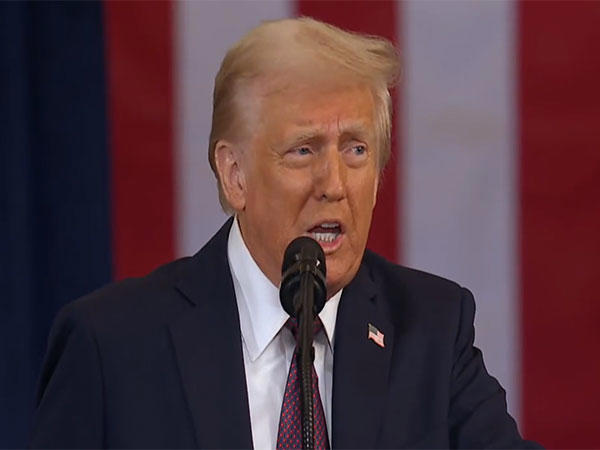
Taipei [Taiwan], January 25 (ANI): Taiwan‘s parliament has voted to freeze billions in defence spending just hours after Donald Trump‘s inauguration, raising concerns about the island’s preparedness against China‘s mounting threats, CNN reported.
The move, backed by the opposition, comes at a time when Taiwan is navigating strained relations with the United States under Trump‘s transactional approach to foreign policy. Critics warn that this decision could jeopardise Taiwan‘s military reformsand send negative signals to Washington.
Taiwan, a major semiconductor producer and democratically governed territory, faces constant threats from China, which claims the island as part of its territory. Despite never having governed Taiwan, Beijing continues to vow reunification, by force if necessary. The United States has been Taiwan‘s main arms supplier and strategic partner, but Trump‘s “America First” policy has heightened fears about whether Washington will continue its support without greater financial contributions from Taipei.
The opposition-led vote to block funding comes as Taiwan‘s President Lai Ching-te struggles with a parliament dominated by opposition forces. Critics argue that this budget freeze could weaken Taiwan‘s Defence capabilities and damage its credibility with the US “If there is not enough budget to consistently improve Taiwan‘s defence reforms and capabilities, the international community will doubt Taiwan‘s determination to defend ourselves,” Lai said in a Facebook post. The frozen funds impact key projects, including the development of indigenous submarines and drones.
Taiwan‘s Premier Cho Jung-tai strongly condemned the opposition’s actions, calling them “suicidal” and warning that they send “the wrong signal to the United States.” Defence Minister Wellington Koo echoed these concerns, emphasising that the freeze could undermine Taiwan‘s military modernisation efforts. Trump, known for his criticism of Taiwan‘s defence spending, previously called for the island to increase its defence allocation to 10 per cent of GDP – a fourfold increase from its current levels.
Taiwan‘s defence spending has faced scrutiny even before Trump‘s return. A backlog of more than USD 20 billion in undelivered US military equipment has hampered Taiwan‘s modernisation efforts. Concerns have also been raised about Taiwan‘s reliance on asymmetric warfare strategies, which prioritise smaller, more mobile systems like drones and portable missiles over conventional military equipment.
Defence experts argue that while progress has been made, much more needs to be done to counter the growing threat from China, which has the world’s largest standing army and spends 11 times more on defence than Taiwan, CNN reported.
Public sentiment in Taiwan reflects growing anxiety over the political deadlock. Residents have expressed concern about how the opposition-led freeze might be perceived by the US “I hope that Taiwan‘s legislature doesn’t embarrass itself and lose face to foreign countries,” said Wang Cheng-yi, a postgraduate student at National TaiwanUniversity. Ms. Hsu, a 75-year-old Taipei resident, emphasised the importance of unity, saying, “Everybody should sit down and talk. Taiwan must balance relations with both the US and China. We are small. We cannot afford to make either big brother unhappy.”
China‘s growing military aggression and diplomatic isolation of Taiwan have added urgency to the island’s defence preparations. Last year, US intelligence suggested that Chinese President Xi Jinping had instructed his military to prepare for an invasion of Taiwan by 2027. While this does not guarantee an invasion, it underscores the escalating threat. The United States has historically maintained a policy of “strategic ambiguity” under the Taiwan Relations Act, which commits Washington to providing Taiwan with the means to defend itself without explicitly promising military intervention.
Taiwan‘s military reforms have faced criticism for their slow pace. Issues such as inadequate reservist training and delays in deploying advanced weaponry have drawn scrutiny. The ongoing debate over Taiwan‘s indigenous submarine program further highlights the challenges. Alexander Huang, head of international affairs for the opposition Kuomintang party, defended the budget freeze, stating, “We are not opposing indigenous weapon system development. However, we emphasise that we need to be very prudent to make sure our self-designed submarine can actually work.”
The political discord also extends to Taiwan‘s infrastructure. Earlier this week, undersea cables connecting Taiwan to the Matsu islands were severed due to “natural deterioration,” disrupting internet services in the area. The digital affairs ministry has warned that further budget cuts could hinder the maintenance of critical infrastructure, leaving Taiwan vulnerable to potential exploitation by Beijing.
Despite these challenges, some Taiwanese remain optimistic. Yeh Hsin-wei, a student in Taipei, pointed to Taiwan‘s semiconductor industry as a key deterrent against Beijing. “The world needs our chips, so I think China wouldn’t risk a war,” he said to CNN. “We need to be prepared, but maybe not worry too much.”
Analysts have urged Taiwan‘s government to focus on presenting a united front, especially in light of Trump‘s return to the White House. “With or without Trump‘s inauguration, with China‘s increasing aggression over Taiwan, it is indeed Taiwan‘s top priority to continue to increase its self-defence budget,” said Wei-Ting Yen, an assistant research fellow at Academia Sinica. “That’s definitely not a good signal.” (ANI)
Provided by SyndiGate Media Inc. (Syndigate.info
).





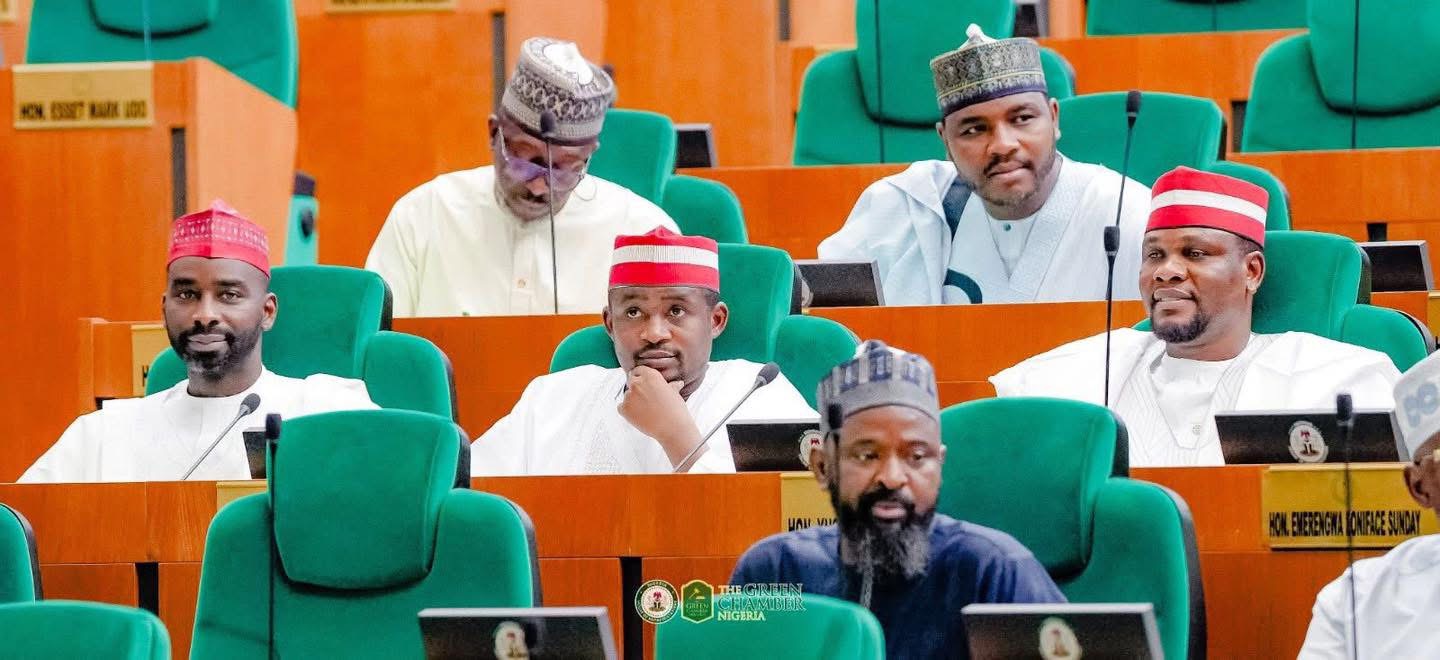
No fewer than 50 members of the 10th House of Representatives are unlikely to be part of the 11th Assembly after losing out in the All Progressive Congress (APC) primaries held on Saturday.
This marks one of the largest turnovers of sitting federal lawmakers since 2015 and signals intensifying internal competition within the ruling party eight months to the 2027 general elections.
While House Speaker Tajudeen Abbas (Kano) and Deputy Speaker Benjamin Kalu (Abia) successfully defended their tickets, several ranking and long-serving lawmakers were defeated, exposing strong anti-incumbent sentiment and the decisive role of state governors in candidate selection.
Major casualties
One of the biggest upsets was the defeat of House Majority Leader Julius Ihonvbere in Edo State’s Owan Federal Constituency. He polled 1,005 votes out of 7,587 cast, finishing third behind Andrew Ijegbia, who scored 3,695 votes. Abdul Oroh placed second with 1,740 votes.
In Delta State, veteran lawmaker Nicholas Mutu, who has represented Bomadi/Patani Federal Constituency since 1999, lost his re-election bid. Ngozi Okolie also lost the Aniocha/Oshimili ticket to former House Minority Leader Ndudi Elumelu.
Cross River State recorded one of the highest casualty rates, with five of eight incumbents failing to secure re-nomination.
They include three-term member Mike Etaba (Obubra/Etung), Godwin Offiono (Ogoja/Yala), Emil Inyang (Akamkpa/Biase), and Bassey Akiba (Odukpani/Calabar Municipality).
Only Peter Akpanke, Joseph Bassey, and Victor Abang won return tickets.
In Plateau State, conflicting results in Pankshin/Kanke/Kanam Federal Constituency triggered early confusion. One returning officer declared challenger John Tongshinen winner with 29,968 votes against incumbent Yusuf Gagdi’s 5,849.
The APC Plateau State primaries committee, chaired by Stella Okotete, later dismissed that declaration as unauthorised and affirmed Mr Gagdi as the authentic winner with 29,207 votes.
At a press briefing, Mrs Okotete stated that Nandom Kura was the recognised returning officer. “The returning officer approved by my committee that has gone to do fake declaration is null and void,” she said.
Other significant losses occurred in Ogun State (at least five incumbents, including Deputy Chief Whip Ibrahim Isiaka and Tunji Akinosi) and Ekiti State (three sitting members).
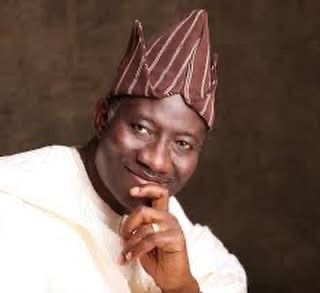
The Peoples Democratic Party (PDP), led by Tanimu Turaki, SAN, has scheduled to screen former president Goodluck Jonathan tomorrow, Tuesday, aMay 19, as the lone presidential candidate of party.
According to a statement from the PDP faction backed by the Oyo State Governor, Seyi Makinde, Former Vice-President Namadi Sambo, former governor of Plateau State, Jona Jang and a former Minister of Foreign Affairs, Tom Ikimi have been listed among a committee of 14 members to screen Jonathan described as a lone candidate by the party.
Other members of the committee were Chief Olabode George, Babangida Aliyu, Maryam ciroma, Zainab Maina, Josephine Anenin, Dr. Abdul Bulama, Dr. Esther Uduehi, Edo State PDP chairman, Tony Aziegbemi, Dr. Sunday Solarium and Chief Anicho Okoro, who would serve as administrative secretary of the committee.
Last week, the national Publicity Secretary of the faction, Ini Ememobong, disclosed that former president Jonathan has successfully registered as a member of the party in the fresh digital registration exercise directed by INEC.
The PDP faction also announced that it was set to screen 748 house of representatives aspirants, 198 senatorial aspirants, and 112 governorship aspirants.
The screening committee would screen 2122 states houses of assembly aspirants. The exercise will commence tomorrow, Tuesday in different states.
According to the statement, the screening exercise would take place nationwide on Tuesday, May 19, 2026, at 10:00 a.m.
The statement said the Interim National Working Committee (iNWC) has also released the names of members to serve on the Screening Committees and Screening Appeal Panels.
It added that the publication of the screening details “is in accordance with the party’s guidelines and timetable for the conduct of the 2027 general elections.”
A former governor and incumbent Senator, Adams Oshiomhole, along with his counterpart Senator Joe Ikpea, sailed through the All Progressives Congress senatorial primary in Edo unopposed, and securing their tickets without a single vote cast against them.
Also Omoregie Ogbeide-Ihama emerged the winner in the APC primary for the Edo South senatorial district.
Ogbeide-Ihama won in the seven local government areas of Edo South in the results announced by the Chairman of APC National Assembly Primary Election, Muhammed Ajana at the Urokpota Hall, Benin.
He polled 27,154 votes while his opponents, Senator Neda Imasuen, got 13,580, and Pastor Osagie Ize-Iyamu got 6785.
The elections were hitch-free in Edo North and Edo Central, where there was no contest against the incumbents, Senators Oshiomhole of Edo North and Ikpea of Edo Central, respectively.
Ajana at the Urokpota Hall said the collation arose from votes cast in the seven local government areas made up of 77 wards where elections were conducted by members of the committee.
He said, “There are seven local governments that make up the Edo South Senatorial District. We have heard from the Returning officers from the seven local government areas. From the collation, the cumulative result we have for Edo South Senatorial District is this; Ogbeide-Ihama with 27,154 votes, Imasuen with 13,580 votes and Ize-Iyamu with 6, 785.
“This is the total reflection of what has transpired from the ward level to the local government and the Edo South senatorial district collation centre. With this we await further directives from the National Secretariat, we have done our best by collating the results which is our mandate, to collate the results and send them to the National Secretariat.”
However, it was gathered that Ize-Iyamu emerged as the APC candidate for Edo South Senatorial race. He claimed to have clinched the party’s ticket after defeating Ogbeide-Ihama and Imasuen.
It was claimed that the Chief Returning Officer, Abubakar Muhammad Kabiru, officially declared Ize-Iyamu the winner after securing the highest number of votes cast.
On his part, the senator representing the district condemned the exercise describing it as a sham allegedly designed to favour a preferred aspirant.
Imasuen spoke while reacting to events at his polling unit in Umagbae North Ward 5, Urhokuosa where he said he was denied the opportunity to vote following what he described as a chaotic and manipulated process.
The lawmaker accused leaders of the party of openly adopting a preferred candidate ahead of the exercise and intimidating members into supporting that aspirant.
He said, “There is nothing satisfactory about this sham of election they did today and it is very unfortunate because as a loyal party member, I expected something better than this.”
He said the warning signs emerged days before the primary when some ward chairmen allegedly informed him that they had been directed not to receive him during consultations.
Imasuen claimed that some ward leaders openly told him the party had already adopted a preferred aspirant, identified as Hon. Omoregie Ogbeide-Ihama, making further consultations unnecessary.

2027: More Than 50 Lawmakers Lose APC Reps Tickets in Major Primary Election

Bandits behind Ogbomoso school abduction will face full wrath of the law- President Tinubu

PDP to screen Goodluck Jonathan on Tuesday as its sole Presidential aspirant For 2027 race

-
Business2 years ago
US court acquits Air Peace boss, slams Mayfield $4000 fine
-

 Trending2 years ago
NYA demands release of ‘abducted’ Imo chairman, preaches good governance
-

 Politics2 years ago
Mexico’s new president causes concern just weeks before the US elections
-

 Politics2 years ago
Putin invites 20 world leaders
-

 Politics2 years ago
Russia bans imports of agro-products from Kazakhstan after refusal to join BRICS
-
Entertainment2 years ago
Bobrisky falls ill in police custody, rushed to hospital
-
Entertainment2 years ago
Bobrisky transferred from Immigration to FCID, spends night behind bars
-
Education2 years ago
GOVERNOR FUBARA APPOINTS COUNCIL MEMBERS FOR KEN SARO-WIWA POLYTECHNIC BORI