
Columns
The 1977 Kalakuta Raid and the Assault on Funmilayo Ransome-Kuti

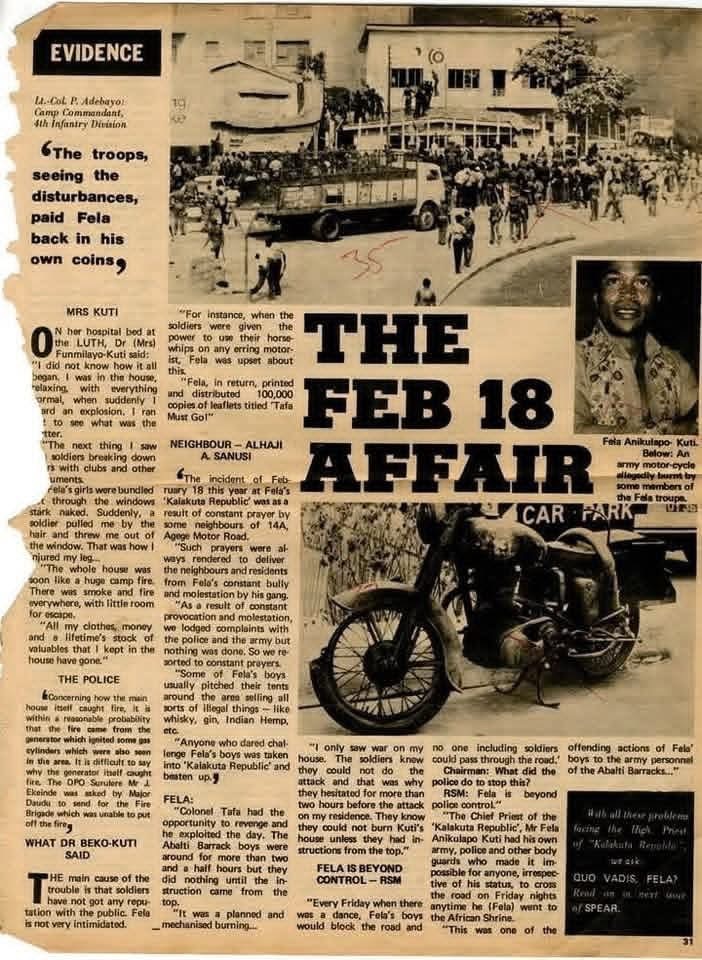
A tragic moment in Nigerian history when a military raid on Fela Kuti’s Kalakuta Republic led to the assault of the renowned activist Funmilayo Ransome-Kuti.
A Harrowing Testimony
One of the most disturbing accounts from the 1977 raid on Kalakuta Republic comes from Funmilayo Ransome-Kuti, one of Nigeria’s most influential activists and the mother of Fela Kuti.
Recounting the attack, she reportedly stated:
“Suddenly a soldier pulled me by the hair and threw me out of the window. That was how I injured my leg.”
This violent act occurred during a military assault on Kalakuta Republic, the communal residence and political headquarters of Fela Kuti and his associates in Lagos.
The incident became one of the most controversial episodes in Nigeria’s cultural and political history.
Funmilayo Ransome-Kuti: Pioneer of Nigerian Activism
Funmilayo Ransome-Kuti (1900–1978) was a prominent Nigerian feminist, teacher, and political activist from Abeokuta.
She played a major role in the Abeokuta Women’s Revolt of the 1940s, mobilising thousands of women to protest colonial taxation policies and the authority of traditional rulers allied with colonial administration.
Her activism made her one of the earliest female political leaders in Nigeria. Over the decades, she advocated for:
Women’s political participation
Social justice
Anti-colonial resistance
By the 1970s, she had become an elder stateswoman of Nigerian activism and was living with her son Fela at Kalakuta Republic.
FESTAC 77 and Rising Tensions
The events leading up to the raid were closely connected to the political atmosphere surrounding Second World Black and African Festival of Arts and Culture, widely known as FESTAC 77.
Held between January and February 1977 in Lagos, FESTAC was one of the largest cultural festivals ever organised in Africa. The event brought together artists, performers, and scholars from across the African diaspora.
Initially, Fela Kuti served on the festival’s planning committee. However, he later clashed with the committee chairman, Ibrahim Babangida Haruna (often referred to as Maj.-Gen. I.B. Haruna), after his proposals for improving the festival were rejected.
Fela subsequently withdrew his support and publicly criticised the festival, describing it as a political spectacle rather than a meaningful cultural event.
The Shrine Versus FESTAC
During FESTAC 77, Fela intensified his criticism of the Nigerian government through performances at his famous nightclub, the Afrika Shrine.
The Shrine quickly became an alternative cultural hub during the festival. Many visitors and music enthusiasts began attending Fela’s performances instead of official FESTAC events.
Through his music and speeches, Fela openly condemned military rule and government corruption, drawing large crowds and international attention.
This growing popularity reportedly increased tensions between Fela and the authorities.
The Raid on Kalakuta Republic
Shortly after FESTAC 77 ended, in February 1977, a large number of soldiers raided Kalakuta Republic, the compound where Fela lived with his family, band members, and followers.
During the raid:
The compound was destroyed and burned
Residents were beaten and assaulted
Musical instruments and recordings were destroyed
It was during this assault that Funmilayo Ransome-Kuti was thrown from a window, sustaining severe injuries.
The attack shocked many Nigerians and attracted international criticism.
Fela’s Response: “Unknown Soldier”
Following the destruction of Kalakuta Republic, Fela responded through music.
In 1979, he released the protest song Unknown Soldier, which directly criticised the government’s official explanation of the attack.
Authorities had claimed that the destruction of the compound was carried out by an “unknown soldier.”
Through the song, Fela sarcastically rejected this explanation and described the violence inflicted on him, his family, and his community.
The Tragic Consequence
The injuries sustained by Funmilayo Ransome-Kuti during the raid had severe long-term consequences. She never fully recovered from the trauma and died in 1978, about a year after the attack.
Her death marked a tragic end to the life of one of Nigeria’s most important political activists.
Historical Significance
The Kalakuta raid remains one of the most discussed incidents in Nigeria’s cultural and political history.
It highlights several themes:
The tensions between artists and military governments
The role of music as political resistance
The vulnerability of civil activists during military rule
For many historians, the event symbolises the intense confrontation between Fela Kuti’s radical artistic activism and the authoritarian political environment of Nigeria during the 1970s.
Sources
Spear Magazine, July 1977
Nigerian cultural archives on Fela Kuti
Historical documentation of the Second World Black and African Festival of Arts and Culture (FESTAC 77)
Nigerian Nostalgia Project historical archives.






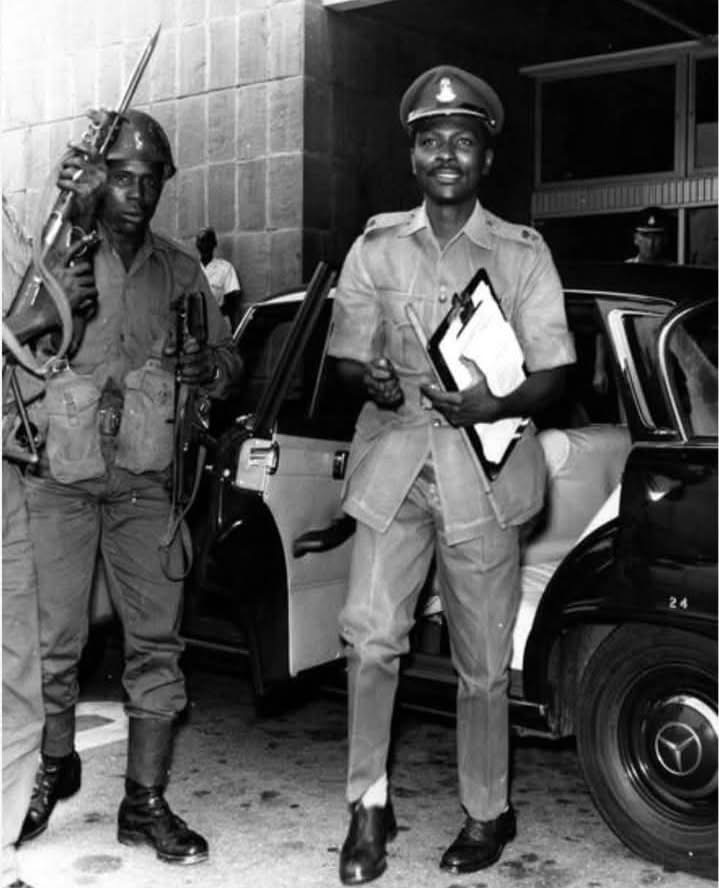
How Yakubu Gowon decided to enter the Army is quite interesting. Encouraged by his British Principal and Vice-Principal to go military, he was nevertheless torn between a career in the Army and competing options as a teacher, engineer, or physician. So he wrote out the options on little pieces of paper placed them inside a Bible and prayed. Then, with his eyes closed, he opened the Bible and picked one at random. It was the Army.
Throughout his military career he would repeatedly approach issues with a r!fle in one hand and a Bible in the other. Years later he would come to be regarded by most as a model of a “kinder, gentler” soldier. Some have nicknamed him “The Preacher”.
In 1954, after passing an entrance examination, he attended several interviews before being sent to the Regular Officers Cadet School at Teshie in Ghana – along with Patrick Anwuna, Alexander Madiebo, Michael Okwechime and Arthur Unegbe. This was followed by a course at Eton Hall in Chester, UK, followed by formal cadet training at the Royal Military Academy, Sandhurst (RMAS). He was a Cadet Sergeant at the RMAS and was commissioned 2/Lt in December 1956. It was at the RMAS that he acquired the nickname “Jack,” the closest sound to “Yakubu” his British instructors could think of.
The above is part of a piece put lol together by Nowa Omoigui, Nigerian military historian and cardiologist.
Gowon later became Head of State and had one of the most troubling dispensation in the history of Nigeria. He was removed from office in 1975 by Murtala Muhammed.
On how he survived immediately after his removal from office, he said in an interview:
“I can say with absolute authority that I may not have anything today, but honestly, at least I have a clear conscience. I thank Idi Amin and (Gnassingbé) Eyadema for the help they gave me to have money to start off with.”
Ethnic African Stories
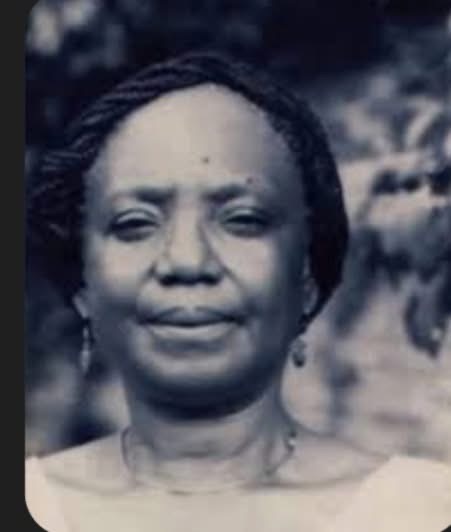
The Imo State born writer and teacher who is largely referred to as the “mother of African Literature”, was the first African woman to publish a novel in English.
Flora belived that African women were unjustly portrayed (in the books of her male counterparts) as people who were doubly malleable, as people who didn’t have even a vestige voice of their own: people who must, for instance, eat fufu not exactly because they wanted to eat fufu but because men insisted that they eat fufu, people who must live in the shadows of men… So she basically did the opposite of this in her books where she gave women prime places, using her pen to unfold to the whole world, in concrete clarity, what she believed ought to be the generally accepted societal ethos.
She celebrated the strength, tenacity and courage of African women, told their success stories in glittering terms, and sang their praises to the stratosphere.
She was born January 13, 92 years ago in Oguta – Imo State, and passed away on October 13, 1993, after enduring a server bout of pneumonia.
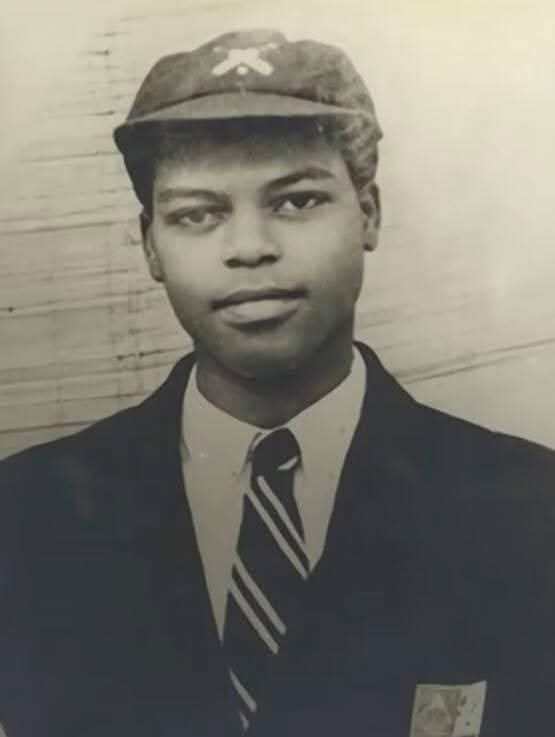
Michael Ibru was a pioneering Nigerian entrepreneur, philanthropist, and founder of the Ibru Organisation, one of the most influential business groups in West Africa. His life reflects ambition, discipline, and the transformation of opportunity into a diversified empire.
Early Life and Background
Born in 1930, Michael Ibru hailed from Agbarha-Otor, near Ughelli.
He was the eldest of seven children in a prominent family. His mother was the daughter of the wealthy Ovedje Osadjere of Olomu, which placed him within a lineage of both traditional influence and commercial awareness.
Growing up in the Niger Delta region, young Ibru was exposed early to trade, mobility, and the importance of enterprise in coastal and riverine communities.
Education and Formative Years
A defining stage of his early life was his education at Igbobi College Yaba, one of Nigeria’s most prestigious secondary schools at the time.
At Igbobi College, Michael Ibru distinguished himself not only academically but also in leadership, eventually serving as Senior Prefect. This position reflected his discipline, influence, and ability to lead peers—qualities that later shaped his business career.
His time at the institution helped refine his worldview and exposed him to structured education during a period when Nigeria was still under colonial administration.
Early Career and Exposure to Business
After completing his studies, he briefly worked with the United Africa Company (UAC), one of the most powerful trading firms operating in West Africa at the time.
This experience exposed him to:
Large-scale import and export systems
Corporate structure and logistics
Commercial distribution networks
However, rather than remain in salaried employment, he chose the path of entrepreneurship—a decision that would redefine his life and legacy.
The Birth of a Business Empire
In 1956, Michael Ibru founded a frozen fish business.
At the time, frozen food distribution was still relatively new in Nigeria, and Ibru identified a gap in the market: the need for affordable, preserved protein sources in urban centres.
His venture quickly expanded due to:
Strong demand for fish in growing cities
Efficient supply chain management
Strategic importation and distribution systems
This modest beginning became the foundation of what would evolve into the Ibru Organisation.
Expansion into a Conglomerate
Over time, the Ibru Organisation grew into a diversified business empire spanning multiple sectors, including:
Food and seafood processing
Aviation and logistics
Hospitality and real estate
Finance and banking
Oil and marine services
Media and publishing
Agriculture and industrial production
The group became one of the largest family-owned conglomerates in West Africa, with numerous subsidiaries operating across Nigeria and beyond.
Rather than relying on a single industry, Michael Ibru built a multi-sectoral business model, which helped the organisation withstand economic fluctuations and remain competitive for decades.
Leadership Style and Business Philosophy
Michael Ibru was widely regarded as a strategic thinker who believed in:
Identifying unmet market needs
Investing in scalable industries
Building long-term institutional structures
Empowering family-led continuity in business
His leadership approach combined traditional values with modern corporate thinking, allowing the Ibru Organisation to grow into a structured enterprise rather than a short-term venture.
Philanthropy and Social Impact
Beyond commerce, Michael Ibru was deeply committed to philanthropy.
His contributions included:
Support for education and scholarships
Community development initiatives
Investment in youth empowerment
Assistance to local infrastructure and social welfare projects
He believed that business success should translate into societal progress, particularly in education and opportunity creation.
Legacy of the Ibru Organisation
The Ibru Organisation remains one of Nigeria’s most recognised business groups, continuing to operate through various subsidiaries across sectors.
Its legacy is defined by:
Industrial diversification
Private sector growth in post-independence Nigeria
Family-led business continuity
Contribution to West Africa’s economic development
From a young student at Igbobi College Yaba to the founder of a continental business empire, Michael Ibru represents the story of vision, risk-taking, and entrepreneurial excellence.
His journey shows how observation, opportunity, and courage can transform a simple idea—like frozen fish distribution—into a legacy that shaped industries across Africa.
Source
Biographical and historical records on Michael Ibru
Public information on the development of the Ibru Organisation
Educational history of Igbobi College Yaba
Historical context of Nigerian post-colonial entrepreneurship and trade development

Bandits behind Ogbomoso school abduction will face full wrath of the law- President Tinubu

PDP to screen Goodluck Jonathan on Tuesday as its sole Presidential aspirant For 2027 race

Oshiomhole wins Edo APC senatorial primaries unopposed

-
Business2 years ago
US court acquits Air Peace boss, slams Mayfield $4000 fine
-

 Trending2 years ago
NYA demands release of ‘abducted’ Imo chairman, preaches good governance
-

 Politics2 years ago
Mexico’s new president causes concern just weeks before the US elections
-

 Politics2 years ago
Putin invites 20 world leaders
-

 Politics2 years ago
Russia bans imports of agro-products from Kazakhstan after refusal to join BRICS
-
Entertainment2 years ago
Bobrisky falls ill in police custody, rushed to hospital
-
Entertainment2 years ago
Bobrisky transferred from Immigration to FCID, spends night behind bars
-
Education2 years ago
GOVERNOR FUBARA APPOINTS COUNCIL MEMBERS FOR KEN SARO-WIWA POLYTECHNIC BORI