
Politics
The Genesis of the Crisis Between Governor Sim Fubara & FCT Minister Nyesom Wike.

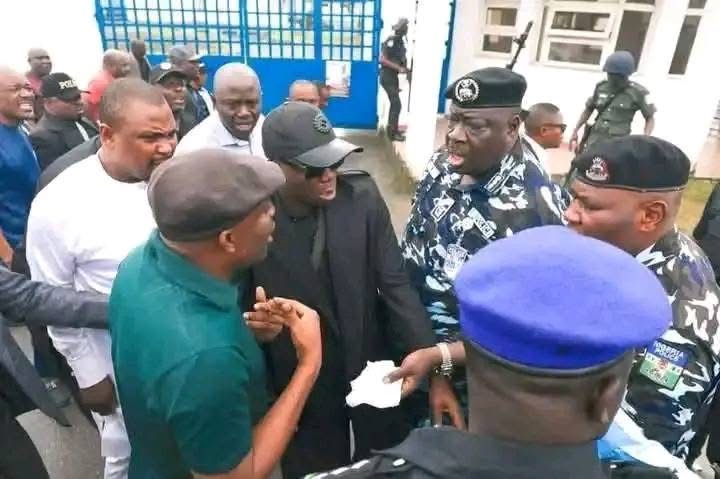
The Genesis of the Crisis Between Governor Sim Fubara & FCT Minister Nyesom Wike.
This Adumbration Has Become Necessary Because, The Avalanche Of Political Crisis That Has Rocked Rivers State, That Has Spiralled Into A State Of Emergency Today, Many People Have Lost Track On How It Began. And This Gap Has Caused Some Inadvertent Misconception About The Roles Played By The Various Actors In The Crisis.
—————————————————-
It all started in 2022 when the tenure of then Governor Nyesom Wike was winding down to an end. The need to find a suitable replacement became a bothering issue to him.
Two things were his worries.
1) Wike has stayed far too long in Power, that the idea of staying out of power was now traumatizing and a huge concern to him, considering the fact that his party the PDP was not holding power at the center. Note; Wike has been in power since year 2000 up till that point in 2022. That’s 22yrs straight in power.
From a two term LGA chairman, to a Chief of Staff, to a Minister, & then became a Governor of the most powerful state in Nigeria.
2) Aside from looking for a suitable surrogate who can keep him in power after his tenure, Wike was equally looking for someone to cover his tracks for his financial malfeasance for the eight (8)years he’s been in Charge as Governor of Rivers State.
Note: Wike till date remains the most financially imprudent Governor the state has had. You can still remember his huge donations to other states around the country to establish his influence. He also sponsored over five different State Governorship election across the country. Plus his own presidential aspiration campaign, where he hire the entire Abuja on the day of the PDP Presidential primaries which he eventually lost.
At the end of his calculations, Sir Siminalayi Fubara, the then Accountant General who had served him diligently over the years became his top choice. Because, he felt Fubara was a soft target who can NEVER SAY NO to all his entreaties.
Again, Fubara was a top choice because, he was the one who knows all about Wike’s financial transactions as a Governor. And if Wike was to be exposed or indicted, Siminalayi Fubara will be the only channel through which they can get to him.
So, it was important to bring him in as Governor to compensate him for all the trouble he’s been through for Wike, and to keep him away from the authorities through the IMMUNITY coverage as a Governor. Fubara’s nomination as PDP candidate was entirely for Wike’s safety, not because Wike loved Fubara.You can still remember the case of N117Billion in 2022, and the EFCC incident at the Portharcourt international airport, when EFCC officials wanted to whisk Fubara away.
Now when the Governorship primaries came, Sir Siminalayi Fubara insisted he doesn’t want to be Governor, because he has seen all the troubles associated with it and he doesn’t want it. Yet Wike insisted it must be him. Wike himself has made allusions to this fact in many of his broadcast and at different fora.
Fast forward to 2023, Wike had used the instrumentality of state to muscle Fubara in as Governor, and the rest like they say is history.
HOW THE TROUBLE BEGAN:
Of the 17 commissioners appointed into Governor Fubara’s cabinet, Wike brought all except one which is—the commissioner for information. Wike brought his cousin as the Chief of Staff, brought the Chief Security officer to the Governor, brought the Confidential secretary to the Governor, including even the cook in Fubara’s kitchen.
Of course he brought the entire 32 legislative Assembly members, and made his Nephew Martins Amaewhule the Speaker. It is safe to say that Wike provided 99.999% of the entire Government structure that Governor Fubara was operating with before the crisis, yet Fubara didn’t complain.The situation was so bad that every Friday, the Governor was mandated to lump up office files together, hop on the state aircraft and head out to Abuja for Wike to give approval to state documents and correspondence, then he will return it back to Fubara on Monday morning.
This situation continued for three solid months without Fubara agitating.
Then Came the straw that broke the Camel’s back.
Three months into Fubara’s government. One day Fubara ask the chairman of the board of Rivers Internal Revenue Generation service (RIRS). A Wike appointee too. The Governor enquired, we have been generating N28billion in revenue, why do you continue to declare N12billion, and where is the balance going to? Although this was a rhetorical question because Fubara knows where it was going to. He ordered the Chairman to start declaring the complete amount, because now he is the Governor, and if any investigation should commence tomorrow or any other day in future, he (Fubara ) is the one to answer for it. He told the chairman he knows what has been happening in the past, but that then, he Fubara was just a civil servant answering to his boss. And he can defend himself for that, but at this moment it would be impossible for him to do that, because he is the one who is the Governor. So he should begin to declare the accuracy of the generated revenue.
The Chairman refused to heed, and presented the situation to the FCT Minister who became so angry by the effrontery of the Governor. Mind you, in all of Wike’s 8yrs as Governor, the highest amount in monthly revenue Wike declared at the end of his tenure was N12billion. Some months were lesser, and this information only became public in the month of May 2023 when Wike was leaving office. Rivers people never got to know what was the internally generated revenue all through Wike’s 8yrs because it was forbidden and made a classified state information.
Now this situation caused a serious rift between the father and son. To an extent the hirelings around Wike started an open confrontation and started disrespecting the Governor. Because at this time, Wike has began shopping for Fubara’s replacement.
The situation degenerated in few weeks to the extent that His Excellency Governor Fubara handed in his resignation letter to Wike. Upon seeing the seriousness in Governor Fubara, Wike called for a meeting for a truce in France.
Note, this Truce meeting was called at the instance of some notable Rivers elders and leaders of the Wike camp. Also, the meeting was to prevail on Governor SIM Fubara NOT to resign. But the truth is that, it was not as though Wike still wanted Fubara at this point, but because Fubara’s decision to resign had taken Wike by surprise.
Nyesom Wike was not prepared for what just happened yet, so he had not perfected his plans. Because if Fubara is allowed to resigned at the point, the Governorship position will automatically fall to the Deputy Governor, a mistake that Wike cannot stomach. So he had to buy time to perfect his plans.
After the meeting in France, they continued to be living and partly living politically with no love. Wike even stopped collecting his pension as Ex-Governor and other estacodes that was meant for him, while Governor Fubara went on with governance and even committed the worst sacrilege in the process when he announced to the public that he was now generating up to N28billion in monthly revenue, and has had no cause to borrow any money to finance the numerous projects he was carrying out.
October 29th 2023 came, by that time Wike has finalized his plans. A meeting with the 32 Assembly members was called in the Minister’s home on Ada-George road in Portharcourt. An instruction was given to the then leader on the house Hon Edison Ogereye Ehie, to raise an impeachment notice in the house the next day being Monday the 30th of October 2023. This impeachment notice was to be raised against the Governor and his deputy, so they can speed up the process of getting Governor SIM out of the brick house and replace him with Martins Amaewhule.
In the meeting, Edison didn’t feel comfortable and didn’t also hide his resentment about the plan. Because according to him, they fought so hard to convince Rivers people to accept this Governor who was heavily unknown to the people. And if they should go ahead and impeach him just five months after, what are they going to tell the people is responsible for his impeachment?
They left the meeting without a concrete agreement, but someway somehow information got out. And mind you, Fubara is still unaware of what was really going on at this point. Information filter out to some quoters who felt betrayed and taken for a ride for trying to impeach an IJAW Governor who was just elected 5months ago. An office the IJAW people had waited for 24yrs to come by in this current democracy, in a state where they are arguably the majority.
The irate youths got together same night on the 29th October when that meeting held, and broke into the hallowed chamber of the assembly, and set the place ablaze primarily out of anger and to stop any impeachment move. This was a very terrible action that no one must commend, although borne out of expediency.
The next day as instructed, Martins Amaewhule and 25 other members, excluding Edison Ehie and 3 others, went somewhere and read out an impeachment notice against the Governor, and suspended the 4 other assembly members who refused to join them.
The four other assembly members equally went somewhere, suspended the 27 other members for suspending them without going through the proper house rules, and for attempting to impeach the Governor without any cogent reason.
Of course, Martins Amaewhule and co went to get a court other, preventing the Edison’s faction and the Governor from tempering with them from carrying out their functions and to protect their privileges. Edison Ehie and co on the other hand, equally went to obtain a counter court order, empowering them to enforce the suspension of Martins Amaewhule and co, and that’s how the real drama began.
Furthermore, the political crisis divided the state. Many who knew that the crisis was all about controlling the resources of the state took sides with the Governor, and gave him the massive support he still enjoys till date.
People from various LGA’s started calling for a RECALL of the 27 lawmakers on the Wike’s side. So out of fear of being recalled, on the 11th day of December 2023, the 27 members DEFECTED to the APC on the orders of the FCT Minister, with a promise that they would get the President’s protection.
The seat of the 27 lawmakers were immediately declared vacant by Edison Ehie, who has been elected as the speaker of his own faction by this time, and also had the backing of a state High Court judgement.
The matter began to heat up to the highest fahrenheit, and on the 18th of December 2023, the infamous Aso Rock Truce was called by President Bola Asiwaju Tinubu, where the “8point Resolution” was Handed Over to both parties.
The eight (8)points Resolution caused a brawl in Rivers State because it was so lobsided to a point many called it a death sentence against Governor SIM Fubara. Because, out of the 8points, 6points was for Gov Fubara to implement while only 2points were required of Martins Amaewhule and his colleagues.
Martins Amaewhule and co claimed instant victory, and celebrated massively.
Governor Fubara on the other hand, made a broadcast a day after this Abuja proclamation and said and I quote, “The Problem We’re Having Is A Matter Between ‘Father & Son’, & No Price Is Too Big To Pay For Peace ” end of quote.
Fubara went ahead and started implementing all the six(6) point that was handed to him except one.
He re-accepted the commissioner who resigned on their own to join the FCT Minister, including those who left and started insulting him, like the former Chief of Staff to the FCT Minister, Mr Emeka Nwoke.
He released the backlog of the 27 members allowance, and started paying them their salaries.
He allowed them to start sitting again where they wanted, despite the fact that their seat has been declared vacant, and they’ve lost their seats.
He withdrew all the cases that was instituted in the courts, including his counter affidavit that was filed in the case against him in Justice Omotosho’s Court, which became the legal ground upon which Martins Amaewhule and co got the judgement they got from the supreme Court. Because, while Fubara withdrew all the cases he had in court with Martins Amaewhule as directed by Mr President, Martins Amaewhule on the other hand DID NOT withdraw theirs. Thereby, having an edge over Fubara because you cannot re-present evidence in a case where you had already withdrawn your defense and evidence. But in all of these, Mr President didn’t see any wrong with their actions for disobeying his directive.
It was upon the realization that Martins Amaewhule and co were not ready for peace that the Governor now re-entered into the legal turf with them albeit late and inconsequential. That was the reason why he didn’t comply with the only point he left out on the list, which was to re-present the budget to Martins Amaewhule.
Fast forward again to February 28th 2025. Martins Amaewhule and co got judgement from the supreme Court on the matter that proceeded from the Justice Omotosho’s Court. The same matter that Mr President had asked Martins Amaewhule to withdraw and he didn’t. The same matter that Governor Fubara had gone to withdraw his counter affidavit from, which they (Martins Amaewhule and co) took advantage of.
On the pronouncement of the supreme Court judgement. It was evident that the court went far and wide to make pronouncement of matters whose substance was not before it. Yet, SIM Fubara still maintained that he will implement everything the court had said, and immediately started implementing the judgement no matter how vexacious it was.
He immediately ask the elected LGA officials to step aside even before receiving the CTC of the court judgement. Upon receipt of the CTC, he began making attempts to re-present the budget as directed by the supreme Court judgement, and of course, the entire Nigeria saw how he was frustrated and ridiculed by the assembly members.
Upon his third attempt to meet with them to present the budget, they locked him out of the assembly complex and announced that they had “Adjourned Sine Die”. But in all of these, the Governor was always made to be the valian by the Abuja gang in collaboration with Mr President.
A day after their announcement of Sine Die adjournment, they sent another impeachment notice from their hideaway, where they were observing and enjoying their adjournment.
Two days later, a “State of Emergency is declared in Rivers State”, the Governor, his Deputy & the assembly members are suspended, on trumped up accusations and a phantom and non-existent threat of insecurity.
Note Again:
This State of Emergency was well choreographed. As Wike has been looking for a way to remove the Governor to no avail. When it became clear that impeachment won’t work because the Chief Judge of the state won’t play along, that’s when they resorted to “State of Emergency “, after threatening the state CJ with EFCC & DSS on allegation of age falsification and it didn’t work.
The State of Emergency became the final option, such that—it was all well planned to fit the purpose so they can take out the Governor.
To make it work—Wike had to do a televised media chat and insulted the entire IJAW nation. Calling them names and immediately afterwards, booked a reception in the same IJAW community seven days later just to trigger a crisis or resistance, so they can use that as a ground to declare the State of Emergency.
When that failed, because the Ijaw people were fast to read and understand Wike’s subterfuge, they resorted to Plan-B. Which was to use an excuse of pipeline vandalization and crude oil sabotage.
The entire plan was so shabby to an extent, the marks of the shovel that was used to dig the ground and the environment near the pipeline, plus all the materials used to decorate the place was still left there when the contracted mercenaries were confronted and they ran away.
To make it more laughable, an incident which happened by 5:am in the morning, the police released a statement in the afternoon that they were still investigating to know if it was actually a sabotage as claimed or not. But by 7:pm in the evening, the President has declared a State of Emergency in Rivers State, suspending the entire democratic structure of the state. And citing an incident that happened by 5:am that same day as his reason.
An incident that hasn’t gotten a closure from the police or the surveillance contractor handling that stretch of the pipeline. So, if this entire drama is not an intentional “Anachronistic State Capture” then what else could it be.
If oil sabotage was a viable reason for state of Emergency, then all the states in the Niger Delta will be under emergency rule by now. Because oil spillage happens everyday in every state in the Niger Delta. Most of it are caused by faulty equipment failures, while others are done by petty oil thieves. So how does the situation in Rivers State today really add up, or calls for a state of Emergency?
Finally;
This chronicle and clarification to the political state capture in Rivers today has become necessary for the sake of those who may not know the Genesis of this crisis, and may be swayed by the wrong narrative of those dishing out falsehood and half-truth concerning H.E Governor Siminalayi Fubara. And those claiming the Governor is ungrateful to his master and godfather who gave him life.
Governor SIM is the only man who could endure the excesses of Chief Nyesom Wike, and Wike himself has said it before. That if he had made the mistake of making some of his allies with him today the Governor, the he won’t last up to two weeks when they would’ve chased him away from entering Rivers State. So nobody should ever think for a bit that Fubara was the problem.
I’m also sure, that having been accosted by the EFCC once while obeying and carrying out the orders of a boss. Nobody will want to submit himself to the same situation that will put him in similar position, or even in grave danger like that again when he is now in charge.
Fubara’s only crime was to have question the over N15billion that was always cornered from the RIRS monthly. And to have asked, how do I account for it if I’m asked tomorrow? Can we do it in a different way that doesn’t implicate me?
If you were the one in Fubara’s stead, would you be comfortable with such setup having been bitten once? If yes then continue to blame him. But if you know you would have asked the same question he asked, then pray for him and pray for Rivers State and Nigeria, because, although this may be happening in Rivers State now, we are all in a terrible situation in this country today.
Comrade Solomon Lenu—Writing From Portharcourt





March 20, 2026
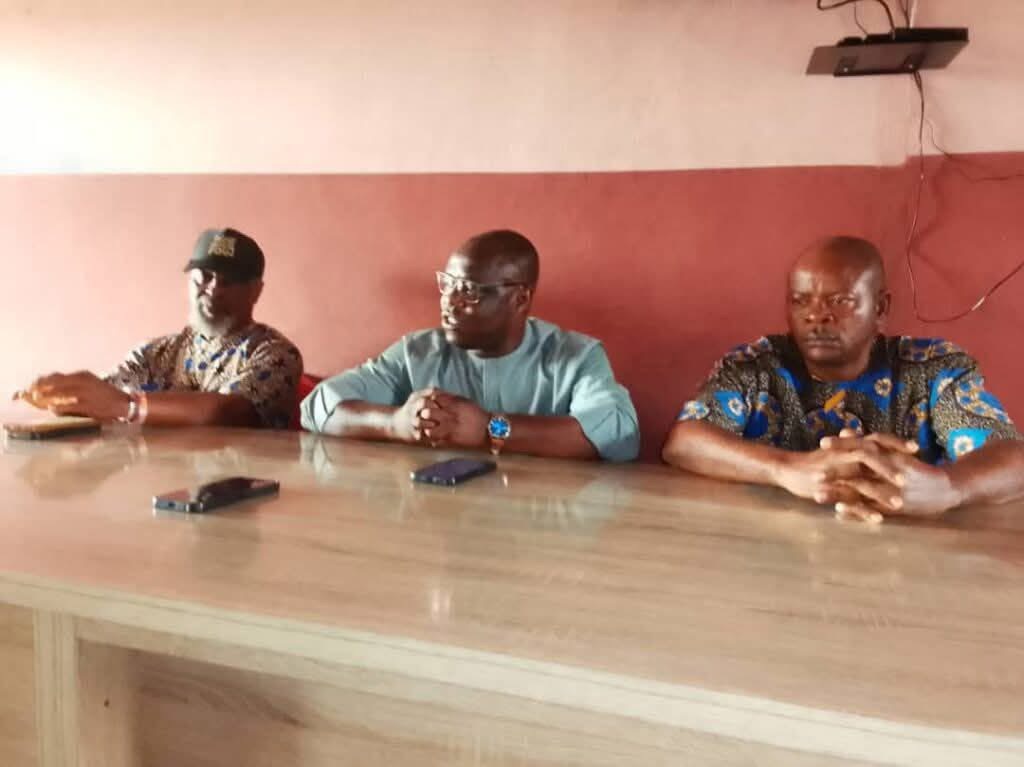
The All Progressives Grand Alliance in Abia State has called on the Senate to declare the seat of the Senator representing Abia South, Enyinnaya Abaribe, vacant following his resignation from the party.
The party made the call on Thursday during a press briefing in Umuahia, where its leadership, led by a former member of the Abia State House of Assembly, Obinna Ichita, insisted that Abaribe voluntarily resigned from APGA and was not sacked, contrary to his claim at the Senate.
Ichita argued that Abaribe’s exit from the party that sponsored his election violates constitutional provisions, stressing that there was no leadership crisis within APGA to justify his defection.
“The senator resigned in his ward. He did so voluntarily, which is his right. However, if you leave the party that gave you the platform for another party when there is no leadership crisis, that seat must be declared vacant,” he said.
He further alleged that Abaribe misrepresented the circumstances of his exit by claiming he was sacked.
“The party has documentary evidence to show that Senator Abaribe was not sacked. He resigned three months after disciplinary measures were taken against him over actions the court did not consider appropriate,” Ichita added.
According to him, the mandate belongs to the people and the party, not the individual office holder.
“They gave him the mandate on the platform of APGA, not any other party. There was nothing like ADC when he was elected. He cannot take the mandate elsewhere without consulting the people who gave it to him,” he said.
Ichita maintained that the constitution is clear on defection, noting that any lawmaker who leaves a party without a valid internal crisis must vacate the seat.
“My message to Senator Abaribe is to honourably vacate the seat instead of waiting for the National Assembly to declare it vacant. That would amount to national embarrassment,” he added.
Also speaking, the APGA State Chairman, Sunday Onukwubiri, and the party’s Public Relations Officer, Chukwuemeka Nwokoro, reiterated that Abaribe had distanced himself from the party’s activities at various levels in the state.
They insisted that he neither holds dual membership nor was he expelled, maintaining that his resignation was voluntary.
“He was invited by the party but failed to appear and was subsequently suspended in line with the party’s constitution. Three months later, he resigned,” the officials said.
Reacting, Abaribe defended his position, insisting that he acted within his constitutional rights.
“When you are no longer a member of a party by virtue of being sent away, you have the fundamental right of association to join another party,” he said.
He argued that his indefinite suspension by APGA effectively amounted to expulsion.
“If a party places you on indefinite suspension for more than six months, what does that mean? It means you have been told to go elsewhere, and that is exactly what I did,” he stated.
The senator added that the proper constitutional procedure for removing him from office would be through a recall process by his constituents.
“If the people who elected me no longer want me, the right thing to do is to initiate a recall. That is the position of the law,” he said.
Politics
Tinubu’s Reforms May Be Challenging, but They’ve Boosted Nigeria’s Global Respect — Information Minister Mohammed Idris
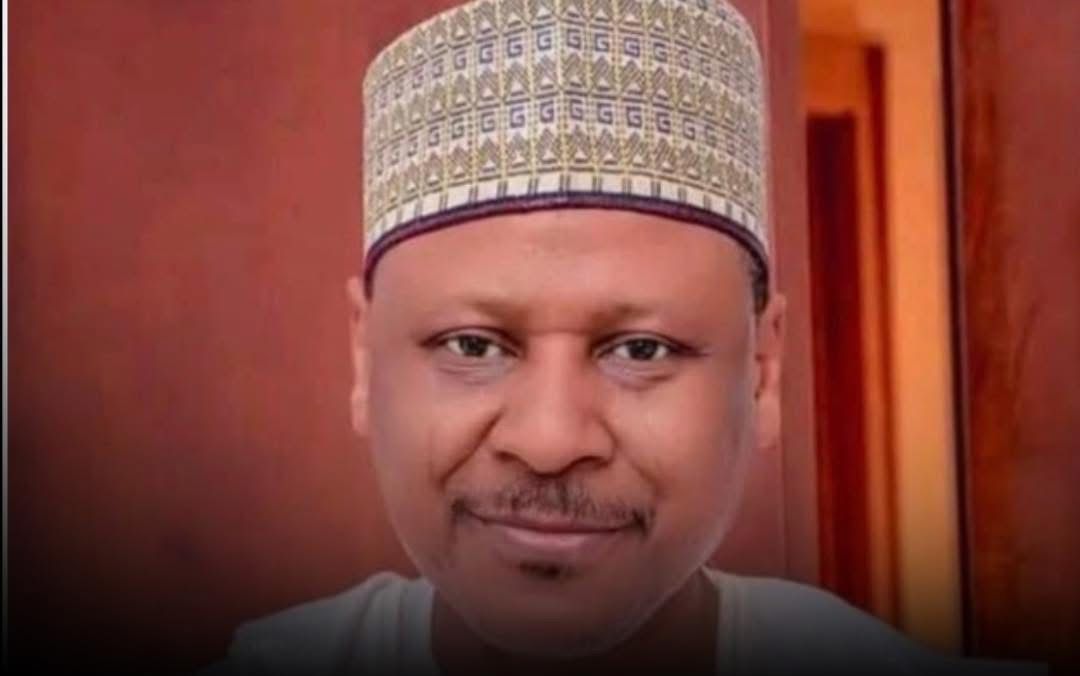
The Minister of Information and National Orientation, Mohammed Idris, has stated that Nigeria is receiving greater respect internationally under the leadership of President Bola Tinubu.
Speaking on Friday after attending Jumaat prayers at Yahaya Road Mosque in Kaduna, Mr Idris said, “Nigeria is indeed taking its rightful place. The country is respected more than ever before on the international scene. The reforms that the president has instituted, as challenging as they are, are meant for the benefit of all Nigerians.”
He urged Nigerians to stay calm as the government continues its efforts to restore security across the nation. Referring to the recent multiple b%mb att@cks in Maiduguri, Borno State, the minister assured that such incidents would not be allowed to recur.
“Indeed, our country is facing challenges, and the government is working tirelessly to ensure security throughout Nigeria. We have seen what has happened, particularly in Borno State. We pray to Allah to make this the last one, as the government is committed to preventing any repetition of such incidents,” he said.
Mr Idris also stressed the importance of citizens being prayerful and working together to address the country’s challenges. He encouraged both Muslims and non-Muslims to unite in the interest of Nigeria’s growth and development.
“This is a time for reflection for all Nigerians. We pray that everyone will consider this moment and recognize the need for unity, progress, and national development. All hands must be on deck for the unity of the country. As we earn respect internationally, we also hope and pray that unity will strengthen within our nation,” he added.
By Dan Opara
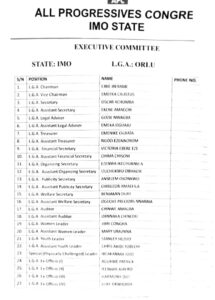
Following the successful conduct of the Imo State APC Congress held in Owerri, Imo State, on March 3rd, 2026, the leadership of the party has officially released the list of victorious candidates who emerged from the exercise.
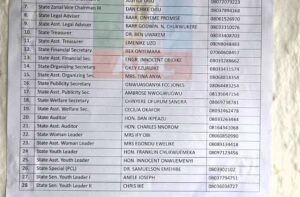
The announcement, made on Friday, March 20th, 2026, came 17 days after the Congress, as gathered by ThePressman Newspaper.
According to the released list, Chief Austin Onyedebelu emerged as the Imo State APC Chairman, while Arc. Allen Enwerem was elected as the State Deputy Chairman. Hon. Onyekachi Ibezim secured the position of State Secretary, alongside 33 other members who now constitute the State Party Executive Committee, including Ex-Officio members in Imo State.
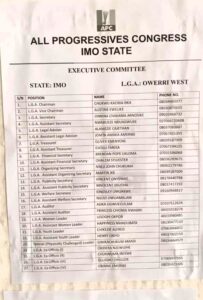
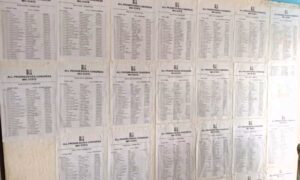
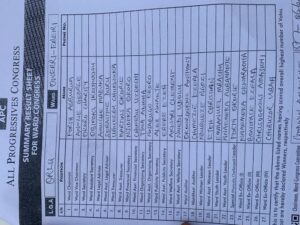
In addition, the leadership of the ruling APC across the 27 Local Government Areas of Imo State has also been announced.
The Ward Party Executive Committee Members for the 305 wards are, however, yet to be fully confirmed.
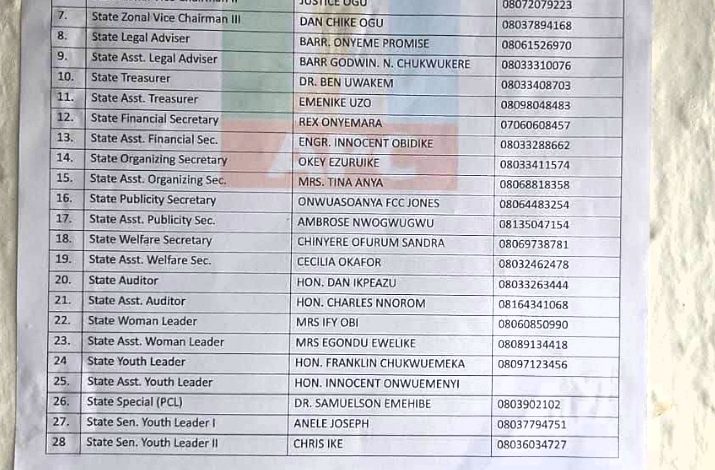
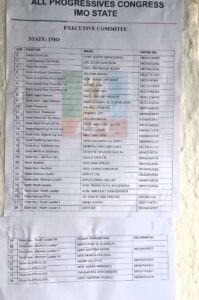
Below is the comprehensive list of the All Progressives Congress State Executive Committee Members for Imo State, including their respective telephone numbers.
ALL PROGRESSIVES CONGRESS
STATE: IMO STATE EXECUTIVE COMMITTEE
State Chairman, Chief Austin Onyedebelu, 08033101685.
State Deputy Chairman, Arc. Allen Enwerem, 08036301966.
State Secretary, Hon. Onyekachi Ibezim, 08033416291.
State Assistant Secretary, Nzenwa Nwoju, 08037717167.
State Zonal Vice Chairman I, Hon. Frank Onyejiaka, 0803314564.
State Zonal Vice Chairman II, Justice Ogu, 08072079223.
State Zonal Vice Chairman III, Dan Chike Ogu, 08037894168.
State Legal Adviser, Barr. Onyeme Promise, 08061526970.
State Assistant Legal Adviser, Barr. Godwin N. Chukwukere, 08033310076.
State Treasurer, Dr. Ben Uwakem, 08033408703.
State Assistant Treasurer, Emenike Uzo, 08098048483.
State Financial Secretary, Rex Onyemara, 07060608457.
State Assistant Financial Secretary, Engr. Innocent Obidike, 08033288662
State Organizing Secretary, Okey Ezuruike, 08033411574.
State Assistant Organizing Secretary, Mrs. Tina Anya, 08068818358.
State Publicity Secretary, Onwuasoanya FCC Jones, 08064483254.
State Assistant Publicity Secretary, Ambrose Nwogwugwu, 08135047154.
State Welfare Secretary, Chinyere Ofurum Sandra, 08069738781.
State Assistant Welfare Secretary, Cecilia Okafor, 08032462478.
State Auditor, Hon. Dan Ikpeazu, 08033263444.
State Assistant Auditor, Hon. Charles Nnorom, 08164341068.
State Woman Leader, Mrs. Ify Obi, 08060850990.
State Assistant Woman Leader, Mrs. Egondu Ewelike, 08089134418.
State Youth Leader, Hon. Franklin Chukwuemeka, 08097123456.
State Assistant Youth Leader, Hon. Innocent Onwuemenyi.
State Special (PCL), Dr. Samuelson Emehibe, 0803902102.
State Senatorial Youth Leader I, Anele Joseph, 08037794751.
State Senatorial Youth Leader II, Chris Ike, 08036034727.
State Senatorial Youth Leader III, Ifeanyi Nwannenna, 08020988164.
State Senatorial Women Leader I, Mrs. Iheako O. Elizabeth.
State Senatorial Women Leader II, Lady Martina Okere, 08036689003.
State Senatorial Women Leader III, Mrs. Franca Onuoha.
State Ex Officio I, Henry Oguguo, 08035001354.
State Ex Officio II, Hon. Alban Amasiatu, 08060564561.
State Ex Officio III, Chukwuma Onyedindere, 08037756307.
State Ex Officio IV, Chief Monday Ikokwu, 08086803626.
Meanwhile, the leadership structure of the All Progressives Congress (APC) in Imo State has been duly constituted, with officials elected across the State, Local Government Area, and Ward levels, reflecting a comprehensive and well-organized party framework.
At the Local Government Area level, notable individuals have emerged as party chairmen in various LGAs.
In Owerri West LGA, Mr. Chikadibia Okpe, was elected as the APC Local Government Chairman.
Similarly, in Orlu LGA, Mr. Ejike Iberame, emerged as the duly elected Party Chairman, while in Oguta LGA, Mr. Obed Onyebuchi, was elected as the APC Chairman, alongside 24 LGA Party Chairmen, to further strengthening the party’s grassroots leadership.
These developments extend across other Local Government Areas and wards, where Party Chairmen and Ward Chairmen have also been elected to provide leadership and coordination at their respective levels.
The successful emergence of party executives at the State, LGA, and Ward levels underscores the APC’s commitment to internal democracy, effective organization, and sustained grassroots mobilization across Imo State.
The release of the list marks a significant step in consolidating the party’s structure across the state, as the newly elected executives are expected to steer the affairs of the APC in Imo State moving forward.

Benita Enwonwu in the 1970s: Model, Actress, and Daughter of Ben Enwonwu

Kidnappers Took Loan With My Phone – Victim Recounts Ordeal

11 more arrested over Ozoro “r@ping festival”

-
Business1 year ago
US court acquits Air Peace boss, slams Mayfield $4000 fine
-

 Trending1 year ago
NYA demands release of ‘abducted’ Imo chairman, preaches good governance
-

 Politics1 year ago
Mexico’s new president causes concern just weeks before the US elections
-

 Politics1 year ago
Putin invites 20 world leaders
-

 Politics1 year ago
Russia bans imports of agro-products from Kazakhstan after refusal to join BRICS
-
Entertainment1 year ago
Bobrisky falls ill in police custody, rushed to hospital
-
Entertainment1 year ago
Bobrisky transferred from Immigration to FCID, spends night behind bars
-
Education2 years ago
GOVERNOR FUBARA APPOINTS COUNCIL MEMBERS FOR KEN SARO-WIWA POLYTECHNIC BORI