








The cause of the altercation could not be immediately ascertained as of press time.
Trending
The Japanese ‘micro-forest’ method is transforming cities


Between busy streets, parks and shopping centres, a green transformation is quietly underway, bringing nature back to the urban sprawl of cities. Micro-forests, small areas of densely planted woodland trees, are being planted everywhere from London to Los Angeles.
But what are they and how can they make our built-up metropolises better?
What are micro-forests and why do we need them?
More than 420 million hectares of forest have been lost to other uses since 1990, according to the UN’s 2020 State of the World’s Forests Report.
With more than 85 per cent of the global population living in urban areas, micro-forests in cities offer an essential opportunity to combat deforestation.
The Miyawaki Forest Technique, invented by Japanese botanist and plant ecology expert Professor Akira Miyawaki in the 1970s, is the inspiration for micro-forests worldwide.
These diverse, organic small forests can be created on sites as small as nine square metres, and only use native species that would otherwise grow naturally in the planting area. They grow up to 10 times faster than monoculture forests, in just two to three decades.
Since Miyawaki’s work began, more than 280 micro-forests have been planted.
NGO Earthwatch Europe has planted 285 tiny forests since 2022. Their plots, made up of 600 trees, can attract more than 500 animal and plant species within the first three years. Locations include a sports ground and park in Haringey, North London. Meanwhile ‘SUGi’, a tree-planting programme which aims to restore biodiversity and reintroduce native species, has created 230 ‘pocket forests’ in 52 cities across the world, from Toulouse, France, to Saint George in Romania and Madrid, Spain.
How do micro-forests benefit the environment?
In polluted urban areas, micro-forests can help to restore soil, water and air quality, according to the Woodland Trust.
Their small size allows plantation in relatively limited urban space, often taking advantage of unused spaces such as school playgrounds, cemeteries, and near metro stations. They can also help to reduce the impact of heavy rainfall, and to keep towns and cities cooler.
Micro-forests can create more habitats for wildlife in cities, such as blackbirds or hedgehogs. When planted in distinct layers, they can also develop plant communities of smaller shrubs and herbs, which allow the micro-forests to become self-sustaining after just three to five years of growth.
“Our pocket forests offer a myriad of benefits” says Elise Van Middelem, Founder and CEO of SUGi.
“Perhaps most importantly, they can support the positive well-being of communities. From a psychological perspective, interacting with nature reduces physical stress and can improve symptoms of mental ill health, including anxiety or depression.”
“They become magnets for human connection. People take respite during the heat of the day or visit to read a book; at other times the forest becomes a place of dancing, learning, discussion, and leisure. They are self-sustaining within 2-3 years from an ecological standpoint, but at a much deeper level, community members become stewards of the land itself.”
She adds: “They also positively impact children and youth. 140 of our pocket forests were planted in schools together with almost 80,000 children. Planting pocket forests provides children with a unique opportunity to engage with nature and see that their actions can have tangible environmental outcomes. Engaging the next generation with nature is critical, because in order for us to want to protect and care for nature, we need to feel a connection with it”
What are the challenges of planting in urban areas?
Despite the benefits of urban micro-forests, there are also issues involved in growing in cities.
Exposure to pollutants, high temperatures and drought can prevent deep root growth, and increase the likelihood of disease, according to Cities4Forests, a global alliance supporting nature in cities.
Van Middelem also highlights the challenge of gaining communities’ support in growing micro-forests: “It is necessary to effectively engage stakeholders in the community and get resident buy-in. A pocket forest cannot be planted without their approval”, she says. “However, none of these challenges are insurmountable.”
These are all issues that must be considered – but with time, micro-forests could help to reduce pollution in cities as well as making them more pleasant places to live.
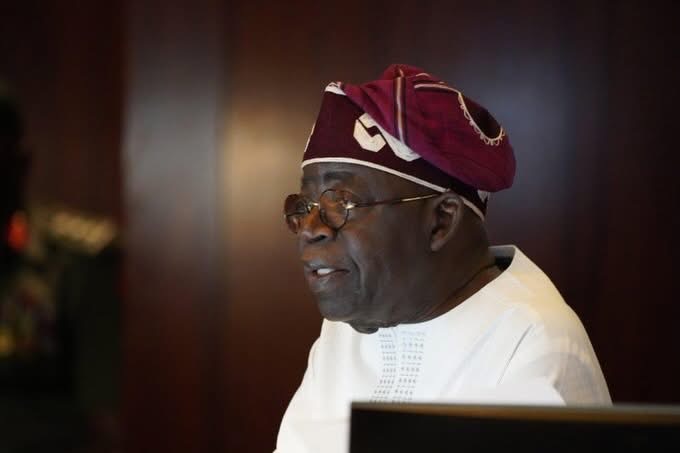
President Bola Tinubu has condemned the reported “barbaric” killing of one of the abducted teachers from the Esiele community in Ogbomoso, Oyo state.
In a statement released issued by his media aide, Bayo Onanuga, on Monday, May 18, President Tinubu said the teacher was k!lled when “rescue operation is underway.”
While conveying his sympathy the government and people of the state, President Tinubu assured that security operatives are “working around the clock” to rescue the victims and arrest the bandits as well as their collaborators within the community.
He further assured that the federal government would collaborate with the state government to rescue the victims.
‘’”I am saddened by the reported killing of one of the teachers kidnapped by the gunmen who invaded the community. I sympathise with Governor Seyi Makinde and commend the steps he has taken on the matter. I sympathise with the families of the kidnapped victims.
The Federal Government is working with the Oyo State government to rescue all the victims. I commend the Inspector-General of Police and the Commissioners of Police in Oyo and Kwara States for their quick intervention and the deployment of a tactical and the Intelligence Response Team (IRT) team to rescue the victims.
The IGP, following my instructions, is personally leading the tech-driven operation. We expect a breakthrough soon. The bandits and all their local collaborators will be fished out and made to face the full wrath of the law.
Cases of kidnapping further make imperative the establishment of state police to man some of our underserved areas. The National Assembly should accelerate the enactment of the law creating state police” the President said
May 14, 2026
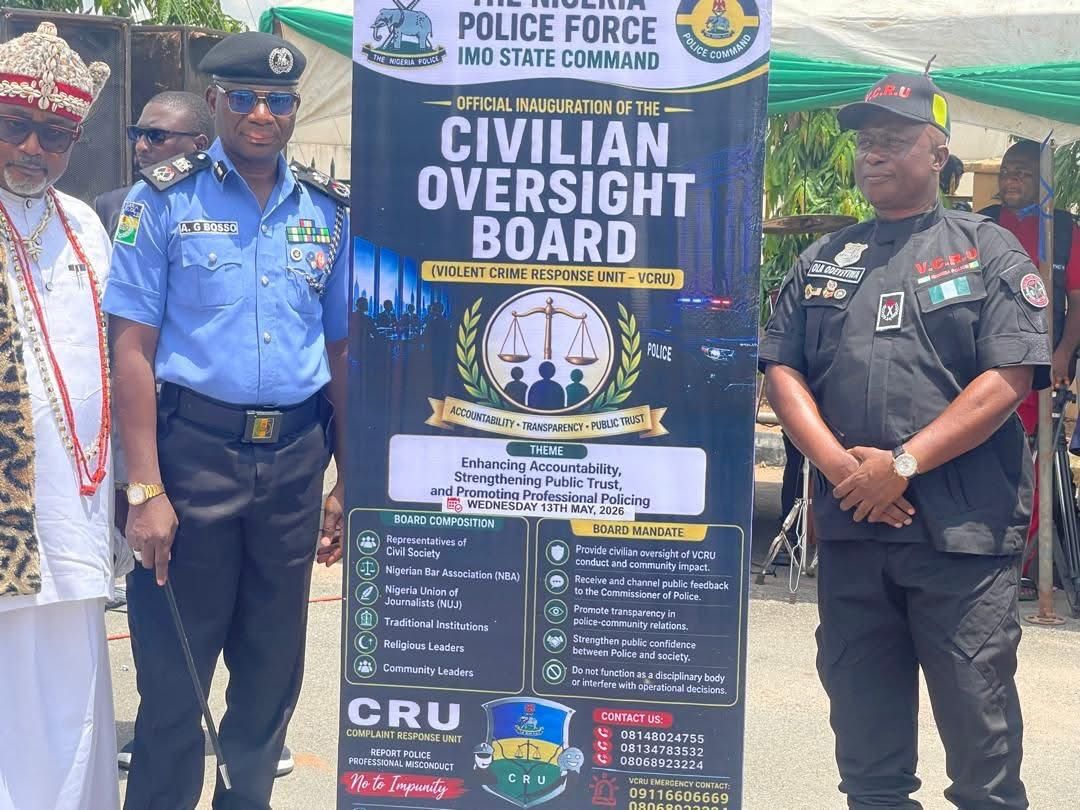
The Rule of Law and Accountability Advocacy Centre (RULAAC) expresses deep concern over the decision by the Nigeria Police Force to disband the notorious “Tiger Base” in Owerri, Imo State, only to inaugurate another tactical police unit operating from the same facility, under substantially the same command structure and reportedly with many of the same operatives.
This development raises serious questions about the sincerity of ongoing police reform efforts in Nigeria and reinforces fears that what is being presented as reform may merely be a cosmetic rebranding exercise designed to deflect public criticism without addressing the underlying culture of abuse and impunity.
Tiger Base became widely associated with allegations of torture, enforced disappearances, arbitrary detention, extortion, and extrajudicial killings. Over the years, victims, families, lawyers, journalists, and civil society organizations documented disturbing patterns of abuse linked to the operations of the unit.
Ordinarily, the disbandment of such a notorious tactical outfit should have marked an opportunity for genuine institutional reform. It should have included:
– Independent investigation into allegations of abuse;
– Accountability for officers implicated in violations;
– Justice and reparations for victims;
– Structural reforms and strengthened oversight;
– Human rights-centered retraining and professionalization.
Instead, the establishment of another tactical formation under substantially similar conditions suggests continuity rather than reform.
RULAAC is particularly concerned that retaining personnel or leadership figures associated with serious allegations of abuse sends a dangerous message that misconduct within the policing system carries no real consequences. This undermines public trust, weakens accountability, and emboldens further violations.
The situation also raises broader concerns regarding political interference in policing. Tactical police units must never become instruments for political intimidation, repression, or the advancement of partisan interests. Professional policing requires operational independence, transparency, accountability, and strict adherence to constitutional and legal standards.
The controversy inevitably recalls the aftermath of the #EndSARS protests, when the disbandment of SARS was quickly followed by the creation of SWAT, generating widespread fears that abusive policing structures were merely being renamed rather than fundamentally transformed.
RULAAC reiterates that genuine police reform cannot be achieved through changes in nomenclature alone. Meaningful reform requires accountability, transparency, civilian oversight, institutional culture change, and justice for victims.
Accordingly, RULAAC calls for the following urgent measures:
1. A transparent and independent investigation into allegations against Tiger Base operatives and leadership;
2. Prosecution and disciplinary action against officers implicated in torture, unlawful killings, and other abuses;
3. Justice, compensation, and support for victims and affected families;
4. Strengthened civilian oversight involving the National Human Rights Commission, judicial institutions, and civil society organizations;
5. Clear operational guidelines and publicly accountable rules of engagement for tactical police units;
6. Measures to insulate policing from political interference and abuse.
The people of Imo State and Nigerians generally deserve a policing system founded on professionalism, legality, accountability, and respect for human rights – not the recycling of abusive structures under new labels.
Signed:
Okechukwu Nwanguma
Executive Director
Rule of Law and Accountability Advocacy Centre (RULAAC)
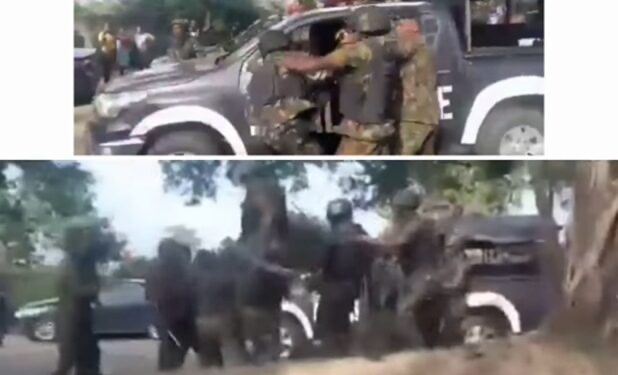
Personnel of the Nigerian military were seen engaging in a fight during the visit of President Bola Ahmed Tinubu to Bayelsa on Friday.
In a video spotted on social media, the driver of a Hilux vehicle marked “Naval Police” was seen stepping down from his vehicle and exchanging words with another driver.
After returning to his vehicle, another driver with a rifle approached him and threw a punch at the Naval Police driver, triggering a brawl.
The incident quickly escalated into a free-for-all, with personnel attached to both vehicles exchanging blows, while stunned civilians watched in disbelief.

Politics2 hours ago
Fubara To Contest Rivers Governorship Seat Under NDC

Education6 hours ago
Breaking: Tinubu Appoints 39 Year Old Professor As New Jamb Registrar

Politics9 hours ago
Desmond Elliot Withdraws from APC Lagos Assembly Primaries, Cites Intimidation

-
Business2 years ago
US court acquits Air Peace boss, slams Mayfield $4000 fine
-

 Trending2 years ago
NYA demands release of ‘abducted’ Imo chairman, preaches good governance
-

 Politics2 years ago
Mexico’s new president causes concern just weeks before the US elections
-

 Politics2 years ago
Putin invites 20 world leaders
-

 Politics2 years ago
Russia bans imports of agro-products from Kazakhstan after refusal to join BRICS
-
Entertainment2 years ago
Bobrisky falls ill in police custody, rushed to hospital
-
Entertainment2 years ago
Bobrisky transferred from Immigration to FCID, spends night behind bars
-
Education2 years ago
GOVERNOR FUBARA APPOINTS COUNCIL MEMBERS FOR KEN SARO-WIWA POLYTECHNIC BORI