
Columns
Tinubu Group Advises Nigerian Government To Settle Nnamdi Kanu’s Matter Through Arbitration

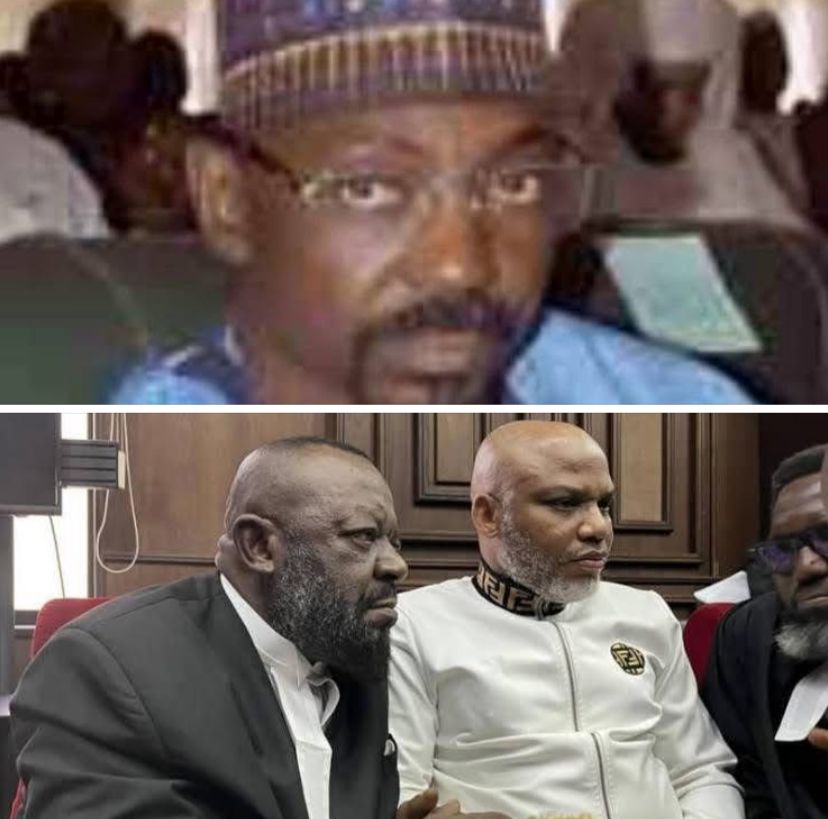
Grand Patron of One Nation for Asiwaju Support Group, Mohammed Ndarani, SAN, on Thursday appealed to the Federal Government to settle the issue of Biafran nation agitator, Mazi Nnamdi Kanu and other agitators, out of court through a formidable national committee of arbitration.
Addressing a press conference in Abuja, Ndarani, was optimistic that the move will lead to peace, and unity in diversity.
“President Bola Tinubu should consider Alternative Dispute Resolution (ADR) mechanisms like arbitration, conciliation and mediation in some of these cases concerning these agitators.High profile cases like Kanu’s are best resolved as quickly as possible because they evoke a lot of sentiments”
“Another reason for an expeditious resolution of the matter is because it would begin to heal festering wounds which we can certainly do without at this stage of our nationhood.
“Justice delayed is invariably justice denied” Ndarani said.
He urged President Tinubu to watch out for little foxes that spoil the vine while he is trying to hold Nigeria together as one indivisible nation.








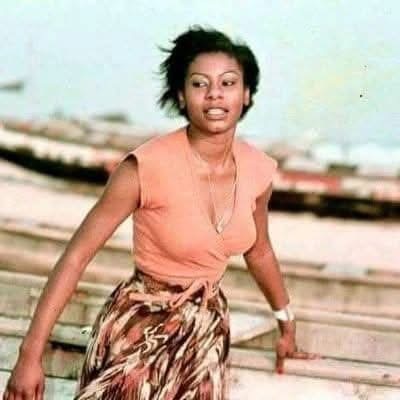
This photograph of Benita Enwonwu from the 1970s recalls a familiar face from Nigerian popular culture of that era. She was widely known as a model and actress, and is especially remembered for her appearance in Joy Soap advertisements, which made her one of the recognisable media personalities of the period.
Benita was also notable for her family background. She was the daughter of Ben Enwonwu, one of Nigeria’s most celebrated modern artists and sculptors. Ben Enwonwu’s career placed him among the leading figures in twentieth-century African art, so Benita’s public image carried an added layer of cultural significance, linking Nigerian advertising, performance, and elite artistic heritage.
While she is often remembered today through nostalgic references to the Joy Soap ad of the 1970s, available reliable public documentation on her wider filmography and career is limited. Because of that, it is safest to describe her as a popular model and screen personality associated with Nigerian advertising culture of the 1970s, rather than overstate details that are not strongly verified.
What makes the image especially interesting is that it reflects a period when print advertising, television commercials, and glamour photography were becoming more influential in shaping urban popular culture in Nigeria. Figures like Benita Enwonwu helped define the aspirational, stylish image of that period.
background
Ben Enwonwu is well documented as a major Nigerian artist, and auction-house and museum records confirm his international reputation and family legacy. Publicly accessible records also support the broad identification of Benita Enwonwu as his daughter, though detailed independent archival coverage of her own career appears limited.
Source note
The immediate source you gave is Benita Enwonwu’s Twitter page, which may be useful as a primary-source attribution for the photo itself, but I could not independently verify that page directly from accessible archival sources in this search.
References
Ben Enwonwu Foundation / related institutional material on Ben Enwonwu’s legacy.
Columns
Aliko was only 20 years old when he founded his company, Dangote Group. In 2011, he became the first nongovernmental figure to receive the distinction of the Grand Commander of the Order of the Niger (GCON), Nigeria’s second highest honour.
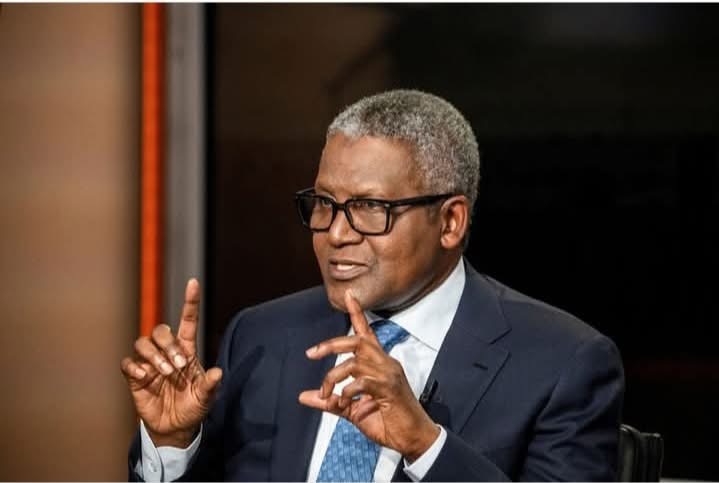
Born April 10, 1957, in Kano, northern Nigeria, Aliko Dangote has come to symbolize the transformative power of enterprise on the African continent. With a commercial instinct honed from youth and a formidable vision for self-reliance, Nigeria’s richest man has redefined industrial ambition in Africa.
In 1977, a young Dangote embarked on his entrepreneurial journey by establishing the Dangote Group, initially a modest trading firm dealing in imported commodities such as sugar, salt, and foodstuffs. As the business grew rapidly, he recognised the limitations of import dependency and set his sights on industrial production.
By 1981, he had launched Dangote Nigeria Limited and Blue Star Services, expanding his operations to include the importation of rice, steel, and aluminium products—a clear indication of his growing appetite for scale and influence. But it was in cement that his greatest impact would soon be felt.
Responding to the ever-increasing demand for building materials in Nigeria and across West Africa, Dangote founded Dangote Cement, positioning it to rival foreign giants such as Lafarge, the French multinational known at the time for dominating African markets through imports. With strategic foresight and substantial investment in local production, Dangote not only outpaced competitors but helped reposition Nigeria as a net exporter of cement.
By 2023, Dangote Cement had become a cornerstone of African infrastructure, generating approximately $3.7 billion in revenue, while Dangote Sugar rose to be one of the largest sugar producers in both Nigeria and the continent at large.
His entrepreneurial achievements are matched by his influence on public policy and national development. In 2011, President Goodluck Jonathan appointed Dangote to the Economic Management Team, recognising his pivotal role in shaping Nigeria’s industrial trajectory. That same year, Jonathan conferred on him the Grand Commander of the Order of the Niger (GCON)—the country’s second highest national honour.
A household name not just in Nigeria but across Africa, Dangote’s reach extends beyond business. In 2014, he was listed among Time magazine’s 100 most influential people in the world, a testament to his international stature. As of March 2025, Forbes estimates his personal fortune at $23.8 billion, making him the wealthiest Black person in the world.
Yet for all the headlines, Dangote’s legacy rests not merely in wealth, but in impact—in industries built, jobs created, and a continent nudged steadily toward economic self-sufficiency. With his flagship Dangote Refinery poised to revolutionise the energy landscape of West Africa, his vision continues to unfold—bold, pragmatic, and unmistakably African.
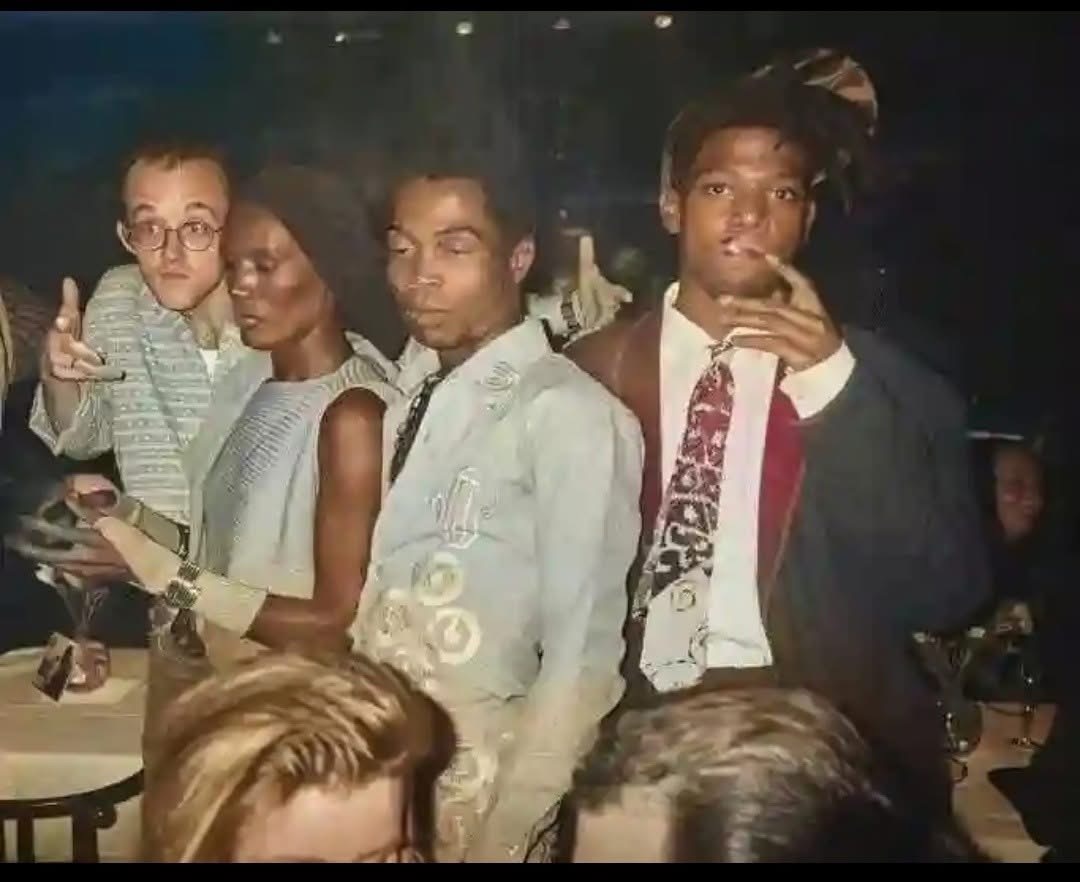
When Afrobeat intersected with 1980s New York’s vibrant art scene
In 1986, Nigerian Afrobeat pioneer Fela Anikulapo Kuti traveled to New York, a global epicentre of music, fashion, and contemporary art. During this trip, he was photographed alongside three towering figures of the city’s cultural scene: Keith Haring, the revolutionary pop artist; Jean-Michel Basquiat, the celebrated neo-expressionist painter; and Grace Jones, the avant-garde singer, model, and performer.
A Convergence of Art, Music, and Activism
Fela Kuti, already a legend in Africa, was known for blending traditional Yoruba rhythms, jazz, funk, and highlife to create Afrobeat, a genre that carried sharp political commentary and a call for African liberation. By the mid-1980s, Fela had achieved international recognition not just as a musician but also as a cultural and political icon.
New York during this period was a magnet for creativity. Downtown Manhattan’s clubs, galleries, and lofts were vibrant meeting points for emerging artists, musicians, and activists. Keith Haring was transforming public spaces with his bold graffiti-inspired imagery that celebrated social activism and community engagement.
Jean-Michel Basquiat, rising from the SAMO graffiti project, was redefining contemporary painting with references to African diasporic history, jazz, and street culture. Grace Jones, with her fearless performances and striking fashion, blurred the lines between music, visual art, and theatricality.
The photograph of Fela with Haring, Basquiat, and Jones embodies a cross-cultural dialogue: African Afrobeat meeting New York’s avant-garde art scene. The collaboration of ideas, energy, and rebellion against social norms created a powerful synergy that celebrated creative freedom and social critique.
Fela’s Impact and Resonance
Fela’s presence in New York in the 1980s extended his influence beyond African music:
Cultural Ambassador: He introduced the global audience to Afrobeat rhythms and political narratives about Nigerian governance and African unity.
Political Voice: Fela used music as activism, critiquing dictatorship, corruption, and inequality, which resonated with New York artists tackling social injustice in their mediums.
Artistic Exchange: His meetings with Haring and Basquiat symbolize the blending of visual and musical arts, showing how African rhythms inspired and were inspired by contemporary Western art.
The Icons of 1980s New York
Keith Haring (1958–1990): His art addressed AIDS awareness, apartheid, and social inequities through a distinctive graffiti style.
Jean-Michel Basquiat (1960–1988): Known for paintings that combined text, imagery, and social commentary, often highlighting African heritage and identity.
Grace Jones (b. 1948): A music and fashion trailblazer, known for her theatrical performances, gender-bending style, and influence on New Wave and disco music.
A Symbolic Moment
The photograph is more than a casual gathering—it is a representation of global cultural exchange. Here was a Nigerian musician whose voice challenged power structures, standing with avant-garde artists who were also pushing boundaries in their respective fields. It highlights how African cultural expression influenced and was celebrated internationally.
This moment also reflects the 1980s as a period of experimentation, cross-pollination, and dialogue among music, fashion, and visual art, creating enduring legacies that continue to inspire generations.
Source:
Veal, Michael. Fela: The Life and Times of an African Musical Icon.
Haring, Keith. Keith Haring Journals.
Basquiat, Jean-Michel. The Radiant Child: The Life of Jean-Michel Basquiat.
Personal archives and historical photographs of Fela Kuti in New York, 1986.

IMO STATE LABOUR PARTY DESCENDS INTO FACTIONAL WAR

EFCC evicts Malami from Abuja home amid forfeiture dispute

Fuel price hike: Gov Makinde announces N10,000 transport support for workers

-
Business1 year ago
US court acquits Air Peace boss, slams Mayfield $4000 fine
-

 Trending1 year ago
NYA demands release of ‘abducted’ Imo chairman, preaches good governance
-

 Politics1 year ago
Mexico’s new president causes concern just weeks before the US elections
-

 Politics1 year ago
Putin invites 20 world leaders
-

 Politics1 year ago
Russia bans imports of agro-products from Kazakhstan after refusal to join BRICS
-
Entertainment1 year ago
Bobrisky falls ill in police custody, rushed to hospital
-
Entertainment1 year ago
Bobrisky transferred from Immigration to FCID, spends night behind bars
-
Education2 years ago
GOVERNOR FUBARA APPOINTS COUNCIL MEMBERS FOR KEN SARO-WIWA POLYTECHNIC BORI