
Politics
Tinubu to remove Ganduje as APC chairman, offer him another appointment


President Bola Tinubu is reportedly planning to appoint the national chairman of the ruling All Progressives Congress, APC, Abdullahi Ganduje as an ambassador for any African country.
Ganduje was appointed as the national chairman of the ruling party on August 3, 2023, following the forced resignation of Abdullahi Adamu.
According to Daily Nigerian, Tinubu first ordered Senate President Godswill Akpabio to break the “bad news” to Mr Ganduje.
Daily Nigerian reports that Akpabio told the APC national chairman that the president’s ambassadorial offer was aimed at saving him from the ongoing corruption trial he is currently facing in Kano.
Mr Ganduje, whose 2018 bribe videos caused him public opprobrium and ridicule, is facing corruption charges alongside his wife, son and other accomplices to the tune of over N50 billion.
But inside sources said Mr Ganduje grumbled and tacitly rejected the president’s offer, explaining that the charges were “tissues of lies” and would win his cases in court.
“Is this the way the president will reward my loyalty? Besides, I am too old to go for ambassadorial posting. All the charges are tissues of lies, and I will win my case in court,” Mr Ganduje was quoted as replying to Mr Akpabio.
According to the sources, the president later personally informed Mr Ganduje of the diplomatic posting plan and offered him to choose “any country in Africa”.
But other sources said the president offered him three choices in Africa, Asia and Europe.
A source close to the APC chairman said the president’s preference was to post him as Nigerian ambassador to Chad, having served in Ndjamena as the executive secretary of the Lake Chad Basin Commission between 2009 and 2011.
“You know the president is looking for a way to pacify him. This is the reason why he allowed him to choose among the three countries, but the president’s preference is Chad.
“But the problem is that no serious Asian or European country would overlook Ganduje’s dollar video and corruption charges to accept him as ambassador.
“However, Ganduje is lobbying hard to retain his seat, going from pillar to post and complaining bitterly to Chief Bisi Akande about the president’s decision to ‘retire’ him from politics. But if the worse comes to worst, Ganduje will choose Morocco over Chad,” the inside source said.
A few days after Mr Tinubu communicated the decision to Mr Ganduje, a letter was sent to the APC chairman notifying him of the president’s approval to conduct the National Executive Committee, NEC meeting and mid-term non-elective national convention.
The letter, dated August 9 and signed by the president’s chief of staff, Femi Gbajabiamila, informed Mr Ganduje of the president’s availability for the NEC meeting to be held at a date between September 8 and 19, 2024.
“I am directed by the President to inform you that he has granted approval for the scheduling and convening of a meeting of the National Executive Committee (NEC) of the Party. The President has confirmed his availability for the NEC meeting between the dates of 8th September 2024 and 19th September, 2024.
“Furthermore, the President has directed that the agenda for the NEC meeting include, among other things, the consideration of a date for the non-elective National Convention to be held before the end of the year 2024.
“Kindly liaise with the undersigned regarding any developments or necessary clarifications related to the scheduling of the meeting. Please ensure that any changes or updates are communicated promptly to facilitate smooth coordination,” Mr Gbajabiamila said in the letter.
(DAILY NIGERIAN)
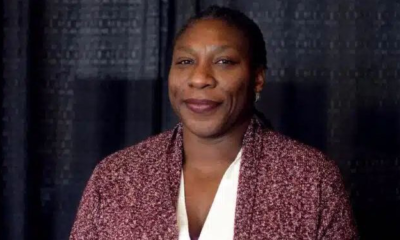






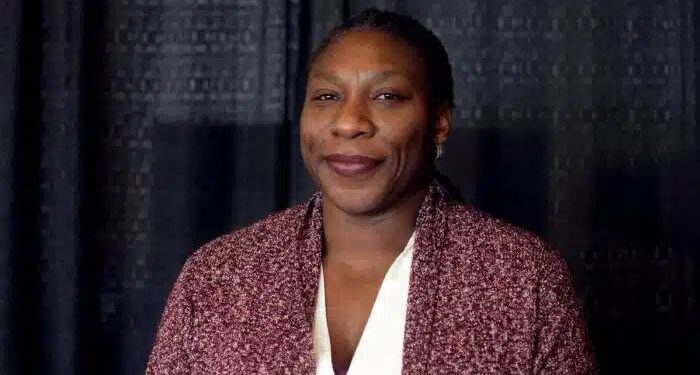
Prof. Iyabo Obasanjo, daughter of former President Olusegun Obasanjo, has declared her intention to contest the 2027 governorship election in Ogun State under the platform of the ruling All Progressives Congress (APC).
She made the declaration during an interview with Nigerian football legend Segun Odegbami on 103.7FM Eagle7 Sports, on Saturday.
The former commissioner ruled out a return to the Senate, stating that her focus is firmly on the governorship race.
“So moving ahead, I’m not going to be Commissioner. Like I said, I’m not even going back to the same party because I think that’s old and I don’t see the use of it. And I’m not going to go back to the Senate,” she said.
“Like the American would say, there’s no need. And this is what I told my associates, when this all started. I said, the only thing I’ll come back to do is the governorship.
“And we have started that journey. We are going to see it through. And so that’s the journey I’m on. And we are very serious about it. I mean we are very dedicated to it.”
The politician also confirmed that she recently joined the APC, explaining that her return to active politics followed persistent calls from supporters.
“Like I told you, a group of people who I did not bring together, have been working, I think, for two years now. And then they started talking to me about a year ago, saying, ‘Look, we think you are the best candidate. We want you back,’” she added.
Her declaration sets the stage for what may become a keenly contested governorship race in Ogun State ahead of the 2027 elections.
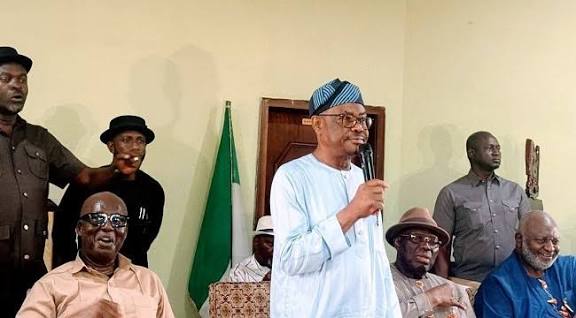
FCT Minister and former governor of Rivers state, Nyesom Wike, has said that any senator, House of Representatives Member, Minister, or governor who supports betrayers will suffer betrayal in their lives and that such person will join their creator when they experience their own betrayal.
Wike who is currently in a running battle with his godson and incumbent governor of Rivers state, Sim Fubara, said this while speaking at a public function in the state today February 6.
Speaking to the crowd at the public function, Wike said
‘’Wether you are a Senator, House of Reps member, a Minister or Governor, and you support betrayers, people will continue to betray you in life. You see people who betray and support them, betrayal is your portion! Betrayal is your portion! and that day you will not have mouth to say anything and there you will collapse and there you will go and they will announce such person has died because that is the seed you have planted because whatever you plant, you reap and so since you are sowing betrayal, betrayal will always follow you.
Watch! Every governor who is doing his second term and has ambition to put a successor and is supporting betrayals, you will never survive it. Betrayal will follow you. From the day your successor comes in. My own took so many months, your own will start immediately the person has been inaugurated. That is what the gods of the land have told me to tell all of you’’
https://www.instagram.com/reel/DUdaCp1jD01/?igsh=MWVnZXoyaGNmOGJ5dA==
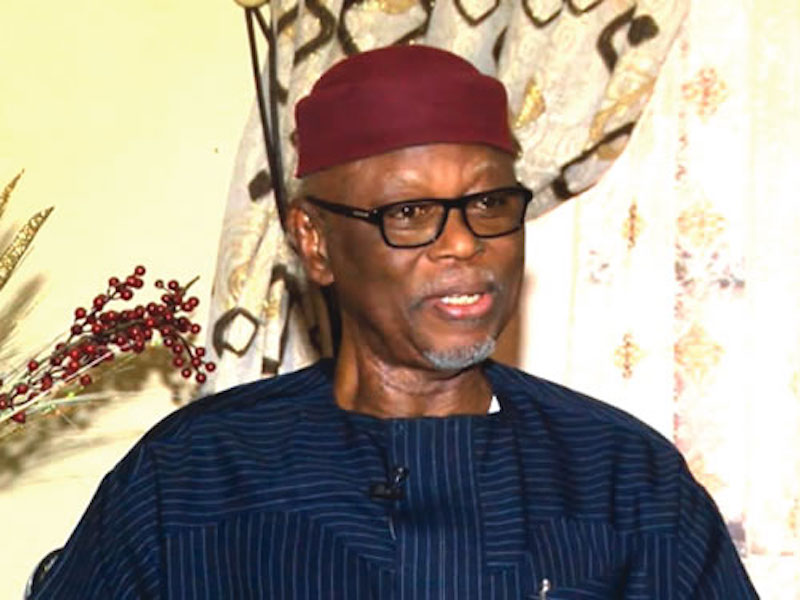
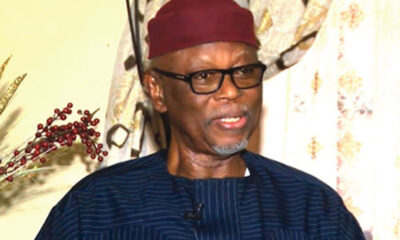
Chairman, Policy Manifesto Committee of the African Democratic Congress, ADC, John Odigie-Oyegun, says former president Muhammadu Buhari gave him the shock of his life, six months into his administration as Nigeria’s leader.
Oyegun made this disclosure on Friday when he featured in an interview on Arise Television’s ‘Prime Time’.
He revealed that as National Chairman of the All Progressives Congress, APC, he went to tell Buhari that he was not delivering his election promises to Nigerians but that the late president told him he would not rule with strictness, but rather wanted to show Nigerians that he is a true civilian president.
The former APC National Chairman lamented that it became business as usual, from there.
“I was national chairman of the APC. Six months or less into our assuming office, fairly alarmed, I went to the late President Buhari for a one-on-one talk. I said Mr President, this is not what the people were expecting. They wanted a bit of the old president Buhari.
“And he explained to me, Mr Chairman, I have learned my lesson. I was shocked. And don’t forget at that time, a lot of prominent Nigerians took their holidays abroad, just to be sure and see what this new sheriff in town will be.
“Buhari told me he wants to now show the people that he’s a true civilian president in Agbada. And by the time we finished the conversation, I said Oh God, we are finished. Because, if he’s not ready to be strict, what’s the point?
“Weeks later, months later, years later, I was proven correct. And of course, it became business as usual, only that they are a new set of tenants in Aso Rock. That was a shocker,” he said.

Olusegun Obasanjo’s Daughter Declares For Ogun Governorship, Joins APC

Nigerian Pharmacist D!es While Donating Kidney To Save His Cousin’s Life

Two Presidents, Many Dignitaries In Attendance As Defence Minister Matawalle’s 10 Children Get Married In One Day (Photos/Video)

-
Business1 year ago
US court acquits Air Peace boss, slams Mayfield $4000 fine
-

 Trending1 year ago
NYA demands release of ‘abducted’ Imo chairman, preaches good governance
-

 Politics1 year ago
Mexico’s new president causes concern just weeks before the US elections
-

 Politics1 year ago
Putin invites 20 world leaders
-

 Politics1 year ago
Russia bans imports of agro-products from Kazakhstan after refusal to join BRICS
-
Entertainment1 year ago
Bobrisky falls ill in police custody, rushed to hospital
-
Entertainment1 year ago
Bobrisky transferred from Immigration to FCID, spends night behind bars
-
Education1 year ago
GOVERNOR FUBARA APPOINTS COUNCIL MEMBERS FOR KEN SARO-WIWA POLYTECHNIC BORI