
Columns
Tinubu’s Reign Of Deception, Destitution And Hopelessness, By Prof. Usman Yusuf

May 13, 2024
Prof. Usman Yusuf
OPINION
Children of the poor continue to die needlessly from vaccine-preventable diseases like measles, diphtheria, diarrhea, pneumonia and meningitis due to lack of access to healthcare.
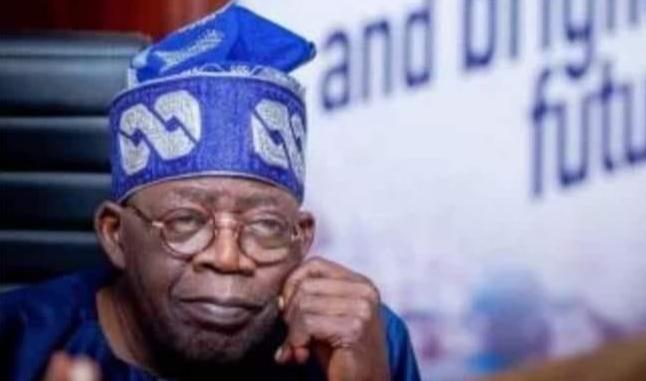
President Bola Ahmed Tinubu’s year in office has been one like no other. He has willfully turned Nigerians into destitutes in their land of plenty. In a country that is officially not at war and has not experienced failure of rainfalls and drought, it is very painful to see citizens, predominantly women, and children, go through the humiliation of queuing up for cups of rice as one sees in war-torn Sudan, or Gaza Strip
This harsh and intolerable condition is as a result of President Tinubu’s inhumane, World Bank-prescribed economic policies of sudden removal of fuel subsidy, massive devaluation of the Naira, and interest rate and electricity tariff hikes. These misguided policies have resulted in galloping inflation now at a 28-year high of 33%, and food inflation rate of 40%
In a country with 133 million, 65% of its population, already in multidimensional poverty and over 20 million children out of school, these policies have added millions more citizens into multidimensional poverty and millions more children out of school because their parents cannot pay for their school fees.
Millions of Nigerians, predominantly women and children, go to bed hungry with no certainty of anything to eat when they wake up. Heads of households are absconding from their homes, abandoning mothers with children because they cannot feed their families.
The government’s answer to this self-imposed hardship is to provide food palliatives. On February 8, 2024, President Tinubu directed the release of 42,000 metric tons of grains from the strategic grains reserve to be distributed free of charge to vulnerable Nigerians. It is now almost 4 months but no vulnerable Nigerian has received anything.
The truth is that the federal government knows fully well that all its silos are literally empty. A Northern governor that was co-opted into this ruse went as far as declaring 5 work-free days for distributing what he very well knew were non-existent palliatives. It is depressing that 64 years after independence, Nigerians are being turned into beggars by their leaders.
Our children’s education has never been more imperiled than now because of the return of mass school abductions by terrorists. Ten years after the tragic abduction of 276 school girls in Chibok by Boko Haram insurgents, Nigeria witnessed 5 mass school abductions (in Gusau, Dutsinma, Gada, Ekiti and Kuriga) in the first eight months of this administration. In spite of these school abductions, neither the state nor federal governments are doing anything to secure our schools because only the children of the poor are at risk.
Nigeria’s healthcare system is in shambles, with many hospital wards across the country looking distressingly like abattoirs and Primary Healthcare Clinics abandoned. The healthcare financing system has been hijacked by “middlemen” called Health Maintenance Organisations (HMOs) to the detriment of patients and healthcare providers.
The recent hike in electricity tariff poses an existential threat to the survival of healthcare services in Nigeria. Many hospitals will not be able to pay the new tariffs, as exemplified by a video clip of a Doctor lamenting after receiving an electricity bill of N25.3 million.
There is a mass exodus of healthcare workers out of Nigeria because of the conditions of our healthcare facilities, lack of work tools and poor pay for healthcare workers. Recent report by the Medical and Dental Council of Nigeria (MDCN) revealed that there are 130,000 registered doctors in Nigeria serving a population of 200 million, giving a doctor-to-patient ratio of 1 Doctor serving 1,500 patients (1:1,500).
The WHO’s recommendation is that 1 Doctor should serve 600 patients (1:600). This ratio is much higher in many states signifying that all Nigerians regardless of their station in life, live in a very high-risk medical environment.
Millions of Nigerians have simply stopped taking their medications because they cannot afford them and have resorted to traditional medicines and prayers, resulting in increased disease-related complications and deaths.
Recent data from the Nigerian Hypertension Society suggests that of the 70 million Nigerian adults with hypertension, half (35 million) are not on treatment due to the skyrocketing drug prices, consequently, Doctors are now seeing more and more hypertension-related complications like stroke, kidney failures, heart failures and deaths.
In the last year, hospitals all across the country have been seeing an exponential rise in the number of children admitted with diseases of severe malnutrition (Marasmus and Kwashiorkor).
Children of the poor continue to die needlessly from vaccine-preventable diseases like measles, diphtheria, diarrhea, pneumonia and meningitis due to lack of access to healthcare.
Contrary to the official propaganda and half-truths about improvements in Nigeria’s national security, the reality on the ground particularly in the Northwest and North Central part of the country says differently. Terrorists still control a large swath of the country’s rural areas fifteen and nine years into the wars against Boko Haram and Bandits respectively.
The land is still drenched in the blood of the innocents, villages are being ransacked and pillaged, villagers chased off their homes or abducted for ransom. Farmers are chased off their farmlands or levied on their harvests. Major highways still remain unsafe from terrorists who attack travelers, killing and abducting passengers at will for ransom. Ethno- Religious conflicts and killings continue unabated.
The 400 women and children abducted by Boko Haram insurgents from IDP camps in Gamboru Ngala, Borno state on 3 March 2024 have been forgotten by the government.
The morale of members of the Military is at its lowest because active duty personnel are increasingly being ambushed and killed by terrorists all across the country. In the last 8 months, over 500 officers and soldiers have been reported killed in such attacks.
Recent hurried, unplanned withdrawals of the military from two bandits-infested areas in Maru LGA. Zamfara state and Shiroro LGA Niger state, where the military sustained unfortunate losses, could very well be a sign of frustration and battle fatigue in our soldiers.
While their house is on fire, 10 Northern Nigerian Governors went to America looking for solutions to problems they are complicit in creating because they control the drivers of insecurity in their states. I have said it again and again that all our security problems are local, and their solutions must be found locally, not in Abuja, New York City, Washington DC or anywhere else. The armed militias created by some of these governors in their states have done nothing but worsened the bloodshed.
It is no secret that both the American and French governments have been lobbying the Nigerian government to open bases and station their troops on Nigerian soil following their expulsion from Niger, Mali and Burkina Faso. The real concern is that the timing of the invitation to the 10 Northern governors by the United States Institute for Peace (USIP) may not be unconnected with this lobby.
Addressing Nigeria’s intractable security challenges will require a sincere, strategic, holistic approach involving all stakeholders instead of the disjointed fire brigade approach currently employed.
President Tinubu’s economic policies have caused a cost of living crisis in Nigeria resulting in unbearable hardships on all citizens. Workers’ salaries cannot pay for rent, water, food, clothing, school fees, transportation, and other basic necessities of life.
Runaway inflation has pauperised citizens and worsened hunger in the land. Managers of the economy are at a loss as to what to do. Their attempt at borrowing and hiking the interest rates to artificially prop up the value of the Naira against the Dollar has not and will never work.
It is voodoo economics to think that taxing citizens beyond their capacity to pay will revive Nigeria’s comatose economy. Taxes do not grow economies, production does.
The federal government has quietly resumed paying for the same fuel subsidy it removed on 29, May 2023. The simple questions to ask are, why is the pump price not back to where it was before the removal of subsidy,were these payments provided for in the 2024 budget and who are the new Cabals benefiting from these payments ?
The attempt by President Tinubu’s Administration to impose this so-called cyber security tax on citizens is nothing but a desperate effort to elevate the Office of the National Security Adviser (ONSA) to a level that was never intended by the authors of our constitution.
The National Assembly saw through this desperation when it defeated a bill presented to the Senate seeking to grant additional powers and creation of armed agencies under the National Security Adviser (NSA).
The attempt to create a taxpayer-funded Cybersecurity fund appears to be a continuation of this effort that would make the ONSA far better funded than the Ministry of Defence, the Armed Forces of Nigeria, the Nigerian Police and Nigerian Intelligence Services. This will be a very dangerous development that will be fatal to our democracy.
We cannot elevate or give power to an appointee way beyond a representative elected by the people. So, to create a fund in the name of whatever aspect of national security is to arm and empower an appointee of the President.
History should teach us of the dangers of allowing appointees of the President to amass so much unchecked powers as was the case with J. Edgar Hoover who became the most powerful FBI’s chief serving as Chief for 48 years under 8 United States Presidents.
Never in the 25-year history of Nigeria’s return to democratic rule have we seen such a brazen and reckless act of impunity as was exhibited by President Tinubu in unilaterally awarding a N15.6 trillion Naira contract for Lagos to Calabar coastal Highway to his longtime friend and business associated in violation of all procurement and due process laws and procedures. Such an amount could complete all the inland roads in the country with some change to spare.
This is a classic case of the term State Capture, which is defined as a type of systematic corruption where narrow interest groups take control of the institutions and processes through which public policy is made, directing public policy away from the public interest and instead shaping it to serve their own interests.
President Tinubu is already setting his sights on his re-election bid in 2027. This explains why he is aggressively amassing a formidable campaign war chest through overtaxations and levies on citizens.
Consequently, he is aggressively cultivating 5 major constituencies: Members of the National Assembly, who refuse to ask the right questions as representatives of their people, Governors, who keep their people quiet by throwing at them palliatives of cups of rice, Religious Clerics, that supported his Muslim-Muslim ticket and the Security Services, who he thinks will protect him from citizens’ anger. The last constituency is Hausa Praise Singers, who have been contracted to sing his praises and songs that would distract restive northern youths from their daily sufferings.
It is unfortunate that by his actions and inactions, the lives, livelihoods and welfare of Nigerians do not matter to this President.
President Tinubu’s impulsive and amateurish handling of the aftermath of the July 2023 coup in Niger is largely responsible for the exit of Niger, Mali and Burkina Faso from the ECOWAS, thereby jeopardizing the survival of the organization created 49 years ago. The exit of these 3 countries from the ECOWAS, acceptance of Russian troops on their soil and the frenzied lobby of the French and Americans to relocate their military bases to Nigeria are all harbingers of bad things to come.
It is concerning that while many Francophone African countries are breaking free from the shackles of oppression and exploitation of their colonial masters, President Tinubu is dragging Nigeria blindly into the embrace of France.
Nigerians have lost faith and trust in President Tinubu’s government due to continuing hardships, increasing cost of living, insecurity, corruption in government, youth unemployment and hopelessness. Leaders continue to live lives of vulgar opulence, corruption, and impunity while citizens live in penury.
President Tinubu’s tenure has thus far been a catastrophic failure in governance. His policies have plunged the citizenry deeper into poverty, imperiled our national security and compromised the integrity of our institutions. Tinubunomics, under the guise of reforms, is only intensifying hardships in the land. The misallocation of resources and corruption reflects a leadership that prioritizes personal enrichment over the public interests. This administration’s actions are disappointing, morally reprehensible and go against the principles of democracy and good governance. We cannot and will not remain silent
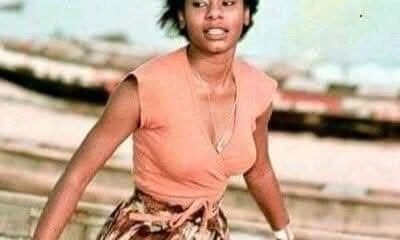





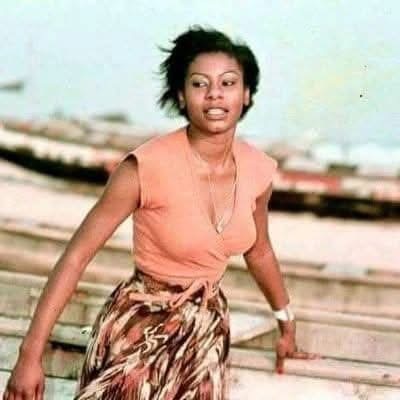
This photograph of Benita Enwonwu from the 1970s recalls a familiar face from Nigerian popular culture of that era. She was widely known as a model and actress, and is especially remembered for her appearance in Joy Soap advertisements, which made her one of the recognisable media personalities of the period.
Benita was also notable for her family background. She was the daughter of Ben Enwonwu, one of Nigeria’s most celebrated modern artists and sculptors. Ben Enwonwu’s career placed him among the leading figures in twentieth-century African art, so Benita’s public image carried an added layer of cultural significance, linking Nigerian advertising, performance, and elite artistic heritage.
While she is often remembered today through nostalgic references to the Joy Soap ad of the 1970s, available reliable public documentation on her wider filmography and career is limited. Because of that, it is safest to describe her as a popular model and screen personality associated with Nigerian advertising culture of the 1970s, rather than overstate details that are not strongly verified.
What makes the image especially interesting is that it reflects a period when print advertising, television commercials, and glamour photography were becoming more influential in shaping urban popular culture in Nigeria. Figures like Benita Enwonwu helped define the aspirational, stylish image of that period.
background
Ben Enwonwu is well documented as a major Nigerian artist, and auction-house and museum records confirm his international reputation and family legacy. Publicly accessible records also support the broad identification of Benita Enwonwu as his daughter, though detailed independent archival coverage of her own career appears limited.
Source note
The immediate source you gave is Benita Enwonwu’s Twitter page, which may be useful as a primary-source attribution for the photo itself, but I could not independently verify that page directly from accessible archival sources in this search.
References
Ben Enwonwu Foundation / related institutional material on Ben Enwonwu’s legacy.
Columns
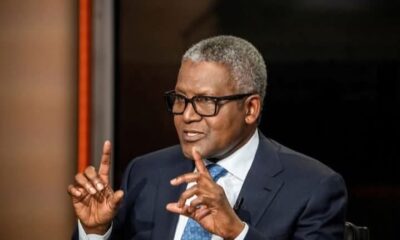
Aliko was only 20 years old when he founded his company, Dangote Group. In 2011, he became the first nongovernmental figure to receive the distinction of the Grand Commander of the Order of the Niger (GCON), Nigeria’s second highest honour.
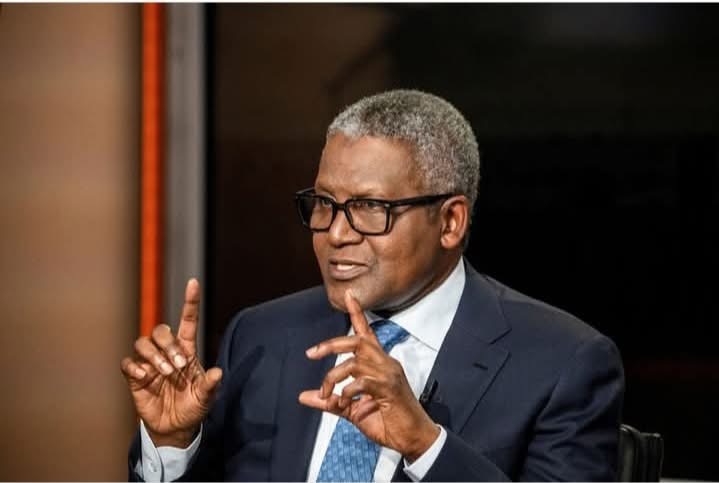
Born April 10, 1957, in Kano, northern Nigeria, Aliko Dangote has come to symbolize the transformative power of enterprise on the African continent. With a commercial instinct honed from youth and a formidable vision for self-reliance, Nigeria’s richest man has redefined industrial ambition in Africa.
In 1977, a young Dangote embarked on his entrepreneurial journey by establishing the Dangote Group, initially a modest trading firm dealing in imported commodities such as sugar, salt, and foodstuffs. As the business grew rapidly, he recognised the limitations of import dependency and set his sights on industrial production.
By 1981, he had launched Dangote Nigeria Limited and Blue Star Services, expanding his operations to include the importation of rice, steel, and aluminium products—a clear indication of his growing appetite for scale and influence. But it was in cement that his greatest impact would soon be felt.
Responding to the ever-increasing demand for building materials in Nigeria and across West Africa, Dangote founded Dangote Cement, positioning it to rival foreign giants such as Lafarge, the French multinational known at the time for dominating African markets through imports. With strategic foresight and substantial investment in local production, Dangote not only outpaced competitors but helped reposition Nigeria as a net exporter of cement.
By 2023, Dangote Cement had become a cornerstone of African infrastructure, generating approximately $3.7 billion in revenue, while Dangote Sugar rose to be one of the largest sugar producers in both Nigeria and the continent at large.
His entrepreneurial achievements are matched by his influence on public policy and national development. In 2011, President Goodluck Jonathan appointed Dangote to the Economic Management Team, recognising his pivotal role in shaping Nigeria’s industrial trajectory. That same year, Jonathan conferred on him the Grand Commander of the Order of the Niger (GCON)—the country’s second highest national honour.
A household name not just in Nigeria but across Africa, Dangote’s reach extends beyond business. In 2014, he was listed among Time magazine’s 100 most influential people in the world, a testament to his international stature. As of March 2025, Forbes estimates his personal fortune at $23.8 billion, making him the wealthiest Black person in the world.
Yet for all the headlines, Dangote’s legacy rests not merely in wealth, but in impact—in industries built, jobs created, and a continent nudged steadily toward economic self-sufficiency. With his flagship Dangote Refinery poised to revolutionise the energy landscape of West Africa, his vision continues to unfold—bold, pragmatic, and unmistakably African.
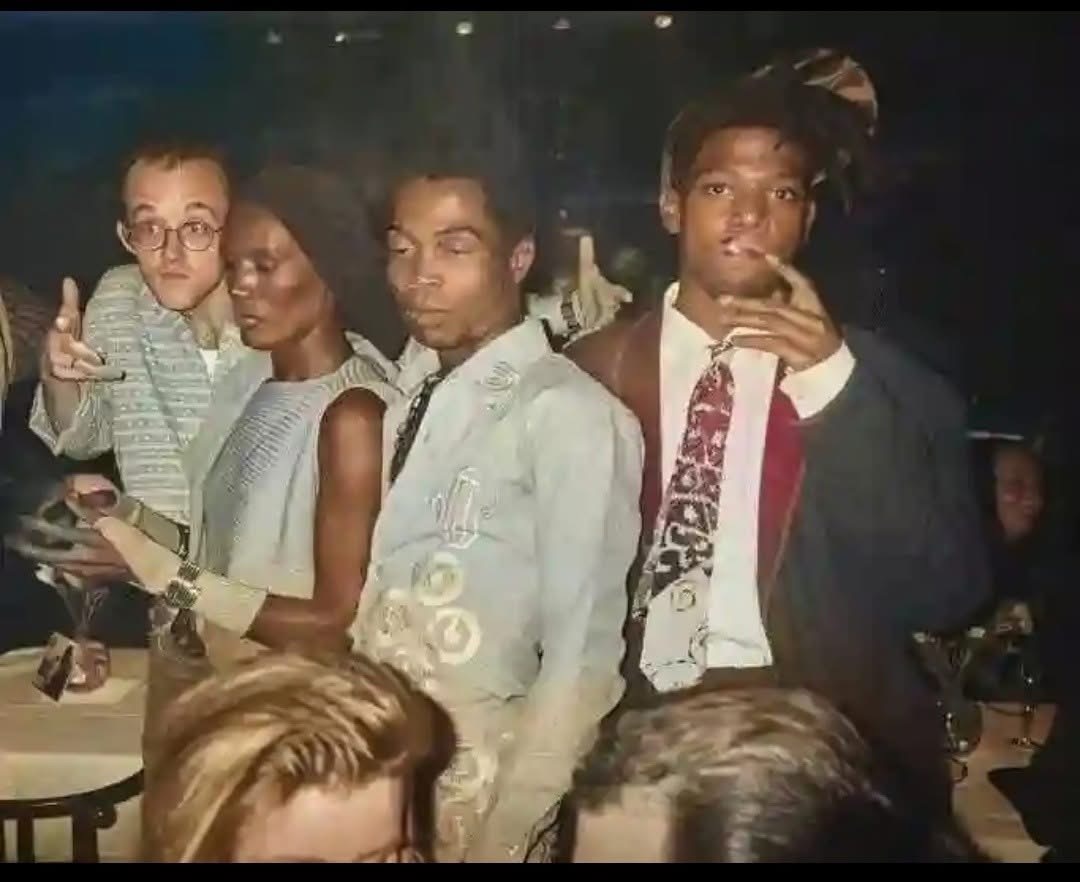
When Afrobeat intersected with 1980s New York’s vibrant art scene
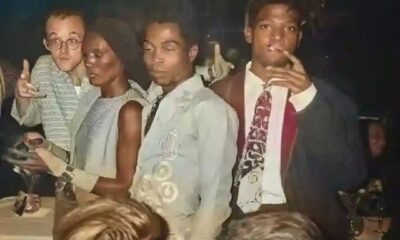
In 1986, Nigerian Afrobeat pioneer Fela Anikulapo Kuti traveled to New York, a global epicentre of music, fashion, and contemporary art. During this trip, he was photographed alongside three towering figures of the city’s cultural scene: Keith Haring, the revolutionary pop artist; Jean-Michel Basquiat, the celebrated neo-expressionist painter; and Grace Jones, the avant-garde singer, model, and performer.
A Convergence of Art, Music, and Activism
Fela Kuti, already a legend in Africa, was known for blending traditional Yoruba rhythms, jazz, funk, and highlife to create Afrobeat, a genre that carried sharp political commentary and a call for African liberation. By the mid-1980s, Fela had achieved international recognition not just as a musician but also as a cultural and political icon.
New York during this period was a magnet for creativity. Downtown Manhattan’s clubs, galleries, and lofts were vibrant meeting points for emerging artists, musicians, and activists. Keith Haring was transforming public spaces with his bold graffiti-inspired imagery that celebrated social activism and community engagement.
Jean-Michel Basquiat, rising from the SAMO graffiti project, was redefining contemporary painting with references to African diasporic history, jazz, and street culture. Grace Jones, with her fearless performances and striking fashion, blurred the lines between music, visual art, and theatricality.
The photograph of Fela with Haring, Basquiat, and Jones embodies a cross-cultural dialogue: African Afrobeat meeting New York’s avant-garde art scene. The collaboration of ideas, energy, and rebellion against social norms created a powerful synergy that celebrated creative freedom and social critique.
Fela’s Impact and Resonance
Fela’s presence in New York in the 1980s extended his influence beyond African music:
Cultural Ambassador: He introduced the global audience to Afrobeat rhythms and political narratives about Nigerian governance and African unity.
Political Voice: Fela used music as activism, critiquing dictatorship, corruption, and inequality, which resonated with New York artists tackling social injustice in their mediums.
Artistic Exchange: His meetings with Haring and Basquiat symbolize the blending of visual and musical arts, showing how African rhythms inspired and were inspired by contemporary Western art.
The Icons of 1980s New York
Keith Haring (1958–1990): His art addressed AIDS awareness, apartheid, and social inequities through a distinctive graffiti style.
Jean-Michel Basquiat (1960–1988): Known for paintings that combined text, imagery, and social commentary, often highlighting African heritage and identity.
Grace Jones (b. 1948): A music and fashion trailblazer, known for her theatrical performances, gender-bending style, and influence on New Wave and disco music.
A Symbolic Moment
The photograph is more than a casual gathering—it is a representation of global cultural exchange. Here was a Nigerian musician whose voice challenged power structures, standing with avant-garde artists who were also pushing boundaries in their respective fields. It highlights how African cultural expression influenced and was celebrated internationally.
This moment also reflects the 1980s as a period of experimentation, cross-pollination, and dialogue among music, fashion, and visual art, creating enduring legacies that continue to inspire generations.
Source:
Veal, Michael. Fela: The Life and Times of an African Musical Icon.
Haring, Keith. Keith Haring Journals.
Basquiat, Jean-Michel. The Radiant Child: The Life of Jean-Michel Basquiat.
Personal archives and historical photographs of Fela Kuti in New York, 1986.

Benita Enwonwu in the 1970s: Model, Actress, and Daughter of Ben Enwonwu

Kidnappers Took Loan With My Phone – Victim Recounts Ordeal

11 more arrested over Ozoro “r@ping festival”

-
Business1 year ago
US court acquits Air Peace boss, slams Mayfield $4000 fine
-

 Trending1 year ago
NYA demands release of ‘abducted’ Imo chairman, preaches good governance
-

 Politics1 year ago
Mexico’s new president causes concern just weeks before the US elections
-

 Politics1 year ago
Putin invites 20 world leaders
-

 Politics1 year ago
Russia bans imports of agro-products from Kazakhstan after refusal to join BRICS
-
Entertainment1 year ago
Bobrisky falls ill in police custody, rushed to hospital
-
Entertainment1 year ago
Bobrisky transferred from Immigration to FCID, spends night behind bars
-
Education2 years ago
GOVERNOR FUBARA APPOINTS COUNCIL MEMBERS FOR KEN SARO-WIWA POLYTECHNIC BORI