
Politics
Top Iranian general killed by same Israeli strike as Nasrallah

Story by Associated Press
The death of Gen. Abbas Nilforushan marks the latest Iranian casualty as the Israel-Gaza war threatens a wider regional conflict
A prominent general in Iran’s paramilitary Revolutionary Guard died in an Israeli air strike that killed Hezbollah leader Hassan Nasrallah in Beirut, Iranian media reported on Saturday.
The killing of Gen. Abbas Nilforushan marks the latest Iranian casualty suffered as the nearly year-long Israel-Gaza war in the Gaza Strip teeters on the edge of becoming a regional conflict. His death further ratchets up pressure on Iran to respond, even as Tehran has signalled in recent months that it wants to negotiate with the West over sanctions crushing its economy.
Nilforushan, 58, was killed on Friday in the strike in Lebanon in which Nasrallah died, the state-owned newspaper Tehran Times reported. Ahmad Reza Pour Khaghan, the deputy head of Iran’s judiciary, also confirmed Nilforushan’s death, describing him as a “guest to the people of Lebanon,” the state-run IRNA news agency said.
Do you have questions about the biggest topics and trends from around the world? Get the answers with SCMP Knowledge, our new platform of curated content with explainers, FAQs, analyses and infographics brought to you by our award-winning team.
Khaghan also reportedly said that Iran had the right to retaliate under international law.
Nilforushan served as the deputy commander for operations in the Guard, a role overseeing its ground forces. What he was doing in Lebanon on Friday wasn’t immediately clear. The Guard’s expeditionary Quds Force for decades has armed, trained, and relied on Hezbollah as part of its strategy to rely on regional militias as a counterbalance to Israel and the United States.
Nilforushan, like other members of the Guard that view Israel as Iran’s main enemy, long mocked and criticised the country.
“The Zionist regime has many ethnic, cultural, social, and military rifts. It is in a vulnerable and doomed [position] more than before,” Nilforushan said in 2022, according to an IRNA report.
The US Treasury sanctioned Nilforushan in 2022 and said he had led an organisation “directly in charge of protest suppression.” Those sanctions came amid the months-long protests in Iran over the death of Mahsa Amini following her arrest for allegedly not wearing her headscarf, or hijab, to the liking of police. At the time, Nilforushan accused Iran’s enemies abroad of stoking the demonstrations led by Iranian women that challenged both the mandatory hijab and the country’s theocracy.
Nilforushan also served in Syria, backing President Bashar al-Assad in his country’s decades-long war that grew out of the 2011 Arab spring. Like many of his colleagues, he began his military career in the Iran-Iraq war of the 1980s.
In 2020, Iranian state television called him a “comrade” of Gen. Qassem Soleimani, the head of its expeditionary Quds Force who was killed in a US drone attack in Baghdad that year.
Nilforushan’s death comes as Iran in recent months has been signalling it wants to change its tack with the West after years of tensions stemming from then-President Donald Trump’s unilateral withdrawal of the US from Tehran’s nuclear deal with world powers in 2018, the Joint Comprehensive Plan of Action (JCPOA).
In July, Iranian voters elected reformist President Masoud Pezeshkian following a helicopter crash that killed President Ebrahim Raisi, a hardline protege to 85-year-old Supreme Leader Ayatollah Ali Khamenei.
While critical of Israel, Pezeshkian has maintained that Iran is willing to negotiate over its nuclear programme, which now enriches uranium to near weapons-grade levels. While Iran has been able to sell oil abroad despite sanctions, it likely was at a steep discount, and energy prices have fallen further in recent weeks.
Meanwhile, Iran still threatens to retaliate for Soleimani’s killing and the suspected Israeli assassination in Tehran of Hamas leader Ismail Haniyeh in July. Iran has not explained why it has not struck yet, though an unprecedented direct attack it launched in April on Israel failed to seriously damage any major target.
More Articles from SCMP
Cathay Pacific reopens premium lounge at Hong Kong airport day after fire breaks out
China is ready with lunar spacesuit in latest step towards 2030 moon landing
Crowds buzzing for National Day-themed drone show over Hong Kong’s Victoria Harbour
China sends ‘deterrent message’ with missile intercept test near Indian border
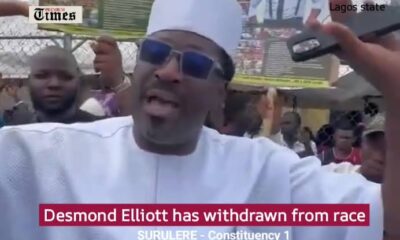




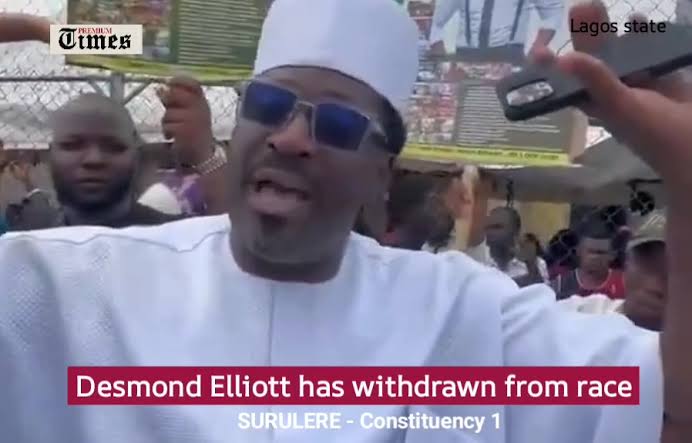
Surulere I lawmaker Desmond Elliot has withdrawn from the All Progressives Congress Lagos House of Assembly primaries, citing intimidation across multiple zones.
In a viral video posted online, the lawmaker said he was stepping out of the race despite seeking re-election under the APC. He alleged that his supporters faced intimidation during the process in several parts of the constituency.
Elliot’s decision came as the primaries held across Lagos on Tuesday. Chief of Staff to the President Femi Gbajabiamila, who represents Surulere Federal Constituency, praised the conduct of the exercise in Surulere, describing it as peaceful.
The withdrawal narrows the contest for the APC ticket in Surulere I ahead of the 2027 general election. Party officials in Lagos have not yet responded to Elliot’s claims, and the APC state chapter has not announced whether the primary in the constituency will proceed with other aspirants.
Elliot has represented Surulere I in the Lagos State House of Assembly since 2015.
https://www.instagram.com/reel/DYkCaAiMxxt/?igsh=ZWw5czl6MHJhNnRy
Politics
Political Shockwave in Rivers as Fubara Pulls Out of APC Governorship Race, Backs Party’s Candidate
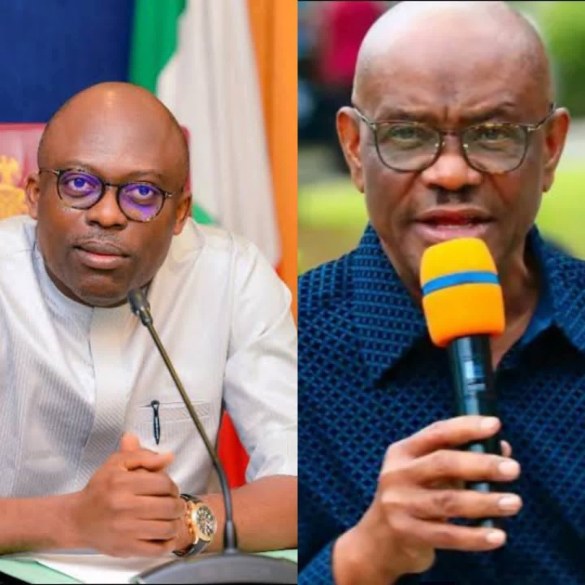
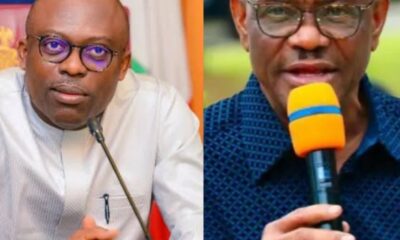
Rivers State Governor, Siminalayi Fubara, has officially withdrawn from the All Progressives Congress (APC) governorship primaries scheduled to take place on Thursday, a development that has stirred fresh political conversations across the state.
The governor announced his decision in a personally signed statement titled “My Decision to Withdraw from the Rivers State Gubernatorial Primaries,” which was released on Wednesday night.
In the statement, Fubara explained that his withdrawal followed wide consultations with political associates, stakeholders, and supporters. He stated that the decision was taken in the overall interest of peace, unity, and stability within the APC and Rivers State at large.
According to the governor, politics should not be allowed to divide the people or create unnecessary tension within the party. He stressed that preserving unity among party members and maintaining stability in the state remain more important than personal political ambition.
Fubara further pledged his total loyalty and support to whoever eventually emerges as the APC governorship candidate, assuring party faithful that he remains committed to the success and progress of the party ahead of the next general elections.
The Rivers governor also appreciated his supporters across the state for standing by him throughout the political process. He thanked party leaders, youth groups, women supporters, and political associates who had continued to show him solidarity and encouragement.
He urged his supporters not to see his withdrawal as the end of his political journey, but rather as a decision made in the collective interest of the party and the state. He also appealed to them to remain peaceful, united, and committed to the ideals of the APC.
Political observers have described the development as one of the biggest political surprises in Rivers State in recent times, especially considering the growing speculations and intense political alignments ahead of the governorship primaries.
Analysts believe the governor’s withdrawal may reshape the political calculations within the APC and influence the direction of the party’s governorship race moving forward.
The announcement has continued to generate mixed reactions from political stakeholders and residents across Rivers State. While some supporters described the move as strategic and mature, others expressed surprise over the governor’s sudden exit from the contest.
Several party faithful, however, commended Fubara for placing party unity and stability above personal ambition, noting that his decision may help reduce internal tensions and strengthen the APC ahead of the elections.
The development has also intensified attention on the remaining aspirants contesting for the APC governorship ticket, as consultations and political meetings continue ahead of the primary election.
Many observers believe the governor’s endorsement of the eventual APC candidate could play a major role in shaping the outcome of the party’s governorship battle and future political structure in the state.
As political activities continue to gather momentum in Rivers State, all eyes are now on the APC primaries and the next phase of political developments expected to unfold in the coming days.
Politics
Ugochukwu Obodo wins Owerri Municipal APC ticket again as APC Elects 27 Imo Assembly Candidates After Successful Primaries
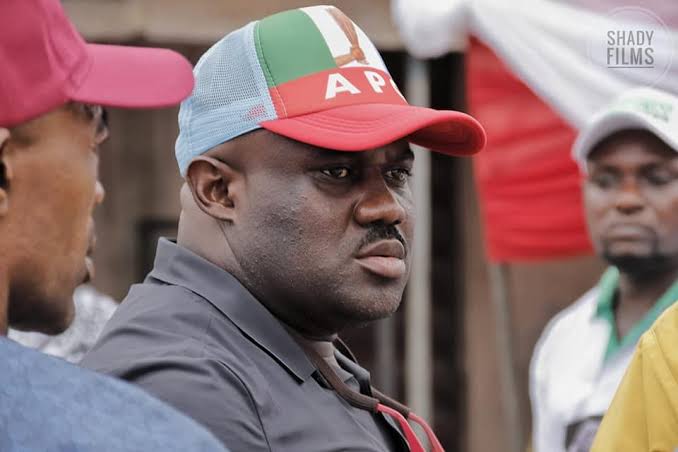
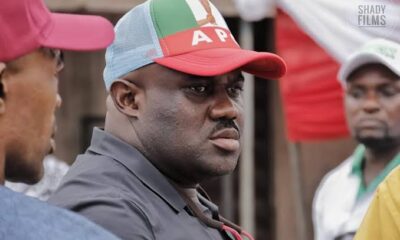
The leadership and members of the All Progressives Congress (APC) in Imo State have successfully elected 27 candidates who emerged victorious during the recently concluded Imo State House of Assembly primary elections conducted across the 305 wards of the State.
In a statement obtained by ThePressman Newspaper, the leadership of Imo APC described the primary election exercise as peaceful, transparent, credible, and reflective of the democratic ideals and internal cohesion of the party.
The information from the party commended party faithful, delegates, stakeholders, and supporters for their maturity, discipline, unity, and sportsmanship throughout the electoral process, noting that the successful conduct of the primaries further demonstrated the organizational strength and readiness of the APC ahead of the 2027 general elections.
According to the statement, the outcome of the primaries reaffirmed the confidence reposed in the party by members across the State, while also positioning the APC for a formidable outing in the forthcoming elections.
The Imo APC leadership warmly congratulated the party’s standard bearers who emerged across the 27 State Constituencies, namely:
Uchenna Osigwe – Orsu LGA
Chantel Adanna Onwumere – Ikeduru
Obodo Ugochukwu – Owerri Municipal
Hon. Ernest Udeze – Ideato North
Godspower Onyeibe – Ideato South
Mrs Julie Egbo – Owerri North
Rt. Hon. Kanayo Onyemaechi – Owerri West
Prince Marcel Amadioha – Ohaji Egbema
Hon. Gilbert Nwosu – Oguta
Hon. Uche Obiozor – Oru East
Hon. Emeka Agbor – Oru West
Rt. Hon. Obinna Egu – Ngor-Okpala
Hon. Magnus Okolie – Orlu
Hon. Innocent Ikpamezie – Mbaitoli
Hon. Modestus Osakwe – Isu
Hon.Ebonine Ozioma Worship – Njaba
Rt Hon Amarachi Chyna Iwuanyanwu – Nwangele
Hon. Chisom Ojukwu – Nkwerre
Hon. Doris Anyanwu – Ahiazu Mbaise
Hon. Princewill Amuchie – Aboh Mbaise
Hon. Henry Agbasonu – Ezinihitte Mbaise
Hon. Sam Osuji – Isiala Mbano
Ben Ozoemenam – Ehime Mbano
Hon. Emeka Okoronkwo – Okigwe
Prince Humphrey Okeke – Obowo
Lady Blessing Nwoba – Ihitte-Uboma
Hon. Chibuzor Umunnakwe – Onuimo
The party further expressed confidence that the emergence of the candidates would strengthen the APC’s chances of securing victory across the State during the 2027 general elections.

Desmond Elliot Withdraws from APC Lagos Assembly Primaries, Cites Intimidation

Political Shockwave in Rivers as Fubara Pulls Out of APC Governorship Race, Backs Party’s Candidate

Ugochukwu Obodo wins Owerri Municipal APC ticket again as APC Elects 27 Imo Assembly Candidates After Successful Primaries

-
Business2 years ago
US court acquits Air Peace boss, slams Mayfield $4000 fine
-

 Trending2 years ago
NYA demands release of ‘abducted’ Imo chairman, preaches good governance
-

 Politics2 years ago
Mexico’s new president causes concern just weeks before the US elections
-

 Politics2 years ago
Putin invites 20 world leaders
-

 Politics2 years ago
Russia bans imports of agro-products from Kazakhstan after refusal to join BRICS
-
Entertainment2 years ago
Bobrisky falls ill in police custody, rushed to hospital
-
Entertainment2 years ago
Bobrisky transferred from Immigration to FCID, spends night behind bars
-
Education2 years ago
GOVERNOR FUBARA APPOINTS COUNCIL MEMBERS FOR KEN SARO-WIWA POLYTECHNIC BORI