
Tech
Trading platform users deny crash claim

Some users of CBEX, a digital asset trading platform, have dismissed trending reports that it has crashed.
This comes amid concerns over the operations of the platform, with some users warning that it showed signs of being a Ponzi scheme.
Our correspondent gathered that there are growing concerns about the platform’s stability, with many users fearing that their money is now stuck.
While some warned that CBEX could be a potential Ponzi scheme on the brink of collapse, others continued to defend the platform, insisting it remained a legitimate operation.
An X user, Viktor Benson (@viktorbensonyt), claimed that some users had been logged out of their accounts and might not be able to retrieve their money.
The post read, “You need to go to the platform to download the app and you tell yourself that platform is legit. Now you have put money and the website has crashed, and you can’t withdraw. Although people are saying that it is a temporary issue and I like being optimistic that by Monday one will be able to withdraw. Let us wait till Monday; hopefully, you can withdraw your money.”
Meanwhile, another X user, @BlessedAjoke, countered the crash claims, saying, “CBEX is still working perfectly, just that you can’t withdraw until the 15th of April. You people should stop spreading fake news. Stop giving people heart attacks nah.”
Another user, @0kparam, criticised those celebrating the platform’s possible collapse.
“Y’all are acting like CBEX crashing makes you financial sages. Nah, it just makes you bitter haters… Ponzi, yen yen yen. Just stfu, coward,” he wrote.
Speaking to Sunday Ekwutos, three other users confirmed that the platform was still functioning, although withdrawals were currently not possible due to the platform’s rules and regulations.
One of the users, Sodiq Dayo, said he was still actively trading on the platform and noted that the issue with withdrawals would be resolved by Tuesday.
“The platform is still working. The reason why the withdrawal is not functioning at the moment is because of some rules and regulations of the platform, and this will be resolved by Tuesday,” he said.
Another CBEX user, Alli Lanre, stated that as long as users could access the platform, there was no issue.
He advised users not to worry or develop hypertension over rumours of the platform’s crash.
Gbenga Adeboye, another user, expressed both optimism and pessimism, saying, “Basically, no one can withdraw unless the trading volume is completed. However, they promised the whole issue would be over by the 15th.”
Reacting to the issue, a financial expert, Aliyu Ilias, noted a regulatory gap in monitoring online financial businesses in Nigeria.
He stressed the need for continuous oversight from the National Information Technology Development Agency and the Central Bank of Nigeria to discourage unclear financial investments, whether Ponzi schemes or otherwise.
Ilias said, “Nigerians should be cautious of quick-income platforms that could crash at any point in time. The government has a responsibility to fish out the sponsors of these Ponzi platforms, even if they are operating in the cloud.”
A cryptocurrency expert, Kayode Olagunju, also emphasised that Ponzi schemes like CBEX should not be encouraged in the country.
He added that it was shameful that Nigerians continue to fall victim to scams despite the education and warnings provided by crypto experts.
“It is a slap in the face of intellectuals who have written so many articles and guides to help people with zero knowledge about cryptocurrencies. Crypto is vast; it is in the same class as the stock market,” he said.
Checks by our correspondent on the official website of the trading platform revealed that it remained accessible.
However, messages sent by Sunday Ekwutos to the email address listed on the CBEX website were undeliverable at the time of filing this report.









Google is acquiring energy infrastructure company ‘Intersect’ for $4.75 billion (approximately 7 trillion Korean won) to secure the power needed for its AI (artificial intelligence) data centers. The move aims to address the power issue, the biggest hurdle in expanding data centers. Google, which developed the ‘Gemini’ AI, is a so-called ‘AI full-stack’ company equipped with all AI-related technologies and services, including AI chips and cloud (virtual servers). The strategy is to directly manage the energy infrastructure needed to actually operate AI as well.
Reuters reported on the 22nd (local time) that Google is acquiring Intersect for $4.75 billion in cash. Google already holds a minority stake in Intersect, and through this acquisition, it will also secure the gigawatt (GW)-level energy and data center projects that Intersect is developing and constructing. Intersect is expected to be responsible for building Google’s data center power infrastructure in the U.S., based on its technology linking power generation facilities and power grids.
Sundar Pichai, CEO of Google and Alphabet, said, “Intersect will enable us to build power infrastructure more quickly and flexibly in line with the increasing demand for AI data centers,” adding, “It will also be an important partner in strengthening America’s energy innovation and technological leadership.”
Bloomberg reported that Intersect’s energy assets currently in operation or under construction in the U.S. amount to $15 billion (approximately 22.2 trillion Korean won).
◇Google increasing energy investments
Google has recently been increasing its investments in the energy sector. Although the company possesses AI chips (TPUs), Gemini, and search and cloud services, stable energy supply is essential to support these businesses.
To this end, Google is also investing in nuclear power technology. In October of last year, it signed a long-term cooperation agreement with small modular reactor (SMR) startup ‘Kairos Power’ to secure up to 500 MW (megawatts) of power. It is noted as the first case among big tech companies to publicly declare securing SMR-based power. Additionally, in August, Google and Kairos Power announced plans to build the next-generation SMR ‘Hermes 2’ in Oak Ridge, Tennessee. The goal is to commence operation in 2030.
Google is also restarting previously shut-down nuclear power plants to secure energy. In October, it announced that it will collaborate with ‘NextEra Energy’ to restart the Duane Arnold Nuclear Generating Station in Iowa, which was closed in 2020. The target restart period is between 2028 and 2029.
Google is also investing in renewable energy such as geothermal power. Since 2023, it has been supplying power to data centers through geothermal power generation with ‘Fervo Energy’ in Nevada, U.S.
Google is also actively investing in next-generation energy technologies that are not yet commercialized. In 2022, it made a large-scale investment in ‘TAE Technologies,’ which possesses nuclear fusion technology. Nuclear fusion power generation is a technology that applies the principle of energy creation in the sun, combining atomic nuclei to produce energy. It is called the ‘dream energy’ because it has abundant fuel resources, emits no carbon, and, unlike conventional nuclear power plants, does not produce high-level nuclear waste. However, it is assessed that more time is needed for commercialization due to technical challenges. Recently, TAE Technologies has accelerated the commercialization of fusion energy by merging with Trump Media Group (TMTG).
Tech
“I Lost $1.2 Million To Hackers On One Of My Apps. I Caught One Of The Hackers, And Instead Of Handing Him Over To The Police, I Employed Him To Work For Me.”- BLord

Anambra Born tech entrepreneur and businessman Linus Williams, popularly known as BLord, has shared an unusual story about how he handled a major cyberattack on one of his applications.
According to BLord, he lost $1.2 million to hackers who infiltrated one of his digital platforms. In the course of tracking the incident, he successfully identified one of the individuals involved in the breach.
Rather than handing the suspect over to security agencies, BLord said he made a strategic decision: he employed the hacker.
He explained that the hacker’s skills, though misapplied, were exceptional and could be redirected towards strengthening his company’s cybersecurity systems.
BLord noted that the decision was driven by a desire to turn a negative experience into an opportunity for growth and to better secure his business infrastructure.
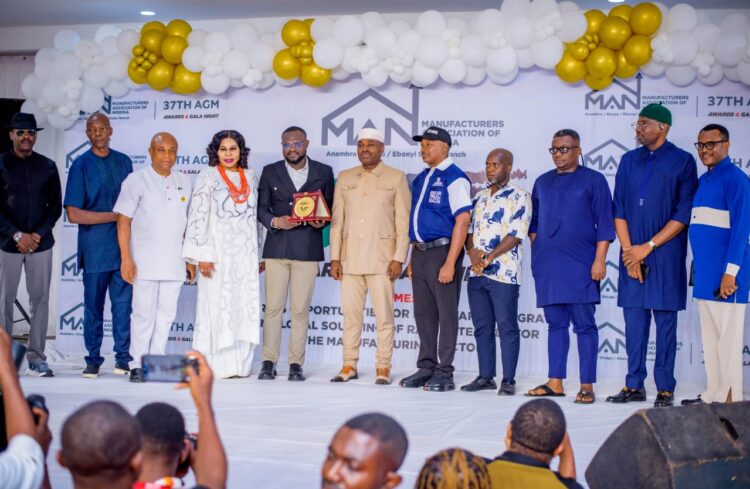
The MD/CEO of John Zobis Group, Mr. John Ezeobi, has again been honoured with another major industry prize in recognition of his contributions to local sourcing, innovation and the growth of Nigeria’s manufacturing capacity.
The prestigious award, “Pillar of Industrial Enterprise and National Impact,” which was conferred on him by the Manufacturers Association of Nigeria (MAN) — Anambra, Ebonyi and Enugu Zone, was presented during the association’s 37th Annual General Meeting, Awards & Gala Night at the International Conference Centre, Enugu.
coming barely three weeks after Ezeobi was nominated as the winner of The Sun’s Industrialist of the Year Award 2025 by the Management of The Sun Newspaper, a run of recognition that has further highlighted his rising profile in the South-East manufacturing ecosystem.
The latest award, it was gathered, celebrates Ezeobi’s deliberate investment in backward integration, his push for local sourcing of raw materials and efforts to strengthen domestic value chains, which MAN described as essential to reducing import dependence and creating jobs across the region.
Chaired by Chief Obinna Iyiegbu (Obi Cubana), the well-attended occasion, themed “Exploring Opportunities for Backward Integration and Local Sourcing of Raw Materials for the Manufacturing Sector,” brought together regulators, policymakers, manufacturers and industry stakeholders and also featured presentations, panel sessions and cultural performances, among other highlights.
Speaking at the event, the Keynote Speaker and Director-General of the Raw Materials Research and Development Council (RMRDC), Prof. Nnanyelugo Ike-Muonso, said the economic benefits of exploring Opportunities for backward integration and local sourcing of raw materials for the Manufacturing sector cannot be overemphasized.
Prof. Ike-Muonso told delegates that Nigeria spent over ₦3.53 trillion importing raw materials in the first half of 2025 alone, warning that such dependence continues to weaken the nation’s economy. He further argued that the proposed 30% Value Addition Bill, which would require a minimum local value addition before export, would be transformational if signed into law.
He also outlined the bill’s potential to expand GDP, generate hundreds of thousands of jobs and save foreign exchange by keeping more of the country’s raw-material wealth in domestic supply chains, boost local manufacturing, and generally reposition Nigeria as a regional industrial hub.
On his own part, the Governor of Enugu State, Dr. Peter Mbah, endorsed the call for stronger industry-academia partnerships and urged financial institutions to make affordable credit available to manufacturers who adopt backward integration. The governor, who was represented by his Deputy, Barrister Ifeanyi Ossai, described the policy pathway as key to moving Nigeria from resource export dependence toward higher-value industrial output.
Reacting via his social handle shortly after receiving the award, the Zobis Cable Boss expressed gratitude for the honour, describing it as a strong motivation to do more in driving local production, reducing import dependence, and strengthening Nigeria’s industrial base.
Ezeobi, who received the plaque from pioneer Nollywood star and legal practitioner, Barr. Kenneth Okonkwo, attested that the AGM provided a critical platform for renewed commitment to backward integration as a pathway to sustainable industrial development.
“The event highlighted the critical importance of backward integration and local sourcing of raw materials as strategic levers for strengthening domestic production, reducing import dependency, and building resilient, self-sustaining industries. A meaningful platform for driving progress and collaboration across Nigeria’s manufacturing sector,” he partly wrote.
Also speaking, the Chairman of MAN for the Anambra-Ebonyi-Enugu zone, Dr. Adaora Chukwudozie, described local sourcing as the pragmatic route to lowering production costs and stabilizing supply chains for SMEs and larger manufacturers alike. She welcomed RMRDC’s roadmap and invited state governments to partner in establishing raw-material corridors and shared processing facilities that would bring inputs closer to factories.
The event, which had His Eminence, Eze Eberechukwu Orji, Eze Aro, as the Royal Father of the Day, was also graced by other notable dignitaries and stakeholders, which include Senator Osita Izunaso, Dr. Gideon Chidiebere Osi, Ichie Sunday Ezeobiora , Chairman, Sunchi Farms; Mr Linus Williams Ifejika, Chairman Blord Group; Otumba Francis Meshioye, National President, Manufacturers Association of Nigeria; Dr. Ifeanyi Okoye, Chairman, Juhel Pharmacy; Chief Dr. Dan Chukwudozie, Chairman,Dozzy Group; Dr. Chike Obidigbo,Chairman, Hardis and Dromedas; Anambra Commissioner for Trade and Industry,Mr. Christian Udechukwu.














Benita Enwonwu in the 1970s: Model, Actress, and Daughter of Ben Enwonwu

Kidnappers Took Loan With My Phone – Victim Recounts Ordeal

11 more arrested over Ozoro “r@ping festival”

-
Business1 year ago
US court acquits Air Peace boss, slams Mayfield $4000 fine
-

 Trending1 year ago
NYA demands release of ‘abducted’ Imo chairman, preaches good governance
-

 Politics1 year ago
Mexico’s new president causes concern just weeks before the US elections
-

 Politics1 year ago
Putin invites 20 world leaders
-

 Politics1 year ago
Russia bans imports of agro-products from Kazakhstan after refusal to join BRICS
-
Entertainment1 year ago
Bobrisky falls ill in police custody, rushed to hospital
-
Entertainment1 year ago
Bobrisky transferred from Immigration to FCID, spends night behind bars
-
Education2 years ago
GOVERNOR FUBARA APPOINTS COUNCIL MEMBERS FOR KEN SARO-WIWA POLYTECHNIC BORI