
Politics
Ukraine’s Zelenskyy in Berlin for ‘victory plan’ talks

Ukrainian President Volodymyr Zelenskyy continues his whirlwind tour of European capitals, presenting his ‘victory plan’ to end the war. German Chancellor Scholz has promised continued support.
Volodymyr Zelenskyy is meeting with German Chancellor Olaf Scholz in Berlin for talks on securing support for Kyiv’s “victory plan” to end the war.
Scholz told a press conference alongside Zelenskyy that Germany would not allow “Russia to dictate terms of peace.”
However, both leaders said they wanted to achieve a “just peace” for Ukraine, and indicated a desire for talks with Russia, something neither country has often said since Russia invaded in early 2022.
Zelenskyy’s stop in Berlin comes after he met with European leaders in London, Paris and Rome on Thursday.
Here are the latest developments on Russia’s war in Ukraine from Friday, October 11:
Why Zelenskyy’s Germany visit no longer includes a Biden meeting
The Ukrianian president’s European whirlwind tour was originally supposed to culminate with talks with President Joe Biden, just a matter of weeks before elections in the US.
However, these plans changed when Biden said he would cancel his trip to the US’ Ramstein Air Base in Germany to chair a meeting of the Ukraine Contact Group.
Biden said he would stay behind to help deal with the aftermath of Hurricane Milton instead.
Two hurricanes in fairly short succession hitting the southeast of the US have turned into something of an election football in recent weeks, even though presidents typically never visit disaster areas until the immediate danger is passed — for fear that their presence and the resources this demands detracts from rescue efforts.
The election on November 5 could prove decisive for Ukraine and its European allies in 2025, particularly in the event that Republican candidate Donald Trump wins.
However, western leaders including new NATO Secretary General Mark Rutte have been trying to play down this prospect this week. Rutte said in London on Thursday, also in Zelenskyy’s presence, that he had no concerns about a potential future Trump administration withdrawing support for Ukraine.
Scholz: Western support key to show Putin ‘playing for time won’t work’
German Chancellor Olaf Scholz said continued support for Ukraine was crucial in order to make it clear to Russian President Vladimir Putin that “playing for time will not work” in the conflict.
Appearing alongside Ukrainian President Volodymr Zelenskyy in Berlin, Scholz said Germany’s support for Kyiv would not waver.
He also said that this conviction would also be the basis “on which we together explore all possibilities for routes towards a just and lasting peace for Ukraine.”
Scholz said that he and Zelenskyy were agreed that there should be another peace conference, and that Russia should participate this time.
“What’s clear is that a realization of peace can only come to pass in accordance with international law,” Scholz said, adding “we will not accept any peace dictated by Russia.”
Zelenskyy thanks Scholz for pledging new military aid
Ukrainian President Volodymyr Zelenskyy thanked Germany and Scholz for their “strong support” for Ukraine, and also for fresh pledges for funding in 2025.
At a meeting with Zelenskyy in Berlin, Scholz announced a €1.4 billion ($1.53 billion) military aid package by the end of 2024.
“We need to think about next year, and to think about keeping up the level of support,” Zelenskyy said.
He said German assistance in areas like air defense “saves thousands of Ukrainian lives and gives our villages and cities a chance to protect ourselves.”
He noted more advanced weaponry Germany sent, often after some internal delays and discussions, including IRIS-T surface-to-air missile systems and “Gepard” or “Cheetah” armored vehicles.
Zelenskyy said his country wanted a “just peace” and “victory” against Russia, and, like Scholz, accused Russia of having no interest in talks.
“We see that Russia is not interested in honest diplomacy or in ending this war according to the UN statutes.
“We demand a just peace for Ukraine, a victory for us, and that is what we are working on every day,” he said.
He said that, to this end, he wanted to present Scholz with Kyiv’s plan “as to how we believe we can force Russia to agree to peace and end this war.”
“We would like this to happen next year, 2025,” he said but also said “we have to build a bridge to a peace summit that generates results that can draw a line under this war.”
He concluded by saying he believed that “together with our partners,” this plan could be realized, and “we are counting on German support.”
Germany’s 2024 budget earmarks €7.1 billion for Ukraine military assistance in 2024, and foresees €4 billion for 2025.
Scholz pledges help defending and mending electricity infrastructure
Chancellor Olaf Scholz told Volodymyr Zelenskyy that Germany would remain a major donor, the second largest in gross terms, for Ukraine this year and next.
“I can promise you that this will continue,” Scholz said alongside Zelenskyy in Berlin.
The chancellor also referred to Ukraine’s energy infrastructure as “the third winter in this murderous war approaches.”
He said that Russia was intentionally targeting Ukraine’s power generation and supply facilities, in order to break the endurance of the civilian population, clearly that is Putin’s aim.”
Germany would “help Ukraine in very specific terms” in this area, Scholz said, noting fresh funds and other agreed measures seeking to assist.
Zelenskyy arrives in Berlin for Scholz talks
Volodymyr Zelenskyy touched down in Berlin on Friday, television footage showed, with Chancellor Olaf Scholz greeting him at his offices.
The Ukrainian president and German chancellor could be seen walking away from the helicopter Zelenskyy had arrived in.
German FM hails anti-nuclear weapon Nobel Peace Prize as ‘aggressive powers’ again threaten their use
Germany’s Foreign Minister Annalena Baerbock praised the decision to give the Nobel Peace Prize to the Japanese anti-nuclear weapons group Nihon Hidankyo on Friday.
Without mentioning Russia by name, she seemed to indicate it also served as a signal in Moscow’s direction.
“Particularly in times, when aggressive powers are again threatening the use of nuclear weapons, it is all the more important that the world makes clear what peace means,” Baerbock said. “Peace means that such weapons are never used.”
Baerbock was speaking alongside her Slovakian counterpart, Juraj Blanar, who visited Berlin for talks on Friday.
The German foreign minister also appealed for more support for Ukraine’s air defense, saying Russian attacks on Ukrainian energy infrastructure with winter approaching were an attempt “to force people in Ukraine into a brutal and cold war.”
Baerbock said roughly two-thirds of Ukraine’s energy facilities had been damaged or destroyed.
She said that Ukraine’s President Zelenskyy, expected soon after in Berlin, was “ready for a just peace,” but alleged that the same could not be said of Russia’s Vladimir Putin.
Nobel laureate warns against use of nuclear weapons in Ukraine
The co-chair of the Japanese atomic bomb survivors’ group Nihon Hidankyo, which was awarded the Nobel Peace Prize on Friday morning, has made an emotional plea against the use of nuclear weapons in Ukraine and other conflicts.
“It has been said that because of nuclear weapons, the world maintains peace. But nuclear weapons can be used by terrorists,” Toshiyuki Mimaki said.
“For example, if Russia uses them against Ukraine, Israel against Gaza, it won’t end there. Politicians should know these things.”
German FM says Putin unwilling to speak with Scholz
Russian President Vladimir Putin is not willing to discuss the war in Ukraine with German Chancellor Olaf Sholz, Germany’s foreign minister said on Friday.
“He refuses to accept peace and every day sends another signal in favor of war and destruction. These days, he is no longer even prepared to speak to the German chancellor on the phone,” Annalena Baerbock told reporters in Berlin.
The comments come hours after a national poll found that a majority of Germans want the two leaders to speak over the phone.
Zelenskyy and Pope Francis exchange gifts
Pope Francis held a private meeting with Ukrainian President Volodymyr Zelenskyy at the Vatican City on Friday morning.
The two leaders exchanged gifts at the end of the 35-minute meeting.
Francis gifted the Ukrainian leader a bronze sculpture of a flower growing next to a bird, inscribed with the phrase “Peace is a fragile flower.”
Zelenskyy gave the pope an oil painting depicting a child amid ruins in Bucha, a town that Russian forces occupied for 33 days in 2022.
The pope has frequently called for peace in Ukraine and prays for its “martyred” people. However, he sparked outrage in Kyiv earlier this year after an interview where he called on Ukrainians to “raise the white flag and negotiate.”
Friday’s meeting was Zelenskyy’s second private audience at the Vatican since the Russian invasion of Ukraine in February 2022.
Earlier, on Thursday, Francis also met with the head of the Ukrainian Greek Catholic Church, Major Archbishop Sviatoslav Shevchuk.
Ukraine says it controls half of key Donetsk city
Ukraine controls around half of the strategically important city of Toretsk in the east, Ukrainian officials said on Friday.
The Ukrainian military has reported eight clashes around the hilltop city in the Donetsk region over the past day.
It comes as Russian forces have gradually pushed further into Ukraine in recent weeks.
“Approximately 40-50% of the city can be said to be under the control of the Ukrainian armed forces, while the rest of the territory is captured by the enemy,” said Vasyl Chynchyk, head of Toretsk city military administration.
Chynchyk said that around 1,150 people remain in the city, with evacuations continuing.
Russian strikes on Odesa kill 4
At least four people were killed by Russian strikes on Odesa overnight, Ukrainian authorities said on Friday morning.
Regional Governor Oleg Kiper said the Russian strikes destroyed a two-storey building in the Black Sea port city.
“The enemy attacked the Odesa region with ballistic missiles. Four people were killed, including a teenager,” Kiper said on social media.
Another 10 people were wounded, he added.
Most Germans want Scholz and Putin to talk — survey
A majority of Germans want Chancellor Olaf Scholz to speak with Russian President Vladimir Putin, according to a survey released on Friday.
The poll was conducted by opinion research institute YouGov on behalf of Germany’s DPA news agency.
The results showed that 59% of respondents were in favor of the two leaders talking over the phone, while 26% opposed it and 15% did not provide an answer.
The figure increased in eastern Germany, where 68% of the respondents said they wanted the two leaders to talk, compared to 19% who said they opposed it.
Putin and Scholz have almost entirely not spoken since Russia invaded Ukraine in February 2022.
Putin arrives in Turkmenistan for regional summit
Russian President Vladimir Putin arrived in Turkmenistan on Friday ahead of a summit hosted by Ashgabat where he is due to speak, Russian state media reported.
Regional leaders including Iran’s President Masoud Pezeshkian are set to attend the event.
Putin is also due to hold talks with Turkmen President Serdar Berdymukhamedov.
Zelenskyy to meet with Olaf Scholz, Pope Francis
Ukrainian President Volodymyr Zelenskyy will continue his two-day European tour on Friday.
He is set to meet with Pope Francis at the Vatican City on Friday morning, before traveling to Germany.
In Berlin, Zelenskyy will hold talks with Germany’s Chancellor Olaf Scholz and President Frank-Walter Steinmeier.
The leaders are expected to discuss arms deliveries as well as a potential peaceful solution to the conflict.
Zelenskyy’s planned meetings on Friday follow similar talks in London, Paris and Rome on Thursday.





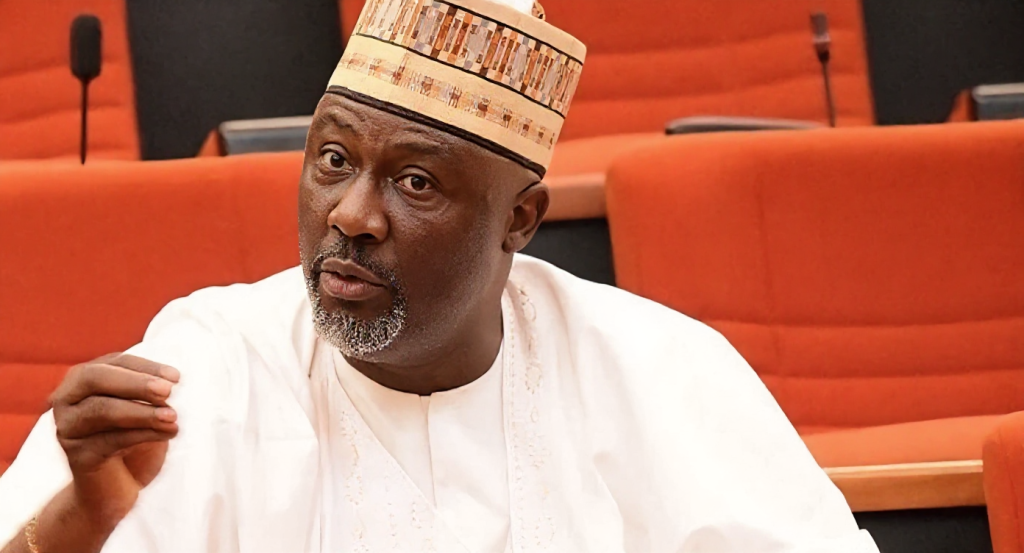
Former lawmaker, Dino Melaye Esq, has raised concerns over the Senate’s reported rejection of the electronic transmission of election results.
The move, according to Melaye, is a clear endorsement of election rigging and an indication of a sinister plan to rig the 2027 elections.
In a statement on Friday, the former lawmaker criticized the Senate’s decision, stating that it undermines the credibility of the electoral process.
The African Democratic Congress, ADC chieftain, also stated that the move opens the door for electoral manipulation and fraud.
He further warned that the rejection of electronic transmission of results is a step backwards for democracy in Nigeria.
Melaye called on lawmakers and citizens to stand up against “this blatant attempt to undermine the will of the people and ensure that future elections are free, fair, and transparent”.
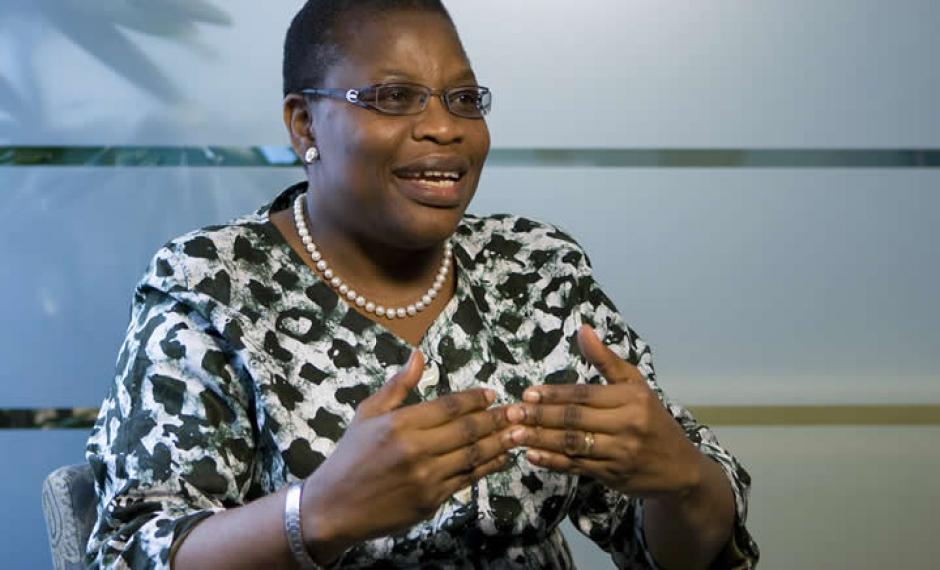
Former Minister of Education, Oby Ezekwesili, has said Nigerians have every reason to be mad at the Senate over the ongoing debate on e-transmission of election results.
Ezekwesili made this known on Friday when she featured in an interview on Arise Television’s ‘Morning Show’ monitored by DAILY POST.
DAILY POST reports that the Senate on Wednesday turned down a proposed change to Clause 60, Subsection 3, of the Electoral Amendment Bill that aimed to compel the electronic transmission of election results.
Reacting to the matter, Ezekwesili said, “The fundamental issue with the review of the Electoral Act is that the Senate retained the INEC 2022 Act, Section 60 Sub 5.
“This section became infamous for the loophole it provided INEC, causing Nigerians to lose trust. Since the law established that it wasn’t mandatory for INEC to transmit electoral results in real-time, there wasn’t much anyone could say.
“Citizens embraced the opportunity to reform the INEC Act, aiming to address ambiguity and discretionary opportunities for INEC. Yet, the Senate handled it with a “let sleeping dogs lie” approach. The citizens have every reason to be as outraged as they currently are.”
Politics
Electoral act: Senate’s action confirms Nigeria ‘fantastically corrupt’, ‘disgraced’ – Peter Obi
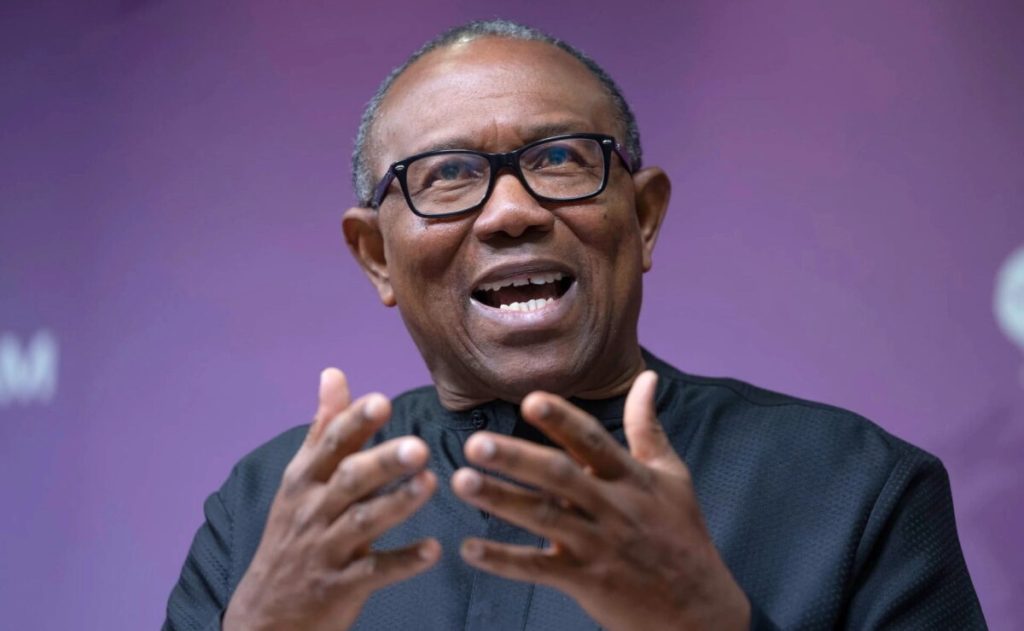
Former Labour Party presidential candidate, Peter Obi, has condemned the Senate’s refusal to make electronic transmission of election results mandatory, saying the move further exposes Nigeria as a fantastically corrupt and disgraced country.
Obi expressed his views in a statement shared on X on Friday, where he accused lawmakers of deliberately weakening Nigeria’s democratic process ahead of the 2027 general elections.
He explained that his reaction came after a brief pause to mourn victims of a deadly tragedy in Kwara State, where over 150 people reportedly lost their lives.
“Let us first pray for the souls of the innocent Nigerians lost in Kwara. That painful incident is why I delayed responding to the shameful development surrounding our electoral system,” he wrote.
Describing the Senate’s decision as intentional and dangerous, Obi said rejecting mandatory electronic transmission was not a simple oversight but a calculated attempt to block transparency.
“The Senate’s open rejection of electronic transmission of results is an unforgivable act of electoral manipulation ahead of 2027,” he said.
According to him, the action strikes at the heart of democracy and raises serious questions about the true purpose of governance in Nigeria.
“This failure to pass a clear safeguard is a direct attack on our democracy. By refusing these transparency measures, the foundation of credible elections is being destroyed. One must ask whether government exists to ensure justice and order or to deliberately create chaos for the benefit of a few.”
The former Anambra State governor linked the post-election controversies of the 2023 general elections to the failure to fully deploy electronic transmission of results, insisting that Nigerians were misled with claims of technical failures.
“
The confusion, disputes and manipulation that followed the 2023 elections were largely due to the refusal to fully implement electronic transmission,” he said.
He added that the so-called system glitch never truly existed.
Obi compared Nigeria’s electoral process with those of other African countries that have embraced technology to improve credibility, lamenting that Nigeria continues to fall behind.
“Many African nations now use electronic transmission to strengthen their democracy. Yet Nigeria, which calls itself the giant of Africa, is moving backwards and dragging the continent along.”
He criticised Nigeria’s leadership class, saying the country’s problems persist not because of a lack of ideas but because of deliberate resistance to meaningful reform.
“We keep organising conferences and writing policy papers about Nigeria’s challenges. But the truth is that the leaders and elite are the real problem. Our refusal to change is pushing the nation backwards into a primitive system of governance.”
Warning of the dangers ahead, Obi said rejecting electronic transmission creates room for confusion and disorder that only serves the interests of a small group.
He also recalled past remarks by foreign leaders who described Nigeria as corrupt, arguing that actions like this continue to justify those statements.
“When a former UK Prime Minister described Nigeria as ‘fantastically corrupt,’ we were offended. When former US President Donald Trump called us a ‘disgraced nation,’ we were angry. But our continued resistance to transparency keeps proving them right.”
Obi warned that Nigerians should not accept a repeat of the electoral irregularities witnessed in 2023.
“Let there be no mistake. The criminality seen in 2023 must not be tolerated in 2027.”
He urged citizens to be ready to defend democracy through lawful and decisive means, while also calling on the international community to closely monitor developments in Nigeria’s electoral process.
“The international community must pay attention to the groundwork being laid for future electoral manipulation, which threatens our democracy and development,” Obi stated.
He concluded by expressing hope that change is still possible if Nigerians take collective responsibility.
“A new Nigeria is possible but only if we all rise and fight for it.”

US Reacts As De@th Toll In Kwara Terror Attacks Hits 200

I’m Sick And Homeless – Nigerian Actor, Okemesi Cries Out For Help (Video)

Catholic Priest Collapses And D!es In Front Of Congregation While Walking To Tabernacle To Return Holy Communion

-
Business1 year ago
US court acquits Air Peace boss, slams Mayfield $4000 fine
-

 Trending1 year ago
NYA demands release of ‘abducted’ Imo chairman, preaches good governance
-

 Politics1 year ago
Mexico’s new president causes concern just weeks before the US elections
-

 Politics1 year ago
Putin invites 20 world leaders
-

 Politics1 year ago
Russia bans imports of agro-products from Kazakhstan after refusal to join BRICS
-
Entertainment1 year ago
Bobrisky falls ill in police custody, rushed to hospital
-
Entertainment1 year ago
Bobrisky transferred from Immigration to FCID, spends night behind bars
-
Education1 year ago
GOVERNOR FUBARA APPOINTS COUNCIL MEMBERS FOR KEN SARO-WIWA POLYTECHNIC BORI