
Politics
US court orders FBI, anti-drug agency to release investigation dossiers on Tinubu

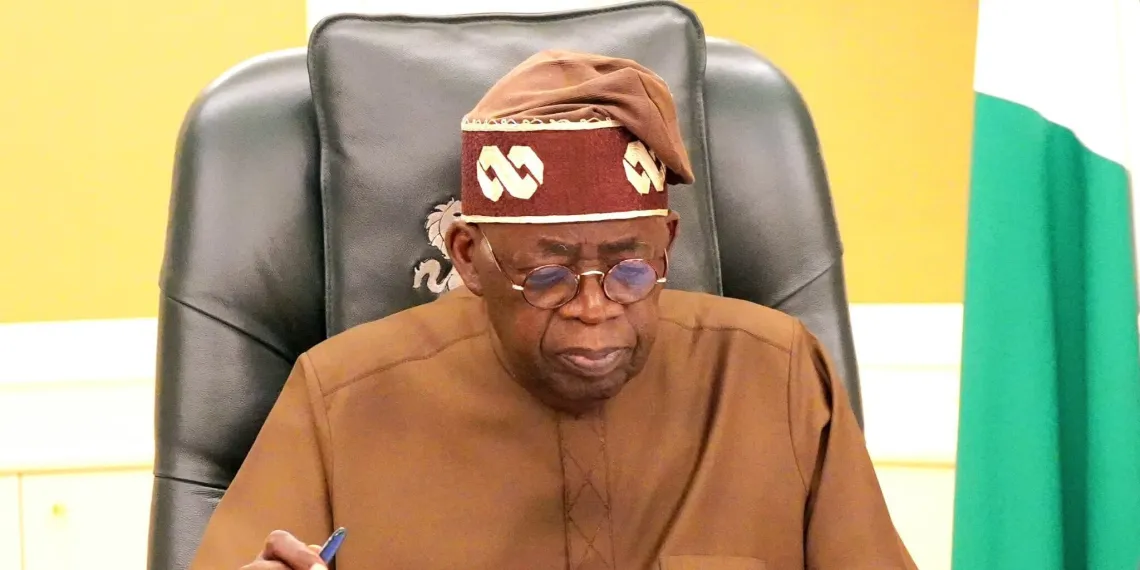
The judge, Beryl Howell, made the order on Tuesday, saying that protecting the information from public disclosure is “neither logical nor plausible.”
The United States District Court for the District of Columbia has ordered top US law enforcement agencies to release confidential information generated on President Bola Tinubu during a “purported federal investigation in the 1990s.”
The judge, Beryl Howell, made the order on Tuesday, saying that protecting the information from public disclosure is “neither logical nor plausible.”
An American, Aaron Greenspan, had filed a suit in June 2023 under the Freedom of Information Act (FOIA) against the Executive Office for US Attorneys, Department of State, Federal Bureau of Investigation(FBI), Internal Revenue Service (IRS), Drug Enforcement Administration (DEA), and the Central Intelligence Agency (CIA).
In his complaint, Mr Greenspan accused the law enforcement agencies of violating the FOIA by failing to release within the statutory time “documents relating to purported federal investigations into” President Tinubu and one Abiodun Agbele.
Between 2022 and 2023, Mr Greenspan filed 12 FOIA requests with six different US government agencies and components seeking information about a joint investigation conducted by the FBI, IRS, DEA, and the US Attorney’s Offices for the Northern District of Indiana and Northern District of Illinois.
According to Mr Greenspan, the records being requested involved charging decisions on the activities, including money laundering, of a Chicago heroin ring that operated in the early 1990s.
In each FOIA request, the American sought criminal investigative records about four named individuals “allegedly associated with the drug ring: Bola Ahmed Tinubu, Lee Andrew Edwards, Mueez Abegboyega Akande, and Abiodun Agbele.”
After the requests, all five US agencies issued “Glomar responses”, refusing to confirm or deny whether the requested records exist.
Mr Greenspan contested those responses at the Department of Justice’s Office of Information Policy (“OIP”). The OIP, however, affirmed the agencies’ refusal to confirm or deny the existence of the requested records.
The American then filed a lawsuit on 12 June 2023, naming the FBI, DEA, IRS, EOUSA, and Department of State as defendants and challenging each agency’s response to the separate FOIA requests.
Court documents show that the CIA was later added as a defendant in the First Amended Complaint, along with a challenge to that agency’s glomar response to the plaintiff’s FOIA request.
On 20 October 2023, Mr Greenspan filed an emergency motion seeking a hearing to compel the US agencies to immediately produce records responsive to his FOIA requests. He cited the Nigerian Supreme Court’s plan to begin hearing arguments in three days’ time in a litigation contesting Mr Tinubu’s 2023 election as the President of Nigeria.
Three days later, on 23 October 2023, Mr Greenspan’s emergency motion was denied for failing to “satisfy any of the requirements for emergency injunctive relief.”
Also on that same day, President Tinubu moved to intervene in the case, citing his privacy interests in his “confidential tax records” and “documents from federal law enforcement agencies that fall within the Privacy Act or exceptions to FOIA and should not be disclosed.”
President Donald Trump
In 1993, Mr Tinubu was said to have forfeited $460,000 to the American government after authorities linked the funds to proceeds of narcotics trafficking.
The issue of Mr Tinubu’s forfeiture of the funds featured prominently at the Presidential Election Petition Court when his opponents, Atiku Abubakar and Peter Obi, challenged the president’s eligibility to contest Nigeria’s presidency. But the election court, in a unanimous decision, dismissed the suits, affirming Mr Tinubu’s election.
However, on Tuesday, Judge Howell ruled partly in favour of Mr Greenspan in the US case.
The judge noted that the ‘Glomar’ responses asserted by the FBI and DEA are “improper and must be lifted.” He said the FBI and DEA failed to show that they properly invoked FOIA.
Mr Howell said since it was acknowledged that Mr Tinubu was a subject of an investigation involving both the FBI and DEA, “the claim that the Glomar responses were necessary to protect this information from public disclosure is at this point neither logical nor plausible.”
‘Why the FOIA request should be granted’
Explaining his judgement further, Mr Howell establish that a FOIA requester may challenge the propriety of an agency’s Glomar response in two ways: first, by “challeng[ing] the agency’s assertion that confirming or denying the existence of any records would result in a cognisable harm under a FOIA exemption,” and, second, showing that the agency “has ‘officially acknowledged otherwise exempt information through prior disclosure,” meaning that the agency “has ‘waived its right to claim an exemption with respect to that information.”
In this case, the judge said Mr Greenspan asserts both types of challenges to defendants’ Glomar responses: “The plaintiffs’ argument that (1) DEA has officially confirmed investigations of Agbele’s involvement in the drug trafficking ring, (2) the FBI and DEA have both officially confirmed investigations of Tinubu relating to the drug trafficking ring, (3) any privacy interests implicated by the FOIA requests to the FBI and DEA for records about Tinubu are overcome by the public interest in release of such information, and (4) the CIA has officially acknowledged records responsive to plaintiff’s FOIA request about Tinubu.”
Meanwhile, the CIA has the judgement entitled in its favour in this case. The judge ruled that Mr Greenspan has failed to show that the “CIA has ever officially acknowledged the existence or nonexistence of records responsive to his FOIA request. therefore, the CIA’s Glomar response must be sustained.”
Tinubu and Agbele’s records cleared for release
Five of Mr Greenspan’s FOIA requests are still at issue in the parties’ pending cross-motions for summary judgement.
During the hearing, the plaintiff agreed to narrow the issues for summary judgement briefing to defendants’ Glomar responses, redactions, and withholdings as to Mr Tinubu and Mr Agbele only.
This is why in its judgement, the judge ordered that the remaining parties, apart from CIA, to file jointly, by 2 May, a report on the status of any outstanding issues in this case, as described in the accompanying order.
How drug ring member was busted and link to Tinubu
Part of the documents submitted by Mr Greenspan to court to back his FOIA case was a verified complaint and accompanying affidavit, filed in the Northern District of Illinois by the DOJ on 26 July 1993.
The documents sought the civil forfeiture of Mr Tinubu’s funds held by First Heritage Bank allegedly connected to the drug trafficking investigation.
The affidavit by Department of Treasury’s Internal Revenue Service (IRS) Special Agent Kevin Moss, who was involved in the investigation, detailed the drug trafficking activities of Mr Agbele which provided the ground for seeking the forfeiture of Mr Tinubu’s funds. It also shared insights into how Mr Agbele was arrested while selling white heroin to a person not known to him to be an undercover agent.
It stated that upon arrival in the United States, “Agbele identified Akande (who has also been linked to Mr Tinubu) as his uncle and stated that Akande provided him (Agbele) an apartment in Hammond, Indiana,” citing “investigating agents of DEA” as the source of this information.
Furthermore, he said according to DEA investigators, Mr Agbele sold white heroin to another individual on numerous occasions.
With the assistance of “Source A”, DEA called Mr Agbele to purchase a small amount of white heroin,” which resulted in a transaction where “Agbele sold one ounce of white heroin to a law enforcement officer working in an undercover capacity.”
Subsequent to this sale, “Agbele was arrested and agreed to cooperate” with the investigation.
The affidavit also states that further investigation by DEA disclosed a lease application completed by Mr Agbele.
Mr Moss’s affidavit confirmed that both the FBI and DEA investigated Mr Tinubu in the wider probe into the drug trafficking activities of Mr Agbele and other members of his ring.
It confirmed that “there is probable cause to believe that funds in certain bank accounts controlled by Bola Tinubu were involved in financial transactions” in violation of US laws “and represent proceeds of drug trafficking.”
It stated that seeking to target Mr Tinubu’s funds arose from “investigation of money laundering of the proceeds of a heroin distribution organisation in the Chicago area.” The clues relied on were said to include “information provided by Special Agents of the IRS, DEA, (and) FBI.”





Politics
‘If Wike Fails To Apologize To Okinbaloye, We Will Boycott All Press Briefings’ – Broadcasters Warn

The Independent Broadcast Association of Nigeria (IBAN) has asked the Minister of the Federal Capital Territory, Nyesom Wike, to retract a controversial remark he made about a journalist with Channels Television, Seun Okinbaloye.
IBAN, the umbrella body for independent broadcast stations in Nigeria, also warned that it may boycott all media engagements organized by the minister if he fails to issue a public apology.
In a statement signed by Ahmed Ramalan, IBAN Chairman, and Fidelis Duker, Acting General Secretary, the association expressed concern about the implications of the comment aired during a live television interview.
The controversy stemmed from a remark made by Wike during a routine media chat on Friday, when he reacted to Okinbaloye’s commentary on the trajectory of Nigeria’s democracy while watching the program Politics Today.
“If there was any way to break the screen, I would have shot him,” Wike had said.
The minister later clarified to journalists present that the statement was not a literal threat.
On Saturday, Lere Olayinka, Senior Special Assistant on Public Communications to the minister, described the comment as “hyperbolic”, arguing that it had been taken out of context by critics.
However, IBAN maintained that the remark was inappropriate for a public official, even if it was not intended as a literal threat.
The association said statements suggesting violence could easily be interpreted as intimidation of journalists.
IBAN warned that comments implying violence could contribute to a hostile environment for media practitioners.
The group noted that Nigeria currently ranks 122 out of 180 countries on the global press freedom index, adding that journalists already face numerous challenges.
According to the association, these include surveillance, attacks, and arbitrary arrests.
The association called on the minister to withdraw the remark and apologise publicly to the journalist and the wider media community.
IBAN also urged Wike to reaffirm his commitment to press freedom in accordance with Sections 22 and 39 of the 1999 Constitution.
“Should the minister fail to meet these requests within a reasonable period, IBAN will have no choice but to advise all independent broadcast stations to suspend coverage of all press briefings, media chats, and official news conferences hosted by the FCT minister,” the statement read.
Despite its warning, the association said it remains open to constructive engagement with public officials.
“We hope the minister will take the necessary corrective action so that normal coverage can continue without interruption,” IBAN added.
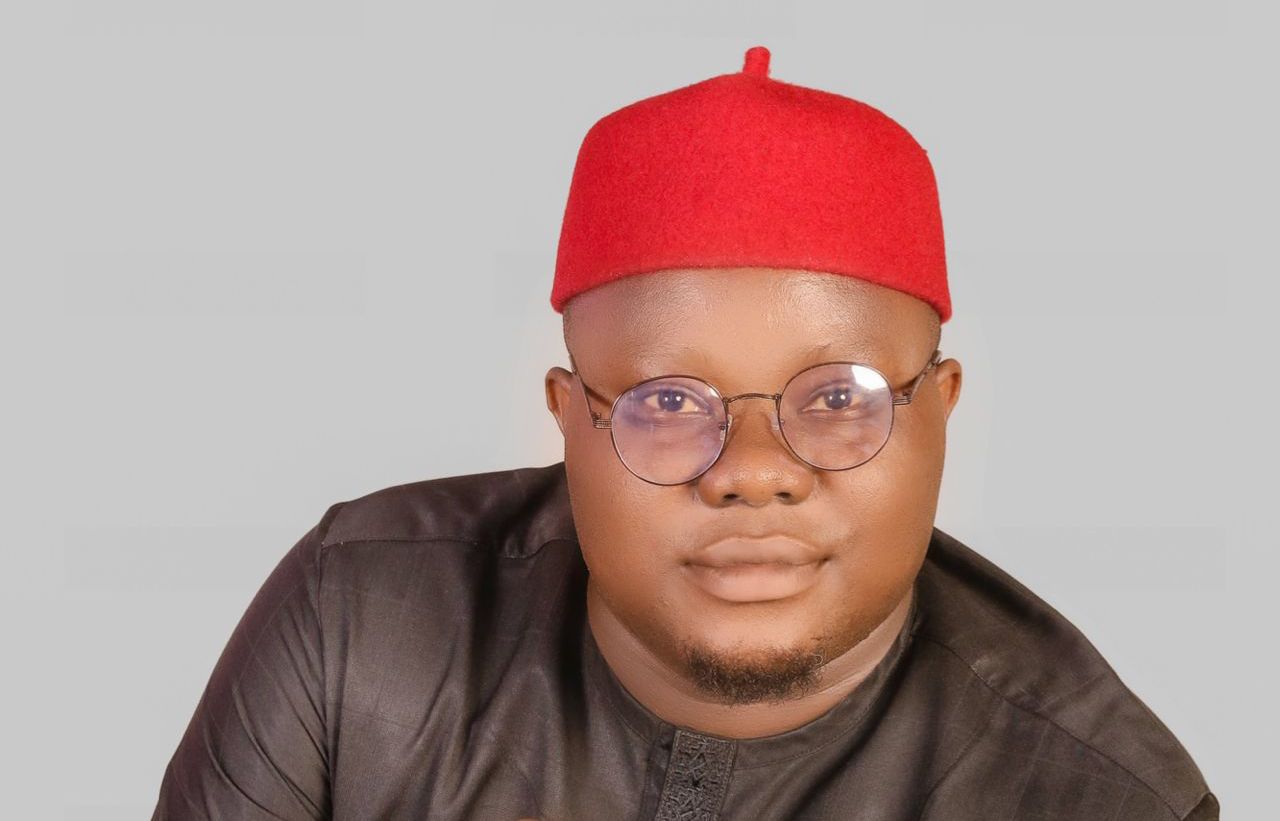
In a heartfelt message, Hon Success Opara has extended warm Easter greetings to Nigerians, celebrating the resurrection of Jesus Christ. Speaking at St. Peter Anglican Church Ikengbu, Opara emphasized the significance of Easter, saying, “He is risen! May the miracle of Easter bring you renewed hope, faith, and joy. Rejoice in the promise of new life and the joy that conquered everything.”
The lawmaker prayed for Nigerians to experience the transformative power of the resurrection, urging them to find solace in the promise of eternal life. “As we commemorate this sacred occasion, let us reflect on the values of love, compassion, and forgiveness that Jesus Christ embodied,” he said.
Hon Opara’s message was filled with Easter cheer, as he wished Nigerians a joyous celebration with family and loved ones. “May the spirit of Easter fill your heart with peace, hope, and renewed faith. Happy Easter!”
The Easter celebration at St. Peter Anglican Church Ikengbu was marked with prayers, hymns, and reflections on the significance of Christ’s resurrection.
Politics
I’m Not a Part of Any Plan to Turn Nigeria Into a One-Party State, But INEC Will Follow Court Orders, Not Political Pressure — INEC Chairman, Joash Amupitan
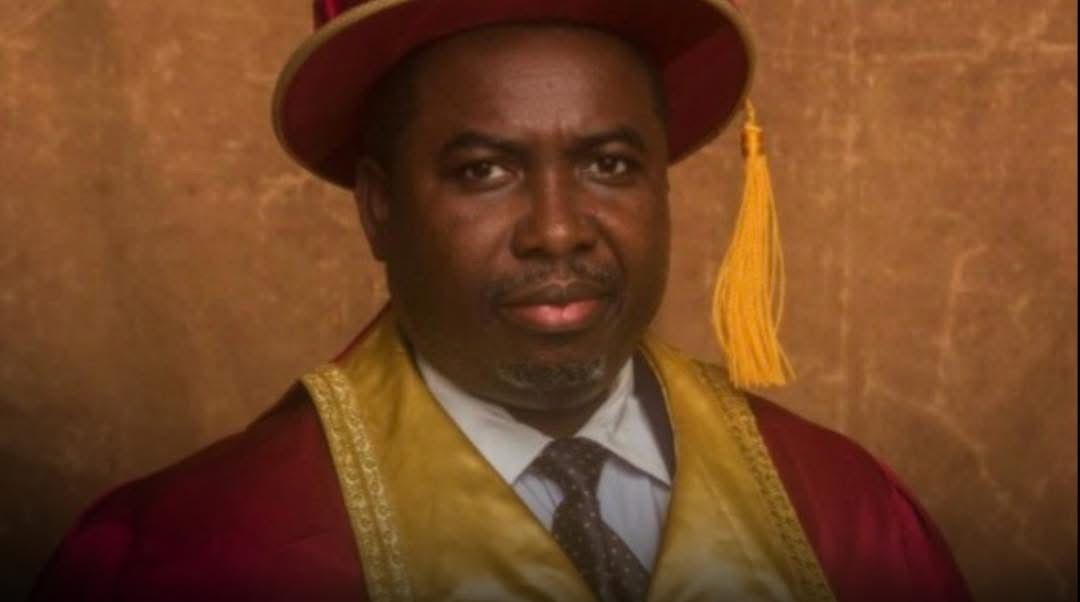
The Chairman of the Independent National Electoral Commission (INEC) Prof. Amupitan has rejected claims that the commission is being used to create a one-party state in favor of President Bola Tinubu ahead of the 2027 elections. “I am not guilty as charged,. Let me say it very clearly. I am not a party to the plan of anyone to turn Nigeria into a one-party state. By the constitution of the Federal Republic of Nigeria, Nigeria is a multi-party state and this is recognized by the constitution and the Electoral Act,” he stated.
He cited the recent FCT area council elections, noting about ten political parties participated, including ADC, PDP, Labor Party, and Zenith Labour Party. “The democratic space remains vibrant. Parties are participating, and the elections demonstrate that competition is alive,” he said.
On disputes within the ADC and the PDP, he explained, “One of the challenges we’ve had is the issue of party leadership. And it’s something that is impacting on democracy because if those issues are not addressed on time, it can cause a lot of problem. Nobody is looking at that part that ordered the trial court to give it expeditious trial. This is an originating summons. An originating summons that could, if they had gone to court, have been decided by now because the Court of Appeal has given a specific order that it should be decided expeditiously.”
Explaining INEC’s role, he said, “So therefore, it calls to question the fact that this order has been made. They’re supposed to go back to the Federal High Court and let the Federal High Court, with that order, compel the judge to hear that case expeditiously. The Court of Appeal made a preservatory order, status quo antebellum. The commission just recorded positions before 2nd September 2025. If the court gives judgment, parties can proceed. Life goes on.”
He concluded, “The whole idea that INEC is being used to turn Nigeria into a one party state is false. INEC follows court orders, not political pressure.”

Abuja hotel collapse: Wike orders arrest of owner, to convert land to public use

How Yakubu Gowon found himself in the Army

‘If Wike Fails To Apologize To Okinbaloye, We Will Boycott All Press Briefings’ – Broadcasters Warn

-
Business1 year ago
US court acquits Air Peace boss, slams Mayfield $4000 fine
-

 Trending1 year ago
NYA demands release of ‘abducted’ Imo chairman, preaches good governance
-

 Politics1 year ago
Mexico’s new president causes concern just weeks before the US elections
-

 Politics1 year ago
Putin invites 20 world leaders
-

 Politics1 year ago
Russia bans imports of agro-products from Kazakhstan after refusal to join BRICS
-
Entertainment1 year ago
Bobrisky falls ill in police custody, rushed to hospital
-
Entertainment1 year ago
Bobrisky transferred from Immigration to FCID, spends night behind bars
-
Education2 years ago
GOVERNOR FUBARA APPOINTS COUNCIL MEMBERS FOR KEN SARO-WIWA POLYTECHNIC BORI