






The cause of the altercation could not be immediately ascertained as of press time.
Trending
WHO report on Nigeria’s road accident rate raises concerns


The recent revelation by the World Health Organisation, WHO, Global Status Report on Road Safety 2023, that Nigeria has one of the highest road crash-related death rates in Africa, at 21.4 deaths per 100,000 population is worrisome.
Founder of Kwapda’as Road Safety Demand (KRSD), Justice Monica Dongban Mensem, who cited the report at a press briefing in Abuja, said the country should stem the tide.
Mensem also announced that she would host the maiden International Road Crash Victims Africa Conference (IRCVAC) in November to give a stronger voice to Road Traffic Crashes (RTCs) victims and their families.
“Nigeria has been ranked among the countries with the highest road traffic deaths in Africa, with 21.4 deaths per 100,000 people, according to the World Health Organization’s Global Status Report on Road Safety 2023.
“This is not just statistics; it means thousands of families are devastated every year. The figure is significantly higher than both the global and African averages,” she said.
On his part, Corps Marshal, Federal Road Safety Corps (FRSC), Shehu Mohammed, said the Corps would double its efforts to reduce road crashes.
As a measure to save lives, he said the FRSC and the foundation have joined forces to establish trauma centres across the country for victims.
Nigerians are concerned that even with the establishment of FRSC and its much-touted efforts to stem the increasing tide of road accidents, the scourge seems to be increasing year in, year out.
The WHO’s report has reopened the argument as to the real cause of road crashes.
While some would put the blame on the nonchalant attitude of some drivers, as evidenced in careless driving and poor vehicle maintenance culture, there are those who put the blame on the government’s failure to build and maintain roads. Those on this divide are of the opinion that most of the accidents are caused by bad roads.
Yet, there are those who believe that it is a combination of human, vehicular and road factors.
Offering insights into the possible causes of incessant carnage on the road, particularly in Nigeria, an award winning luxurious driver with one of the leading transport companies in Nigeria, who has been driving even across some West African countries for over 20 years, Mr Pius Akwashiki, narrowed them down to three major factors, namely- road conditions, vehicle conditions and human factors.
Road condition
Akwashiki noted that much as other factors contribute to accidents on the roads, the condition of roads is a major contributory factor, at least in Nigeria.
He argued that from east to west, north to south, the story remains the same; the roads are generally bad.
“For instance, Lagos –Benin-Ore Road has been a death trap for over 15 years, causing accidents on a daily basis. The road alone accounts for more than 40 percent of the yearly accidents in the country,” he stated.
He lamented that the roads across the country are so bad to a point that sometimes, potholes as deep as three feet dot the major highways.
Akwashiki noted that a lot of accidents happen as a result of cars unexpectedly running into these potholes, and when such accidents occur, it is always very fatal and the casualty figure is always very high.
“The sights of abandoned rickety vehicles on our highways are commonplace. They cause obstructions, and most often, result in accidents.
“Aside from potholes and abandoned rickety vehicles, other hazards include wooden objects and old vehicle tyres, which the police use to form roadblock on our highways.
“While a great number of vehicles tend to somersault when they run into potholes, others run into other vehicles on the road while trying to avoid these unexpected hazards,” he said.
He said another remarkable factor is the absence of road signage on most of the country’s highways. “This makes it difficult for non-locals to use any stretch of our roads without prior tutoring regarding the ‘dos’ and ‘don’ts’ of each stretch,” he added.
Vehicle condition
Talking about vehicle condition, he said most vehicles in Nigeria were not serviced regularly.
He also said that even when the owners want to service the vehicles, they are not done by authorized Manufacturer Service Agents or by people who have access to the manufacturer service manuals.
“A lot of improvisations, therefore, go into vehicle maintenance.
“The serviceable parts are also not reliably supplied by the authorized manufacturer agents. These fake parts, therefore, tend to give way in the least expected of situations. Such unexpected parts failures cause accidents as well,” he submitted.
He equally did not forget the role of skilled auto mechanics, when he said: “The absence of a skilled workforce also makes the workmanship of the maintenance engineers in Nigeria operate at standards way below the standards in the advanced countries of the world.”
Human factor
He stressed that the discussion around human factors is very diverse as it includes not only the vehicle owners but the government and some of its agencies. He, however, noted that it is a major contributory factor to incessant carnage on the road.
He said: “When we talk about human factor, it is all encompassing; both the government and its agencies, like the FRSC, Vehicle Inspection Service (VIS) and the Ministry of Transport, the drivers and corporate bodies have failed to live up to their respective biddings as far reducing road accident is concerned.”
He decried the ease with which driver’s licences are procured in Nigeria, saying that it calls for serious concerns and needs urgent scrutiny.
“People who don’t know anything about driving easily get the license at the licensing office as long as they have the cash. It does not matter whether the person knows how to drive or not; so long as the person can afford the kickback he will get it.
“This has increased the number of accidents on our roads because the resultant effect is that incompetent drivers are seen plying major roads.
“Most drivers don’t know road signs, and even the ones that scarcely know, refuse to adhere strictly to them. They overtake where there is a sharp bend, ignoring such traffic warnings and ultimately causing accidents most often,” he said.
He also pointed out most people’s driving habits, saying, “The driving habits of most Nigerians are so bad that many people tailgate other drivers at high speeds causing major difficulties for the vehicles when things go wrong with any of the vehicles in the convoy.”
He lamented that speed limits are never adhered to on the roads “and the vehicles are commonly used well in excess of the design load capacity. This makes it difficult for drivers of such vehicles to control them in a safe and reasonable manner when necessary.
“Some drivers are in the habit of drinking and driving or even sleeping on the steering as a result of fatigue.”
Ekwutosblog investigation shows that some of the transport companies in Nigeria are in the habit of paying their drivers based on how many trips they were able to go from Onitsha or Benin to Lagos every day.
This practice, according to investigation, is called ‘Pay as You go’ among drivers.
This finding was corroborated by Akwashiki, who agreed that the system is unhealthy and contributes to high carnage on the highway because most of the drivers involved would try to go as many trips as possible to make more money, forgetting that they are human beings who have limits to which their system could work without resting.
“Another prevalent human factor is the habit of drivers answering or making phone calls while on steering. This has led to many accidents because some times, the driver becomes overexcited or downcast by what the person at the other end said, thereby losing concentration most times.
“The result is always fatal accidents, resulting in loss of lives and serious injuries,” he added.
Further investigation also revealed that the use of second hand vehicle tyres, popularly called ‘tokunbo tyres’ contribute a great deal to road accidents.
Speaking on this, a tyre seller in Maza-Maza area of Lagos, Chief James Chukwuebuka stressed that the lifespan of vehicle tyres is always neglected by vehicle owners in Nigeria, particularly those who buy second hand or fairly used tyres.
He said: “The average life span of a new tyre is four years but you discovered that most fairly used tyres are way up to 10 years.”
He noted that even the new tyres that burst, sometimes, are because they have stayed for more than four years after production without being used”.
But, in all of these, Akwashiki would not extricate the FRSC from the sundry road accidents, even as he blamed the government for bad roads across the country.
He said accidents would continue to be on the increase as long as there is no statistics of drivers who have been involved in road accidents more than two times.
He said what happens is that when most reckless drivers get involved in a road accident with their vehicle, what the transport companies normally do is just to sack them.
“Such a driver will then seek appointment with another transport company that is unaware of his past driving records.
“He gets involved in another accident and he is fired and he moves to another company.
“The journey continues and he keeps wasting people’s lives on the highway,” he added.
He suggested that the FRSC should have statistics of such drivers and get their names published in the national dailies so that other transport companies will not employ them.
Solutions
On the possible solution to incessant road carnage, Akwashiki advised that all government agencies, ranging from the FRSC to the VIO and the Ministry of Transport, must brace up to their responsibilities.
He condemned a situation where persons who are inexperienced are given driver’s license simply because they could pay for it.
In a bid to enforce all the road safety laws, he pointed out that the FRSC should also get modern equipment that could assist them in detecting drivers who are drunk and still driving.
The government should also do its bidding by ensuring that the major highways are devoid of potholes.
The VIO officers should stop taking kickbacks and make sure that vehicles that are not road worthy are marked ‘off road.’
Akwashiki also suggested that if the FRSC could have a data bank of all the drivers that have been involved in road accidents for two or three times and publish such names in the national newspapers so that other transport owner will not hire them, it would be a major step towards reducing road carnage in Nigeria.
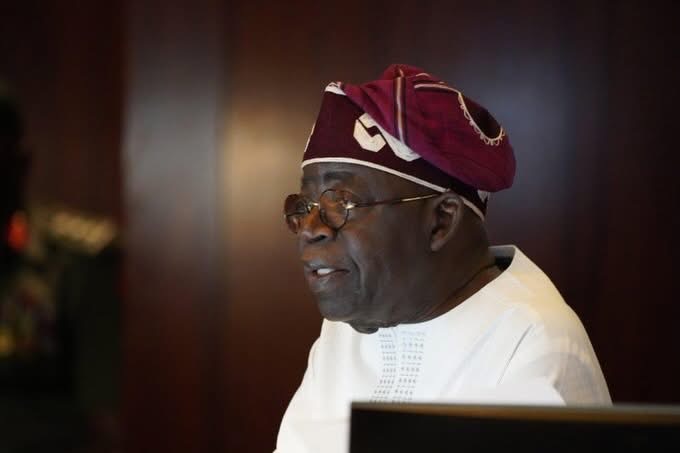
President Bola Tinubu has condemned the reported “barbaric” killing of one of the abducted teachers from the Esiele community in Ogbomoso, Oyo state.
In a statement released issued by his media aide, Bayo Onanuga, on Monday, May 18, President Tinubu said the teacher was k!lled when “rescue operation is underway.”
While conveying his sympathy the government and people of the state, President Tinubu assured that security operatives are “working around the clock” to rescue the victims and arrest the bandits as well as their collaborators within the community.
He further assured that the federal government would collaborate with the state government to rescue the victims.
‘’”I am saddened by the reported killing of one of the teachers kidnapped by the gunmen who invaded the community. I sympathise with Governor Seyi Makinde and commend the steps he has taken on the matter. I sympathise with the families of the kidnapped victims.
The Federal Government is working with the Oyo State government to rescue all the victims. I commend the Inspector-General of Police and the Commissioners of Police in Oyo and Kwara States for their quick intervention and the deployment of a tactical and the Intelligence Response Team (IRT) team to rescue the victims.
The IGP, following my instructions, is personally leading the tech-driven operation. We expect a breakthrough soon. The bandits and all their local collaborators will be fished out and made to face the full wrath of the law.
Cases of kidnapping further make imperative the establishment of state police to man some of our underserved areas. The National Assembly should accelerate the enactment of the law creating state police” the President said
May 14, 2026
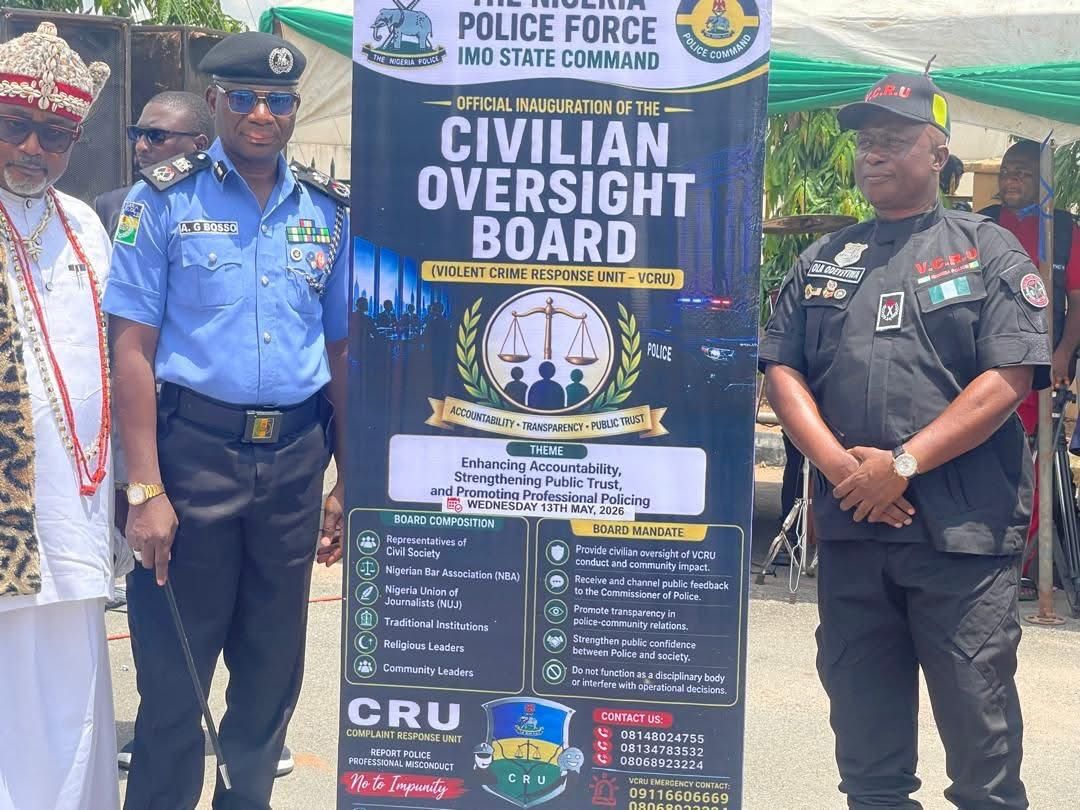
The Rule of Law and Accountability Advocacy Centre (RULAAC) expresses deep concern over the decision by the Nigeria Police Force to disband the notorious “Tiger Base” in Owerri, Imo State, only to inaugurate another tactical police unit operating from the same facility, under substantially the same command structure and reportedly with many of the same operatives.
This development raises serious questions about the sincerity of ongoing police reform efforts in Nigeria and reinforces fears that what is being presented as reform may merely be a cosmetic rebranding exercise designed to deflect public criticism without addressing the underlying culture of abuse and impunity.
Tiger Base became widely associated with allegations of torture, enforced disappearances, arbitrary detention, extortion, and extrajudicial killings. Over the years, victims, families, lawyers, journalists, and civil society organizations documented disturbing patterns of abuse linked to the operations of the unit.
Ordinarily, the disbandment of such a notorious tactical outfit should have marked an opportunity for genuine institutional reform. It should have included:
– Independent investigation into allegations of abuse;
– Accountability for officers implicated in violations;
– Justice and reparations for victims;
– Structural reforms and strengthened oversight;
– Human rights-centered retraining and professionalization.
Instead, the establishment of another tactical formation under substantially similar conditions suggests continuity rather than reform.
RULAAC is particularly concerned that retaining personnel or leadership figures associated with serious allegations of abuse sends a dangerous message that misconduct within the policing system carries no real consequences. This undermines public trust, weakens accountability, and emboldens further violations.
The situation also raises broader concerns regarding political interference in policing. Tactical police units must never become instruments for political intimidation, repression, or the advancement of partisan interests. Professional policing requires operational independence, transparency, accountability, and strict adherence to constitutional and legal standards.
The controversy inevitably recalls the aftermath of the #EndSARS protests, when the disbandment of SARS was quickly followed by the creation of SWAT, generating widespread fears that abusive policing structures were merely being renamed rather than fundamentally transformed.
RULAAC reiterates that genuine police reform cannot be achieved through changes in nomenclature alone. Meaningful reform requires accountability, transparency, civilian oversight, institutional culture change, and justice for victims.
Accordingly, RULAAC calls for the following urgent measures:
1. A transparent and independent investigation into allegations against Tiger Base operatives and leadership;
2. Prosecution and disciplinary action against officers implicated in torture, unlawful killings, and other abuses;
3. Justice, compensation, and support for victims and affected families;
4. Strengthened civilian oversight involving the National Human Rights Commission, judicial institutions, and civil society organizations;
5. Clear operational guidelines and publicly accountable rules of engagement for tactical police units;
6. Measures to insulate policing from political interference and abuse.
The people of Imo State and Nigerians generally deserve a policing system founded on professionalism, legality, accountability, and respect for human rights – not the recycling of abusive structures under new labels.
Signed:
Okechukwu Nwanguma
Executive Director
Rule of Law and Accountability Advocacy Centre (RULAAC)
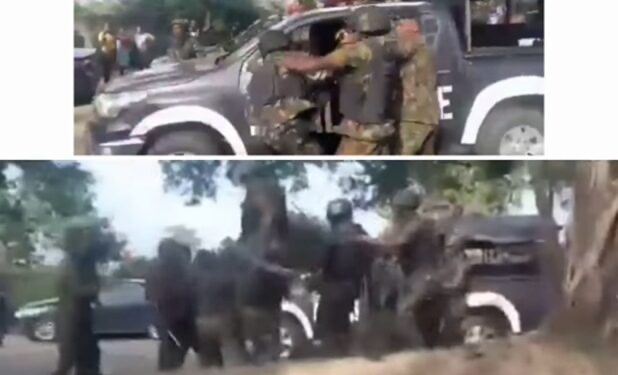
Personnel of the Nigerian military were seen engaging in a fight during the visit of President Bola Ahmed Tinubu to Bayelsa on Friday.
In a video spotted on social media, the driver of a Hilux vehicle marked “Naval Police” was seen stepping down from his vehicle and exchanging words with another driver.
After returning to his vehicle, another driver with a rifle approached him and threw a punch at the Naval Police driver, triggering a brawl.
The incident quickly escalated into a free-for-all, with personnel attached to both vehicles exchanging blows, while stunned civilians watched in disbelief.

Politics7 hours ago
2027: More Than 50 Lawmakers Lose APC Reps Tickets in Major Primary Election

Trending2 days ago
Bandits behind Ogbomoso school abduction will face full wrath of the law- President Tinubu

Politics2 days ago
PDP to screen Goodluck Jonathan on Tuesday as its sole Presidential aspirant For 2027 race

-
Business2 years ago
US court acquits Air Peace boss, slams Mayfield $4000 fine
-

 Trending2 years ago
NYA demands release of ‘abducted’ Imo chairman, preaches good governance
-

 Politics2 years ago
Mexico’s new president causes concern just weeks before the US elections
-

 Politics2 years ago
Putin invites 20 world leaders
-

 Politics2 years ago
Russia bans imports of agro-products from Kazakhstan after refusal to join BRICS
-
Entertainment2 years ago
Bobrisky falls ill in police custody, rushed to hospital
-
Entertainment2 years ago
Bobrisky transferred from Immigration to FCID, spends night behind bars
-
Education2 years ago
GOVERNOR FUBARA APPOINTS COUNCIL MEMBERS FOR KEN SARO-WIWA POLYTECHNIC BORI