
Columns
Why The Witch-Hunt? By Fatima Oiza Muhammed


TalkJudith
Why The Witch-hunt? By Fatima Oiza Muhammed
As a Kogite from the Central Senatorial District of Kogi State (The Same Senatorial district Yahaya Bello is from), I can’t sit and watch misinformation been spread everywhere as it relates to the current faceoff between the EFCC and Yahaya Bello.
I have read lots of articles and watched many interviews where people were alleging that the EFCC is witch-hunting Yahaya Bello and that the EFCC Chairman is been used by some persons in the presidency to fight Yahaya Bello..
As a kogite and a sister to Yahaya Bello who knows almost everything about this case, I have to let the world know the truth..
First of all, I would love to state that I love my brother Yahaya Bello.. I also love my people from the Central Senatorial district more than anyone else from any other senatorial district or state..
I am unapologetic about this.. However, no matter how much we love each other where I come from, there are certain acts that we all condemn and forbid.. Real Ebira Men or Women are not thieves.. We detest stealing so much that even if the thief is my twin brother, I will not hesitate to call him out and report him to the society.
We are courageous and truthful people. If an Ebira man or woman is falsely accused of stealing, they will courageously come out to clear their names because if they do not, the stealing tag will be attached to their loved ones and their generations yet unborn..
What Yahaya Adoza Bello is doing right now offends the core values of the true Ebira culture.. Guilty or not, Yahaya Bello is expected to courageously answer the allegations against him.. No matter who wants to “persecute” him, as a former Governor and a member of the Ruling party, if he is innocent, he will walk free except of course he is not.
Yahaya Bello has become a national issue; people all over the country are now tagging we the Ebira’s as cowards who only know how to talk without actions.. I used to believe so much in the capacity of Yahaya Bello.
I never knew that a time will come where Yahaya Bello will be afraid of *Natasha Akpoti*!
I listened to the EFCC Chairman’s speech with so much tears in my eyes.. The EFCC Chairman went against the code by personally calling Yahaya Bello to offer him a safe cover to answer the allegations against him.
This case began long before the current EFCC Chairman came on board.. *How will any reasonable person tag this a witch-hunt??*
The EFCC Chairman’s video brought me to tears..
I want to at this point pray for the EFCC Chairman; for honoring us the Ebira’s and Kogites generally by offering Yahaya a safe cover to answer the allegations, You will live long.. Your enemies will never succeed… You will grow from strength to strength.. You are uplifted.. No harm will come near you or Your loved ones..
In addition to this, I also want to thank the EFCC chairman for exercising the greatest restraints at Yahaya’s house.
Mr Chairman, your actions so far have shown that you are a well bred lawyer and a true man of God.. I saw the pain in your eyes when you were talking about the money stolen from a poor state like Kogi State.. You almost cried that day.. Trust me, the pain we feel as Ebiras is much more than what you feel Mr Chairman.. By running away, it means that Yahaya is guilty of all the charges against him and more.. I know what N80billion naira can do for kogi state at this point in time.. To think that just one person diverted this huge amount of money for his personal use is sickening.
It pains me seeing my brothers and sisters going online to defend Yahaya Bello..
They are further confirming to the whole country that we the Ebiras are thieves and we celebrate the biggest thieves among us.. Those not from kogi who are taking money from Yahaya to defend this humongous theft, may God forgive you… I pray you all experience the same in your various states since you are fully in support.
The money Yahaya Bello is alleged to have stolen is not the money for just the Igalas. It is not money for just the Okuns. What he stole belongs to all kogites.. The ebiras inclusive.
We are now celebrating someone stealing from us just because he is not coming to our various houses with guns and other dangerous weapons to forcefully take these monies from us.. Those who steal with guns and weapons will never be able to steal 80 billion naira in their lifetime..
Besides been an Ebira lady, another thing that triggered me into writing this post is when I had a discussion with one of my brothers from Ebira land who is a local government worker.. because of the percentage salaries currently being paid since the past 8yrs to Local government staff in Kogi State, he had to withdraw his children from school.. Today, his children are hawking all over Okene.. The little female ones have become vulnerable to pedophiles roaming around.. Hearing this same man supporting Yahaya Bello just because he is Ebira totally broke me.. I had to tell him how Yahaya was alleged to have taken $700,000 + from the state and used it to pay the school fees of his children in advance until they graduate from the school.. That school is one of the most expensive schools in Nigeria.. I told him how Yahaya even paid in advance for one of his children who is yet to start going to school.. I asked him the personal or collective benefit himself or his community have gotten from Yahaya Bello since he became governor, he was unable to mention anything. I asked him if Okene water is working? For 8yrs that his hero Yahaya was Governor?
What about water for Eika, Ihima, Ogaminana, Ogori, Okengwe, Obangede, Eganyi etc?
I asked him if St Andrew primary school in Okene and many of its types in Okehi, Adavi, Ogori-Magongo and Ajaokuta got any attention during his 8yrs?
I asked if Yahaya increased his salary when he came in simply because he is an Ebira man?.. At this point, he was already in tears.. He wept uncontrollably.. Like I told you earlier, he was being paid percentage salary.. I asked him if in addition to all these things, he can in good conscience support a known thief who has stolen directly from him, he said NO. As I was about asking more questions, he stopped me and started raining curses on Yahaya Bello and cohorts.. Wow, how was it that he had to wait for me to remind him of his reality?? I asked what he wanted in life and for his kids.. He told me he just wanted to give them a good life and ensure that they are properly educated so that they can stand shoulder to shoulder with their peers in the future.
I asked if he would be able to do that with the percentage salary he is currently receiving?
At this point, he went mute.. I do not want this write up to become too long and boring but a *honest* Ebira man or woman knows exactly how painful this matter is to us..
On this note, I, on behalf of the majority of *genuine/honest* *Ebira’s and genuine Kogites pledge our unwavering and total support to the EFCC Chairman Barrister, Ola Olukayode and Mr President, Bola Ahmed Tinubu for their fight against corruption..*
Some people are mentioning names of persons who should also be invited by the EFCC as the excuse for supporting Bello’s cowardice.. It’s such a pity.. Hadi Sirika was recently just arrested on an allegation of stealing 8 billion Naira.. He was arrested and he is now in the process of clearing himself. Nobody from his state organized any protest against the EFCC.. They didn’t start doing interviews claiming that Sirika is being Witch-hunted. The governor of his state did not come to disrupt his lawful arrest by the EFCC.
Hadi Sirika is also a leader in the Ruling party; APC.. This is because his people will not be seen to celebrate thieves.. Yahaya on the other who is wanted over a whooping sum of 80 billion naira + is alleging witch-hunt; therefore, he will not surrender himself to be properly investigated and possibly prosecuted as if he is above the law?
My dearest EFCC Chairman, Kogites are solidly behind you!!!!! You will succeed.. You are uplifted.. Thank you for putting the good people of Kogi First.. We will not sit to applaud one man who is alleged to have stolen a huge chunk of our commonwealth just because we speak the same tribe… All those stolen monies are for himself, his immediate family, and his presidential ambition come 2027.. Kogites are supposed to suffer while one man wastes our commonwealth on a fruitless endeavor??? *GODFORBID* I am an example of what an Ebira lady with good character should be. I am courageous, I fear no one as long as I am on the side of the truth.. No hired thug or assassin can threaten me for speaking out..
In conclusion, I will never stop reminding the EFCC Chairman that all exceptionally good manner kogites are solidly behind him. We beg him to do all within his legal power and to also ask Mr President for the support of other relevant agencies so that Yahaya Adoza Bello our runaway ex-governor can be brought to justice so that this current embarrassment hovering all over Ebiraland and its good people can cleared off.
A statute of the EFCC chairman will be erected in Lokoja and we will never forget him if he helps us get justice and helps return the stolen funds to kogi state so that Kogites can benefit from their commonwealth instead of one man sitting on it.
At this point, I appeal to those alleging witch-hunt and and those taking money to speak in favor of Yahaya to desist from doing that.. If they don’t heed to this timely and humble appeal, my prayer for them is that their offsprings and loved ones will also suffer from theft whenever anything good comes to their way.. Their generations unborn will work and behave like Yahaya Bello and they will never live a happy life..
*STOP WITCH-HUNTING THE EFCC CHAIRMAN*
Hon Fatima Oiza Muhammed
National Secretary,
Kogi Youth frontier for good governance
TalkJudith
Source: GateKeeperNews
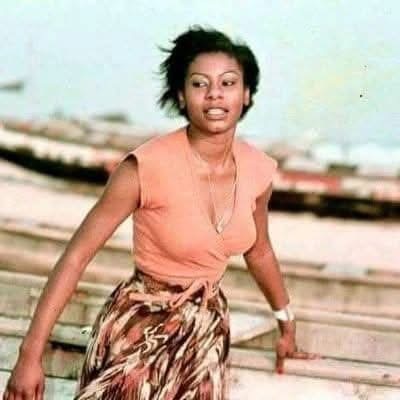
This photograph of Benita Enwonwu from the 1970s recalls a familiar face from Nigerian popular culture of that era. She was widely known as a model and actress, and is especially remembered for her appearance in Joy Soap advertisements, which made her one of the recognisable media personalities of the period.
Benita was also notable for her family background. She was the daughter of Ben Enwonwu, one of Nigeria’s most celebrated modern artists and sculptors. Ben Enwonwu’s career placed him among the leading figures in twentieth-century African art, so Benita’s public image carried an added layer of cultural significance, linking Nigerian advertising, performance, and elite artistic heritage.
While she is often remembered today through nostalgic references to the Joy Soap ad of the 1970s, available reliable public documentation on her wider filmography and career is limited. Because of that, it is safest to describe her as a popular model and screen personality associated with Nigerian advertising culture of the 1970s, rather than overstate details that are not strongly verified.
What makes the image especially interesting is that it reflects a period when print advertising, television commercials, and glamour photography were becoming more influential in shaping urban popular culture in Nigeria. Figures like Benita Enwonwu helped define the aspirational, stylish image of that period.
background
Ben Enwonwu is well documented as a major Nigerian artist, and auction-house and museum records confirm his international reputation and family legacy. Publicly accessible records also support the broad identification of Benita Enwonwu as his daughter, though detailed independent archival coverage of her own career appears limited.
Source note
The immediate source you gave is Benita Enwonwu’s Twitter page, which may be useful as a primary-source attribution for the photo itself, but I could not independently verify that page directly from accessible archival sources in this search.
References
Ben Enwonwu Foundation / related institutional material on Ben Enwonwu’s legacy.
Columns
Aliko was only 20 years old when he founded his company, Dangote Group. In 2011, he became the first nongovernmental figure to receive the distinction of the Grand Commander of the Order of the Niger (GCON), Nigeria’s second highest honour.
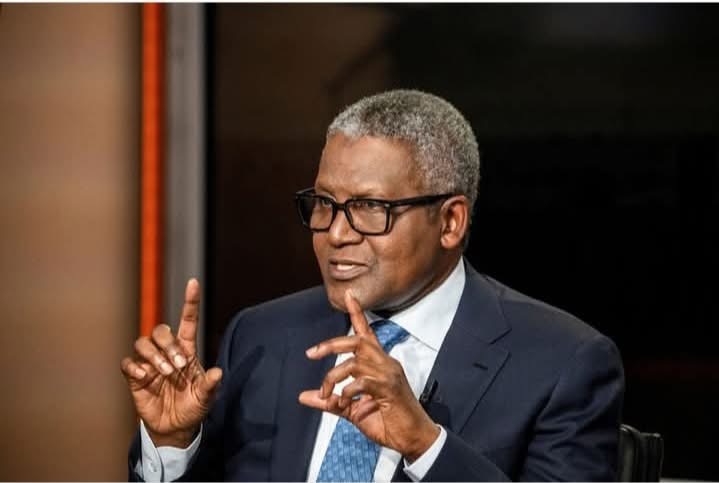
Born April 10, 1957, in Kano, northern Nigeria, Aliko Dangote has come to symbolize the transformative power of enterprise on the African continent. With a commercial instinct honed from youth and a formidable vision for self-reliance, Nigeria’s richest man has redefined industrial ambition in Africa.
In 1977, a young Dangote embarked on his entrepreneurial journey by establishing the Dangote Group, initially a modest trading firm dealing in imported commodities such as sugar, salt, and foodstuffs. As the business grew rapidly, he recognised the limitations of import dependency and set his sights on industrial production.
By 1981, he had launched Dangote Nigeria Limited and Blue Star Services, expanding his operations to include the importation of rice, steel, and aluminium products—a clear indication of his growing appetite for scale and influence. But it was in cement that his greatest impact would soon be felt.
Responding to the ever-increasing demand for building materials in Nigeria and across West Africa, Dangote founded Dangote Cement, positioning it to rival foreign giants such as Lafarge, the French multinational known at the time for dominating African markets through imports. With strategic foresight and substantial investment in local production, Dangote not only outpaced competitors but helped reposition Nigeria as a net exporter of cement.
By 2023, Dangote Cement had become a cornerstone of African infrastructure, generating approximately $3.7 billion in revenue, while Dangote Sugar rose to be one of the largest sugar producers in both Nigeria and the continent at large.
His entrepreneurial achievements are matched by his influence on public policy and national development. In 2011, President Goodluck Jonathan appointed Dangote to the Economic Management Team, recognising his pivotal role in shaping Nigeria’s industrial trajectory. That same year, Jonathan conferred on him the Grand Commander of the Order of the Niger (GCON)—the country’s second highest national honour.
A household name not just in Nigeria but across Africa, Dangote’s reach extends beyond business. In 2014, he was listed among Time magazine’s 100 most influential people in the world, a testament to his international stature. As of March 2025, Forbes estimates his personal fortune at $23.8 billion, making him the wealthiest Black person in the world.
Yet for all the headlines, Dangote’s legacy rests not merely in wealth, but in impact—in industries built, jobs created, and a continent nudged steadily toward economic self-sufficiency. With his flagship Dangote Refinery poised to revolutionise the energy landscape of West Africa, his vision continues to unfold—bold, pragmatic, and unmistakably African.
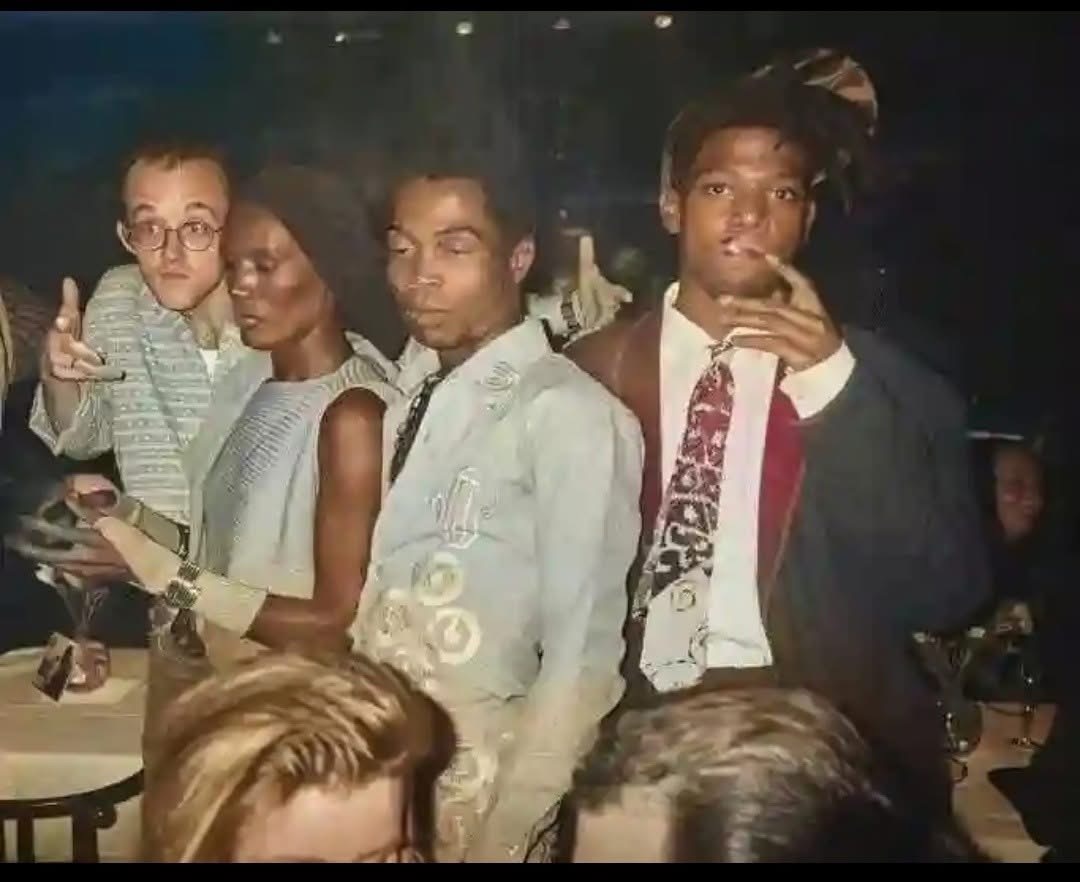
When Afrobeat intersected with 1980s New York’s vibrant art scene
In 1986, Nigerian Afrobeat pioneer Fela Anikulapo Kuti traveled to New York, a global epicentre of music, fashion, and contemporary art. During this trip, he was photographed alongside three towering figures of the city’s cultural scene: Keith Haring, the revolutionary pop artist; Jean-Michel Basquiat, the celebrated neo-expressionist painter; and Grace Jones, the avant-garde singer, model, and performer.
A Convergence of Art, Music, and Activism
Fela Kuti, already a legend in Africa, was known for blending traditional Yoruba rhythms, jazz, funk, and highlife to create Afrobeat, a genre that carried sharp political commentary and a call for African liberation. By the mid-1980s, Fela had achieved international recognition not just as a musician but also as a cultural and political icon.
New York during this period was a magnet for creativity. Downtown Manhattan’s clubs, galleries, and lofts were vibrant meeting points for emerging artists, musicians, and activists. Keith Haring was transforming public spaces with his bold graffiti-inspired imagery that celebrated social activism and community engagement.
Jean-Michel Basquiat, rising from the SAMO graffiti project, was redefining contemporary painting with references to African diasporic history, jazz, and street culture. Grace Jones, with her fearless performances and striking fashion, blurred the lines between music, visual art, and theatricality.
The photograph of Fela with Haring, Basquiat, and Jones embodies a cross-cultural dialogue: African Afrobeat meeting New York’s avant-garde art scene. The collaboration of ideas, energy, and rebellion against social norms created a powerful synergy that celebrated creative freedom and social critique.
Fela’s Impact and Resonance
Fela’s presence in New York in the 1980s extended his influence beyond African music:
Cultural Ambassador: He introduced the global audience to Afrobeat rhythms and political narratives about Nigerian governance and African unity.
Political Voice: Fela used music as activism, critiquing dictatorship, corruption, and inequality, which resonated with New York artists tackling social injustice in their mediums.
Artistic Exchange: His meetings with Haring and Basquiat symbolize the blending of visual and musical arts, showing how African rhythms inspired and were inspired by contemporary Western art.
The Icons of 1980s New York
Keith Haring (1958–1990): His art addressed AIDS awareness, apartheid, and social inequities through a distinctive graffiti style.
Jean-Michel Basquiat (1960–1988): Known for paintings that combined text, imagery, and social commentary, often highlighting African heritage and identity.
Grace Jones (b. 1948): A music and fashion trailblazer, known for her theatrical performances, gender-bending style, and influence on New Wave and disco music.
A Symbolic Moment
The photograph is more than a casual gathering—it is a representation of global cultural exchange. Here was a Nigerian musician whose voice challenged power structures, standing with avant-garde artists who were also pushing boundaries in their respective fields. It highlights how African cultural expression influenced and was celebrated internationally.
This moment also reflects the 1980s as a period of experimentation, cross-pollination, and dialogue among music, fashion, and visual art, creating enduring legacies that continue to inspire generations.
Source:
Veal, Michael. Fela: The Life and Times of an African Musical Icon.
Haring, Keith. Keith Haring Journals.
Basquiat, Jean-Michel. The Radiant Child: The Life of Jean-Michel Basquiat.
Personal archives and historical photographs of Fela Kuti in New York, 1986.

Benita Enwonwu in the 1970s: Model, Actress, and Daughter of Ben Enwonwu

Kidnappers Took Loan With My Phone – Victim Recounts Ordeal

11 more arrested over Ozoro “r@ping festival”

-
Business1 year ago
US court acquits Air Peace boss, slams Mayfield $4000 fine
-

 Trending1 year ago
NYA demands release of ‘abducted’ Imo chairman, preaches good governance
-

 Politics1 year ago
Mexico’s new president causes concern just weeks before the US elections
-

 Politics1 year ago
Putin invites 20 world leaders
-

 Politics1 year ago
Russia bans imports of agro-products from Kazakhstan after refusal to join BRICS
-
Entertainment1 year ago
Bobrisky falls ill in police custody, rushed to hospital
-
Entertainment1 year ago
Bobrisky transferred from Immigration to FCID, spends night behind bars
-
Education2 years ago
GOVERNOR FUBARA APPOINTS COUNCIL MEMBERS FOR KEN SARO-WIWA POLYTECHNIC BORI