
Business
World Pizza Day: How an Italian food favourite conquered the world

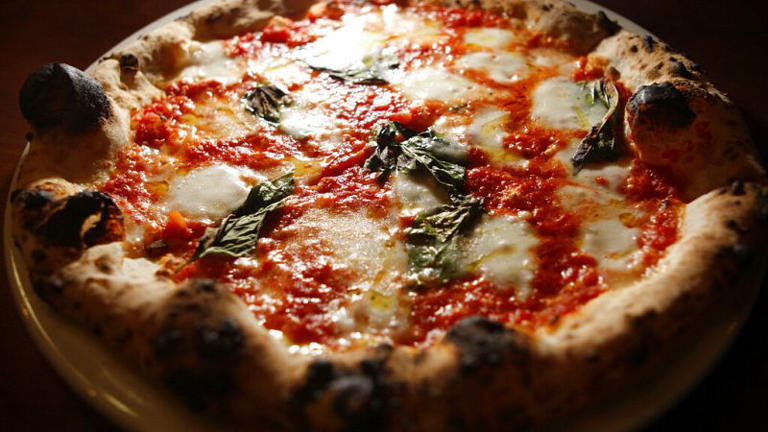
17 January marks World Pizza Day, a celebration of a dish with more than 2,000 years of history. From Neapolitan and Roman styles to Margherita, diavola, and even potato-topped variations, there are few places left in the world which don’t honour this iconic culinary tradition.
In 2017, UNESCO recognised “the art of Neapolitan pizza makers” as an Intangible Cultural Heritage of Humanity, highlighting its cultural significance on a global scale.
As for the date, it wasn’t chosen randomly: 17 January coincides with the feast of St. Anthony Abbot, the patron saint of fire and related trades, including machinists, blacksmiths, and, fittingly, pizza makers.
Where is pizza eaten the most in the world? And in Europe?
In Italy, four out of ten families are expected to prepare pizza at home in 2025, according to data from Coldiretti-Ixé. Meanwhile, global pizza turnover in 2024 is projected to reach a record €160 billion, with Italy contributing €15 billion to this figure.
Pizza is a major economic driver in Italy, generating 100,000 jobs nationwide – a number that doubles to 200,000 on weekends. Each year, Italy produces 2.7 billion pizzas, equating to about 46 pizzas per person annually, a figure that includes all age groups, from infants to the elderly.
Italians’ preferences differ significantly from those of the global market. According to Coldiretti, Italians prioritize higher-quality ingredients and are willing to pay a premium for them.
Interestingly, while pizza is an Italian staple, the world’s largest per capita consumers are Americans, who eat an average of 13 kilograms of pizza per year.
In Europe, on the other hand, Italy is in first place with 7.8 kilos per year, followed by Spain’s 4.3kg, and France and Germany’s 4.2kg and in fifth position the United Kingdom with 4kg.
The rise of food delivery has significantly boosted this already thriving sector: some apps speak of ‘an order every two seconds’. Others point to year-on-year growth in turnover of 20 per cent between 2024 and 2025.
The most and least popular pizzas in the world
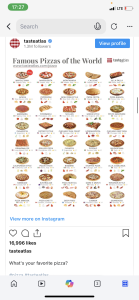
According to data from the food web portal TasteAtlas, the Margherita reigns as the most popular pizza in the world, followed by the Montanara and calzones. In sixth place is American-style pizza topped with cheese, vegetables, and tomato sauce. Following that is pepperoni pizza (where ‘pepperoni’ in the US refers to a type of salami) and the iconic ‘New York-style’ pizza, before circling back to fried pizza.
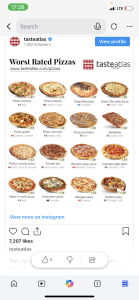
In last place is an Italian pizza: the ‘Mimosa pizza,’ topped with corn and cooked ham. Just above it are the Cuban pizza, the Scottish fried pizza, the Quad City-style pizza (a grilled variation popular in the US), and Canada’s unique pizza-ghetti, which features spaghetti as an additional topping.
How much does pizza cost in Italy?
Pizza has always been a popular dish in the Bel Paese, and this has never changed. On the other hand, inflation and the push for higher quality ingredients have increased the price in Italy and across Europe.
A survey by Altroconsumo calculated the average cost of a pizza, a soft drink, and service in various Italian cities. Sassari tops the list as the most expensive city (€14.67), followed by Bolzano, Milan, and Venice. On the more affordable end are Livorno (€8.67), Pescara (€9.18), Naples (€9.63), and Bari (€9.63).
Whatever pizza you love, with or without pineapple, happy World Pizza day.










The Trade Union of Nigeria, TUC, has raised the alarm that the price of Premium Motor Spirit aka Petrol may climb to about N2,000 per litre if urgent measures are not taken to cushion the impact of rising global crude prices and the depreciating naira.
Speaking to newsmen on Thursday, April 9, the president of the TUC, Festus Osifo, called on the Federal Government to immediately deploy 60 percent of excess crude oil revenue above the 2026 budget benchmark to subsidise crude feedstock supplies to the Dangote Refinery and other modular refineries, a move it says will slash pump prices of petrol, diesel, and jet fuel within two weeks
“Today, comrades, we are seeing that the cost of petrol is edging towards N2,000 per litre depending on the part of the country that you are. Nigerian workers are already passing through excruciating pain as we speak.
The same way it is affecting transportation, it is also affecting manufacturing. The cost of diesel has also gone northward, meaning that the cost of production has increased. When production costs rise, the final price of goods on the shelves will also skyrocket.
If this continues unchecked, the inflation that we are currently celebrating as going downwards will reverse and start moving up again,” he stated.
Osifo outlined the proposal as an urgent intervention to cushion Nigerian workers from excruciating pain caused by petrol prices edging towards ₦2,000 per litre in some parts of the country

The governor of Oyo state, Seyi Makinde, has approved a N10,000 transportation allowance as a palliative for the state workforce to cushion the effects of the increase in the pump price of Premium Motor Spirit, otherwise known as petrol.
The Chairman of the Nigeria Labour Congress (NLC), Oyo State chapter, Kayode Martins, in a statement released on Monday, March 23, disclosed that the governor has granted the request of the union on the issue of transportation allowance.
The statement read
“Following the intervention and formal request made by the State Council of the Nigeria Labour Congress (NLC) earlier this morning, the state government has approved a N10,000 transportation allowance for all workers in the state.
The newly approved allowance is set to take effect from April 2026, providing much-needed relief to workers grappling with rising transportation costs amid current economic challenges.
This development comes as a direct response to sustained advocacy by the state NLC, aimed at cushioning the impact of increased living expenses on the workforce.
Further details on implementation are expected to be communicated by the relevant government authorities in due course.”
The Central Bank of Nigeria (CBN), has declared that banks and financial institutions must establish and maintain a temporary watch-list for Bank Verification Numbers (BVN) implicated in suspected fraudulent transactions.
According to the CBN in a circular dated March 12, 2026 and signed by its Director of Payments System Policy Department, Musa I. Jimoh, the apex bank said such a suspected BVN may remain on the temporary watchlist for a maximum period of twenty-four (24) hours during which the owner would be contacted to make clarifications.
The circular explained that the move is part of several new measures under a revised regulatory framework aimed at enhancing financial system stability.
“A BVN may remain on this temporary Watchlist for a maximum period of twenty-four (24) hours, during this period, the BVN owner shall be contacted to provide clarification regarding the identified transaction(s),” the circular stated.
The circular also sets an age requirement for BVN enrolment, restricting registration to individuals who have attained eighteen (18) years and above.
The CBN also added that amendments to phone numbers linked to a BVN shall be allowed only once.
“Amendments to phone numbers linked to a BVN shall be allowed only once,” the circular noted.
The apex bank stated that access to BVN databases will remain tightly controlled.
“Access to the BVN databases shall be exclusively granted to Central Bank of Nigeria (CBN) licensed financial institutions.
“Notwithstanding this provision, the Central Bank of Nigeria (the Bank) reserves the right to approve access to the BVN databases in extenuating circumstances and in accordance with the provisions of extant laws,” the circular said.
Financial institutions are expected to comply with the new requirements, and customers may be contacted by their banks if their BVNs are temporarily flagged during the new fraud monitoring process.
The new policy, as stated by the CBN, takes effect from May 1, 2026.

2027: More Than 50 Lawmakers Lose APC Reps Tickets in Major Primary Election

Bandits behind Ogbomoso school abduction will face full wrath of the law- President Tinubu

PDP to screen Goodluck Jonathan on Tuesday as its sole Presidential aspirant For 2027 race

-
Business2 years ago
US court acquits Air Peace boss, slams Mayfield $4000 fine
-

 Trending2 years ago
NYA demands release of ‘abducted’ Imo chairman, preaches good governance
-

 Politics2 years ago
Mexico’s new president causes concern just weeks before the US elections
-

 Politics2 years ago
Putin invites 20 world leaders
-

 Politics2 years ago
Russia bans imports of agro-products from Kazakhstan after refusal to join BRICS
-
Entertainment2 years ago
Bobrisky falls ill in police custody, rushed to hospital
-
Entertainment2 years ago
Bobrisky transferred from Immigration to FCID, spends night behind bars
-
Education2 years ago
GOVERNOR FUBARA APPOINTS COUNCIL MEMBERS FOR KEN SARO-WIWA POLYTECHNIC BORI