
Business
Zenith Bank Delivers Outstanding 2025 Half Year Financial Results Under Adaora Umeoji’s Leadership

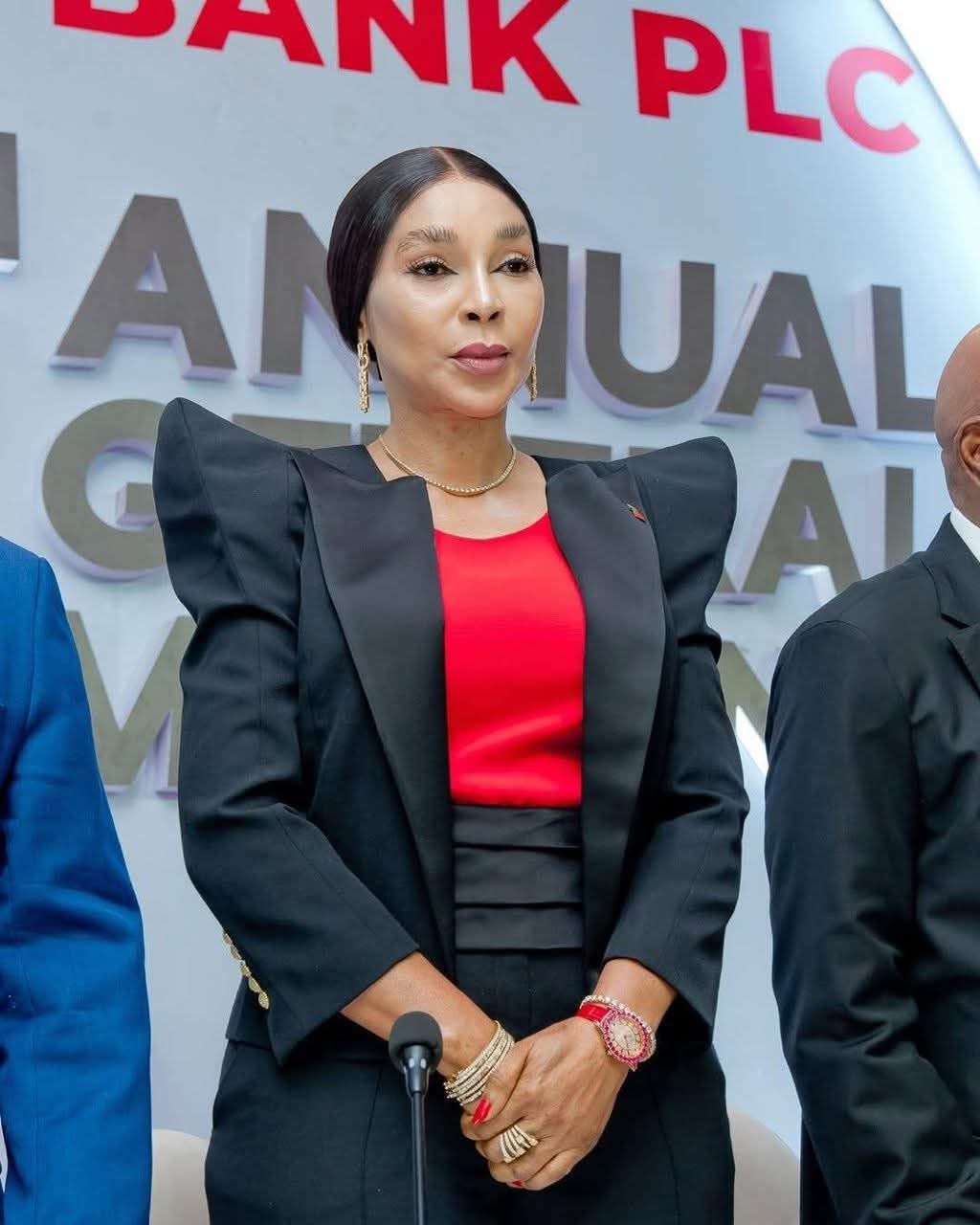
Zenith Bank Plc has once again proven why it stands tall as one of Africa’s most resilient financial institutions.
The bank’s half-year 2025 results, released this week, are not just a story of numbers—they are a story of bold leadership, decisive strategy, and a clear vision under the stewardship of its Group Managing Director/CEO, Dame Dr. Adaora Umeoji, OON.
Despite writing off a staggering ₦760 billion in bad loans as part of the industry-wide CBN forbearance regime exit, Zenith still posted a solid ₦532 billion profit after tax.
For shareholders, this translated into smiles: the Board approved an interim dividend of ₦1.25 per share, a 25% increase from the ₦1.00 paid in H1 2024.
Headline Numbers at a Glance
Gross earnings surged 20% YoY to ₦2.52 trillion (H1 2025 vs. ₦2.1 trillion H1 2024).
Interest income jumped 60% YoY to ₦1.84 trillion, powered by higher yields and strong loan book performance.
Net interest income nearly doubled, up 89% YoY to ₦1.35 trillion.
Customer deposits climbed to ₦23.5 trillion (₦22 trillion Dec 2024), with savings deposits (₦8.8 trillion) now overtaking current accounts (₦8.7 trillion) for the first time.
Total assets stood firm at ₦31 trillion, up from ₦30 trillion in Dec 2024.
Capital adequacy ratio (CAR) at a robust 26%, far above regulatory thresholds.
NPL ratio improved to 3.1% (vs. 4.7% in Dec 2024), showing stronger asset quality.
Even after a heavy one-off loan provision, Zenith maintained a return on average equity (ROAE) of 24.8%—a testament to efficiency and resilience.
Adaora’s Decisive Leadership
What stands out in this result season is not just the numbers but the leadership behind them.
Adaora Umeoji has shown that banking leadership in Nigeria can be bold, disciplined, and visionary all at once. Instead of chasing flashy profit headlines, her team took the harder route—“biting the bullet” with ₦760bn provisions to clean up the loan book and build a stronger foundation for the future.
This decision signals clarity of purpose: protect the balance sheet today, unlock greater growth tomorrow. In her own words:
> “Our H1 2025 performance reaffirms the strength and resilience of the Zenith brand. In the face of elevated provisioning, our total asset quality has recorded a marked improvement while our balance sheet remains strong, liquid and well positioned to capture emerging opportunities.”
Adaora’s leadership has also emphasized sustainability, gender parity, and digital transformation.
Under her watch, Zenith is not just chasing profits—it is positioning itself as a future-ready institution, committed to SMEs, women entrepreneurs, and environmentally responsible banking.
Why It Matters
For investors, these results are both reassuring and exciting. Interim dividends are higher, capital buffers are stronger, and the path to sustained growth in 2H 2025 is clear. Zenith’s fortress balance sheet, coupled with a bold leadership style, ensures that the bank remains a bellwether for the Nigerian and African financial system.
As the recapitalization race continues in Nigeria’s banking industry, Zenith already sits comfortably above the ₦500bn capital requirement, with shareholders’ funds at ₦4.57 trillion. This further reinforces its reputation as a safe haven for investors.
Conclusion
Zenith Bank’s H1 2025 results are not just a financial scorecard—they are a leadership case study. Under Adaora Umeoji’s stewardship, Zenith has shown that true leadership means facing challenges head-on, taking the tough decisions, and still delivering value to shareholders.
The numbers are impressive. The dividends are attractive. But the story behind it all—the story of bold, visionary leadership—is what will sustain Zenith Bank’s dominance in the years to come.








The Central Bank of Nigeria (CBN), has declared that banks and financial institutions must establish and maintain a temporary watch-list for Bank Verification Numbers (BVN) implicated in suspected fraudulent transactions.
According to the CBN in a circular dated March 12, 2026 and signed by its Director of Payments System Policy Department, Musa I. Jimoh, the apex bank said such a suspected BVN may remain on the temporary watchlist for a maximum period of twenty-four (24) hours during which the owner would be contacted to make clarifications.
The circular explained that the move is part of several new measures under a revised regulatory framework aimed at enhancing financial system stability.
“A BVN may remain on this temporary Watchlist for a maximum period of twenty-four (24) hours, during this period, the BVN owner shall be contacted to provide clarification regarding the identified transaction(s),” the circular stated.
The circular also sets an age requirement for BVN enrolment, restricting registration to individuals who have attained eighteen (18) years and above.
The CBN also added that amendments to phone numbers linked to a BVN shall be allowed only once.
“Amendments to phone numbers linked to a BVN shall be allowed only once,” the circular noted.
The apex bank stated that access to BVN databases will remain tightly controlled.
“Access to the BVN databases shall be exclusively granted to Central Bank of Nigeria (CBN) licensed financial institutions.
“Notwithstanding this provision, the Central Bank of Nigeria (the Bank) reserves the right to approve access to the BVN databases in extenuating circumstances and in accordance with the provisions of extant laws,” the circular said.
Financial institutions are expected to comply with the new requirements, and customers may be contacted by their banks if their BVNs are temporarily flagged during the new fraud monitoring process.
The new policy, as stated by the CBN, takes effect from May 1, 2026.
NNPC Reduces Fuel Price
The Nigerian National Petroleum Company Limited has reduced the pump price of Premium Motor Spirit, also known as petrol, at its retail stations in Lagos and Abuja.
The adjustment took effect on Wednesday as the national oil company reduced the price to N1,130 per litre in Lagos and N1,165 per litre in Abuja.
The new price means motorists in Lagos are now paying N100 less than the previous pump price of N1,230 per litre.
In Abuja, the new rate represents a reduction of N95 from the former price of N1,260 per litre.
Checks showed that the new price was already in place at several NNPC filling stations in Lagos, including outlets located along Isheri Oshun Road, Apple Junction and Ago Palace Way.
The same adjustment was also recorded in the Federal Capital Territory, where NNPC stations in areas such as Jabi and Wuse began selling petrol at N1,165 per litre.
The reduction comes at a time when many private oil marketers have not yet adjusted their pump prices to match the recent drop in the gantry price announced by the Dangote Petroleum Refinery.
Dangote Refinery had earlier lowered its gantry price for petrol by N100 per litre, bringing it down to N1,075 per litre.
The change followed a fall in international crude oil prices.
Global oil prices had earlier risen sharply due to tensions in the Middle East involving the United States, Iran and Israel.
The crisis raised fears of possible disruption to oil supply, especially around the Strait of Hormuz, an important route for global crude shipments.
Prices later began to fall after the President of the United States, Donald Trump, indicated that the conflict might end soon.

Grief has swept through the business and faith communities following the passing of Sir Innocent Chinedu Onuoha, the respected entrepreneur and Executive Chairman of InnoChris Group. He died peacefully in his sleep on December 11, 2025, at his home in Lagos. He was 71.
Born in 1954 in Umuoma Umuaro II Autonomous Community, Isiala Mbano Local Government Area of Imo State, Onuoha grew to become a symbol of enterprise, generosity, and unwavering faith. A devoted member and evangelist in the Anglican Communion, he lived a life that blended business success with service to God and humanity.
Long before many came to know his vast business interests, the name Innochris had already echoed in popular culture. In the 1990s, legendary Ogene music maestro Oliver De Coque famously chanted “Ugbo ndi oma Innochris eh!” in one of his songs — a line that celebrated the Onuoha brothers and helped make Sir Innocent Onuoha and his brother Christian Onugha widely known during that era.
Onuoha’s entrepreneurial journey began after years of professional experience working as secretary to a former Chief Engineer at Flour Mills of Nigeria. With determination and vision, he went on to establish InnoChris Group, a conglomerate that grew to include InnoChris Transport, InnoChris Computers, and InnoChris Spare Parts, serving customers across Nigeria.
Continues in comments below

Benita Enwonwu in the 1970s: Model, Actress, and Daughter of Ben Enwonwu

Kidnappers Took Loan With My Phone – Victim Recounts Ordeal

11 more arrested over Ozoro “r@ping festival”

-
Business1 year ago
US court acquits Air Peace boss, slams Mayfield $4000 fine
-

 Trending1 year ago
NYA demands release of ‘abducted’ Imo chairman, preaches good governance
-

 Politics1 year ago
Mexico’s new president causes concern just weeks before the US elections
-

 Politics1 year ago
Putin invites 20 world leaders
-

 Politics1 year ago
Russia bans imports of agro-products from Kazakhstan after refusal to join BRICS
-
Entertainment1 year ago
Bobrisky falls ill in police custody, rushed to hospital
-
Entertainment1 year ago
Bobrisky transferred from Immigration to FCID, spends night behind bars
-
Education2 years ago
GOVERNOR FUBARA APPOINTS COUNCIL MEMBERS FOR KEN SARO-WIWA POLYTECHNIC BORI