By Prince Eze Ugochukwu
When a health system that had been gasping for breath a decade ago begins steadily to breathe again, the honest chronicler must note it. Not with the noise of a market square, but with the sobriety of a doctor reading a patient’s chart.
To say Imo State’s health sector has been completely fixed would be a lie. To say nothing has changed would be an equally lazy falsehood.
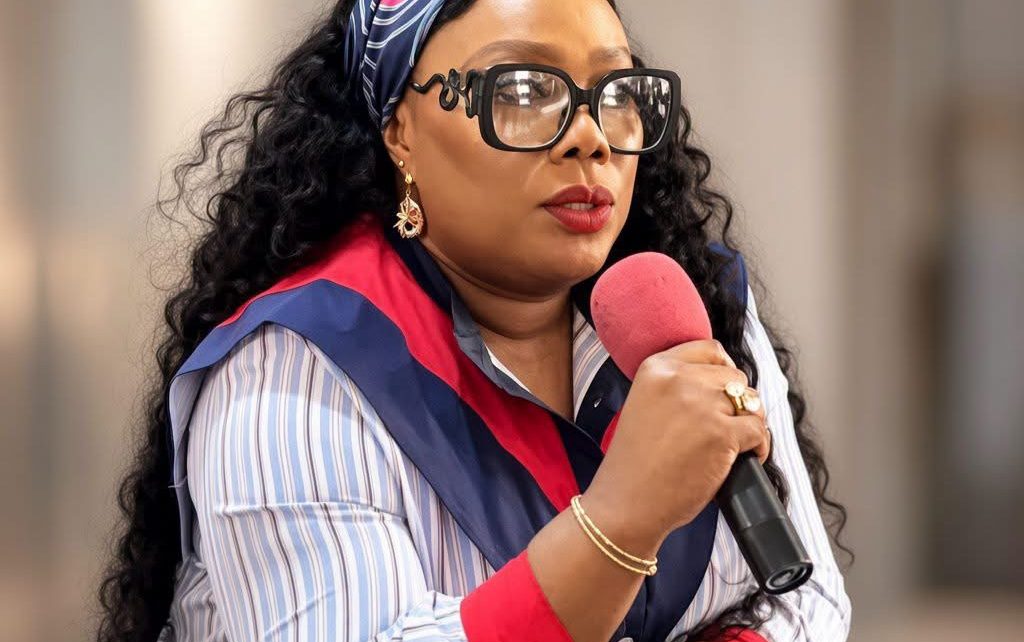
Since Dr. Mrs. Chioma Vivian Egu was sworn in as Commissioner for Health on April 30, 2024, the state has been taking steady, deliberate steps — some large, some small — to mend a system that had been struggling for years.
The elders say, nwayọ nwayọ ka e ji aracha ofe dị ọkụ — slowly, slowly, one eats hot soup. That is the spirit of her tenure. Not noise. Not magic. Just steady work.
The first major reform came in May 2025, when Governor Hope Uzodimma directed the consolidation of the state’s two health ministries — Tertiary Health and Primary Health — into a single Ministry of Health, with Egu at the helm. The handover was completed by June 2, 2025.
This was not merely a change of signboards. It was an attempt to connect the dots between primary care in the villages and specialist care in the cities. Too often, patients had fallen through the cracks between the two. The merger was meant to close those cracks.
At the Imo State Specialist Hospital, Umuguma, Owerri, the changes are visible.
In July 2025, a fresh consignment of equipment arrived — six trailers loaded with Intensive Care Unit machines, paediatric incubators, paediatric beds, modern hospital furniture, and fully equipped consulting rooms. The contractor, Yobachi Engineering Services Ltd, said it was just the beginning. And it was.
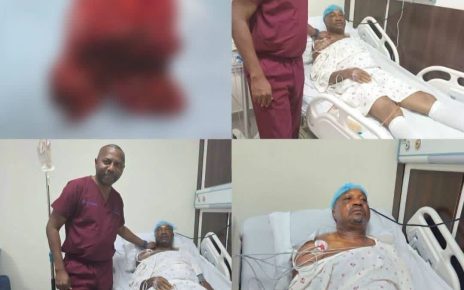
A dedicated building now houses the Imo Robotics and Oncology Centre, also known as the Prostate Clinic, under a public-private partnership. It is equipped with advanced medical equipment, specialist surgical units, intensive care facilities, and robotic surgery capabilities.
In August 2026, the first robotic-assisted surgery in Imo since the state’s creation fifty years ago was performed there. The procedure was led by Professor Kingsley Ekwueme, a UK-based consultant robotic and laparoscopic surgeon and Fellow of the Royal College of Surgeons. Governor Uzodimma was present. The technology allows for smaller cuts, less pain, shorter recovery, and better precision, especially in prostate cancer cases where nerves must be preserved. It is a small step toward making Imo a place where people come for care, not just leave to other destinations.
At the 100-Bed OSSAP-SDGs Mother and Child Hospital, sited within Awo-Omamma General Hospital and commissioned under Egu’s ministry, the facilities include private and general wards, an operating theatre, recovery rooms, consultation units, scanning rooms, adult and paediatric Intensive Care Units, a laboratory, ultrasound machines, emergency carts, delivery kits, and vacuum extractors.
At IMSUTH, Orlu, over N4 billion has been invested to rehabilitate facilities and procure equipment, including a new MRI and CT scan, to replace obsolete ones. Accreditation has been restored, allowing stranded students to graduate. A world-class Heart Transplant Centre is under construction. A 200-bed Infectious Disease Centre is 85 percent complete, in partnership with Seplat Energy and NNPCL. There is a medical oxygen plant and a 260kVA solar power system. The Presidency inspected these projects in July 2026 and described them as evidence of purposeful leadership.
That is something.
Egu does not serve only from a desk.
On September 18, 2025, she led the inspection tour for the flag-off of 55 new Primary Health Centres across all 27 Local Government Areas, alongside IMSHIA CEO Dr. Uche Ewelike. That day, she visited Orogwe/Ohii in Owerri West, Enyiogwugwu and Ibeku in Aboh Mbaise, Nneorie in Ngor Okpala, Akpodim Health Centre in Ezinihitte Mbaise, and Umuohiagu Health Centre in Ngor Okpala.
The full list of 55 new health centre locations includes Enyiogwugwu and Ibeku in Aboh Mbaise; Nnarambia and Obodo Ahiara/Ihenweorie in Ahiazu Mbaise; Umueze 2 and Umuakagu in Ehime Mbano; Akpodim and Ezinihitte 6; Isiekenesi 2, Umueshi, and Umuobom in Ideato South; Amayi and Umuawuchi/Nomo in Ihitte Uboma; Iho and Uzoagba in Ikeduru; Obollo, Ibeme, and Anara in Isiala Mbano; Amandugba 1 and Isu Njaba in Isu; Ogbaku and Ihitte in Mbaitoli; Imerienwe, Amala/Ntu, Ohekelem Nnorie, and Obike/Elelem in Ngor Okpala; Obinator and Amucha in Njaba; Umanachi, Umudi, and Owerrenkwoji 1 in Nkwerre; Amaigbo 7, Dim na N’Ume, and Abajah 1 in Nwangele; Achara and Umologho/Umuagu in Obowo; Ejemekwuru/Akabor and Egwe/Egbuoma in Oguta; Ohuba and Egbema in Ohaji Egbema; Umuoko and Okohia in Onuimo; Amannachi and Amaruru in Orsu; Amiri 2, Amagu, Akatta 1, and Awo Omamma 1 in Oru East; Otulu and Mgbidi 1 in Oru West; Obibi Ezena, Emekuku 1, and Orji 2 in Owerri North; Orogwe/Ohii and Oforola in Owerri West.
She said all facilities were on track for completion and ready for public use no later than October 2026. Many of them are.
On November 7, 2025, she was back on the road, inspecting Ukama Amafor Health Centre in Imerienwe, Elelem Health Centre, and Amapu-Amala Health Centre in Alatia Amala, all in Ngor Okpala, with a directive that they be completed on time.
Her policy work has been quieter but no less important. What commends Dr. Chioma Vivian Egu’s tenure is not rhetoric but reach.
In April 2025, she walked the streets of Owerri herself to flag off African Vaccination Week with a simple but powerful mantra — _”Immunization for All is Humanly Possible”_ — insisting that every vaccine is safe, effective and free.
That walk became policy:
1,262,390 children receiving full Vitamin A doses and 125,873 pregnant women receiving Multiple Micro-nutrient Supplements across the two rounds of 2025 MNCH Week; a deliberate pivot in February 2026 to replace the measles-only shot with the measles-rubella vaccine to protect unborn children from blindness, deafness and congenital heart disease; and a statewide catch-up that saw children, from 9 months to 14 years, targeted in schools, and churches.
It is the quiet competence of deploying cold chains, trained personnel and insurance coverage that removes cost as a barrier — and in doing so, restores the original promise of government: that no mother should die giving birth and no child should die from a disease we can prevent.
In October 2025, she met with UNICEF’s Enugu Field Office to discuss the Multiple Micronutrient Supplementation and Child Nutrition Fund, to ensure that supplements reach all pregnant women. Her representative, Permanent Secretary Kennedy Adinnu, put it simply: health should be seen as an investment, not just an expenditure.
When Ebola threatened in 2025, she moved to set up Rapid Response Teams in all 27 LGAs, with surveillance at borders, airports, motor parks, and markets, and the procurement of Personal Protective Equipment.
In March 2026, she chaired the BHCPF 2026 Q1 State Oversight Committee meeting, aligning the 2026 Annual Operational Plan and expanding enrollment for vulnerable people through IMSHIA.
Also in March 2026, she supported the David Omenukor Foundation’s “Blue Hat & Bow Tie” event at Golden Vista Hotel, where over 1,000 people were screened for colorectal cancer. On February 8, 2026, she joined the World Cancer Day Walk, which ended at Imo State Specialist Hospital, Umuguma. She also briefed the UN Deputy Secretary-General, Amina Mohammed, at Government House on improvements in primary and secondary healthcare.
There has been recognition, though Egu wears it lightly.
In May 2025, the Ministry, working with IMSHIA, received the award for Best Health Insurance and Managed Care Agency in Provider Network and Performance Management at the Health Insurance and Managed Care Leadership Awards.
The real reward, however, is not a plaque. It is the 2.7 million residents who have enrolled in the ImoCare Health Insurance Programme within two and a half years — one of the largest single health insurance enrollments in Sub-Saharan Africa. It is the child from Okwuabala, Orlu LGA, born with multiple complex birth defects, now receiving specialist care at Innobel Specialist Hospital under the insurance programme. It is the pensioners who received major eye surgeries at the IMSU Medical Centre. These are not statistics. They are people.
Egu herself has been careful to share the credit.
She says, “Through His Excellency we have seen improvements in our immunization systems, primary health care delivery, and expansion of outreach to vulnerable populations.” She says, “Health should be viewed as an investment rather than an expenditure.” And she stated, “Partnership with development partners is key to sustaining the foundation the Governor has paid in healthcare sector.” That is not false modesty. It is the understanding that no single person can heal a whole state without partnerships.
Her work is not finished. Dr. Chioma Vivian Egu has not performed miracles. She has simply shown up, listened, and worked.
In a sector that had almost lost hope, that is no small thing. Imo’s health sector is not yet healed. But it is finally taking its medicine.