
Politics
36 state Governors submit report on State Police, indicate support

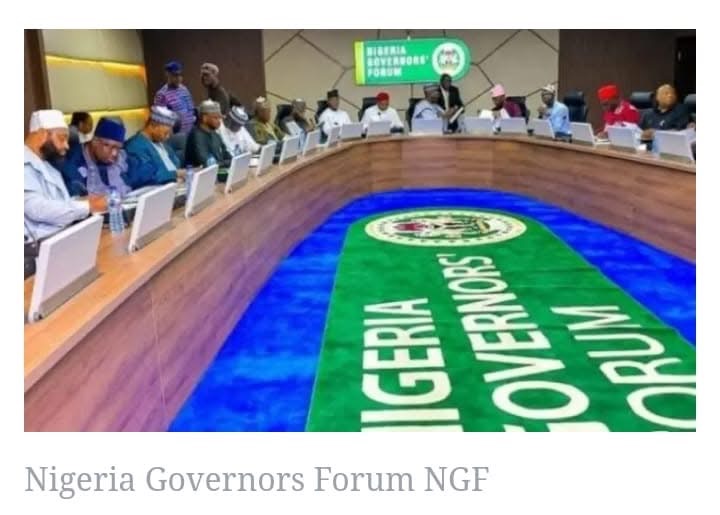
The National Economic Council (NEC) has received position reports on the establishment of State police from the 36 state governors.
The NEC meeting was chaired by Vice President Kashim Shettima and attended by state governors, deputy governors, ministers and some presidential aides.
Briefing State House Correspondents shortly after the meeting which lasted for over 4 hours, Governor Uba Sani of Kaduna State said the state governors indicated an overwhelming support for the establishment of state police because of the security challenges bedeviling their states.
However, he said the NEC postponed deliberation on the matter to January 2024.
“Virtually every state has its own peculiar security challenges, and many agree that state police is the way forward,” Sani stated.
“Today, the council decided to step down the discussion until the next meeting to allow for further deliberation and the presentation of a report from the NEC secretariat.”
The governor highlighted the pressing need for enhanced security measures, citing ungoverned spaces across the country and a significant shortage of personnel in federal security agencies, including the police and armed forces.
“The establishment of state police will help address these gaps, particularly in states grappling with unique security issues,” he said.
He also disclosed that the secretariat has committed to engaging stakeholders further before the council’s January meeting where a comprehensive report will be presented.
On the issue of flooding, the National Economic Council approved the disbursement of more funds to state governments where recent flood disasters had ravaged communities, leading to loss of lives and properties.
NEC said the approval would enable the affected states to provide adequate financial supports to the victims.
Meanwhile, the NEC has also approved 0.05% of non-oil federation revenue as funding for the Revenue Mobilization, Allocation, and Fiscal Commission (RMAFC).
Announcing the resolution after Thursday’s meeting, Anambra State Governor, Chukwuma Soludo, stated that the decision followed a report presented by RMAFC on November 21, which highlighted funding challenges faced by the commission.
“RMAFC plays a vital role in ensuring equitable revenue allocation across the federation, but it has been operating under significant financial constraints,” Governor Soludo explained.Soludo explained.
The council reviewed RMAFC’s proposal for 0.75% of non-oil revenue but approved 0.05%, subject to further scrutiny by the National Assembly. This allocation is part of broader tax reforms currently under consideration.
In addition to the funding approval, NEC directed RMAFC to submit a draft repeal-and-replace bill to the National Assembly to modernise its governing legislation and align it with the evolving fiscal realities of the country.
Governor Soludo emphasized the importance of these measures, noting, “This institution carries critical responsibilities in the functioning of our federation.
“Adequate funding and an updated legal framework are essential to empower RMAFC to meet its obligations effectively.” (Channels TV)
Kindly follow Ekwutosblog for verified News and Current Affairs in addition to insightful contents that inform, inspire, educate and entertain you always.
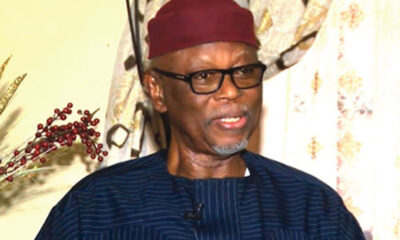






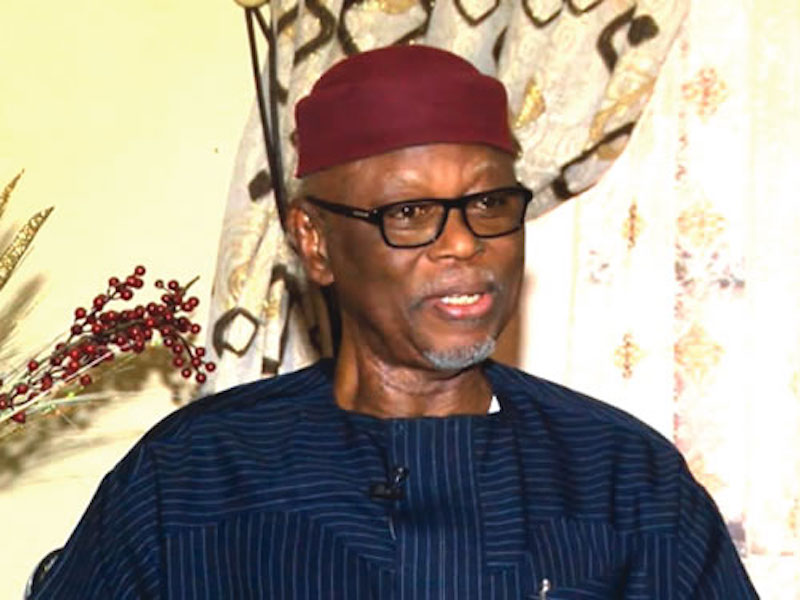
Chairman, Policy Manifesto Committee of the African Democratic Congress, ADC, John Odigie-Oyegun, says former president Muhammadu Buhari gave him the shock of his life, six months into his administration as Nigeria’s leader.
Oyegun made this disclosure on Friday when he featured in an interview on Arise Television’s ‘Prime Time’.
He revealed that as National Chairman of the All Progressives Congress, APC, he went to tell Buhari that he was not delivering his election promises to Nigerians but that the late president told him he would not rule with strictness, but rather wanted to show Nigerians that he is a true civilian president.
The former APC National Chairman lamented that it became business as usual, from there.
“I was national chairman of the APC. Six months or less into our assuming office, fairly alarmed, I went to the late President Buhari for a one-on-one talk. I said Mr President, this is not what the people were expecting. They wanted a bit of the old president Buhari.
“And he explained to me, Mr Chairman, I have learned my lesson. I was shocked. And don’t forget at that time, a lot of prominent Nigerians took their holidays abroad, just to be sure and see what this new sheriff in town will be.
“Buhari told me he wants to now show the people that he’s a true civilian president in Agbada. And by the time we finished the conversation, I said Oh God, we are finished. Because, if he’s not ready to be strict, what’s the point?
“Weeks later, months later, years later, I was proven correct. And of course, it became business as usual, only that they are a new set of tenants in Aso Rock. That was a shocker,” he said.
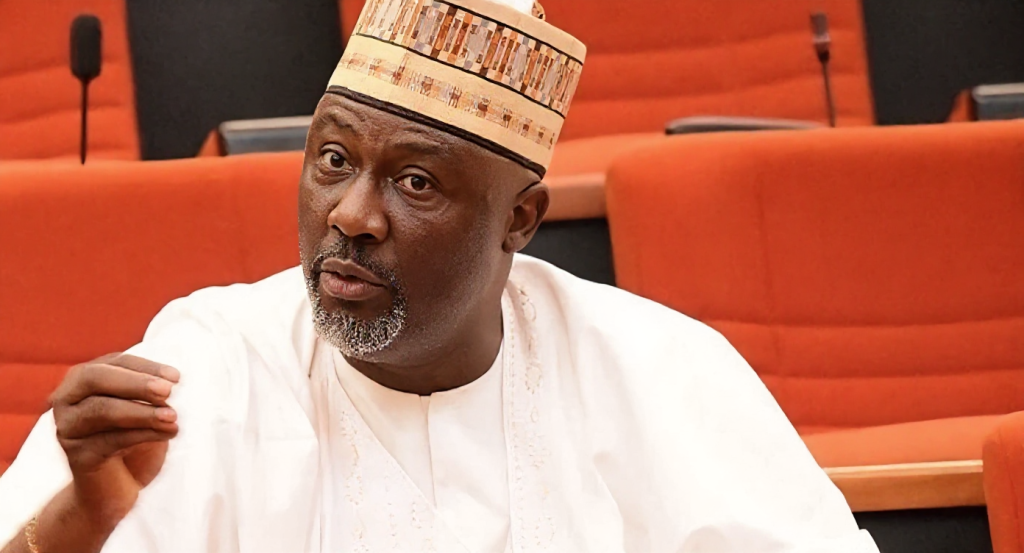
Former lawmaker, Dino Melaye Esq, has raised concerns over the Senate’s reported rejection of the electronic transmission of election results.
The move, according to Melaye, is a clear endorsement of election rigging and an indication of a sinister plan to rig the 2027 elections.
In a statement on Friday, the former lawmaker criticized the Senate’s decision, stating that it undermines the credibility of the electoral process.
The African Democratic Congress, ADC chieftain, also stated that the move opens the door for electoral manipulation and fraud.
He further warned that the rejection of electronic transmission of results is a step backwards for democracy in Nigeria.
Melaye called on lawmakers and citizens to stand up against “this blatant attempt to undermine the will of the people and ensure that future elections are free, fair, and transparent”.
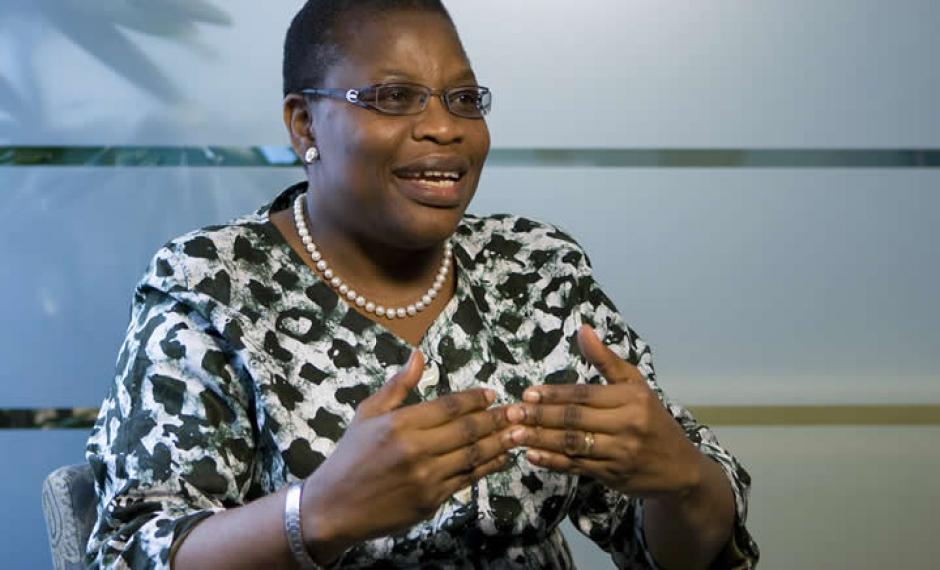
Former Minister of Education, Oby Ezekwesili, has said Nigerians have every reason to be mad at the Senate over the ongoing debate on e-transmission of election results.
Ezekwesili made this known on Friday when she featured in an interview on Arise Television’s ‘Morning Show’ monitored by DAILY POST.
DAILY POST reports that the Senate on Wednesday turned down a proposed change to Clause 60, Subsection 3, of the Electoral Amendment Bill that aimed to compel the electronic transmission of election results.
Reacting to the matter, Ezekwesili said, “The fundamental issue with the review of the Electoral Act is that the Senate retained the INEC 2022 Act, Section 60 Sub 5.
“This section became infamous for the loophole it provided INEC, causing Nigerians to lose trust. Since the law established that it wasn’t mandatory for INEC to transmit electoral results in real-time, there wasn’t much anyone could say.
“Citizens embraced the opportunity to reform the INEC Act, aiming to address ambiguity and discretionary opportunities for INEC. Yet, the Senate handled it with a “let sleeping dogs lie” approach. The citizens have every reason to be as outraged as they currently are.”

How Buhari shocked me 6 months into his administration – Oyegun

Gunmen k!ll President General of Ogidi community and one other in Anambra.

Police bust syndicate behind nude photo blackmail in Lagos

-
Business1 year ago
US court acquits Air Peace boss, slams Mayfield $4000 fine
-

 Trending1 year ago
NYA demands release of ‘abducted’ Imo chairman, preaches good governance
-

 Politics1 year ago
Mexico’s new president causes concern just weeks before the US elections
-

 Politics1 year ago
Putin invites 20 world leaders
-

 Politics1 year ago
Russia bans imports of agro-products from Kazakhstan after refusal to join BRICS
-
Entertainment1 year ago
Bobrisky falls ill in police custody, rushed to hospital
-
Entertainment1 year ago
Bobrisky transferred from Immigration to FCID, spends night behind bars
-
Education1 year ago
GOVERNOR FUBARA APPOINTS COUNCIL MEMBERS FOR KEN SARO-WIWA POLYTECHNIC BORI