
Politics
A path to Ukrainian peace: Beyond exaggerated expectations

The protracted, attritional war that Russia has waged against Ukraine for nearly three years has led analysts and political leaders alike to ponder how to end this war as soon as possible and achieve a lasting peace.
Increasingly, proposals are emerging to apply a model similar to the one implemented in Germany after World War II. Adapting to Ukraine would mean that it would never relinquish the annexed territories, and the West would never recognise these territories as Russian.
However, Ukraine would accept the reality that it cannot reclaim the occupied territories through force and would commit to a non-violent approach.
In exchange, Ukraine would demand concrete, not merely symbolic, security guarantees that Russia would not repeat its aggression against Ukraine.
Just recently, both Czech President Petr Pavel and outgoing NATO Secretary General Jens Stoltenberg have expressed themselves along a similar vein. So, what is preventing the implementation of such a solution?
I would say that a problem lies in the exaggerated and unrealistic expectations held by Ukrainian citizens and a significant part of the democratic world.
This is a common phenomenon within the political sphere. Unrealistic expectations can be inadvertently cultivated not only by populists but also by well-intentioned politicians who make excessive promises to their constituents.
Such expectations pose a significant risk, not merely to the politicians who propagate them, but more importantly to the communities they represent, as these communities may find themselves on a perilous path with limited options for reversal.
Can we really make Putin kneel?
It appears that Ukraine has experienced precisely this phenomenon. The initial Ukrainian successes, including the defence of Kyiv against a blitzkrieg (a rapid invasion by Russian airborne troops at the outset of the war), the defence of Kharkiv, and the subsequent daring counteroffensive, led both Ukrainian President Volodymyr Zelenskyy and parts of the West to experience euphoria and to foster expectations of a Ukrainian victory over Russia, with Western support.
These expectations included the notion of expelling Russian forces from all occupied territories, including Crimea.
Russian soldiers guard a pier where two Ukrainian naval vessels are moored, in Sevastopol, March 2014 AP Photo

The West is also to blame for creating these exaggerated, unrealistic expectations. Some leaders hoped to persuade Putin to back down or at least suspend his operation. In the case of Ukraine, the granting of EU candidate status was considered by many to be something that was not even on the table.
Talk of the West’s vast economic and military superiority also contributed to the illusion that, eventually, Putin will kneel.
However, it seems to me that President Zelensky also made a key mistake by not involving the Ukrainian parliamentary opposition in solving the problem.
On the contrary, there have been reports here and there that Ukrainian border guards have not allowed the leader of the opposition, former President Petro Poroshenko, to leave Ukraine.
The mayor of Kyiv, Vitali Klitschko, has repeatedly expressed his criticism of the president. There are no known joint negotiations by the wider Ukrainian political leadership to seek a common solution to the key issues of the war.
I believe Zelenskyy should do this
And that’s how misinformation spreads. For example, the idea that these are various nationalist, if not outright fascist, units of Ukrainian fighters who are preventing President Zelenskyy from making any compromises.
In reality, it is the Ukrainian president himself who has manoeuvred himself into a position where the opposition will not proactively help him, and his voters will have a hard time understanding a potential change of approach to ending the war and thus will also have a hard time accepting any compromise.




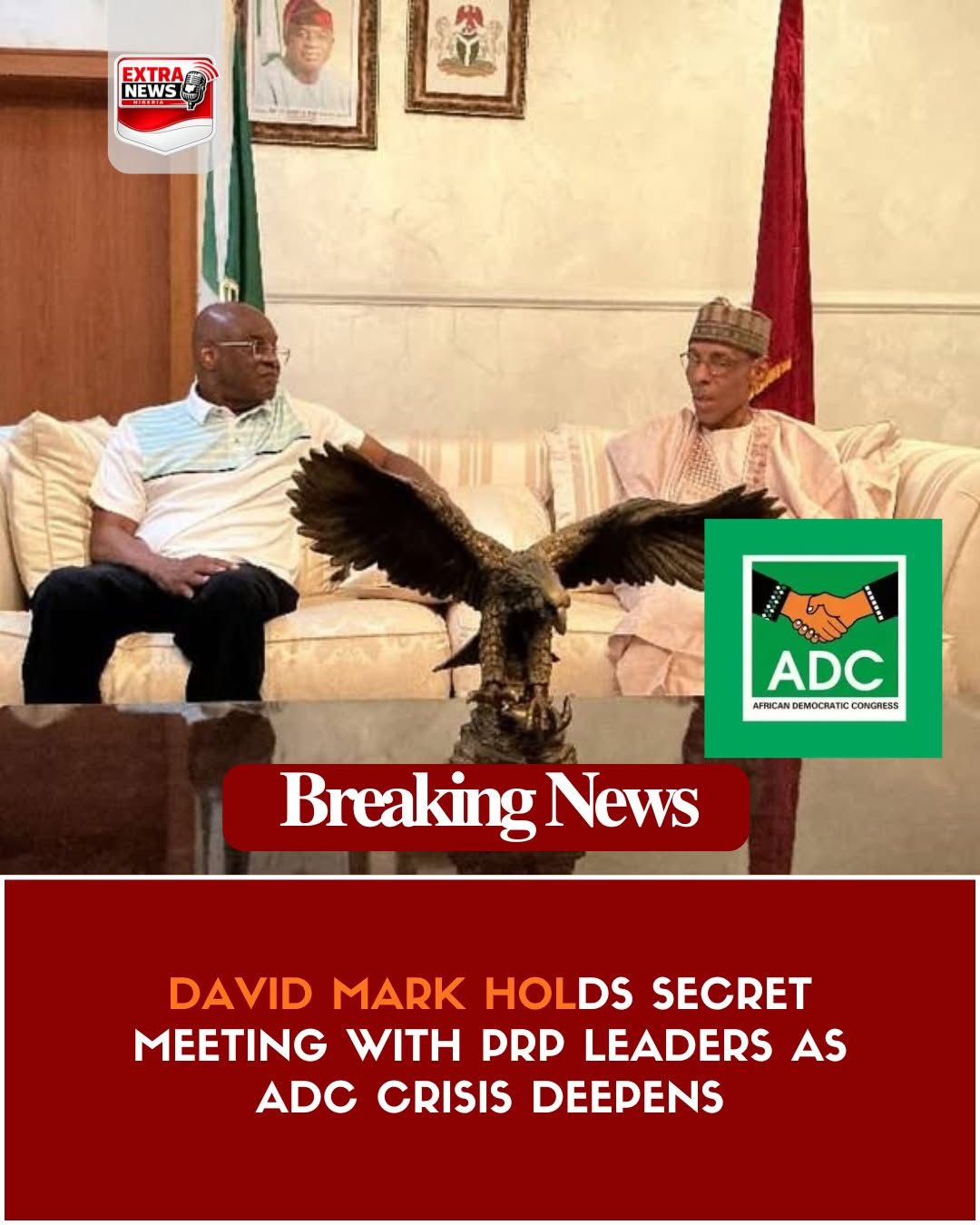
The embattled National Chairman of the African Democratic Congress, David Mark, on Friday held a closed-door meeting with leaders of the Peoples Redemption Party in Abuja. The private consultation is seen as a fresh round of political moves as the ADC continues to battle a lingering leadership crisis and growing internal divisions.
Top figures from both parties were said to be present at the meeting, including PRP National Chairman Hakeem Baba-Ahmed and senior ADC officials. The development is already drawing attention as opposition parties continue realignments ahead of the 2027 political season, with many watching closely for possible alliances and next steps in the party crisis.
Politics
“ADC is a Holy Party, Cannot be used to Scam Nigerians Again” – Hon Success Opara tells David Mark
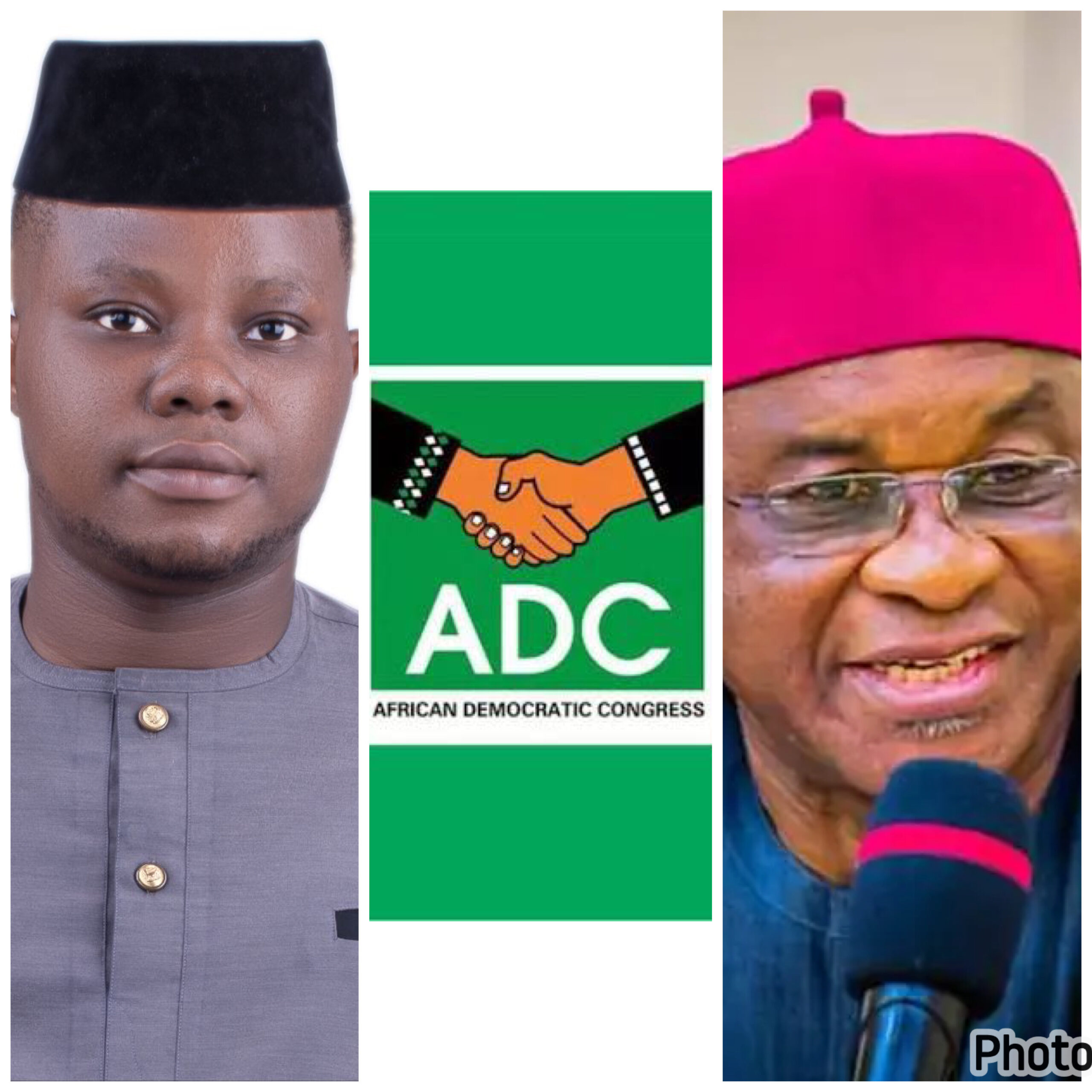
ADC Party in Turmoil: Hon Success Opara Slams Leadership, Warns Against Scamming Nigerians
Abuja, Nigeria – The African Democratic Congress (ADC) is facing internal strife as Hon Success Opara, a prominent party official, has warned against attempts to use the party to deceive Nigerians. Opara specifically criticized the leadership of David Mark, stating that the party cannot be used to scam citizens again.
“ADC holy Party cannot be used to scam Nigerians again,” Opara said, emphasizing that those forming coalitions are hindering the party’s growth and denying youths opportunities to thrive.
“Those who are forming coalition don’t want to give the youths the chance to strive in the party,” she added.
Opara’s statement highlights the deepening divisions within the ADC, with concerns over leadership and the party’s direction.
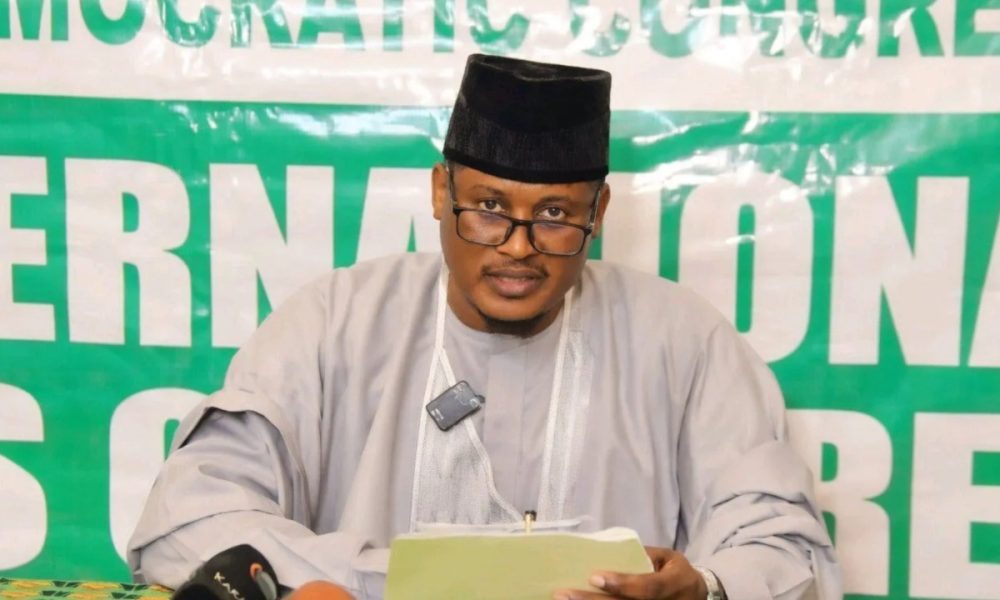
The factional National Chairman of the African Democratic Congress (ADC), Nafiu Bala Gombe, has announced that the party under his leadership will bar individuals above the age of 55 from contesting for political positions.
Gombe made the disclosure during an interview with BBC Hausa, where he outlined a vision centred on generational change and greater youth participation in politics.
“The African Democratic Congress (ADC) is a party that belongs to all Nigerians. What we are doing now is to ensure the party moves forward properly.
“We have decided that we will give the youths a real chance. The time has come for young people to take the lead in politics.
“If you are over 55 years old, you are not going to contest for positions in the ADC under our leadership.
“We want to bring in fresh blood, new ideas, and energy from the youth. Nigeria’s future depends on the young generation.
“The old ways have not worked well for the country. We need to open the door wide for youths to participate fully as candidates, leaders, and decision-makers,” he said.

David Mark Holds Secret Meeting With PRP Leaders as ADC Crisis Deepens

Chaos As Military Officers Exchange Blows During Tinubu’s Visit To Bayelsa (Videos)

HRH Ekwueme of Ochia Kingdom Iynched & kiIIed in Imo.

-
Business1 year ago
US court acquits Air Peace boss, slams Mayfield $4000 fine
-

 Trending1 year ago
NYA demands release of ‘abducted’ Imo chairman, preaches good governance
-

 Politics1 year ago
Mexico’s new president causes concern just weeks before the US elections
-

 Politics1 year ago
Putin invites 20 world leaders
-

 Politics1 year ago
Russia bans imports of agro-products from Kazakhstan after refusal to join BRICS
-
Entertainment1 year ago
Bobrisky falls ill in police custody, rushed to hospital
-
Entertainment1 year ago
Bobrisky transferred from Immigration to FCID, spends night behind bars
-
Education2 years ago
GOVERNOR FUBARA APPOINTS COUNCIL MEMBERS FOR KEN SARO-WIWA POLYTECHNIC BORI