
Politics
A non Commissioned Officer Killed Ironsi..

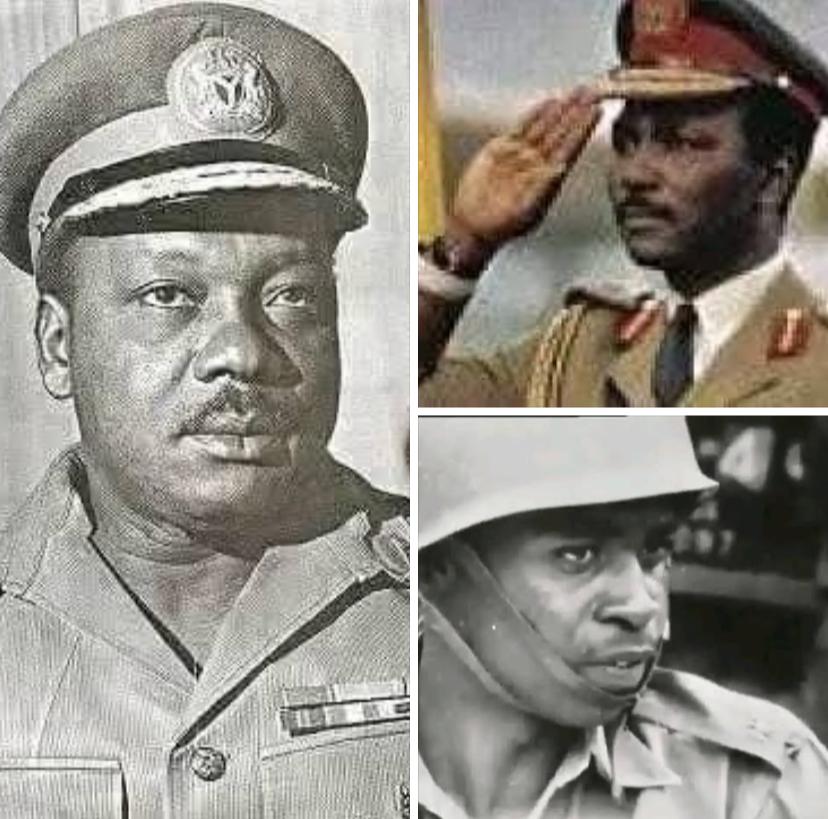
Fifty seven years after his assassination, the departure of General Johnson Aguiyi – Ironsi continues to be engulfed in mystery. Even those closest to him came out with different versions of what transpired in Ibadan, on July 29, 1966.
In all accounts, it is impossible to name who really shot the first African to command United Nations forces and the first Nigerian general. What is certain is that the trigger was pulled by a Non Commissioned Officer ( NCO) after commissioned officers lost control of the rabid situation.
Recently, Col. Sani Bello, then a Second Lieutenant and Ironsi’s Army Aide de Camp ( ADC) debunked claims that he made a deal with the Air Force ADC, Lt. Andrew Nwankwo. The supposed agreement benefitted the duo who escaped as their boss faced imminent death.
Fifty seven years after his assassination, the departure of General Johnson Aguiyi – Ironsi continues to be engulfed in mystery. Even those closest to him came out with different versions of what transpired in Ibadan, on July 29, 1966.
In all accounts, it is impossible to name who really shot the first African to command United Nations forces and the first Nigerian general. What is certain is that the trigger was pulled by a Non Commissioned Officer ( NCO) after commissioned officers lost control of the rabid situation.
Recently, Col. Sani Bello, then a Second Lieutenant and Ironsi’s Army Aide de Camp ( ADC) debunked claims that he made a deal with the Air Force ADC, Lt. Andrew Nwankwo. The supposed agreement benefitted the duo who escaped as their boss faced imminent death.
Our electric bike will crash price of goods and fight climate change – Adekunle Ajasin Varsity….0:00 / 1:00
It is curious that it took 57 years for Bello to come out with this version. Nwankwo is late now, so it is difficult to get his reaction. However, I find it odd that a brave officer would agree to run away instead of defending his principal even if death was the price.
Lt. Akintunde Akinsehinwa died defending Gen. Murtala Mohammed in 1976. Maj. Usman Bello was killed as he tried to fight for Gen. Ibrahim Babangida, in 1990. From Bello’s account, he was arrested and detained when he went to ascertain what had become of those who were sent to find out what went wrong at Government House, Ibadan.
While Nwankwo announced to Biafrans that Bello saved him, the latter credits Garba Dada Paiko as their saviour who ordered them into a Land Rover as the killer gang got really blood thirsty. This account makes some sense since Bello and the Ironsi family have continued to relate.
I tend to agree with Bello that he was going to be gunned down, like Ironsi and Col. Adekunle Fajuyi, until Dada Paiko intervened. What I do not know is what happened to Adamu Umoru, Fajuyi’s ADC who was with the other subalterns at Government House Ibadan during the coup.
Paiko and Bello hailed from Bida Province, that could have worked. If Paiko desired, he would have left Nwankwo with the assassins instead of taking him away with Bello. The moment he was about to drive off, Sgt. Tijanni Maiduguri fired the shot that killed the military governor of Western Region.
It is almost certain that no commissioned officer was there when Ironsi died. That explains the different names being bandied about since 1966. Yakubu Danjuma, Dada Paiko, William Walbe, Nuhu Nathan, Clement Dabang, Musa Bitiyong, Ibrahim Rabo, Bako Wali, all these names keep popping up.
Dada Paiko played a major role in the abduction of Ironsi and Fajuyi but denied killing the general. He came out with another puzzle. The name Sgt. Bakari Baba Lapai should interest everyone. He was alleged to have hit Danjuma’s shoulders for wasting time with the Head of State.
According to Paiko, while Nuhu Nathan snatched Ironsi’s crocodile swagger stick called Charlie, Baba Lapai disappeared with it. Till date, there is no trace of Bakari Baba Lapai in Nigeria Army records, so said Paiko who unfortunately, is not alive today to repeat himself.
Search for:
Search
Home
News
E-Editions
Politics
Metro
Business
Sports
Editorial
Columns
Allure
Columns
August 5, 2023
Unknown Gunman Shot Ironsi, By Emeka Obasi
Aguiyi-Ironsi
Aguiyi-Ironsi
Fifty seven years after his assassination, the departure of General Johnson Aguiyi – Ironsi continues to be engulfed in mystery. Even those closest to him came out with different versions of what transpired in Ibadan, on July 29, 1966.
In all accounts, it is impossible to name who really shot the first African to command United Nations forces and the first Nigerian general. What is certain is that the trigger was pulled by a Non Commissioned Officer ( NCO) after commissioned officers lost control of the rabid situation.
Recently, Col. Sani Bello, then a Second Lieutenant and Ironsi’s Army Aide de Camp ( ADC) debunked claims that he made a deal with the Air Force ADC, Lt. Andrew Nwankwo. The supposed agreement benefitted the duo who escaped as their boss faced imminent death.
Our electric bike will crash price of goods and fight climate change – Adekunle Ajasin Varsity….0:00 / 1:00
It is curious that it took 57 years for Bello to come out with this version. Nwankwo is late now, so it is difficult to get his reaction. However, I find it odd that a brave officer would agree to run away instead of defending his principal even if death was the price.
Lt. Akintunde Akinsehinwa died defending Gen. Murtala Mohammed in 1976. Maj. Usman Bello was killed as he tried to fight for Gen. Ibrahim Babangida, in 1990. From Bello’s account, he was arrested and detained when he went to ascertain what had become of those who were sent to find out what went wrong at Government House, Ibadan.
While Nwankwo announced to Biafrans that Bello saved him, the latter credits Garba Dada Paiko as their saviour who ordered them into a Land Rover as the killer gang got really blood thirsty. This account makes some sense since Bello and the Ironsi family have continued to relate.
I tend to agree with Bello that he was going to be gunned down, like Ironsi and Col. Adekunle Fajuyi, until Dada Paiko intervened. What I do not know is what happened to Adamu Umoru, Fajuyi’s ADC who was with the other subalterns at Government House Ibadan during the coup.
Paiko and Bello hailed from Bida Province, that could have worked. If Paiko desired, he would have left Nwankwo with the assassins instead of taking him away with Bello. The moment he was about to drive off, Sgt. Tijanni Maiduguri fired the shot that killed the military governor of Western Region.
It is almost certain that no commissioned officer was there when Ironsi died. That explains the different names being bandied about since 1966. Yakubu Danjuma, Dada Paiko, William Walbe, Nuhu Nathan, Clement Dabang, Musa Bitiyong, Ibrahim Rabo, Bako Wali, all these names keep popping up.
Dada Paiko played a major role in the abduction of Ironsi and Fajuyi but denied killing the general. He came out with another puzzle. The name Sgt. Bakari Baba Lapai should interest everyone. He was alleged to have hit Danjuma’s shoulders for wasting time with the Head of State.
According to Paiko, while Nuhu Nathan snatched Ironsi’s crocodile swagger stick called Charlie, Baba Lapai disappeared with it. Till date, there is no trace of Bakari Baba Lapai in Nigeria Army records, so said Paiko who unfortunately, is not alive today to repeat himself.
Related News
JAN 15, 1966 COUP: Eye witness to a morning of murder, mayhem, carnage
January 15, 1966: A morning of murder, mayhem and carnage
ABATI VS TOS BENSON, by Emeka Obasi
Paiko further explained that while in the United States in 1963, he came across one Vararo Segura, an Ifa high priest, also known as Obafemi. The story was that supreme power in the world was with Orisha, and it was believed that Chief Ladoke Akintola, governor of Western Region, before Fajuyi possessed such power.
Segura tried to convince Dada Paiko that someone snatched the power from Akintola after his assassination in January 1966. And the verdict was that Ironsi had it in his crocodile swagger stick. A funny tale because the general was in Lagos at the time Emma
Nwobosi led troops to kill Akintola in Ibadan.
The fear of Ironsi was real. As a United Nations Peace keeper in the Congo, he braved Katanga rebels to rescue an Austrian medical team and some Nigerian soldiers. That act earned him the Ritter Kruez ( First Class) medal.
The Congolese rebels under Moise Tshombe were dreaded as cannibals. The killing of Lt. G. Ezeugbana confirmed it. Lt. Olusegun Obasanjo was lucky. He cheated death after being dumped in a vehicle booth. That Ironsi dared them made headlines.
The second Secretary General of the United Nations, Dag Hammarskjold, did not survive the Katanga crisis. His aircraft was blown up near Ndola, Zambia on his way to negotiate a ceasefire between UN troops and Tshombe’s soldiers.
Those who took Ironsi and Fajuyi away, knew they returned from Congo with medals. What they did not know was that the crocodile swagger stick was bought in Lubumbashi as a souvenir.
It possessed no power from Orisha. Apparently, Baba Lapai was a ghost sent from the spirit world.
The mystery is endless. Stories continue to fly. Some said Ironsi and Fajuyi were tied to a Land Rover, driven to Olodo Village along Ibadan – Iwo Road, tied to trees and executed. Another account said they were buried in a shallow grave at Lalupon. However, their bodies were exhumed from the Military Cemetery, Jericho, Ibadan.
How strange that some of the names associated with Ironsi’s death in 1966, were also killed much later over coup plots. Dabang, Rabo, Umoru died in 1976. Bitiyong was executed in 1986. Others who were part of second coup of 1966, died following a third coup in 1976. Murtala, Isa Bukar, Abdul Wya, Bukar Dimka, Mac Donald Gotibp, Sabo Kwale, all lost their lives.
Bello was commissioned on July 29, 1965. Hammarskjold was born on July 29, 1905. Ironsi died on July 29, 1966. His successor, Yakubu Gowon, was overthrown on July 29, 1975. Murtala who led the coup against Ironsi, became Head of State on July 29, 1975.



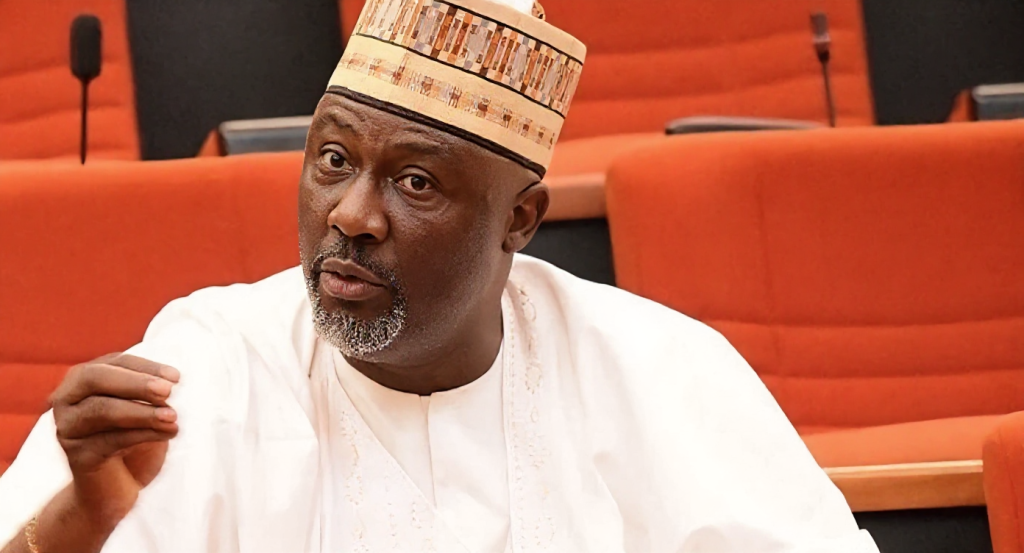
Former lawmaker, Dino Melaye Esq, has raised concerns over the Senate’s reported rejection of the electronic transmission of election results.
The move, according to Melaye, is a clear endorsement of election rigging and an indication of a sinister plan to rig the 2027 elections.
In a statement on Friday, the former lawmaker criticized the Senate’s decision, stating that it undermines the credibility of the electoral process.
The African Democratic Congress, ADC chieftain, also stated that the move opens the door for electoral manipulation and fraud.
He further warned that the rejection of electronic transmission of results is a step backwards for democracy in Nigeria.
Melaye called on lawmakers and citizens to stand up against “this blatant attempt to undermine the will of the people and ensure that future elections are free, fair, and transparent”.
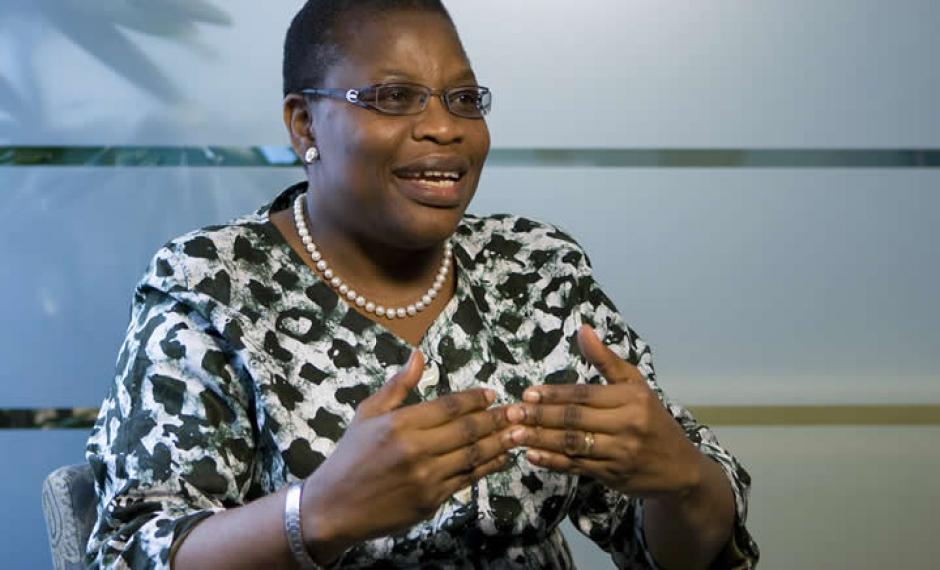
Former Minister of Education, Oby Ezekwesili, has said Nigerians have every reason to be mad at the Senate over the ongoing debate on e-transmission of election results.
Ezekwesili made this known on Friday when she featured in an interview on Arise Television’s ‘Morning Show’ monitored by DAILY POST.
DAILY POST reports that the Senate on Wednesday turned down a proposed change to Clause 60, Subsection 3, of the Electoral Amendment Bill that aimed to compel the electronic transmission of election results.
Reacting to the matter, Ezekwesili said, “The fundamental issue with the review of the Electoral Act is that the Senate retained the INEC 2022 Act, Section 60 Sub 5.
“This section became infamous for the loophole it provided INEC, causing Nigerians to lose trust. Since the law established that it wasn’t mandatory for INEC to transmit electoral results in real-time, there wasn’t much anyone could say.
“Citizens embraced the opportunity to reform the INEC Act, aiming to address ambiguity and discretionary opportunities for INEC. Yet, the Senate handled it with a “let sleeping dogs lie” approach. The citizens have every reason to be as outraged as they currently are.”
Politics
Electoral act: Senate’s action confirms Nigeria ‘fantastically corrupt’, ‘disgraced’ – Peter Obi
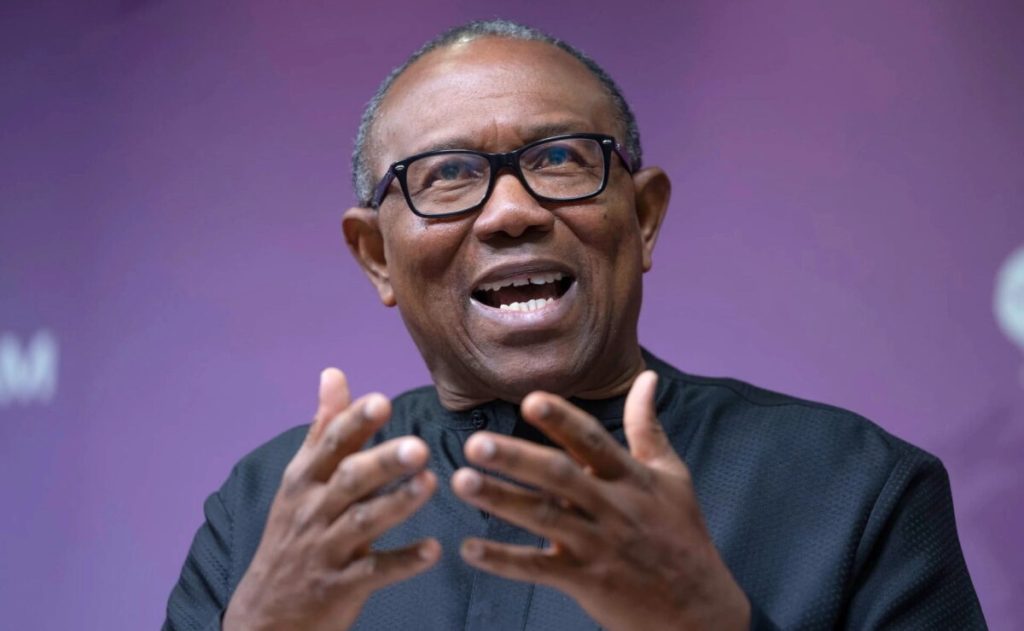
Former Labour Party presidential candidate, Peter Obi, has condemned the Senate’s refusal to make electronic transmission of election results mandatory, saying the move further exposes Nigeria as a fantastically corrupt and disgraced country.
Obi expressed his views in a statement shared on X on Friday, where he accused lawmakers of deliberately weakening Nigeria’s democratic process ahead of the 2027 general elections.
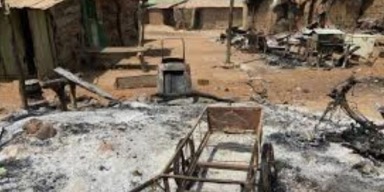
He explained that his reaction came after a brief pause to mourn victims of a deadly tragedy in Kwara State, where over 150 people reportedly lost their lives.
“Let us first pray for the souls of the innocent Nigerians lost in Kwara. That painful incident is why I delayed responding to the shameful development surrounding our electoral system,” he wrote.
Describing the Senate’s decision as intentional and dangerous, Obi said rejecting mandatory electronic transmission was not a simple oversight but a calculated attempt to block transparency.
“The Senate’s open rejection of electronic transmission of results is an unforgivable act of electoral manipulation ahead of 2027,” he said.
According to him, the action strikes at the heart of democracy and raises serious questions about the true purpose of governance in Nigeria.
“This failure to pass a clear safeguard is a direct attack on our democracy. By refusing these transparency measures, the foundation of credible elections is being destroyed. One must ask whether government exists to ensure justice and order or to deliberately create chaos for the benefit of a few.”
The former Anambra State governor linked the post-election controversies of the 2023 general elections to the failure to fully deploy electronic transmission of results, insisting that Nigerians were misled with claims of technical failures.
“
The confusion, disputes and manipulation that followed the 2023 elections were largely due to the refusal to fully implement electronic transmission,” he said.
He added that the so-called system glitch never truly existed.
Obi compared Nigeria’s electoral process with those of other African countries that have embraced technology to improve credibility, lamenting that Nigeria continues to fall behind.
“Many African nations now use electronic transmission to strengthen their democracy. Yet Nigeria, which calls itself the giant of Africa, is moving backwards and dragging the continent along.”
He criticised Nigeria’s leadership class, saying the country’s problems persist not because of a lack of ideas but because of deliberate resistance to meaningful reform.
“We keep organising conferences and writing policy papers about Nigeria’s challenges. But the truth is that the leaders and elite are the real problem. Our refusal to change is pushing the nation backwards into a primitive system of governance.”
Warning of the dangers ahead, Obi said rejecting electronic transmission creates room for confusion and disorder that only serves the interests of a small group.
He also recalled past remarks by foreign leaders who described Nigeria as corrupt, arguing that actions like this continue to justify those statements.
“When a former UK Prime Minister described Nigeria as ‘fantastically corrupt,’ we were offended. When former US President Donald Trump called us a ‘disgraced nation,’ we were angry. But our continued resistance to transparency keeps proving them right.”
Obi warned that Nigerians should not accept a repeat of the electoral irregularities witnessed in 2023.
“Let there be no mistake. The criminality seen in 2023 must not be tolerated in 2027.”
He urged citizens to be ready to defend democracy through lawful and decisive means, while also calling on the international community to closely monitor developments in Nigeria’s electoral process.
“The international community must pay attention to the groundwork being laid for future electoral manipulation, which threatens our democracy and development,” Obi stated.
He concluded by expressing hope that change is still possible if Nigerians take collective responsibility.
“A new Nigeria is possible but only if we all rise and fight for it.”

Police bust syndicate behind nude photo blackmail in Lagos

Man in shock after lady he lodged with in a hotel in Abuja flees with his car and other valuables

US Reacts As De@th Toll In Kwara Terror Attacks Hits 200

-
Business1 year ago
US court acquits Air Peace boss, slams Mayfield $4000 fine
-

 Trending1 year ago
NYA demands release of ‘abducted’ Imo chairman, preaches good governance
-

 Politics1 year ago
Mexico’s new president causes concern just weeks before the US elections
-

 Politics1 year ago
Putin invites 20 world leaders
-

 Politics1 year ago
Russia bans imports of agro-products from Kazakhstan after refusal to join BRICS
-
Entertainment1 year ago
Bobrisky falls ill in police custody, rushed to hospital
-
Entertainment1 year ago
Bobrisky transferred from Immigration to FCID, spends night behind bars
-
Education1 year ago
GOVERNOR FUBARA APPOINTS COUNCIL MEMBERS FOR KEN SARO-WIWA POLYTECHNIC BORI