





Trending
Are the Lebanese people caught in the crossfire of a war they didn’t ask for?

The prospects of an Israeli ground incursion in Lebanon have reached their peak, and even a temporary ceasefire seems a distant echo after Israel rejected the deal and Hezbollah remains reluctant to turn away its missile launchpads.
While the number of civilian casualties is surging, Lebanon’s public services are teetering on collapse, especially after years of financial and economic crises that have put the country’s finances on its knees.
Thousands of people are leaving their villages in the south and the Bekaa Valley to find shelter in the provinces of Beirut, the Lebanese mountains, and the north.
Right now, the general sentiment in Lebanon is that one can only hope for an 11th-hour miracle.
“Lebanese people want peace,” Health Minister Firass Abiad told Euronews. “The position of the Lebanese government, and the position of the Lebanese people as well, is that Lebanon does not want war.”
“And from day one, we believe that the best way out of this situation is to have a diplomatic solution, starting with a cease fire in Gaza and the immediate release of the (Israeli) hostages.”
“It is clear that violence is not going to bring us closer to a solution, yet unfortunately, it will make the situation worse,” Abiad pointed out.

A resident checks an apartment that was hit by an Israeli airstrike in Beirut’s southern suburbs, 25 September 2024 AP Photo/Hassan Ammar
Regional and international observers are increasingly persuaded that the ceasefire will not be possible without a powerful political deal. Yet, the prospects of stopping the war seem to go well beyond the borders and the will of the sectarian-based Lebanese institutions.
Unless Israel strikes a deal with Hamas, that is.
According to observers, a humanitarian-led ceasefire in Gaza could help lower the heat threatening to inflame the entire Middle East and whose domino effect could push Lebanon to a new civil war, further complicated due to militias of different types and non-state actors like Hezbollah.
“After the loss of lives of innocent civilians and tens of thousands of women and children in Gaza, now we have a similar situation unfolding in Lebanon,” Abiad said. “Hezbollah has stated clearly that if things stop in Gaza, they will stop all their action.”
“Therefore, everybody understands that a ceasefire in Gaza will be the instrument to remove the excuse of all non-state actors, whether in Lebanon, whether in Iraq, whether in Yemen or any other places (to stop fighting),” he explained.
Captives of ballistic diplomacy
The Middle Eastern non-state actors have become the de-facto pieces of the ballistic diplomacy of Tehran in its proxy war against Israel and the desire of Iran to stress-test the Iron Dome, the Israeli anti-missile defence system.
This might complicate things further, experts say.
“It’s very unlikely that Hezbollah will be pushed to reduce its launching of rockets into Israel. It’s more likely that we are going to see further escalation on this side,“ said Luigi Narbonne, on-leave EU ambassador to Saudi Arabia and other MENA countries and head of Mediterranean Studies at the LUISS University in Rome.
“It’s well known that Hezbollah has much larger capacities in terms of rockets and precision-guided missiles that may strike Israel and cause major damage and casualties amongst the (Israeli) population,” Narbone explained to Euronews.

Hezbollah members raise their group flags and chant slogans in Beirut, 25 September 2024 Hassan Ammar/Copyright 2024 The AP. All rights reserved
Meanwhile, Lebanese authorities are forced by the circumstances to find unsteady solutions to highly sensitive matters at home.
Since the end of the civil war in 1990 and the signing of the National Reconciliation Accords, aka the Taif Agreement, the Lebanese Council of Ministers has been a delicate composition of different parties involving the country’s main religious groups — Catholics and Orthodox Christians, Sunni and Shia Muslims, the Druze and other minorities — who fought against each other not so long ago.
Now, the country is preparing for the possibility of having to fight side-by-side against Israel’s boots on the ground — an issue that has raised a number of questions both at home and abroad.
“Will the Lebanese army defend its country? I think that it is the least that one can expect from a national army when that army’s country is being invaded. It is its duty, to defend its community, its citizens,” Abiad said.
Caught in the middle of it yet again
In 2006, when the Tsahal invaded Lebanon, the Lebanese regular army did not fight against the Israeli units because they did not receive any orders from Beirut. For the Lebanese government, it was all just a showdown between the IDF and Hezbollah’s militants.
“We know that there is a part of Lebanon that clearly does not like Hezbollah. However, the reaction of the Lebanese people will very much depend on the level of damages and the casualties that Israel will provoke with its military actions,” said Nardone.

Lebanese soldiers gather outside a damaged mobile shop after what is believed to be the result of a walkie-talkie exploding inside it, in the southern port city of Sidon, Leba AP Photo
After 2006’s Two Months War, the UN Resolution 1701 established that the Lebanese army had the role to defend the national borders and the obligation to disarm Hezbollah. Yet, since then, the Shia militia has only increased in size and firepower.
But as much as the current conflict is yet another Israel-Hezbollah bust-up, Lebanon is the one on the receiving end of it all.
“The 1701 resolution has also had infringements from Israel, who continues to occupy parts of Lebanon, and their warplanes continue to intrude into the airspace of Lebanon, and they continue to attack Lebanon,” the Lebanese minister of health said.
“The problem a lot of the times with Israel is that it only thinks that laws are made for the other countries.”
Wars, financial crisis and high-tech dystopia
Despite the relative lack of popularity of Hezbollah in Lebanon, in the end, the humanitarian crisis could bring the country together.
“Lebanon is already passing through multiple crises. We are in a deep financial crisis. We are hosting a large number of refugees, almost 1.5 million. One-third of our population. So, this war that has been ongoing for almost one year has really put a lot of stress on our system,” Abiad said.
The Lebanese population is strained and exhausted, which could bring unexpected outcomes.

People react during the funeral procession of their relatives, who were killed in Monday’s Israeli airstrikes, in the southern village of Saksakieh, 24 September 2024 AP Photo/Mohammed Zaatari
“We have been witnessing mass displacement of people from the south. And obviously, the number of casualties, including civilians and children, will have an impact on the Lebanese people, which may also react as a nation and overcome the traditional divisions,” said Nardone.
Those living in Lebanon are still traumatised by last week’s dystopian exploding pager and walkie-talkie attacks, Abiad explained.
“It was a very big shock to the health system. Ever since the war started, we have been preparing our health care system, our hospitals, for the possibility of mass casualties.”
“But that attack was unprecedented because the weaponisation of the communication devices caused a large number of casualties. We are talking about 3,000 casualties in a matter of minutes,” he said.
Will regional actors step in to prevent a disaster?
Finally, the Lebanese question might find its solution through the involvement of other major actors in the region. Are the political conditions there?
“We have respected and accepted the call of the US, the G7 and the rest of the leading countries like Qatar, Saudi Arabia, Egypt, UAE and others. We have complied with all of this, with the consensus among all the stakeholders of the region,” Abias said.
Saudi Arabia has a major role in Lebanon, especially after the Abraham Accords and the downfall of Syria and its leader, Bashar al-Assad.
“It’s no secret that the Saudi (government) views Hezbollah as a force that would need to be dismantled or at least reduced in power,” Nardone said.
“In the past, they tried politically to use their influence within the Lebanese political arena to get these results. And so far, unsuccessfully. And, of course, at the moment they would rather not take actions that may entail a risk of being drawn into the conflict,” he concluded.
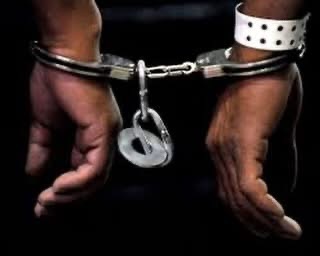
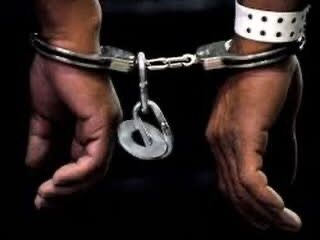
Men of the Police Special Fraud Unit (PSFU), Lagos, have apprehended three suspects who allegedly run a cyber blackmail and extortion scheme in the state.
According to the spokesperson of the unit, DSP Ovie Ewhubare, the suspects get a hold of their victims explicit photos and then threaten to release them if a ransom is not paid.
He said that the suspects, two males and a female, were apprehended after a petition was filed by a complainant who reported being repeatedly threatened by unknown individuals demanding money.
“The complainant received several phone calls in which the callers threatened to release her nude photographs to the public if she failed to pay them. Acting out of fear and emotional distress, she transferred money to the suspects.
The situation escalated when the suspects demanded an additional N10 million, prompting her to formally petition the police,” he said
The police imagemaker state dthat upon receipt of the complaint, the Commissioner of Police, PSFU, Mr Kayode Ojapinwa, ordered the immediate deployment of operatives to investigate the matter.
“The investigation led to the arrest of the three suspects. Investigations revealed that one of the suspects gained unlawful access to the complainant’s mobile device and fraudulently transferred her nude photographs to his own device. Further findings indicated that he conspired with the other suspects and other accomplices currently at large to demand and receive money from the complainant in several tranches,” he said
According to him, the suspects are currently in police custody and are expected to be arraigned before a court of competent jurisdiction.
The image maker said that investigations were ongoing to apprehend other fleeing members of the syndicate and to recover all proceeds of the alleged crime.
Trending
Catholic Priest Collapses And D!es In Front Of Congregation While Walking To Tabernacle To Return Holy Communion
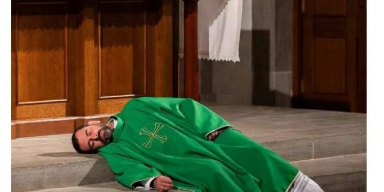
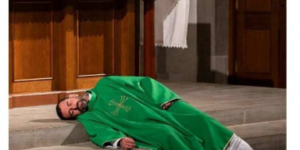
A Catholic priest has tragically passed away after suddenly collapsing in front of the congregation during Sunday mass.
The tragic incident took place last Sunday, February 1 in Wiesmath in the district of Wiener Neustadt, Austria.
Shortly after administering Holy Communion, 59-year-old priest Raimund Beisteiner was about to return the host to the tabernacle when he “suddenly” collapsed, according to a statement from the Archdiocese of Vienna.
“Despite immediate professional assistance, he di£d in the church,” the statement said.
The mayor of Wiesmath, Erich Rasner, had also attended the Mass with many other believers and witnessed the dramatic scenes.
The shock in Wiesmath at the loss of the popular priest is great. Beisteiner had shaped the spiritual life of the parish for almost two decades and was highly regarded far beyond the community.
Rasner praised him as an “extremely conscientious, sensitive priest” and also emphasized the personal loss of a friendship that had grown over many years.
A prayer service was organized at short notice for the late priest. It was attended by numerous priests from the deanery as well as Archbishop Josef Grünwidl.

Trending
Nollywood Actress, Angela Okorie Allegedly Re-Arrested Over Alleged Refusal To Pay Lawyer Who Secured Her Bail (Video)

Angela Okorie, the Nigerian actress, has reportedly been re-arrested over allegations that she refused to pay the lawyer who secured her bail from Suleja Prison.
Angela was re-arrested at the Suleja prison on Tuesday, immediately she was released on bail.
This came less than an hour after actor Stanley Ontop raised the alarm over an alleged plan to re-arrest the actress after release on Tuesday.
Speaking in a video on Instagram, actress Doris Ogala who said she is already on her way to the police station, stated that the actress was re-arrested by an unnamed Senior Advocate of Nigeria, SAN, for refusing to pay the N5 million agreed fee to secure her bail.
Doris said; “You see, one thing is for someone to cut their clothes according to their size. Angela has been arrested again. As a matter of fact, I’m going to the police station now. You see, when Angela was arrested by Mercy, she called a friend of her or village person. I don’t know how they relate. To help her get a SAN.
“And the SAN charged them N5 million. I think the SAN was the one who even facilitated the bail and all that. Now when Angela knew that they have granted her bail according to the lady, Angela started saying that she didn’t ask her to get a SAN and she wasn’t going to pay the money, and meanwhile this lady has deposited.”
Recall that Angela, who was granted bail on Friday after her arrest by Mercy Johnson over alleged defamation, regained her freedom few minutes ago after perfecting her bail conditions.
Watch Doris Ogala speak


Trending10 hours ago
Police bust syndicate behind nude photo blackmail in Lagos

News10 hours ago
Man in shock after lady he lodged with in a hotel in Abuja flees with his car and other valuables

News13 hours ago
US Reacts As De@th Toll In Kwara Terror Attacks Hits 200

-
Business1 year ago
US court acquits Air Peace boss, slams Mayfield $4000 fine
-

 Trending1 year ago
NYA demands release of ‘abducted’ Imo chairman, preaches good governance
-

 Politics1 year ago
Mexico’s new president causes concern just weeks before the US elections
-

 Politics1 year ago
Putin invites 20 world leaders
-

 Politics1 year ago
Russia bans imports of agro-products from Kazakhstan after refusal to join BRICS
-
Entertainment1 year ago
Bobrisky falls ill in police custody, rushed to hospital
-
Entertainment1 year ago
Bobrisky transferred from Immigration to FCID, spends night behind bars
-
Education1 year ago
GOVERNOR FUBARA APPOINTS COUNCIL MEMBERS FOR KEN SARO-WIWA POLYTECHNIC BORI