
Politics
Beyond the Backlash: A reasoned look at Ikedi Ohakim’s legacy and relevance for 2027

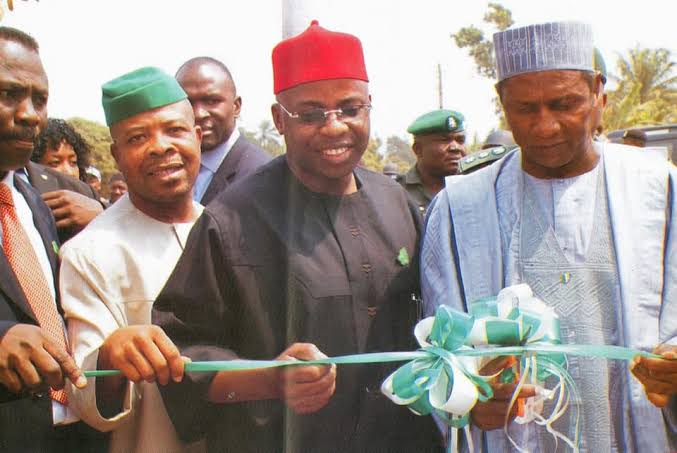
— A factual rebuttal to Nze James Chinonyerem’s recent attack on Dr. Ikedi Ohakim By Chief Sir Emmanuel Okwudiri Mbah PhD -Who writes from Azaraubo Emekuku Owerri North L.G.A Imo State
While Nze James Chinonyerem’s recent critique of Dr. Ikedi Ohakim raises several contentious points, it ultimately presents a narrow and reductionist view of a complex political legacy. A fair and balanced evaluation of Ohakim’s record—and his relevance to Imo State’s future—requires thoughtful reflection on both his strengths and his shortcomings, not a wholesale dismissal based on selective memory.
Revisiting the 2007 Electoral Context
Characterising Ohakim’s 2007 emergence as a mere “imposition” not only oversimplifies the political dynamics of the time but ignores the complex legal and institutional crisis that unfolded. A widely circulated and unchallenged statement by Prof. Maurice Iwu, then Chairman of the Independent National Electoral Commission (INEC), offers a definitive account.
According to Prof. Iwu, the suspension of voting in the Imo 2007 gubernatorial election was triggered by legal disputes within both the PDP and APGA, including:
- The Supreme Court’s last-minute judgment affirming Senator Ifeanyi Ararume as PDP’s valid candidate—after INEC had already printed ballots with Engr. Charles Ugwu’sname.
- President Obasanjo’s declaration that PDP had no candidate, creating further constitutional ambiguity.
- Legal wrangling within APGA that invalidated Martin Agbaso’s candidacy, since he contested under a faction not recognised by court orders at the time.
Prof. Iwu explained that disruptions, including violence and attempted ballot alterations, led to the legally sanctioned suspension of the governorship election. No votes were tabulated; there was no declared result, and no candidate—including Martin Agbaso—could be said to have “won” a legally voided election.
Most importantly, Iwu clarified that Martin Agbaso was not even a legally recognised APGA candidate as of election day. A Superior Court judgment had ordered INEC to comply with the ruling faction of APGA, which meant Agbaso’s name remained on the ballot only under legal constraints—not as a valid contender.
In other words, the notion that Ohakim “robbed” Agbaso is not only false—it is legally impossible.
Those perpetuating this myth are not just distorting history; they are perpetuating a politically weaponised falsehood that has long since been debunked by the electoral body itself. It is time to lay this narrative to rest.
Let us be clear: Okigwe Zone did not sabotage Owerri Zone in 2007. No legitimate election was concluded. Ohakim emerged only after a fresh, court-sanctioned election was conducted—an election in which he received the mandate of the people under lawful conditions.
Despite criticisms of his communication style, Ohakim’s administration delivered measurable progress. His focus on infrastructure, especially road construction and rehabilitation, left visible improvements across the state.
The IROMA Legacy
One of his most notable legacies was the creation of the Imo State Roads Maintenance Agency (IROMA)—a flagship initiative aimed at addressing the state’s deteriorating road infrastructure. IROMA was not only responsible for the rehabilitation and maintenance of roads across urban and rural areas, but also served as a massive employment generator. Under Ohakim’s tenure, the agency reportedly created over 30,000 jobs, significantly reducing unemployment and stimulating local economies.
The Clean and Green Initiative
Ohakim’s administration also launched the Clean and Green Initiative, a comprehensive environmental sanitation program aimed at transforming Imo State into a cleaner and more sustainable environment. This initiative led to Owerri being adjudged the cleanest state capital in Nigeria for three consecutive years—2009, 2010, and 2011—by the Federal Ministry of Environment.
Ohakim established the The College of Education Ihitte/ Uboma and the Imo State Polytechnic which Gov Uzodimma upgraded to the Imo State University of Agriculture and Environmental Sciences in Umuagwo (now part of Imo State University)—a long-term contribution to education and agricultural development. His broader rural development efforts reflected a clear intent to decentralise opportunities beyond the capital.
The Real Distinction
Ohakim was often perceived as abrasive. Yet, a distinction between style and substance reveals a more complex governance record. Several of his policies—particularly in agriculture, youth empowerment, and sanitation—were forward-thinking, aligning with sustainable development goals long before they became national talking points. His real challenge lay in stakeholder engagement and message delivery, not necessarily policy design.
Understanding the 2011 Electoral Defeat
Reducing Ohakim’s 2011 loss to personal failings misses the broader national context. Yes, there were internal missteps, including frictions within his party and insufficient grassroots consultation. However, even the critic himself, Nze James Chinonyerem, inadvertently acknowledges the role of federal interference when he wrote:
“Ask those who participated in that election as agents of PDP. They will tell how mercilessly they were muzzled by the federal security agencies.”
This admission is significant.
If federal security agencies indeed muzzled party agents during a democratic election, then the 2011 outcome cannot be considered a pure expression of the people’s will. Should this kind of electoral suppression—where security forces stifle political participation—be normalised or quietly condoned? On the contrary, it should be condemned by all who believe in democracy, regardless of party affiliation.
Moreover, Dr. Ikedi Ohakim’s 2011 re-election bid was severely damaged by an orchestrated campaign of misinformation—most notably the now-infamous false allegation involving a Catholic priest. The claim that Ohakim physically assaulted a reverend father spread like wildfire and was used as a moral and emotional weapon against him. It deeply influenced public sentiment in a largely Catholic state like Imo.
Yet, years later, the priest publicly retracted the accusation and apologised. This belated confession confirmed what many already knew: Ohakim was a victim of a deliberate character assassination designed to swing public opinion. That lie, though politically effective, unjustly cost him re-election and damaged his reputation.
Ohakim’s 2011 defeat, therefore, must be understood in the context of both institutional muzzling and weaponised falsehoods. He was not merely outvoted; he was outmanoeuvred by undemocratic means.
Ohakim’s enduring legacy in Okigwe
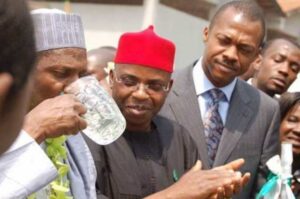
Late President Umaru Musa Yar’adua drinking water from the greater Okigwe water scheme during the commissioning
The assertion that “Nde Okigwe deserve better” should not be wielded as a tool to disqualify one of the zone’s most accomplished sons. Dr. Ikedi Ohakim’s tenure as governor was marked by tangible developments that directly benefited the Okigwe zone, reflecting his deep-rooted commitment to uplifting his homeland.
The first official state visit of President Yar’Dua was the commissioning of the greater Okigwe water scheme, a monumental initiative that had languished since the era of Governor Sam Mbakwe. Ohakim’s administration revived and completed this project, ensuring a reliable water supply for the region.
In infrastructure, Ohakim prioritised the dualization of major roads leading into Okigwe, enhancing connectivity and fostering economic activities. His administration also focused on rural electrification and road rehabilitation projects within the zone, improving the quality of life for residents.
Beyond physical infrastructure, Ohakim’s policies had a profound socio-economic impact. His 10,000 Youth Employment Initiativeprovided job opportunities for many youths in Okigwe, addressing unemployment and stimulating the local economy. His Clean and Green Initiative, which earned Owerri national acclaim, also had spillover effects in Okigwe, beautifying public spaces and improving environmental health.
Dismissing Ohakim’s contributions to Okigwe is not only unfair—it is inaccurate. He remains one of the most qualified and committed figures the zone has ever produced.
While calls for fresh leadership are valid, they must be balanced against the need for institutional memory, proven competence, and political stability. Governance is not experimentation. The best future for Imo lies in leaders who can combine past lessons with fresh thinking. Experience does not preclude innovation; it can empower it.
A Checklist for 2027
Rather than recycling old grievances, Imo’s political debate should focus on forward-looking questions:
- Policy Platform: What solutions does Ohakim offer for today’s pressing issues?
- Political Evolution: How has he grown from past mistakes?
- Bridge-Building: Can he unite traditional institutions, youth, and political actors?
- Vision Fit: Do his goals align with Imo’s economic and social development path?
Let the People Decide
Democracy’s strength lies in its capacity for renewal and redemption. Dr. Ikedi Ohakim’s past term had its challenges—but to entirely write off his future potential is shortsighted. The decision about who leads Imo next must rest with the people, not gatekeepers of selective memory.
Let Imo’s future be decided not by recycled grudges, but by renewed vision. The people deserve a campaign grounded in facts, fairness, and bold ideas. In that conversation, every serious contender—including Dr. Ikedi Ohakim—deserves to be heard, not heckled.
Final Note: On the Credibility of Nze James Chinonyerem
In engaging with public commentary such as that of Nze James Chinonyerem, readers should consider the broader context of the commentator’s history and motivations. Chinonyerem has previously featured in political controversies, including being indirectly referenced in a 2022 article on P.M. Expresstitled “Who Is Afraid Of Prince Dr. Alex Mbata?”, which discussed coordinated political attacks against prominent figures in Imo State.
His pattern of highly opinionated political writing often leans toward emotionally charged allegations rather than evidence-based critique. Without a clear record of public service, governance credentials, or professional distinction in policy or academia, such commentary should be weighed with discernment.
Constructive political discourse should elevate ideas, not recycle unfounded grievances. As Imo State approaches another defining electoral moment, the people deserve truth, fairness, and focus on the real issues—not personal vendettas disguised as public analysis.
Chief Sir Emmanuel Okwudiri Mbah PhD
Write from Azaraubo Emekuku Owerri North L.G.A Imo State




Politics
Ndigbo are no longer spectators in the Nigerian project- Minister Dave Umahi dismisses calls for Biafra under Tinubu’s administration
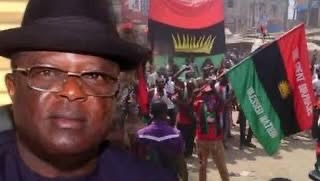
The Minister of Works, David Umahi, says the all-inclusive style of governance being practiced by President Bola Tinubu has made the agitation for Biafra an unnecessary clamour.
While speaking at the inspection of the Enugu-Anambra road last Saturday, December 13, Umahi said the Tinubu administration had given Ndigbo what they had sought for decades, not through secession, but through what he described as unprecedented inclusion in national governance and development.
He explained that the agitation for Biafra was historically driven by neglect, exclusion and underrepresentation at the federal level, but insisted that the situation had changed under the current administration.
“When a people are fully integrated, respected and empowered within the structure of the nation, the dream they once chased through agitation has already been achieved through cooperation.
The push for Biafran secession over the years was borne out of neglect, exclusion and underrepresentation but today the narrative has changed dramatically under President Bola Tinubu.
The President has deliberately opened the doors of national development to the South-East. Appointments, policy inputs and infrastructure priorities now reflect true federal balance.
Every sector now bears visible Igbo footprints. The emergence of Igbo sons and daughters in strategic positions is a testament to this inclusion.
Biafra was never about breaking Nigeria; it was about being counted in Nigeria. Through inclusion, equity and concrete development, Ndigbo are no longer spectators in the Nigerian project; they are co-authors of its future. When justice finds a people, agitation loses its voice.”he said
The African Democratic Congress (ADC) has announced a 90-day nationwide membership mobilisation, revalidation, and registration exercise as part of preparations for its internal party activities ahead of 2026.
The party also approved provisional dates for its congresses and the election of delegates at the polling unit, ward, and local government levels across the country.
In circulars issued by its national secretary, Rauf Aregbesola, the ADC said the congresses are expected to hold between January 20 and January 27, 2026.
The process, the party said, will lead to the emergence of delegates who will participate in its non-elective national convention scheduled for February 2026 in Abuja.
A statement by Bolaji Abdullahi, national publicity secretary of the party, said the decisions were reached at a meeting of the national working committee (NWC) held on November 27, 2025.
Abdullahi said the timetable and activities were approved in line with the resolutions of the NWC and in accordance with relevant provisions of the party’s constitution.
The ADC said further details on the membership exercise, congresses, and convention will be communicated to party members and stakeholders in due course.
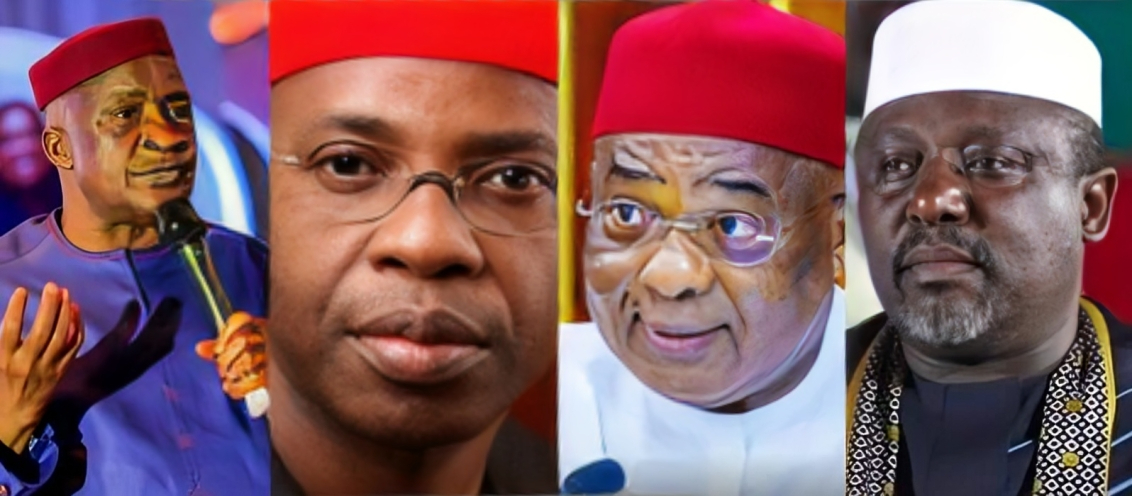
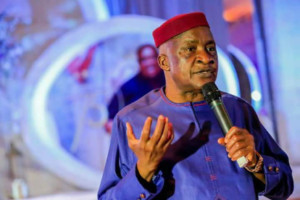
Imo State’s inability to sustain political succession from one elected governor to another is not accidental. It is the consequence of recurring structural failures rooted in elite conspiracy, federal power realignments, internal party implosions, zoning sensitivities, and the perennial arrogance of incumbency. From Achike Udenwa to Ikedi Ohakim and Rochas Okorocha, each administration fell victim to a combination of these forces, leaving behind a state where power is never inherited, only contested.
Achike Udenwa’s experience remains the most instructive example of how federal might and elite scheming can dismantle a governor’s succession plan. Governing between 1999 and 2007 under the PDP, Udenwa assumed that the party’s national dominance would guarantee internal cohesion in Imo. Instead, his tenure coincided with one of the most vicious intra-party wars the state has ever witnessed.
The Imo PDP split into two irreconcilable blocs. On one side was Udenwa’s grassroots-driven Onongono Group, powered by loyalists such as Alex Obi and anchored on local structures. On the other was a formidable Abuja faction populated by heavyweight figures including Kema Chikwe, Ifeanyi Araraume, Hope Uzodimma, Tony Ezenna, and others with direct access to federal influence. This was not a clash of personalities alone; it was a struggle over who controlled the levers of power beyond Owerri.
The conflict worsened when Udenwa openly aligned with then Vice President Atiku Abubakar during his bitter feud with President Olusegun Obasanjo. That alignment proved politically fatal. Obasanjo, determined to weaken Atiku’s network nationwide, withdrew federal support from governors perceived as loyal to the vice president. In Imo, the effect was immediate and devastating.
Federal agencies, party organs, and influence channels tilted decisively toward the Kema Chikwe-led Abuja faction. Udenwa lost effective control of the PDP structure, security leverage, and strategic influence. His foot soldiers in the Onongono Group could mobilise locally, but they could not withstand a coordinated assault backed by the centre.
His preferred successor, Charles Ugwu, never gained political altitude. By the time succession became imminent, Udenwa was already a governor without power. Even his later recalculations failed to reverse the tide. The party had slipped beyond his grasp.
The eventual outcome was politically ironic. Ikedi Ohakim emerged governor, backed by forces aligned with the federal establishment, notably Maurice Iwu—his kinsman and then Chairman of the Independent National Electoral Commission (INEC). Another Udenwa ally, Martin Agbaso, briefly tasted victory, only for his election to be cancelled. The lesson was brutal and unmistakable: without federal alignment, succession in Imo is almost impossible.
Notably, Udenwa’s record in office did not rescue him. Infrastructure development, relative stability, and administrative competence counted for little in the face of elite conspiracy operating simultaneously at state and federal levels. In Imo politics, performance is secondary to power alignment.
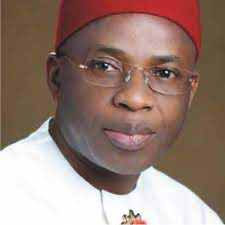
Ikedi Ohakim’s tenure presents a different dimension of failure. Unlike Udenwa, he never reached the point of succession planning. His administration was consumed by political survival. From 2007 to 2011, Ohakim governed amid persistent hostility from elites and a rapidly deteriorating public image.
Ohakim has consistently maintained that his downfall was orchestrated. Central to his claim is the allegation that he was blackmailed with a scandal involving the alleged assault of a Catholic priest, Reverend Father Eustace Eke. In a deeply religious state like Imo, the allegation was politically lethal.
Whether the claims were factual or exaggerated mattered less than their impact. The narrative overwhelmed governance, drowned out policy achievements, and turned public opinion sharply against him. Political elites who had midwifed his emergence quickly distanced themselves, sensing vulnerability.
By the 2011 election, Ohakim stood isolated. Party loyalty evaporated, elite cover disappeared, and voter sympathy collapsed. His re-election bid failed decisively. With that loss, any discussion of succession became irrelevant. His experience reinforces a core principle: a governor rejected by the electorate cannot dictate continuity.
*Uzodimma*
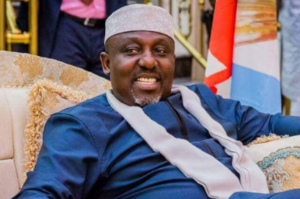
Rochas Okorocha’s rise in 2011 appeared to signal a break from Imo’s succession curse. Charismatic, populist, and financially powerful, he commanded party structures and grassroots loyalty. By his second term, he seemed politically unassailable.
Yet Okorocha committed the most consequential succession error in the state’s history. By attempting to impose his son-in-law, Uche Nwosu, as successor, he crossed from political strategy into dynastic ambition. That decision detonated his massive support base in the State overnight.
Imo’s political elites revolted almost unanimously. Party affiliation became secondary to a shared determination to stop what was widely perceived as an attempt to privatise public office. The revolt was elite-driven, strategic, and ruthless.
The zoning factor compounded the crisis. Okorocha hailed from Orlu zone; so did Nwosu. For many Imo voters, the prospect of Orlu retaining power through familial succession was unacceptable. What might have been tolerated as ambition became framed as entitlement.
This time, elite resistance aligned with popular sentiment. The electorate queued behind alternatives not necessarily out of conviction, but out of rejection. Crucially, Emeka Ihedioha emerged governor because Okorocha fatally miscalculated—splitting his base, provoking elite rebellion, and underestimating voter resentment. Okorocha’s formidable structure collapsed under internal rebellion and voter backlash, sealing his failure to produce a successor.
Hope Uzodimma’s current position must be assessed against this turbulent history. At present, the structural indicators are in his favour. He enjoys firm federal backing, controls the APC machinery in the state, and commands the support—or at least the compliance—of most major political elites.
Unlike Udenwa, Uzodimma is aligned with the centre. Unlike Ohakim, he has survived electoral tests. Unlike Okorocha, he has not openly flirted with dynastic politics. On the surface, the succession equation appears favorable.
*Udenwa*
However, Imo’s history cautions against certainty. Elite loyalty in the state is conditional and transactional. It endures only where interests are balanced, ambitions managed, and inclusion sustained. A wrong choice of successor could still provoke elite conspiracy, even if it emerges from within the ruling party.
The opposition remains weak and fragmented, with limited capacity to mobilize mass resistance. Yet voter apathy, now more pronounced than during the Udenwa and Okorocha eras, introduces a new risk. Disengaged electorates are unpredictable and often disruptive.
“Ohakim*
Ultimately, Uzodimma’s challenge is not opposition strength but elite psychology. Suppressed ambitions, if mishandled, can erupt. Succession in Imo has never been about coronation; it is about negotiation.
*Okorocha*
History is unforgiving to governors who confuse incumbency with ownership. Power in Imo is never transferred by decree. As 2027 approaches, the same forces that toppled past succession plans remain alive. Whether Uzodimma avoids their trap will depend not on power alone, but on restraint, balance, and political wisdom.

HAPPY BIRTHDAY MY LOVE- GOVERNOR HOPE UZODIMMA CELEBRATES HIS WIFE ON HER BIRTHDAY WITH HEARTFELT MESSAGE .

Robotic surgeries now happening in many private hospitals in Nigeria- Muhammad Ali Pate, Minister Of Health & Social Welfare

58-year-old man be@ts wife to de@th in Imo

-
Business1 year ago
US court acquits Air Peace boss, slams Mayfield $4000 fine
-

 Trending1 year ago
NYA demands release of ‘abducted’ Imo chairman, preaches good governance
-

 Politics1 year ago
Mexico’s new president causes concern just weeks before the US elections
-

 Politics1 year ago
Putin invites 20 world leaders
-

 Politics1 year ago
Russia bans imports of agro-products from Kazakhstan after refusal to join BRICS
-
Entertainment1 year ago
Bobrisky falls ill in police custody, rushed to hospital
-
Entertainment1 year ago
Bobrisky transferred from Immigration to FCID, spends night behind bars
-
Education1 year ago
GOVERNOR FUBARA APPOINTS COUNCIL MEMBERS FOR KEN SARO-WIWA POLYTECHNIC BORI