
News
BREAKING: Protest Rocks Ondo Town, Igbokoda As Governor Aiyedatiwa’s Brother Allegedly Attacks Monarch, Traditionalists Declare ‘Abomination’

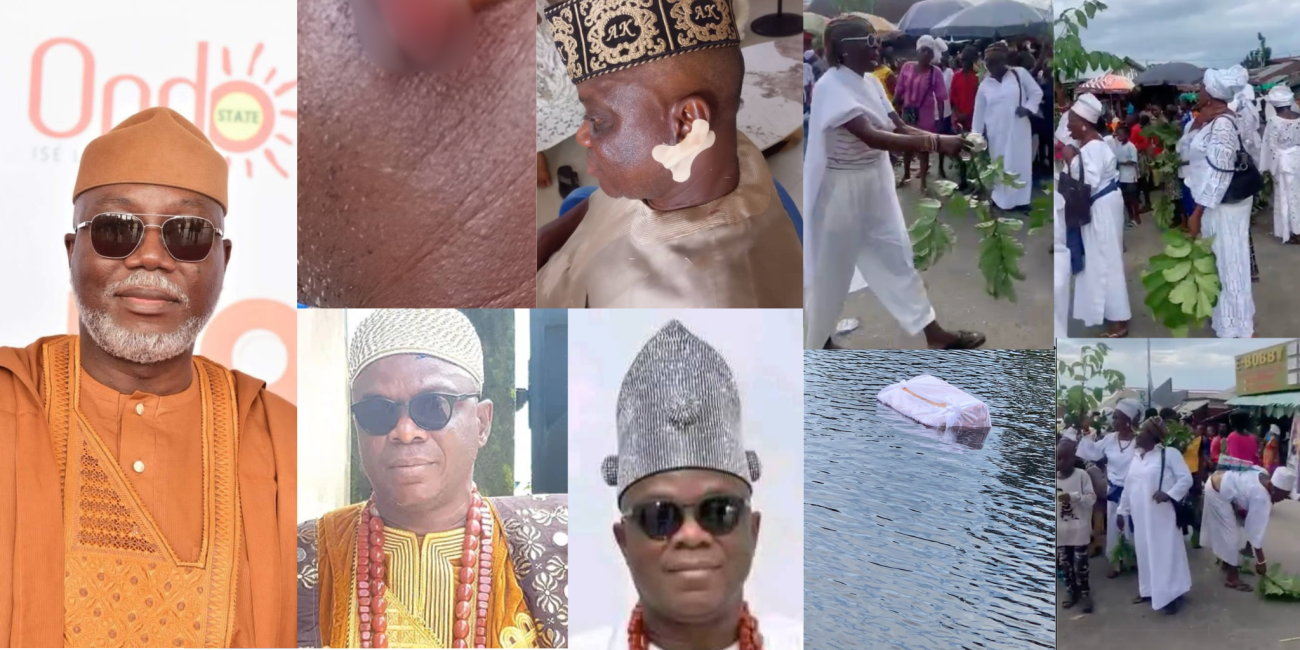
The monarch was allegedly attacked and beaten by Dayo, who holds the title of Akogun of Obe-Nla, during an official flag-off ceremony for the dualisation of the Okiti-Pupa/Igbokoda road on Monday.
Tension has gripped Igbokoda, the headquarters of the Ilaje Local Government Area in Ondo State, as various groups including women, youths, and traditional worshippers have taken to the streets in protest after the alleged physical assault of the town’s monarch, His Royal Majesty Oba Afolabi Odidiomo, by Dayo Aiyedatiwa — elder brother to Governor Lucky Aiyedatiwa.
The monarch was allegedly attacked and beaten by Dayo, who holds the title of Akogun of Obe-Nla, during an official flag-off ceremony for the dualisation of the Okiti-Pupa/Igbokoda road on Monday.
SaharaReporters gathered that the attack occurred in full public view, sparking immediate outrage across the ancient riverine community.
In response, women dressed in white and bearing traditional leaves flooded the popular Igbokoda Market, chanting and decrying the act as a “grave abomination.”
They declared that the gods of the land had been deeply offended.
Many later marched to the Larada shrine, invoking deities and demanding spiritual justice.
Traditionalists, led by masquerades, also staged a ritual procession to the two rivers surrounding Igbokoda Island, chanting the names of local gods.
Early Friday morning, a mysterious object believed to be part of a ritual sacrifice was seen floating on the river, further heightening tensions.
A building in the town reportedly linked to Dayo Aiyedatiwa was sealed off with red traditional symbols — a cultural sign of taboo and exclusion.
Palace sources confirmed to SaharaReporters that Oba Odidiomo, said to be recovering from injuries, remains under spiritual restriction and “forbidden by the gods” from speaking.
One of them said “Kabiesi was bitten by a mad dog and we know the owners of the dog have been using their powers to sponsor lies in the media against our king.
https://www.facebook.com/share/v/1Fva3o7iWC/?mibextid=wwXIfr
“We are the owners of this land. We are civilised and our Oba is well educated and respected. That’s their headache. They will soon hear from God.”
Meanwhile scores of prominent traditional rulers from different places were trooping into the palace on solidarity visits and they were the only people allowed into the Palace.
On June 3, 2025, SaharaReporters reported that Dayo Aiyedatiwa, the elder brother of Ondo State Governor Lucky Aiyedatiwa, was accused of physically assaulting the Olu of Igbokoda, His Royal Majesty Oba Afolabi Odidiomo, during an official flag-off ceremony.
Dayo is the Akogun of Obe-Nla and the elder brother of Governor Aiyedatiwa.
The incident reportedly occurred on Monday at “Zero Zero,” the headquarters of Ilaje Local Government Area, during a public event.
Oba Odidiomo had told SaharaReporters that, as the chief host in his community, he welcomed the traditional rulers as they arrived one after the other and ensured they were seated. Eventually, there were no more seats available.
The monarch explained that each time a new monarch arrived, he would stand up and make room for them, then find another place to sit.
He said he continued this way because he felt it was his responsibility to ensure all the traditional rulers were comfortable in his hometown.
He had said that after seating everyone, he noticed Dayo, the governor’s elder brother, bringing a chair to sit directly in front of the table where all the traditional rulers were seated.
The monarch said he approached Dayo and politely said, “Please, sir, where you are sitting is not appropriate. You are sitting in front of kings.”
In response, Dayo reportedly replied, “Do you know who you are talking to?”
The monarch told SaharaReporters that he did not know who Dayo was, frankly.
He said, “God knows I didn’t know him.”
Oba Odidiomo said he did not need to know who Dayo was before telling him that the seat he was occupying was inappropriate.
“If I, as the monarch, should look at where he’s sitting, I would ask myself—does that seat befit him?” he added.
However, the monarch stated frankly, “The people seated behind him were kings, and Dayo was not one of them.”
He said it was not appropriate for Dayo to sit there.
“Immediately I said that, he responded by saying it would not be well with me. God is my witness—if I am lying against him, may I not wake up if I sleep tonight,” he said.
He continued, “He said it would not be well with me. I couldn’t keep quiet for a moment. I asked myself—was he just being bold because he was questioning who I am, or does he truly not know me? At the very least, I was dressed in full royal regalia.
“I asked him, ‘What did you just say?’ He repeated it—he said it would not be well with me. I pointed at him and asked, ‘Am I the one you’re saying it should not be well with? Is that acceptable?’”
The monarch reportedly responded and told Dayo, “When you wake up in the morning and gather your fruits in the afternoon, in the night, it will not be well with you. You will not enjoy the fruit of your labour.”
“Immediately I said that, he jumped up and tried to lift me. I’m sure if he had succeeded, he would have slammed me to the floor,” the monarch said.
The monarch explained that he had initially approached Dayo politely and said, “Please, sir, where you are sitting is not appropriate. You are sitting in front of kings.
“But I made it impossible for him to carry me. When he saw he couldn’t lift me, he used one hand to release me from the way he was holding me and bent my head to the side—towards my ear. That was when I gave him a shoulder. I hit him with my shoulder. He staggered a bit and let go of my ear.
“He was holding a walking stick. I know that type of walking stick usually has a sword hidden inside. So someone who could bite me might also use a sword. So the first thing I did as he staggered away was to take the stick from him.”
Oba Odidiomo told SaharaReporters that when he noticed that blood was already dripping from his ear, he used the walking stick to hit him.
“And I felt it was embarrassing,” he said.
“People started coming to me, saying, ‘That’s the elder brother of the governor.’
“And then I came home. As I’m talking to you now, just as you called me, the younger—I don’t know—the younger brother of the governor, maybe the next in line to him, is calling me. People have been begging me, everybody. They’ve been begging me.”
The monarch explained that he felt that the situation would be embarrassing for the governor, who had nothing to do with it, as his name had been coming up in the press because of his brother’s public behaviour.
He said, “Those who tried to provoke me into saying all sorts of things—I ignored them. My brother, I can forward a picture of my ears to you.
“That’s the situation. I have refused to grant any press interviews for two reasons. First, speaking now does not erase the embarrassment, the pain, and the dent on my reputation. So, granting a press review at this point would only ridicule the matter further.
“Second, the person involved is the governor’s eldest brother—same father, same mother. And I feel publicising this issue further could damage the governor’s image. But I have now chosen to speak out for two reasons.”
Oba Afolabi explained that the matter was already circulating in the press in a way that suggested a deliberate attempt to cover up the truth.
The monarch said, “I believe that when someone does wrong, they should be told the truth. Even if they forgot or didn’t intend it, they can be corrected calmly. But when someone deliberately misleads, then the truth must be exposed.
“Let me explain what I mean. There is a report from Roving Reporters, an online news outlet. In their story, they claimed that I was attacked because I arrived late to a function, after everyone had already taken their seats. They claimed I went to meet a community leader, whose name they could not provide, and was then attacked.
“They even used an old photo from 2017, presenting it as an image of the alleged attack. They claimed the attacker was unknown and urged the government to investigate it.”
He said the article was written by someone from Ilaje, the area where Dayo Aiyedatiwa hails from, noting that it shows there may be a biased narrative.
He said the reporter made it seem as though he was the one who approached a community leader, whose identity they did not verify, and was attacked as a result.
The monarch noted that this is not just a misrepresentation; it’s a deliberate distortion of facts.
He said the reporter urged the authorities to take the following steps: Suspend Oba Afolabi pending investigation, conduct a thorough investigation into the incident and the monarch’s past behaviour and consider dethroning him if found guilty of misconduct.
When asked what he expected the league of traditional rulers to do, he said, “To start with, I am the victim here, and I do not want to be a judge in my own case. I want the traditional rulers and all people of good conscience to look into the incident and do what is right—what must be done.
“As far as I’m concerned, traditionally, it is forbidden for my blood to spill and touch the ground. And as I speak to you, traditional rites concerning that have already commenced. We are going to get to the truth.
“I’ve considered legal action and many other options, but with the appeals coming in… So, I think the basic traditional rites began last night, and they are going to last for three days.”
“Someone just told me that some youths gathered in front of the local government office protesting or something like that. I’m going to quell it. I don’t want any noise about it, for my sake and the sake of the government,” he said.
“But I think it is quite interesting, as it were. That’s all I can say for now.”


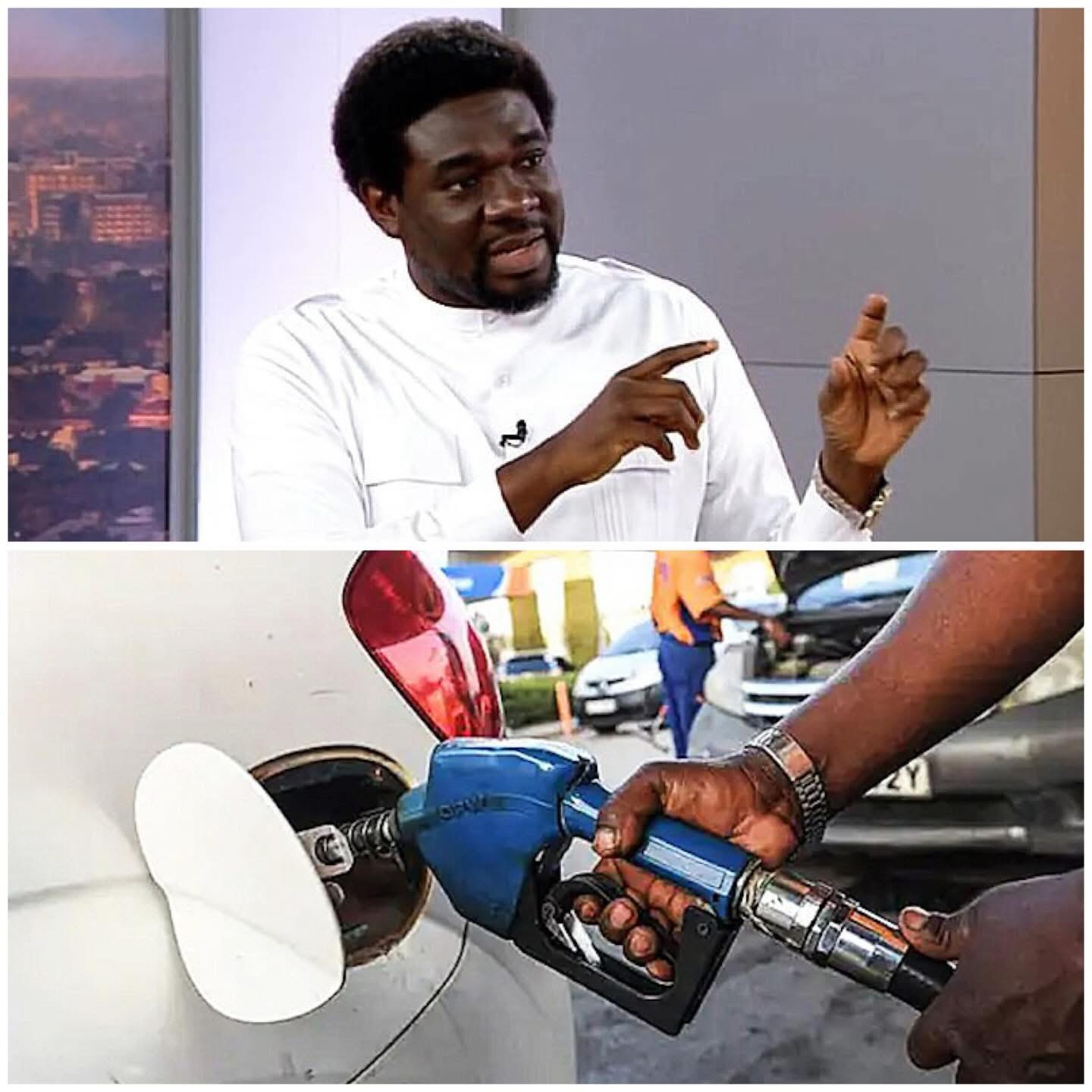
The Trade Union of Nigeria, TUC, has raised the alarm that the price of Premium Motor Spirit aka Petrol may climb to about N2,000 per litre if urgent measures are not taken to cushion the impact of rising global crude prices and the depreciating naira.
Speaking to newsmen on Thursday, April 9, the president of the TUC, Festus Osifo, called on the Federal Government to immediately deploy 60 percent of excess crude oil revenue above the 2026 budget benchmark to subsidise crude feedstock supplies to the Dangote Refinery and other modular refineries, a move it says will slash pump prices of petrol, diesel, and jet fuel within two weeks
“Today, comrades, we are seeing that the cost of petrol is edging towards N2,000 per litre depending on the part of the country that you are. Nigerian workers are already passing through excruciating pain as we speak.
The same way it is affecting transportation, it is also affecting manufacturing. The cost of diesel has also gone northward, meaning that the cost of production has increased. When production costs rise, the final price of goods on the shelves will also skyrocket.
If this continues unchecked, the inflation that we are currently celebrating as going downwards will reverse and start moving up again,” he stated.
Osifo outlined the proposal as an urgent intervention to cushion Nigerian workers from excruciating pain caused by petrol prices edging towards ₦2,000 per litre in some parts of the country
News
Cameroon’s President, Paul Biya Set To Get A Vice President For The First Time In His 43-Year Rule
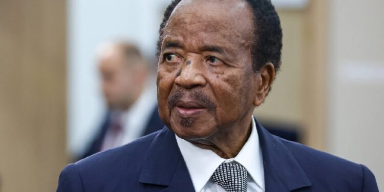
Cameroon’s president, Paul Biya, is set to get a vice president for the first time in his four-decade rule, following controversial constitutional changes backed by the parliament.
In a joint session of the ruling party-dominated National Assembly and Senate, lawmakers voted 200 to 18 in favour, with four abstentions, to pass the bill.
The bill stipulates that the vice president will automatically assume the presidency if President Paul Biya dies, resigns, or becomes incapacitated.
Biya, 93, has led the Central African country since 1982 and is the world’s oldest serving head of state. Public discussion about his health is banned.
According to the legislation, a copy of which was seen by Reuters, the vice president will be appointed and dismissed by the president, serving for the remainder of the president’s seven-year term.
However, the interim leader would be prohibited from initiating constitutional changes or running in a subsequent election.
Prior to the amendment, the constitution designated the leader of the Senate to briefly take over in case the sitting president d!es or is incapacitated. An election would then be held.
The Social Democratic Front (SDF) party, which has six representatives in parliament, boycotted the vote. It had pushed for a revision in favour of the vice-president being jointly elected with the president, rather than appointed.
The party also sought a constitutional provision that reflects the linguistic split between English and French-speaking regions. The SDF wanted the nation’s top two posts to be shared between Cameroon’s two communities, which was the position before 1972.
“This constitutional reform could have been a moment of political courage, but it is nothing less than a missed historic opportunity,” SDF chairman Joshua Osih said.
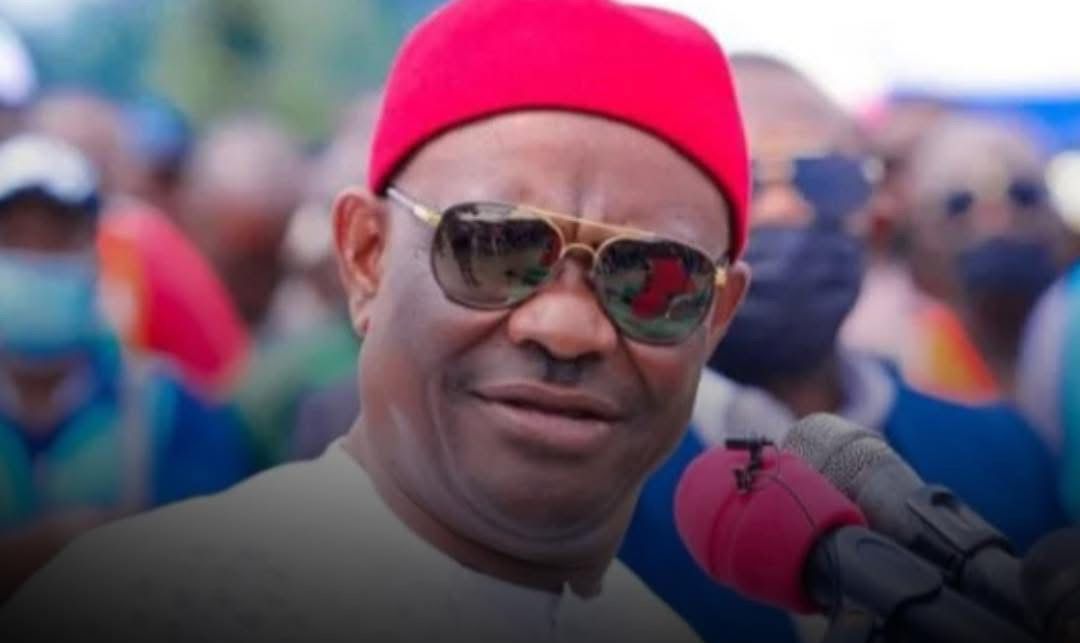
Minister of the Federal Capital Territory, Nyesom Wike, has highlighted the ongoing challenges of tax collection, pointing out the disparity between citizens’ expectations and the reality of government revenue.
Speaking with TVC NEWS live, he stressed that while Nigerians expect quality infrastructure and services, there is widespread reluctance to contribute through taxes.
On the difficulty of generating revenue, Wike said: “To collect tax, you know it’s not an easy thing. I don’t know how many of you here like to pay tax. Nigerians want everything for free. They want road, they want light. It is not easy.”
He further stated; “When I came to Abuja we were about 8, 9 billion. The money we get from the federal government is 1% of the allocation of federal government. So if federal government gets 1 trillion for example, they’ll give us one percent which is ten billion naira and that cannot carry the society. Our salary in a month is not less than 12–13 billion, so we must augment. How do we augment?”
Addressing public criticism, he added: “There’s no ab¥se that any politician has received than me. I think after the president, I’m the highest ab¥sed. There’s nothing we do that we won’t get ab¥sed. Well, what is important to me is that I want to be concentrated to do the job.”
On oversight and accountability, Wike explained how closely he monitors the finances: “The money we have gotten from tax challenge me, minister FCT, what are you doing? I’ll show you as I sit here.”

David Mark Holds Secret Meeting With PRP Leaders as ADC Crisis Deepens

Chaos As Military Officers Exchange Blows During Tinubu’s Visit To Bayelsa (Videos)

HRH Ekwueme of Ochia Kingdom Iynched & kiIIed in Imo.

-
Business1 year ago
US court acquits Air Peace boss, slams Mayfield $4000 fine
-

 Trending1 year ago
NYA demands release of ‘abducted’ Imo chairman, preaches good governance
-

 Politics1 year ago
Mexico’s new president causes concern just weeks before the US elections
-

 Politics1 year ago
Putin invites 20 world leaders
-

 Politics1 year ago
Russia bans imports of agro-products from Kazakhstan after refusal to join BRICS
-
Entertainment1 year ago
Bobrisky falls ill in police custody, rushed to hospital
-
Entertainment1 year ago
Bobrisky transferred from Immigration to FCID, spends night behind bars
-
Education2 years ago
GOVERNOR FUBARA APPOINTS COUNCIL MEMBERS FOR KEN SARO-WIWA POLYTECHNIC BORI