
Business
China hits back at US tariffs with vow to take case to the WTO

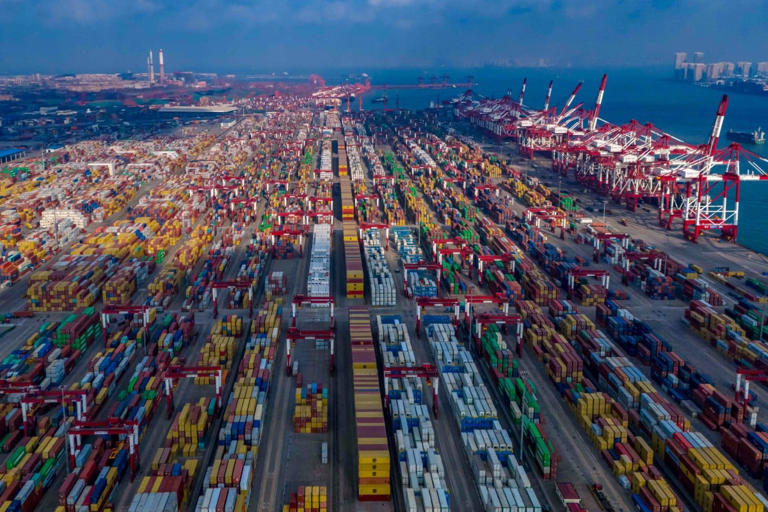
China will file a claim with the WTO and take necessary countermeasures to safeguard its interests, the Ministry of Commerce said on Sunday after the US announced it would impose tariffs on Chinese goods.
“The unilateral tariff hikes by the US seriously violate World Trade Organization rules,” the ministry said, adding that the move “not only fails to address America’s own issues” but also “disrupts normal China-US economic and trade cooperation”.
“We urge the US to take an objective and rational approach to its domestic issues, such as fentanyl, rather than resorting to tariff threats against other countries,” the ministry said.
Do you have questions about the biggest topics and trends from around the world? Get the answers with SCMP Knowledge, our new platform of curated content with explainers, FAQs, analyses and infographics brought to you by our award-winning team.
The ministry’s statement followed US President Donald Trump’s decision on Saturday to sign an executive order imposing a 10 per cent tariff on Chinese imports in response to what he said was the failure of Chinese officials to stem the flow of precursor chemicals for fentanyl into the United States.
Fentanyl is a powerful synthetic opioid that has led to hundreds of thousands of deaths in North America.
The White House also referred China’s “intellectual property theft, forced technology transfer, and other unreasonable behaviour”, as well as illegal immigration “including a rising number of Chinese nationals and people on the terror watch list”.
The Chinese Ministry of Foreign Affairs reaffirmed Beijing’s efforts to control the illegal production of fentanyl, saying the country was “one of the world’s strictest and most thorough enforcers of anti-narcotics policies”.
“The fentanyl crisis is a problem of the United States, and out of humanitarian concern, China has supported US efforts to tackle the issue,” the foreign ministry said.
It called the tariffs “unconstructive”, saying they would “inevitably impact and undermine” future cooperation between the two sides on drug control.
“We urge the US to correct its wrongful actions, safeguard the hard-won progress in bilateral anti-drug cooperation, and promote the stable, healthy, and sustainable development of China-US relations,” the foreign ministry said.
Along with the tariffs on Chinese imports, Trump also signed orders to impose a 25 per cent tariff on goods from Canada and Mexico. The tariffs will go into effect on Tuesday and will be on top of those already in place.
Gary Ng, a senior economist at French investment bank Natixis, said the executive orders marked a new trade war era, with the US “using tariffs to achieve US economic and geopolitical goals, regardless of whether they are (against) allies”.
“The move has brought the tariffs on the US’ biggest trading partners to a more similar level (as those on China),” Ng said.
He said China could take a range of retaliatory measures, including imposing reciprocal tariffs, introducing export controls on certain critical materials, and restricting market access for certain American firms.
Zhang Zhiwei, president and chief economist at Pinpoint Asset Management, said the 10 per cent tariffs signed off by Trump were “not a big shock to China’s economy”.
“It’s unlikely to change the market expectation of China’s macro outlook this year, which already factored in higher tariffs from the US,” Zhang said.
The tariffs on China are also well below the 60 per cent import duties Trump threatened to enact at various points on the presidential campaign trail last year.
Zhang added the focus of the US trade policy announced on the weekend was on Canada and Mexico, not China, pointing to the differing tariff rates imposed on each country.
More Articles from SCMP
Hong Kong football fans gather to see Rivaldo, Kaka and others for legends match
19-month-old boy in critical condition with flu at Hong Kong hospital
Missing Hong Kong man dies after being found unconscious at Suicide Cliff
Why celebrate Kowloon Walled City at Hong Kong airport?
Hong Kong’s Paul Chan warns Trump tariffs will prolong high interest rates
This article originally appeared on the South China Morning Post (www.scmp.com), the leading news media reporting on China and Asia.






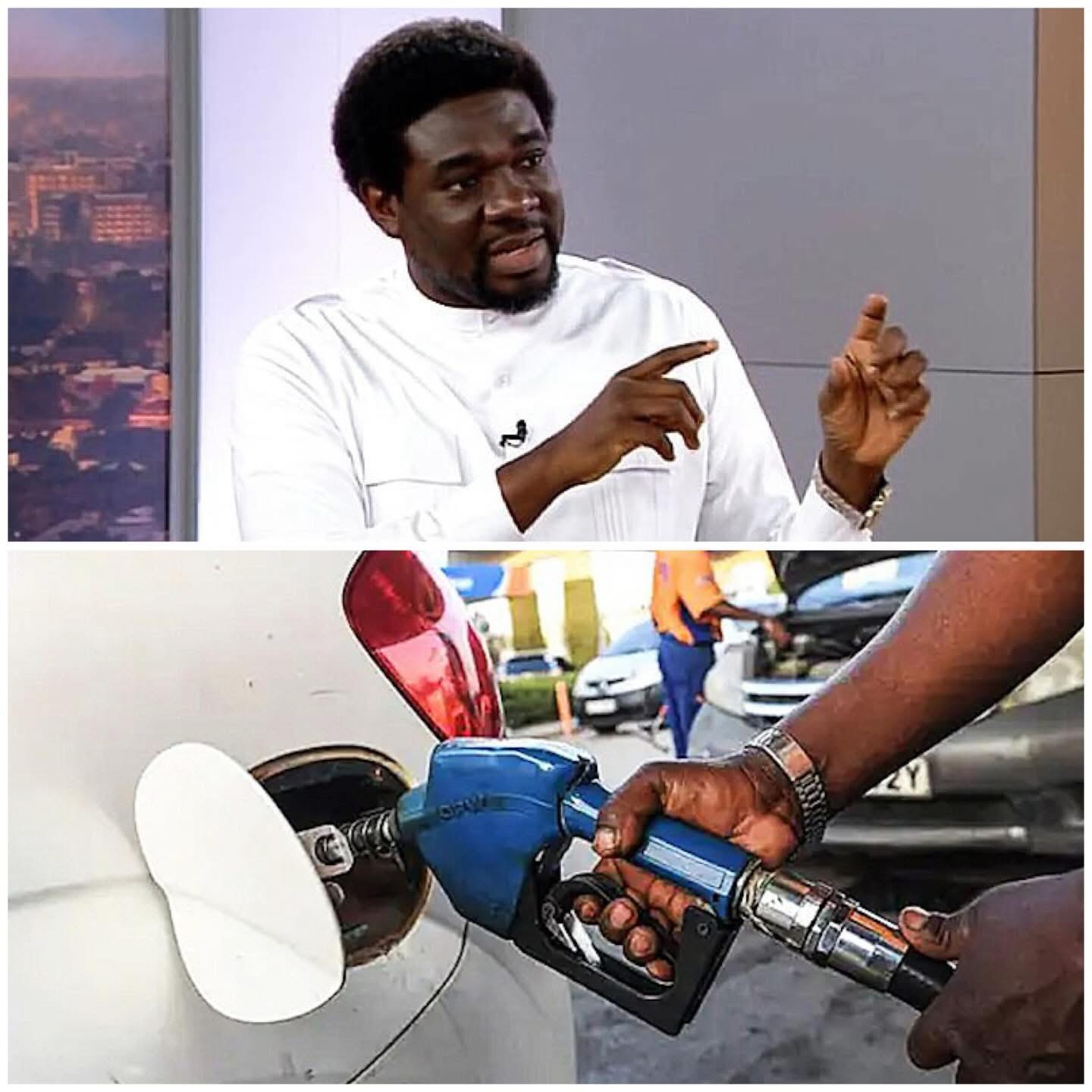
The Trade Union of Nigeria, TUC, has raised the alarm that the price of Premium Motor Spirit aka Petrol may climb to about N2,000 per litre if urgent measures are not taken to cushion the impact of rising global crude prices and the depreciating naira.
Speaking to newsmen on Thursday, April 9, the president of the TUC, Festus Osifo, called on the Federal Government to immediately deploy 60 percent of excess crude oil revenue above the 2026 budget benchmark to subsidise crude feedstock supplies to the Dangote Refinery and other modular refineries, a move it says will slash pump prices of petrol, diesel, and jet fuel within two weeks
“Today, comrades, we are seeing that the cost of petrol is edging towards N2,000 per litre depending on the part of the country that you are. Nigerian workers are already passing through excruciating pain as we speak.
The same way it is affecting transportation, it is also affecting manufacturing. The cost of diesel has also gone northward, meaning that the cost of production has increased. When production costs rise, the final price of goods on the shelves will also skyrocket.
If this continues unchecked, the inflation that we are currently celebrating as going downwards will reverse and start moving up again,” he stated.
Osifo outlined the proposal as an urgent intervention to cushion Nigerian workers from excruciating pain caused by petrol prices edging towards ₦2,000 per litre in some parts of the country
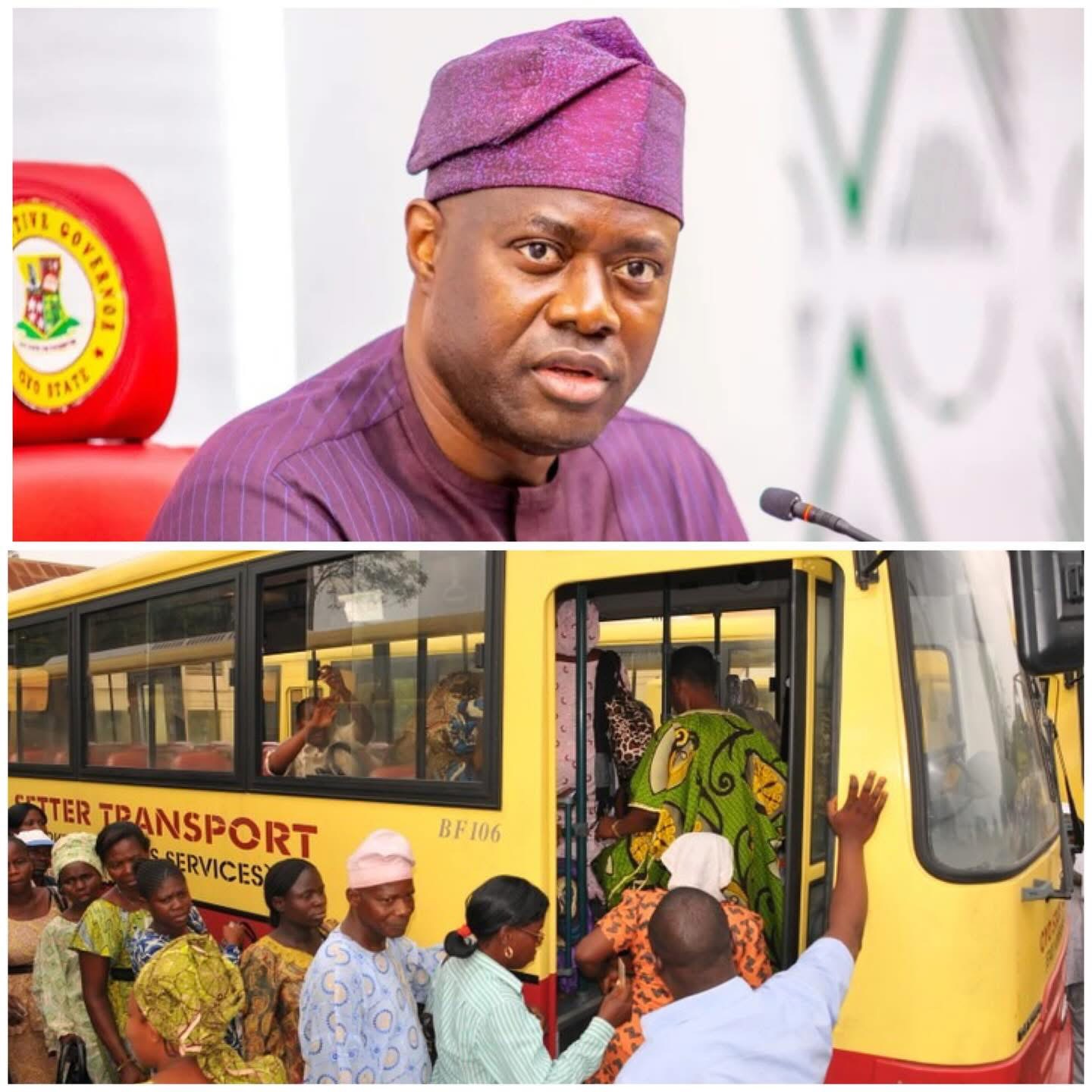
The governor of Oyo state, Seyi Makinde, has approved a N10,000 transportation allowance as a palliative for the state workforce to cushion the effects of the increase in the pump price of Premium Motor Spirit, otherwise known as petrol.
The Chairman of the Nigeria Labour Congress (NLC), Oyo State chapter, Kayode Martins, in a statement released on Monday, March 23, disclosed that the governor has granted the request of the union on the issue of transportation allowance.
The statement read
“Following the intervention and formal request made by the State Council of the Nigeria Labour Congress (NLC) earlier this morning, the state government has approved a N10,000 transportation allowance for all workers in the state.
The newly approved allowance is set to take effect from April 2026, providing much-needed relief to workers grappling with rising transportation costs amid current economic challenges.
This development comes as a direct response to sustained advocacy by the state NLC, aimed at cushioning the impact of increased living expenses on the workforce.
Further details on implementation are expected to be communicated by the relevant government authorities in due course.”
The Central Bank of Nigeria (CBN), has declared that banks and financial institutions must establish and maintain a temporary watch-list for Bank Verification Numbers (BVN) implicated in suspected fraudulent transactions.
According to the CBN in a circular dated March 12, 2026 and signed by its Director of Payments System Policy Department, Musa I. Jimoh, the apex bank said such a suspected BVN may remain on the temporary watchlist for a maximum period of twenty-four (24) hours during which the owner would be contacted to make clarifications.
The circular explained that the move is part of several new measures under a revised regulatory framework aimed at enhancing financial system stability.
“A BVN may remain on this temporary Watchlist for a maximum period of twenty-four (24) hours, during this period, the BVN owner shall be contacted to provide clarification regarding the identified transaction(s),” the circular stated.
The circular also sets an age requirement for BVN enrolment, restricting registration to individuals who have attained eighteen (18) years and above.
The CBN also added that amendments to phone numbers linked to a BVN shall be allowed only once.
“Amendments to phone numbers linked to a BVN shall be allowed only once,” the circular noted.
The apex bank stated that access to BVN databases will remain tightly controlled.
“Access to the BVN databases shall be exclusively granted to Central Bank of Nigeria (CBN) licensed financial institutions.
“Notwithstanding this provision, the Central Bank of Nigeria (the Bank) reserves the right to approve access to the BVN databases in extenuating circumstances and in accordance with the provisions of extant laws,” the circular said.
Financial institutions are expected to comply with the new requirements, and customers may be contacted by their banks if their BVNs are temporarily flagged during the new fraud monitoring process.
The new policy, as stated by the CBN, takes effect from May 1, 2026.

Desmond Elliot Withdraws from APC Lagos Assembly Primaries, Cites Intimidation

Political Shockwave in Rivers as Fubara Pulls Out of APC Governorship Race, Backs Party’s Candidate

Ugochukwu Obodo wins Owerri Municipal APC ticket again as APC Elects 27 Imo Assembly Candidates After Successful Primaries

-
Business2 years ago
US court acquits Air Peace boss, slams Mayfield $4000 fine
-

 Trending2 years ago
NYA demands release of ‘abducted’ Imo chairman, preaches good governance
-

 Politics2 years ago
Mexico’s new president causes concern just weeks before the US elections
-

 Politics2 years ago
Putin invites 20 world leaders
-

 Politics2 years ago
Russia bans imports of agro-products from Kazakhstan after refusal to join BRICS
-
Entertainment2 years ago
Bobrisky falls ill in police custody, rushed to hospital
-
Entertainment2 years ago
Bobrisky transferred from Immigration to FCID, spends night behind bars
-
Education2 years ago
GOVERNOR FUBARA APPOINTS COUNCIL MEMBERS FOR KEN SARO-WIWA POLYTECHNIC BORI