Connect with us

Columns

Could Elon Musk Be Paying Your Social Security Check?

Published

on

(Image credit: Getty Images)

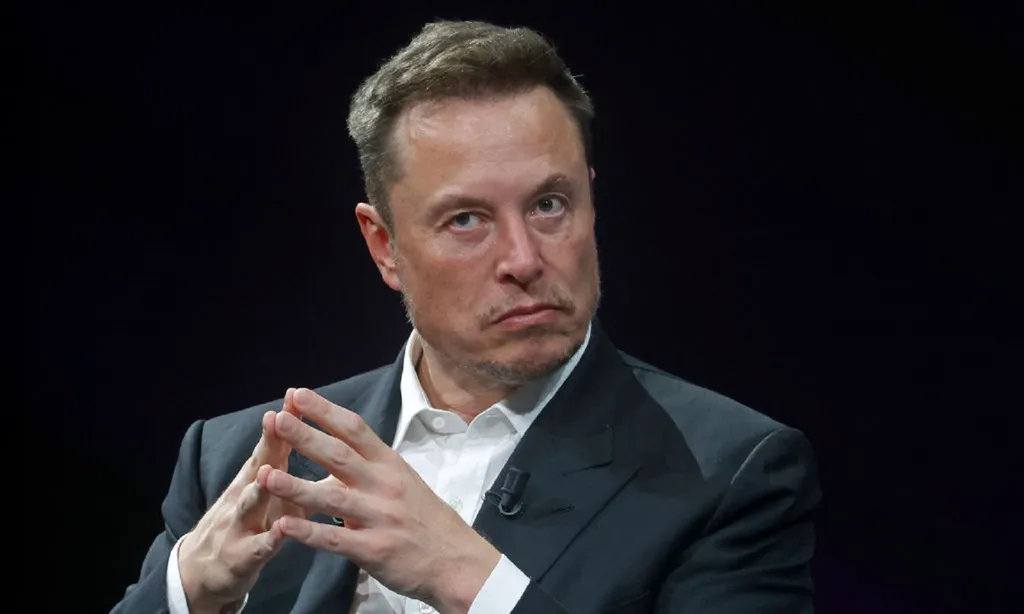
Musk now has access to the US Treasury payment system, which handles Social Security checks. Will your check be on time? Will your data be safe?

Elon Musk isn’t just the world’s richest person. He’s also a man who may now have access to every single taxpayer’s personal financial data.

On Jan. 31, Treasury Secretary Scott Bessent granted members of the Department of Government Efficiency (DOGE), including Musk, access to the U.S. Treasury’s federal payment system. This system disburses trillions of dollars each year for programs that include Social Security and Medicare. It’s unclear what happens next.

With this move, Musk has effectively gained access to the federal government’s checkbook. As a result, Musk, tasked with cutting wasteful spending, has attained a level of control that many find unsettling.

The decision to grant Musk access to the Treasury’s payment system was not without controversy either. Last week, David Lebryk, a top Treasury official who worked there for decades, was ousted after aiming to block Musk’s access. He was initially put on leave and subsequently announced his retirement.

Democrats push back

Senate Finance Committee Ranking Member Ron Wyden (D-Ore.) questioned the decision to grant Musk access to the federal payment system. In a Jan. 31 letter, he stated, “I can think of no good reason why political operators who have demonstrated a blatant disregard for the law would need access to these sensitive, mission-critical systems.”

Wyden also expressed concern that the mismanagement of the federal payment system could threaten the full faith and credit of the U.S., a concern echoed in a February 2 letter from Senator Elizabeth Warren (D. -Mass) to the new Treasury secretary. Wyden noted that Musk was not only denied high-level security clearance but that his business dealings overseas could put the U.S. at greater risk of a cybersecurity attack.

When asked about Musk’s control of the U.S. Treasury payment system, President Donald Trump said, “We’ll give him the approval when appropriate; where not appropriate, we won’t.”

Americans have questions

Last week, the White House was blocked from freezing federal grants and loans. Now, the concern shifts to other government programs Musk may or may not have the power to control. Here are a couple of the more pressing questions consumers will likely have.

Will you get your Social Security check on time?

Millions of Americans depend on Social Security’s regular payments, which are processed through the Treasury payment system. There’s no reason to believe your next Social Security check will be late due to the change in management. However, there is little information about how DOGE intends to run the Treasury system.

There’s also no indication that Musk’s team will stop your Social Security check. According to The New York Times, Musk intends to focus cost-cutting efforts on blocking improper payments across government agencies rather than stopping individual checks.

Democrats vowed to protect Social Security and other payments with a bill. “We must protect people’s Social Security payments, their Medicare payments, tax refunds, from any possible tampering by DOGE or any other unauthorized entities,” Senate Minority Leader Chuck Schumer (D-NY.) said at a press conference on Monday.

Of course, the most significant risk to Social Security is its funding shortfall, as older Americans retire in droves and the program’s trust funds dwindle. There are no easy fixes. Potential solutions — including benefit cuts, raising the retirement age and tax increases — are politically difficult to enact. However, President Trump has statedthat he will not touch Social Security.

That said, the Social Security Administration’s Office of the Inspector General found that between fiscal years 2015 and 2022, the agency lost almost $72 billion to improper payments, most of which were overpayments. Getting overpayments returned to Social Security fits within Musk’s stated goal of blocking improper payments, though it would have only a marginal effect on the Social Security funding shortfall.

Is your personal data safe?

In theory, Musk and his team now have access to every American’s Social Security number and, in many cases, their banking information. However, the team is still bound by the law, which means any attempt to use that information for commercial or other purposes would likely result in legal challenges from Congress.

What’s less clear is that this new, unidentified team will protect Americans’ data security.

Unfortunately, identity theft is rampant, and Americans need assurances that government data is secure. Musk has been criticized for poor privacy and security decisions at some of his companies. For example, Tesla, has a spotty record when protecting user data.

Musk has floated the idea of using blockchain technology to track government payments and, ideally, to improve efficiency. Blockchain helps make payments more transparent and immutable, offering real benefits for tracking transactions. Some municipalities within the U.S. have piloted blockchain initiatives. However, this technology is still relatively young, and it’s hard to know what kind of privacy issuesmight arise from its use in tracking the largest payment system in the world.

Whether you’re a fan or a detractor of Elon Musk, ultimately, he is a private citizen who’s been handed the key to an unfathomably large vault. We are in uncharted territory.

READ MORE


Maurie Backman

Maurie Backman is a freelance contributor to Kiplinger. She has over a decade of experience writing about financial topics, including retirement, investing, Social Security, and real estate. She has written for USA Today, U.S. News & World Report, and Bankrate. She studied creative writing and finance at Binghamton University and merged the two disciplines to help empower consumers to make smart financial planning decisions.

With contributions from

Columns

Orji Uzor Kalu

Published

on


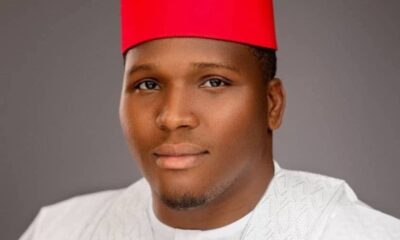
Orji Uzor Kalu MON (born 21 April 1960) is a prominent Nigerian politician, businessman, and former two-term governor of Abia State. He is widely recognized for his influence in both Nigeria’s political landscape and its private sector, particularly in media and diversified business enterprises.

Early Life and Education

Kalu was born in Abia State, where he grew up and began his early education. He later attended the University of Maiduguri but was suspended during a period of student activism. Despite the interruption, Kalu went on to build a successful entrepreneurial career before fully venturing into politics. Over the years, he completed various academic and executive programs, strengthening his profile as a businessman and public administrator.

Business Career

Before entering high-level politics, Kalu established himself as a successful entrepreneur. He is the Chairman of SLOK Holding, a business conglomerate with interests spanning:

trading

manufacturing

shipping

banking

oil and gas

His investments expanded both within Nigeria and internationally. Kalu also holds significant influence in the Nigerian media industry as the chairman and principal owner of The Daily Sun and New Telegraph, two widely circulated national newspapers. Through these enterprises, he has contributed to Nigeria’s media development, business growth, and employment generation.

Political Career

Kalu ventured into politics in the early 1990s. His major political breakthrough came in 1999, when he was elected Governor of Abia State, the first governor of the state under Nigeria’s Fourth Republic. He served two terms from 29 May 1999 to 29 May 2007.

During his governorship, Kalu focused on:

infrastructural development

education reforms

rural development

fiscal transparency

encouragement of local enterprise

He became known for his bold political style and his outspokenness on national issues. Kalu also played influential roles in national politics, aligning with various political parties at different times and serving as one of the notable political actors in Southeast Nigeria.

Senatorial Career

In 2019, Kalu was elected as the Senator representing Abia North Senatorial District in the Nigerian Senate. In the Senate, he has participated in legislative debates, sponsored bills, and advocated for policies supporting economic growth, regional development, and national unity.

Legal Challenges

Kalu faced legal controversies regarding corruption allegations linked to his time as governor. He was convicted in 2019 by a Federal High Court; however, the Supreme Court later nullified the conviction, citing procedural errors and ordering a retrial. The development became one of the most widely discussed legal cases involving a high-ranking public official in Nigeria.

Honours and Recognition

Kalu holds the national honour of Member of the Order of the Niger (MON). His political and business careers have earned him recognition across Nigeria and beyond, while his strong media presence continues to shape public discourse.

Personal Life

He is married and has children. Kalu maintains a significant influence in both political and business circles and continues to be an active figure in Nigerian public life.

Continue Reading

Columns

THE EXECUTION OF THE 1976 COUP PLOTTERS IN NIGERIA

Published

on


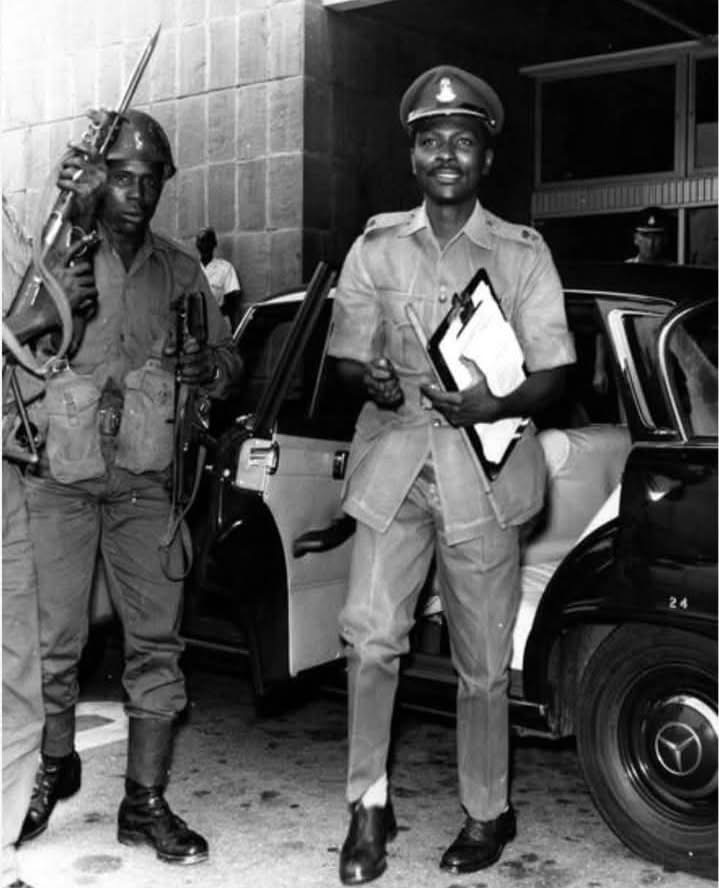
On Friday, February 13, 1976, Nigeria was shaken by a tragic and violent coup d’état led by Lieutenant Colonel Bukar Suka Dimka. The most devastating outcome of this failed coup was the assassination of the nation’s then Head of State, General Murtala Ramat Muhammed. He was gunned down in Ikoyi, Lagos, as he traveled unescorted to his office at the Dodan Barracks. His death sent shockwaves across the country and marked a dark chapter in Nigeria’s post-independence political history.

General Murtala Muhammed had only been in office for approximately 200 days, yet he was deeply admired for his bold reforms, anti-corruption stance, and efforts to return Nigeria to civilian rule. His untimely death sparked outrage, mourning, and swift retribution by the military establishment.

The coup, though partially successful in its initial hours, quickly collapsed. Loyalist forces, particularly those under the command of then Chief of Staff, Supreme Headquarters, Lieutenant General Olusegun Obasanjo, and General Theophilus Danjuma, regained control of strategic institutions. Dimka had temporarily seized the state radio to broadcast his justification for the coup, accusing the Muhammed regime of corruption and maladministration. However, his broadcast was cut short, and he fled Lagos.

Olusegun Obasanjo, after initial hesitation, accepted the call to leadership and succeeded Muhammed as Head of State. His new regime was determined to punish the conspirators severely and deter future insurrections. What followed was one of the most publicized military trials and mass executions in Nigerian history.

The Court-Martial and Executions

Over 100 military personnel and civilians were arrested in connection to the failed coup. Following military investigations and tribunals, dozens were convicted of plotting, aiding, or executing the coup attempt. The convicted officers were sentenced to death by firing squad, and the executions were carried out in two major rounds.

The first set of executions took place on March 11, 1976, at Bar Beach, Lagos, a location known at the time for public executions. Under the supervision of General Obasanjo’s military government, 31 individuals were executed, including senior officers, junior ranks, and one civilian. These included:

1. Major General I. D. Bisalla (former Commissioner for Defence)

2. Warrant Officer II Monday Monchon

3. Staff Sergeant Richard Dungdang

4. Sergeant Sale Pankshin

5. Lieutenant Colonel A. R. Aliyu

6. Captain M. Parvwong

7. Captain J. F. Idi

8. Captain S. Wakins

9. Lieutenant Mohammed

10. Lieutenant E. L. K. Shelleng

11. Lieutenant Colonel Ayuba Tense

12. Colonel A. D. S. Way

13. Lieutenant Colonel T. K. Adamu

14. Lieutenant Colonel A. B. Umaru

15. Captain A. A. Aliyu

16. Captain Augustine Dawurang

17. Major M. M. Mshelia

18. Lieutenant William Seri

19. Major I. B. Ribo

20. Major K. K. Gagra

21. Captain M. R. Gelip

22. Mr. Abdulkarim Zakari (a civilian who assisted in the radio broadcast)

23. Lieutenant Peter Ggani

24. Major Ola Ogunmekan

25. Lieutenant O. Zagmi

26. Lieutenant S. Wayah

27. Sergeant Ahmadu Rege

28. Sergeant Bala Javan

29. Warrant Officer II Sambo Dankshin

30. Warrant Officer II Emmanuel Dakup Seri

31. Major J. W. Kasai

A second round of executions took place between May 15 and 17, 1976, following the capture and trial of the coup leader and his key accomplices. This final round included:

32. Lieutenant Colonel Bukar Suka Dimka (leader of the coup)

33. Joseph D. Gomwalk (former Military Governor of Benue-Plateau State)

34. Lieutenant S. Kwale

35. Warrant Officer H. E. Bawa

36. Colonel I. Buka

37. Major J. K. Afolabi

38. H. Shaiyen

Dimka was captured after a nationwide manhunt and interrogation. During his trial, he remained defiant and refused to express remorse. His execution, along with the others, was carried out in secrecy, though public knowledge of it spread quickly.

These executions were meant to send a clear signal that treason and political instability would not be tolerated. While controversial, especially due to the scale and speed of the trials, the actions taken by the Obasanjo-led government reinforced military discipline and temporarily stabilized Nigeria’s political environment.

General Olusegun Obasanjo would go on to continue the reform agenda of the late Murtala Muhammed and, in 1979, became the first military leader in Nigeria to voluntarily hand over power to a democratically elected civilian government. This marked the beginning of Nigeria’s Second Republic.

The 1976 coup attempt remains one of Nigeria’s most defining political crises, remembered not only for the tragic loss of a visionary leader but also for the massive response it provoked from the military and the Nigerian public.

Continue Reading

Columns

Tokunbo Akintola: The First Black African Student at Eton College

Published

on


In April 1964, a quiet but historic milestone was recorded in the educational and social history of both Nigeria and Britain. On the 29th of that month, the family of Chief Samuel Ladoke Akintola—then Premier of the Western Region of Nigeria—stood proudly at Eton College in England as his son, Tokunbo Akintola, was formally admitted as the first Black African student in the school’s centuries-long history. At just thirteen years old, Tokunbo stepped into one of the most prestigious educational institutions in the world, a boarding school that had shaped the minds of British royals, aristocrats, intellectuals, and nineteen British Prime Ministers.

The photograph taken that day captures not merely a familial moment but a symbol of cultural diplomacy and evolving global relations. The Akintola family appears in a dignified blend of traditional Nigerian attire and modest Western clothing—a visual representation of their deep Yoruba roots and their engagement with the global stage. Standing at the centre is young Tokunbo, clad in his new school uniform, poised to begin an educational journey many could only dream of. Around him, his family offers a visible aura of pride, hope, and expectation.

Chief Ladoke Akintola, Tokunbo’s father, was by then one of the most influential political figures in Nigeria. A trained lawyer, seasoned journalist, and an orator known for his eloquence, he had risen to become Premier of the Western Region during a turbulent but significant period in Nigeria’s post-independence political evolution. His son’s admission into Eton represented both personal achievement and national symbolism—proof that African families could now step confidently onto platforms historically reserved for the British elite.

Eton College itself stood as an institution of immense reputation. Founded in 1440 by King Henry VI, it had become synonymous with leadership and privilege, producing generations of statesmen, military leaders, and members of the Royal Family. For centuries, its doors had remained firmly closed to Africans. Tokunbo’s arrival in 1964 therefore marked a quiet breaking of barriers, the beginning of a new chapter in cross-cultural educational exchange.

Tokunbo remained at Eton through the late 1960s, navigating the school’s rigorous academic environment and its deeply traditional culture. Those who remember him described him as gentle, intelligent, and quietly charismatic. Yet his life, promising as it was, would be a short one. Four years after leaving Eton, in 1973, Tokunbo Akintola died tragically at a young age, cutting short what many believed could have become a remarkable legacy in law, politics, or diplomacy—fields that seemed perfectly aligned with his upbringing and the reputation of his father.

Today, Tokunbo’s story endures as part of Nigeria’s broader historical narrative. It represents the aspirations of a generation of postcolonial families who sought to blend African identity with global opportunity. It also stands as a reminder of the contributions—and sacrifices—made by those who walked early paths of representation, carrying the hopes of their families and nations with them.

Source:
Getty Images archival description; historical records on Ladoke Akintola and Eton College.

Continue Reading

Trending