
Politics
Council autonomy: ALGON, NULGE kick as govs get N2tn LG allocations

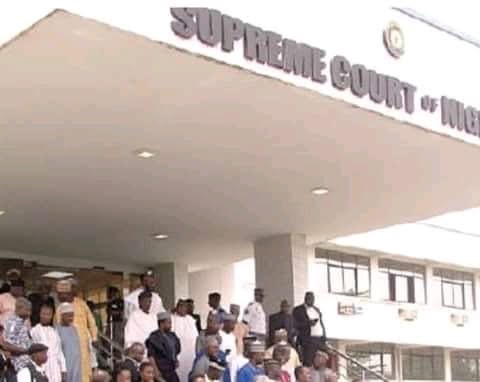
The Federation Accounts Allocation Committee disbursed a total of N2.08tn in allocations to Local Government Councils between July and December 2024, findings by The PUNCH have shown.
However, despite the July 2024 Supreme Court ruling granting full financial autonomy to Nigeria’s 774 Local Government Areas, The PUNCH learnt that the allocations were still paid to state government accounts.
This, it was learnt, has irked officials and members of the Association of the Local Governments of Nigeria and National Union of Local Government Employees.
The landmark Supreme Court ruling directed that funds meant for LGs should be paid directly into their accounts, bypassing state governments, in an effort to promote autonomy and ensure that the funds allocated to local governments were properly utilised.
Nearly six months after the judgment, the Federal Government had not effected direct payment of allocations to the local governments, as directed by the apex court.
The PUNCH reported that the Minister of Finance and Coordinating Minister of the Economy, Wale Edun, said the Federal Government was yet to commence direct payment to the respective LGs due to some “practical impediments.”
He added that a committee had been set up by the Federal Government to look at the practicability of the judgment.
The Federal Government, it was learnt, faced challenges implementing the ruling on local government financial autonomy, with concerns over its impact on salary payments and operational viability.
An analysis of communiqués released after the monthly meeting of Federation Accounts Allocation Committee showed that from July to December 2024, the total distributable revenue amounted to N8.351tn, which was shared among the Federal Government, States, and Local Government Councils. The disbursements for each month were as follows:
In July 2024, the total revenue shared was N1.354tn. The Federal Government received N459.776bn, while the States received N461.979bn and the Local Government Councils received N337.019bn.
In August 2024, the total distributable revenue increased to N1.358tn. The Federal Government received N431.079bn, the States N473.477bn, and the LGCs N343.703bn, a slight increase of N6.684bn from the previous month. This represents a 2 per cent increase in the amount allocated to LGCs.
September 2024 saw a decrease in the total distributable revenue, which fell to N1.203tn. The Federal Government received N374.925bn, the States N422.861bn, and the Local Government Councils N306.533bn. This marked a significant drop of N37.170bn in LGC allocations compared to August 2024, a decrease of 10.1 per cent.
In October 2024, the total distributable revenue rose to N1.298tn. The Federal Government received N424.867bn, the States received N453.724bn, and the LGCs received N329.864bn. This marked an increase of N23.331bn, representing a 7.6 per cent rise in allocations to the LGCs from September.
The trend continued in November 2024, with the total distributable revenue increasing to N1.411tn. The Federal Government received N433.021bn, the States received N490.696bn, and the Local Government Councils received N355.621bn. This represented an increase of N25.757bn, or 7.8 per cent, compared to the previous month for LGC.
In December 2024, the total distributable revenue reached N1.727tn, the highest amount of the six-month period. The Federal Government received N581.856bn, the States N549.792bn, and the Local Government Councils received N402.553bn. This was the largest allocation to the LGs, with an increase of N46.932bn, which equated to a 13.2 per cent rise from November.
Over the six-month period, the total amount allocated to the Local Government Councils was N2.075tn out of the N8.351tn total distributable revenue. This allocation represents approximately 24.9 per cent of the total revenue shared.
We observed that was a 72.06 per cent increase in the allocations to local governments between July to December 2024 when compared to the same period of the previous year.
This means that there was an increase of N869bn from the N1.206tn allocated to local government councils within the same period last year.
The month of December saw the highest allocation to LGCs, marking a significant 13.2 per cent increase from the previous month. This sharp rise in December followed a steady upward trajectory in LGC allocations, with the biggest percentage increase seen in the final month of the year.
Despite these large disbursements, the question of whether the Supreme Court’s directive will be fully implemented remains unanswered.
In July this year, the Supreme Court declared that it is unconstitutional for state governors to hold funds allocated for local government administrations.
The seven-man panel, in the judgment delivered by Justice Emmanuel Agim, declared that the 774 local government councils in the country should manage their funds themselves.
The apex court held that the power of the government is portioned into three arms of government, the federal, the state and the local government.
The court further declared that a state government has no power to appoint a caretaker committee and a local government council is only recognisable with a democratically elected government.
The judgment held that the use of a caretaker committee amounts to the state government taking control of the local government and is in violation of the 1999 Constitution.
The court ruled that state governments are perpetuating a dangerous trend by refusing to allow democratically elected local government councils to function, instead appointing their loyalists who can only be removed by them.
The court stated that it is the local government that should receive and manage funds meant for local government.
The judgment held that the local government council funds must be paid to only democratically elected local government councils stating that “anything other than this will be taken as a gross misconduct.”
The Attorney General of the Federation and Minister of Justice, Prince Lateef Fagbemi (SAN), earlier issued a stern warning to state governors bypassing the Supreme Court judgment on local government autonomy, threatening to seek a contempt of court suit if the defiance continues.
Fagbemi also cautioned local government chairmen across the country against mismanaging or looting public funds.
The AGF stressed that the autonomy granted to local governments by the Supreme Court is to empower the grassroots and not for carting public funds into private pockets as such attitude will not go unpunished.
ALGON, NULGE kick
The Secretary-General of the Association of Local Governments of Nigeria, Mohammed Abubakar, while speaking on the delay in the direct payment of federal allocation to local governments, lamented the non-implementation of the Supreme Court ruling.
“Sincerely, we are all in the dark as we stand now. People who don’t want this LG autonomy to work are having a field day. Ordinarily, the Supreme Court judgment should not be left unattended. We are in the dark, to the extent that we cannot pinpoint what the government is trying to achieve by not enforcing the Supreme Court judgment allowing allocation to be paid directly to local government accounts,” Abubakar told The PUNCH.
He added, “The Nigeria Union of Local Government Employees and ALGON had made their submissions that the LGs accounts should be opened across board and submitted to the Office of The Accountant-General for the allocation to be disbursed directly.
But the governors are claiming that they already utilised funds for the interest of the local governments. They also argued that the local governments’ money is not enough to take care of all the health and the primary school teachers. But we are saying they should allow the implementation first, then we can make a case for whatever deficiencies we have.
In a situation where you don’t act but worry about some issues raised by the governors, which include that they have incurred a lot of loans on behalf of the local governments, then we may not have a way forward. So, these are the bottlenecks that we understand are causing these delays, but again there can be a way out of these issues and we have proffered some solutions to the committee. It is best known to the committee why it has not carried out the advice we gave to them.”
Also, the Ogun State Chairman of the Nigerian Union of Local Government Employees, Bayo Adefesobi, on Monday blamed the Federal Government for the non-implementation of the court judgment.
We have not seen the implementation of LG autonomy in Ogun State just as it is across the country. The blame for the non-implementation should go to the Federal Government that made the pronouncement but refused to follow up on its decision.
Once the Federal Government pays the allocation into the respective accounts of the local governments, the chairmen will access the funds and use them for grassroots development. So, we all await the Federal Government to do the needful.”
The Chairman, Kwara State chapter of NULGE, Seun Oyinlade, expressed disappointment over the non-implementation of the LG autonomy six months after the judgment.
He said “All the 16 local governments in the state did not receive their allocations directly from the Federal Government. If the councils had received direct allocation from the Federal Government, there would have been no need for the JAAC meeting held with the council officials before the payment of LG workers’ salaries for the month of November.”
Speaking with one of our correspondents, ex-chairman of Atakumosa West LG in Osun State, Francis Famurewa, lamented the fate of the lgs, saying despite being elected, LG chairmen were made to take instructions from the state’s Commissioner for Local Government Affairs, an appointee of the governor.
Asked if he was satisfied with the situation of the LGs, Famurewa said, “Nobody will be satisfied with the current situation where local governments are appendages of the state.
Most of the time, they are not just appendages, they are under the control of the Ministry of Local Government. When I was in office as chairman, we were more under the Commissioner for Local Government, which was a terrible situation.
Follow up Sylvester Joseph








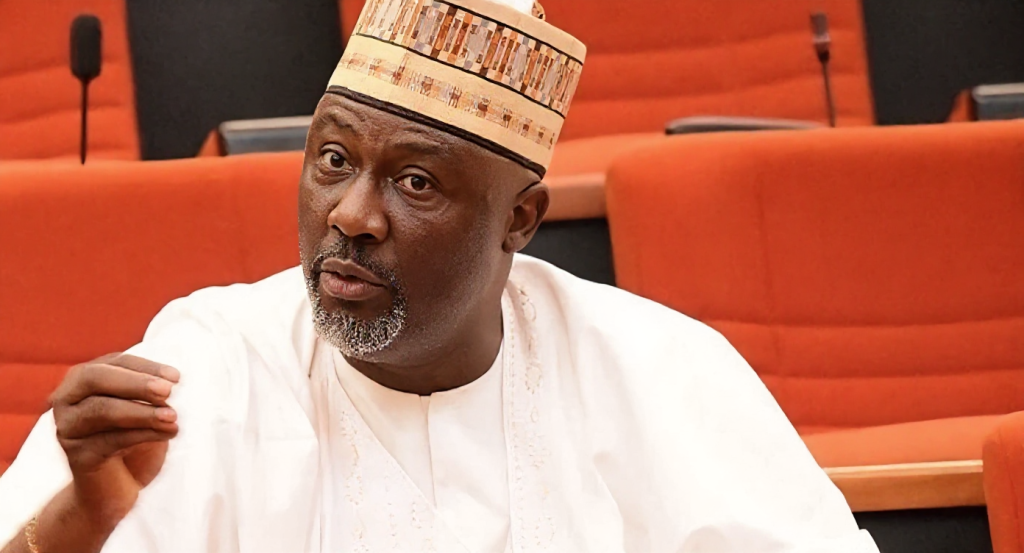
Former lawmaker, Dino Melaye Esq, has raised concerns over the Senate’s reported rejection of the electronic transmission of election results.
The move, according to Melaye, is a clear endorsement of election rigging and an indication of a sinister plan to rig the 2027 elections.
In a statement on Friday, the former lawmaker criticized the Senate’s decision, stating that it undermines the credibility of the electoral process.
The African Democratic Congress, ADC chieftain, also stated that the move opens the door for electoral manipulation and fraud.
He further warned that the rejection of electronic transmission of results is a step backwards for democracy in Nigeria.
Melaye called on lawmakers and citizens to stand up against “this blatant attempt to undermine the will of the people and ensure that future elections are free, fair, and transparent”.
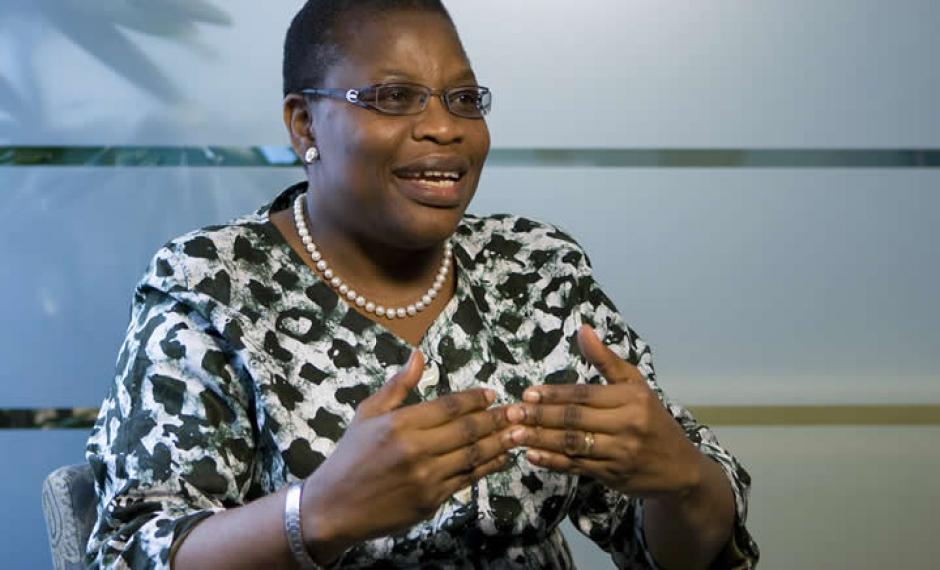
Former Minister of Education, Oby Ezekwesili, has said Nigerians have every reason to be mad at the Senate over the ongoing debate on e-transmission of election results.
Ezekwesili made this known on Friday when she featured in an interview on Arise Television’s ‘Morning Show’ monitored by DAILY POST.
DAILY POST reports that the Senate on Wednesday turned down a proposed change to Clause 60, Subsection 3, of the Electoral Amendment Bill that aimed to compel the electronic transmission of election results.
Reacting to the matter, Ezekwesili said, “The fundamental issue with the review of the Electoral Act is that the Senate retained the INEC 2022 Act, Section 60 Sub 5.
“This section became infamous for the loophole it provided INEC, causing Nigerians to lose trust. Since the law established that it wasn’t mandatory for INEC to transmit electoral results in real-time, there wasn’t much anyone could say.
“Citizens embraced the opportunity to reform the INEC Act, aiming to address ambiguity and discretionary opportunities for INEC. Yet, the Senate handled it with a “let sleeping dogs lie” approach. The citizens have every reason to be as outraged as they currently are.”
Politics
Electoral act: Senate’s action confirms Nigeria ‘fantastically corrupt’, ‘disgraced’ – Peter Obi
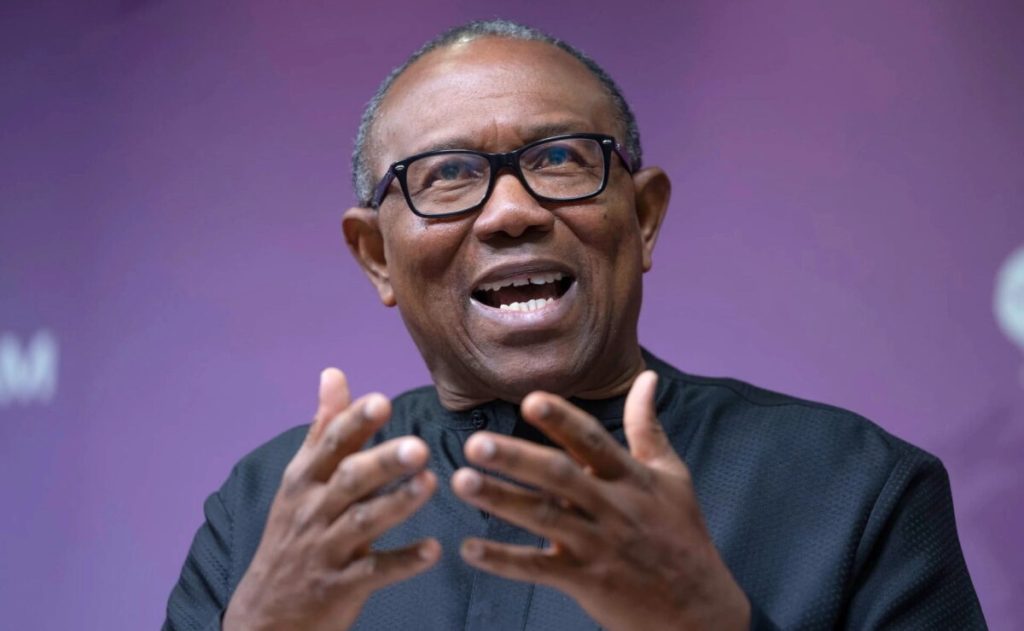
Former Labour Party presidential candidate, Peter Obi, has condemned the Senate’s refusal to make electronic transmission of election results mandatory, saying the move further exposes Nigeria as a fantastically corrupt and disgraced country.
Obi expressed his views in a statement shared on X on Friday, where he accused lawmakers of deliberately weakening Nigeria’s democratic process ahead of the 2027 general elections.
He explained that his reaction came after a brief pause to mourn victims of a deadly tragedy in Kwara State, where over 150 people reportedly lost their lives.
“Let us first pray for the souls of the innocent Nigerians lost in Kwara. That painful incident is why I delayed responding to the shameful development surrounding our electoral system,” he wrote.
Describing the Senate’s decision as intentional and dangerous, Obi said rejecting mandatory electronic transmission was not a simple oversight but a calculated attempt to block transparency.
“The Senate’s open rejection of electronic transmission of results is an unforgivable act of electoral manipulation ahead of 2027,” he said.
According to him, the action strikes at the heart of democracy and raises serious questions about the true purpose of governance in Nigeria.
“This failure to pass a clear safeguard is a direct attack on our democracy. By refusing these transparency measures, the foundation of credible elections is being destroyed. One must ask whether government exists to ensure justice and order or to deliberately create chaos for the benefit of a few.”
The former Anambra State governor linked the post-election controversies of the 2023 general elections to the failure to fully deploy electronic transmission of results, insisting that Nigerians were misled with claims of technical failures.
“
The confusion, disputes and manipulation that followed the 2023 elections were largely due to the refusal to fully implement electronic transmission,” he said.
He added that the so-called system glitch never truly existed.
Obi compared Nigeria’s electoral process with those of other African countries that have embraced technology to improve credibility, lamenting that Nigeria continues to fall behind.
“Many African nations now use electronic transmission to strengthen their democracy. Yet Nigeria, which calls itself the giant of Africa, is moving backwards and dragging the continent along.”
He criticised Nigeria’s leadership class, saying the country’s problems persist not because of a lack of ideas but because of deliberate resistance to meaningful reform.
“We keep organising conferences and writing policy papers about Nigeria’s challenges. But the truth is that the leaders and elite are the real problem. Our refusal to change is pushing the nation backwards into a primitive system of governance.”
Warning of the dangers ahead, Obi said rejecting electronic transmission creates room for confusion and disorder that only serves the interests of a small group.
He also recalled past remarks by foreign leaders who described Nigeria as corrupt, arguing that actions like this continue to justify those statements.
“When a former UK Prime Minister described Nigeria as ‘fantastically corrupt,’ we were offended. When former US President Donald Trump called us a ‘disgraced nation,’ we were angry. But our continued resistance to transparency keeps proving them right.”
Obi warned that Nigerians should not accept a repeat of the electoral irregularities witnessed in 2023.
“Let there be no mistake. The criminality seen in 2023 must not be tolerated in 2027.”
He urged citizens to be ready to defend democracy through lawful and decisive means, while also calling on the international community to closely monitor developments in Nigeria’s electoral process.
“The international community must pay attention to the groundwork being laid for future electoral manipulation, which threatens our democracy and development,” Obi stated.
He concluded by expressing hope that change is still possible if Nigerians take collective responsibility.
“A new Nigeria is possible but only if we all rise and fight for it.”

Police bust syndicate behind nude photo blackmail in Lagos

Man in shock after lady he lodged with in a hotel in Abuja flees with his car and other valuables

US Reacts As De@th Toll In Kwara Terror Attacks Hits 200

-
Business1 year ago
US court acquits Air Peace boss, slams Mayfield $4000 fine
-

 Trending1 year ago
NYA demands release of ‘abducted’ Imo chairman, preaches good governance
-

 Politics1 year ago
Mexico’s new president causes concern just weeks before the US elections
-

 Politics1 year ago
Putin invites 20 world leaders
-

 Politics1 year ago
Russia bans imports of agro-products from Kazakhstan after refusal to join BRICS
-
Entertainment1 year ago
Bobrisky falls ill in police custody, rushed to hospital
-
Entertainment1 year ago
Bobrisky transferred from Immigration to FCID, spends night behind bars
-
Education1 year ago
GOVERNOR FUBARA APPOINTS COUNCIL MEMBERS FOR KEN SARO-WIWA POLYTECHNIC BORI