
Politics
G20 Summit: Brazil’s billionaire tax plan faces pushback

The G20 summit in Rio aims to build consensus on taxing the super-rich for climate action and poverty relief. But as geopolitical issues take priority, President Lula may struggle to quell skepticism over the proposal.
Brazilian President Luiz Inacio Lula da Silva, hosting the G20 summit in Rio de Janeiro from Monday, will try to progress plans to tax the world’s richest billionaires, who often use complex loopholes to avoid tax.
At a July meeting of G20 finance ministers in Rio, the world’s wealthiest nations agreed to start a “dialogue on fair and progressive taxation, including of ultra-high-net-worth individuals,” despite fierce resistance from the United States and within Germany’s now collapsed coalition government.
While the world’s growing geopolitical issues — the Ukraine and Gaza conflicts, the prospect of a second Trump term in the US and China trade — are expected to dominate the two-day summit, Lula hopes to move the wealth tax plan forward as the money raised from billionaires will help boost other pressing global issues.

Campaigners have called for years for greater scrutiny over how the wealthy avoid taxes
© Fabrice Coffrini/AFP
Advocates say new tax would cause little pain
Devised by French economist Gabriel Zucman, the plan would introduce an annual tax of 2% on the total net worth of the uberwealthy — not just their annual income. This would include real estate assets, corporate shareholdings and other investments. Zucman estimates that the top 0.01% of the population pay an effective tax rate of just 0.3% of their wealth.
The new levy could raise up to $250 billion (€237 billion) a year from the nearly 2,800 billionaires globally, who have a combined net worth estimated at some $13.5 trillion, according to the Forbes Richest World’s Billionaires List. The funds raised would be used to tackle growing global inequalities, especially among heavily indebted low-income countries, including many in Africa.
“The taxation of high net-worth individuals is very important as it could be a source for funding initiatives that fight hunger and poverty, and also tackle climate change,” Tomas Marques, a research fellow at Hamburg’s GIGA Institute for Latin American Studies, told DW.
Developing nations, who many scientists say are being disproportionately affected by climate change, have for years demanded funding to offset its worst impacts. Success stories include World Bank and Green Climate Fund support for India’s bid to boost solar power capacity and Brazil’s Amazon Fund, aimed at reducing deforestation, which is part-funded by Norway and Germany.
Skepticism over G20 spending plans
While there may be broad public support for new taxes on the ultra-wealthy, the rise of national populism in many G20 countries is increasing scrutiny about how public money is spent, amid concerns that international aid and development funds could be better deployed at home.
“Most of the G20 countries are having a hard time balancing their budgets,” Maria Antonieta Del Tedesco Lins, an economist and associate professor at the University of Sao Paulo, told DW. “While extra taxes would help, it’s very hard to juggle national pressures with new international or multilateral obligations.”
Monday’s opening ceremony in Rio will launch the Global Alliance Against Hunger and Poverty, an initiative under Brazil’s G20 presidency that seeks to accelerate efforts in the fight against poverty and a lack of food by 2030.
The Brazilian government is also the principal backer of the proposed tax on the ultrawealthy, along with France, Spain and South Africa. Despite this support, the lower house of Brazil’s parliament, the Chamber of Deputies, last month rejected plans for an additional domestic levy on those with large fortunes.
“It’s a shame because Brazil could benefit a lot [from this tax] because we are a very unequal country. If there was an international consensus [on taxing the superrich] it could help negotiations in the Brazilian Congress,” said Lins, who took part in a G20 academic engagement group ahead of the summit.
In Brazil, as in the rest of the world, the wealthy often shield their wealth from tax authorities by creating shell companies in countries with low or zero taxes, taking advantage of banking secrecy laws and forming trusts and charitable foundations, which offer generous tax breaks.
US spurns wealth-tax proposal
While China’s and India’s positions on the new tax are ambiguous, Washington remains firmly opposed. US Treasury Secretary Janet Yellen told the Wall Street Journal in May that the measure was “something we can’t sign on to.”
President-elect Donald Trump has yet to comment on the proposal but is unlikely to back hiking taxes on the uber-rich. His first term was marked by large tax cuts — which benefited wealthy individuals and corporations the most. But during his short-lived run for the White House in 2000, he did promise to cut the national debt by levying a one-time 14.25% tax on the wealthy.
Lula then faces tough odds in making any meaningful progress during the two-day summit, especially as many critical geopolitical issues, as well as Brazil’s proposal to improve global governance will also dominate the talks.
“Lula is a great negotiator,” Marques said. “He bills himself as a bridge builder between the Global South and Global North. But I don’t know how he can reach a consensus around this very sensitive topic.”

Brazilian President Luiz Inacio Lula da Silva is a shrewed negotiator, who is determined to push ahead with higher taxes on billionaires
© Erica Martin/TheNEWS2/picture alliance
Wealth tax — a boon for Africa
Better representation at G20 for Africa is now critical, as the continent seeks to benefit from any new tax plan, through the receipt of poverty and climate alleviation funds. The African Union, the regional bloc of 55 African countries, will be attending the Rio summit for the first time, after being admitted as a full G20 member in August.
Next year, South Africa will take over the rotating G20 presidency — the fourth consecutive leadership of the bloc from the Global South, after Indonesia, India, and Brazil. The role will give the country and Africa as a whole further opportunities to shape global policies and advocate for the continent’s interests.
“African countries have been underrepresented in the G20 despite the continent’s importance globally,” Marques, who is in Rio for the summit, told DW. “But things are changing, and the African Union is now starting to have some influence on policymaking.”
Edited by: Uwe Hessler
Author: Nik Martin







March 20, 2026
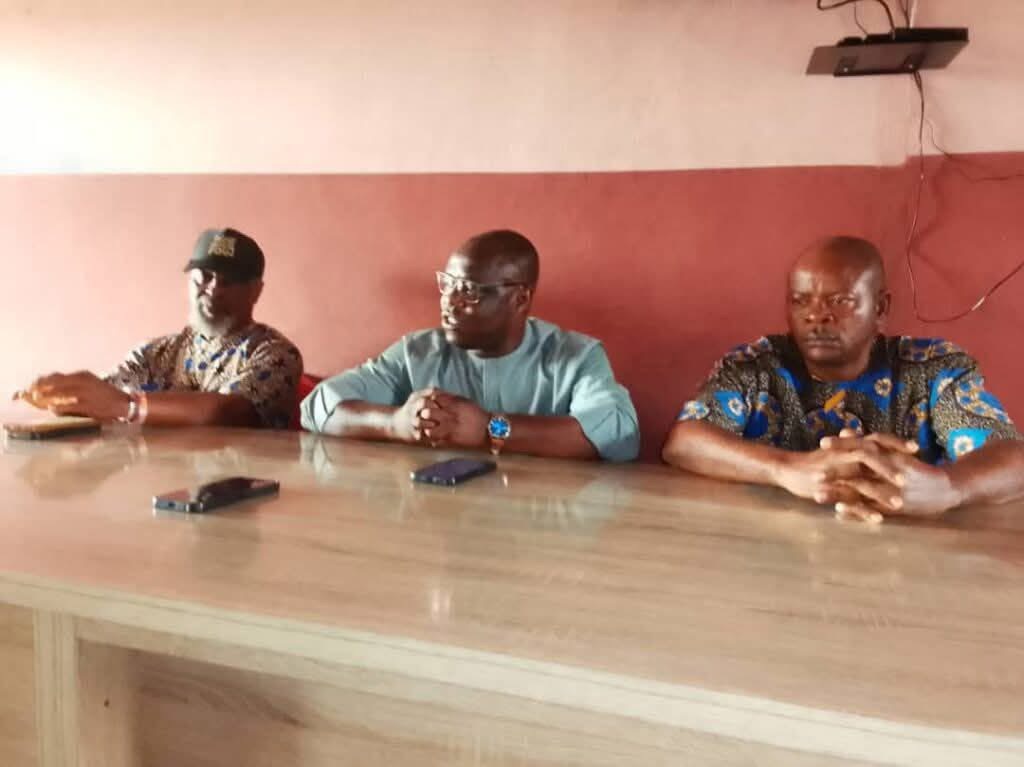
The All Progressives Grand Alliance in Abia State has called on the Senate to declare the seat of the Senator representing Abia South, Enyinnaya Abaribe, vacant following his resignation from the party.
The party made the call on Thursday during a press briefing in Umuahia, where its leadership, led by a former member of the Abia State House of Assembly, Obinna Ichita, insisted that Abaribe voluntarily resigned from APGA and was not sacked, contrary to his claim at the Senate.
Ichita argued that Abaribe’s exit from the party that sponsored his election violates constitutional provisions, stressing that there was no leadership crisis within APGA to justify his defection.
“The senator resigned in his ward. He did so voluntarily, which is his right. However, if you leave the party that gave you the platform for another party when there is no leadership crisis, that seat must be declared vacant,” he said.
He further alleged that Abaribe misrepresented the circumstances of his exit by claiming he was sacked.
“The party has documentary evidence to show that Senator Abaribe was not sacked. He resigned three months after disciplinary measures were taken against him over actions the court did not consider appropriate,” Ichita added.
According to him, the mandate belongs to the people and the party, not the individual office holder.
“They gave him the mandate on the platform of APGA, not any other party. There was nothing like ADC when he was elected. He cannot take the mandate elsewhere without consulting the people who gave it to him,” he said.
Ichita maintained that the constitution is clear on defection, noting that any lawmaker who leaves a party without a valid internal crisis must vacate the seat.
“My message to Senator Abaribe is to honourably vacate the seat instead of waiting for the National Assembly to declare it vacant. That would amount to national embarrassment,” he added.
Also speaking, the APGA State Chairman, Sunday Onukwubiri, and the party’s Public Relations Officer, Chukwuemeka Nwokoro, reiterated that Abaribe had distanced himself from the party’s activities at various levels in the state.
They insisted that he neither holds dual membership nor was he expelled, maintaining that his resignation was voluntary.
“He was invited by the party but failed to appear and was subsequently suspended in line with the party’s constitution. Three months later, he resigned,” the officials said.
Reacting, Abaribe defended his position, insisting that he acted within his constitutional rights.
“When you are no longer a member of a party by virtue of being sent away, you have the fundamental right of association to join another party,” he said.
He argued that his indefinite suspension by APGA effectively amounted to expulsion.
“If a party places you on indefinite suspension for more than six months, what does that mean? It means you have been told to go elsewhere, and that is exactly what I did,” he stated.
The senator added that the proper constitutional procedure for removing him from office would be through a recall process by his constituents.
“If the people who elected me no longer want me, the right thing to do is to initiate a recall. That is the position of the law,” he said.
Politics
Tinubu’s Reforms May Be Challenging, but They’ve Boosted Nigeria’s Global Respect — Information Minister Mohammed Idris
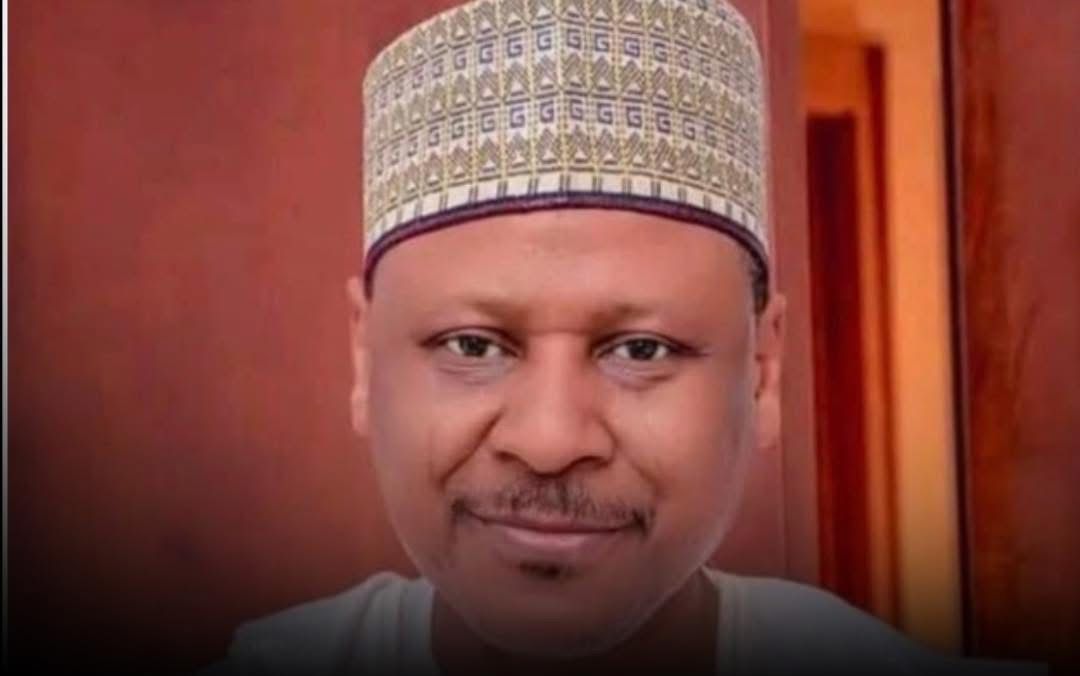
The Minister of Information and National Orientation, Mohammed Idris, has stated that Nigeria is receiving greater respect internationally under the leadership of President Bola Tinubu.
Speaking on Friday after attending Jumaat prayers at Yahaya Road Mosque in Kaduna, Mr Idris said, “Nigeria is indeed taking its rightful place. The country is respected more than ever before on the international scene. The reforms that the president has instituted, as challenging as they are, are meant for the benefit of all Nigerians.”
He urged Nigerians to stay calm as the government continues its efforts to restore security across the nation. Referring to the recent multiple b%mb att@cks in Maiduguri, Borno State, the minister assured that such incidents would not be allowed to recur.
“Indeed, our country is facing challenges, and the government is working tirelessly to ensure security throughout Nigeria. We have seen what has happened, particularly in Borno State. We pray to Allah to make this the last one, as the government is committed to preventing any repetition of such incidents,” he said.
Mr Idris also stressed the importance of citizens being prayerful and working together to address the country’s challenges. He encouraged both Muslims and non-Muslims to unite in the interest of Nigeria’s growth and development.
“This is a time for reflection for all Nigerians. We pray that everyone will consider this moment and recognize the need for unity, progress, and national development. All hands must be on deck for the unity of the country. As we earn respect internationally, we also hope and pray that unity will strengthen within our nation,” he added.
By Dan Opara
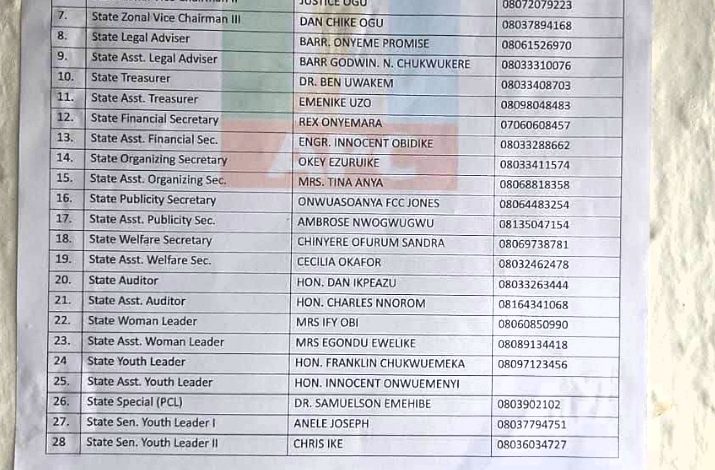
Following the successful conduct of the Imo State APC Congress held in Owerri, Imo State, on March 3rd, 2026, the leadership of the party has officially released the list of victorious candidates who emerged from the exercise.
The announcement, made on Friday, March 20th, 2026, came 17 days after the Congress, as gathered by ThePressman Newspaper.
According to the released list, Chief Austin Onyedebelu emerged as the Imo State APC Chairman, while Arc. Allen Enwerem was elected as the State Deputy Chairman. Hon. Onyekachi Ibezim secured the position of State Secretary, alongside 33 other members who now constitute the State Party Executive Committee, including Ex-Officio members in Imo State.
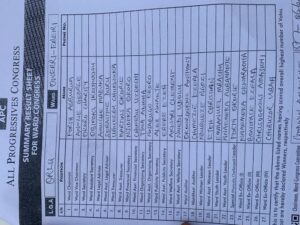
In addition, the leadership of the ruling APC across the 27 Local Government Areas of Imo State has also been announced.
The Ward Party Executive Committee Members for the 305 wards are, however, yet to be fully confirmed.
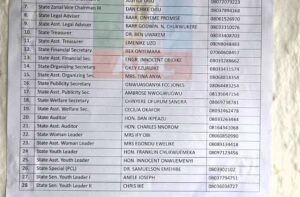
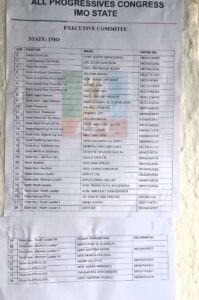
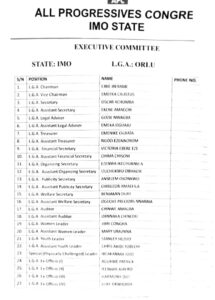
Below is the comprehensive list of the All Progressives Congress State Executive Committee Members for Imo State, including their respective telephone numbers.
ALL PROGRESSIVES CONGRESS
STATE: IMO STATE EXECUTIVE COMMITTEE
State Chairman, Chief Austin Onyedebelu, 08033101685.
State Deputy Chairman, Arc. Allen Enwerem, 08036301966.
State Secretary, Hon. Onyekachi Ibezim, 08033416291.
State Assistant Secretary, Nzenwa Nwoju, 08037717167.
State Zonal Vice Chairman I, Hon. Frank Onyejiaka, 0803314564.
State Zonal Vice Chairman II, Justice Ogu, 08072079223.
State Zonal Vice Chairman III, Dan Chike Ogu, 08037894168.
State Legal Adviser, Barr. Onyeme Promise, 08061526970.
State Assistant Legal Adviser, Barr. Godwin N. Chukwukere, 08033310076.
State Treasurer, Dr. Ben Uwakem, 08033408703.
State Assistant Treasurer, Emenike Uzo, 08098048483.
State Financial Secretary, Rex Onyemara, 07060608457.
State Assistant Financial Secretary, Engr. Innocent Obidike, 08033288662
State Organizing Secretary, Okey Ezuruike, 08033411574.
State Assistant Organizing Secretary, Mrs. Tina Anya, 08068818358.
State Publicity Secretary, Onwuasoanya FCC Jones, 08064483254.
State Assistant Publicity Secretary, Ambrose Nwogwugwu, 08135047154.
State Welfare Secretary, Chinyere Ofurum Sandra, 08069738781.
State Assistant Welfare Secretary, Cecilia Okafor, 08032462478.
State Auditor, Hon. Dan Ikpeazu, 08033263444.
State Assistant Auditor, Hon. Charles Nnorom, 08164341068.
State Woman Leader, Mrs. Ify Obi, 08060850990.
State Assistant Woman Leader, Mrs. Egondu Ewelike, 08089134418.
State Youth Leader, Hon. Franklin Chukwuemeka, 08097123456.
State Assistant Youth Leader, Hon. Innocent Onwuemenyi.
State Special (PCL), Dr. Samuelson Emehibe, 0803902102.
State Senatorial Youth Leader I, Anele Joseph, 08037794751.
State Senatorial Youth Leader II, Chris Ike, 08036034727.
State Senatorial Youth Leader III, Ifeanyi Nwannenna, 08020988164.
State Senatorial Women Leader I, Mrs. Iheako O. Elizabeth.
State Senatorial Women Leader II, Lady Martina Okere, 08036689003.
State Senatorial Women Leader III, Mrs. Franca Onuoha.
State Ex Officio I, Henry Oguguo, 08035001354.
State Ex Officio II, Hon. Alban Amasiatu, 08060564561.
State Ex Officio III, Chukwuma Onyedindere, 08037756307.
State Ex Officio IV, Chief Monday Ikokwu, 08086803626.
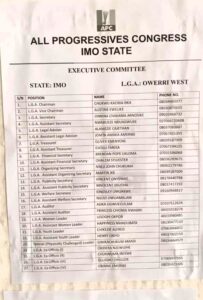
Meanwhile, the leadership structure of the All Progressives Congress (APC) in Imo State has been duly constituted, with officials elected across the State, Local Government Area, and Ward levels, reflecting a comprehensive and well-organized party framework.
At the Local Government Area level, notable individuals have emerged as party chairmen in various LGAs.
In Owerri West LGA, Mr. Chikadibia Okpe, was elected as the APC Local Government Chairman.
Similarly, in Orlu LGA, Mr. Ejike Iberame, emerged as the duly elected Party Chairman, while in Oguta LGA, Mr. Obed Onyebuchi, was elected as the APC Chairman, alongside 24 LGA Party Chairmen, to further strengthening the party’s grassroots leadership.
These developments extend across other Local Government Areas and wards, where Party Chairmen and Ward Chairmen have also been elected to provide leadership and coordination at their respective levels.
The successful emergence of party executives at the State, LGA, and Ward levels underscores the APC’s commitment to internal democracy, effective organization, and sustained grassroots mobilization across Imo State.
The release of the list marks a significant step in consolidating the party’s structure across the state, as the newly elected executives are expected to steer the affairs of the APC in Imo State moving forward.


Fuel price hike: Gov Makinde announces N10,000 transport support for workers

Former Acting Accountant-General of the Federation bags 72years imprisonment for diverting N868.46 million security funds

Benita Enwonwu in the 1970s: Model, Actress, and Daughter of Ben Enwonwu

-
Business1 year ago
US court acquits Air Peace boss, slams Mayfield $4000 fine
-

 Trending1 year ago
NYA demands release of ‘abducted’ Imo chairman, preaches good governance
-

 Politics1 year ago
Mexico’s new president causes concern just weeks before the US elections
-

 Politics1 year ago
Putin invites 20 world leaders
-

 Politics1 year ago
Russia bans imports of agro-products from Kazakhstan after refusal to join BRICS
-
Entertainment1 year ago
Bobrisky falls ill in police custody, rushed to hospital
-
Entertainment1 year ago
Bobrisky transferred from Immigration to FCID, spends night behind bars
-
Education2 years ago
GOVERNOR FUBARA APPOINTS COUNCIL MEMBERS FOR KEN SARO-WIWA POLYTECHNIC BORI